









When the Denver Nuggets won the first NBA championship in franchise history in June 2023, it felt as though one of the most compelling stories in modern basketball had reached its perfect conclusion. Nikola Jokić was the best player of the playoffs, the Finals MVP, and the central figure of a team that arguably played the most convincing basketball in the league that season. And it did so in a way that left no room for debate.


At that moment, it seemed as though the biggest question of his career had been settled forever. Jokić was no longer a player who still needed to validate his greatness. More importantly, Denver did not look like a team destined to win only one championship.
Denver’s Window Is No Longer Wide Open
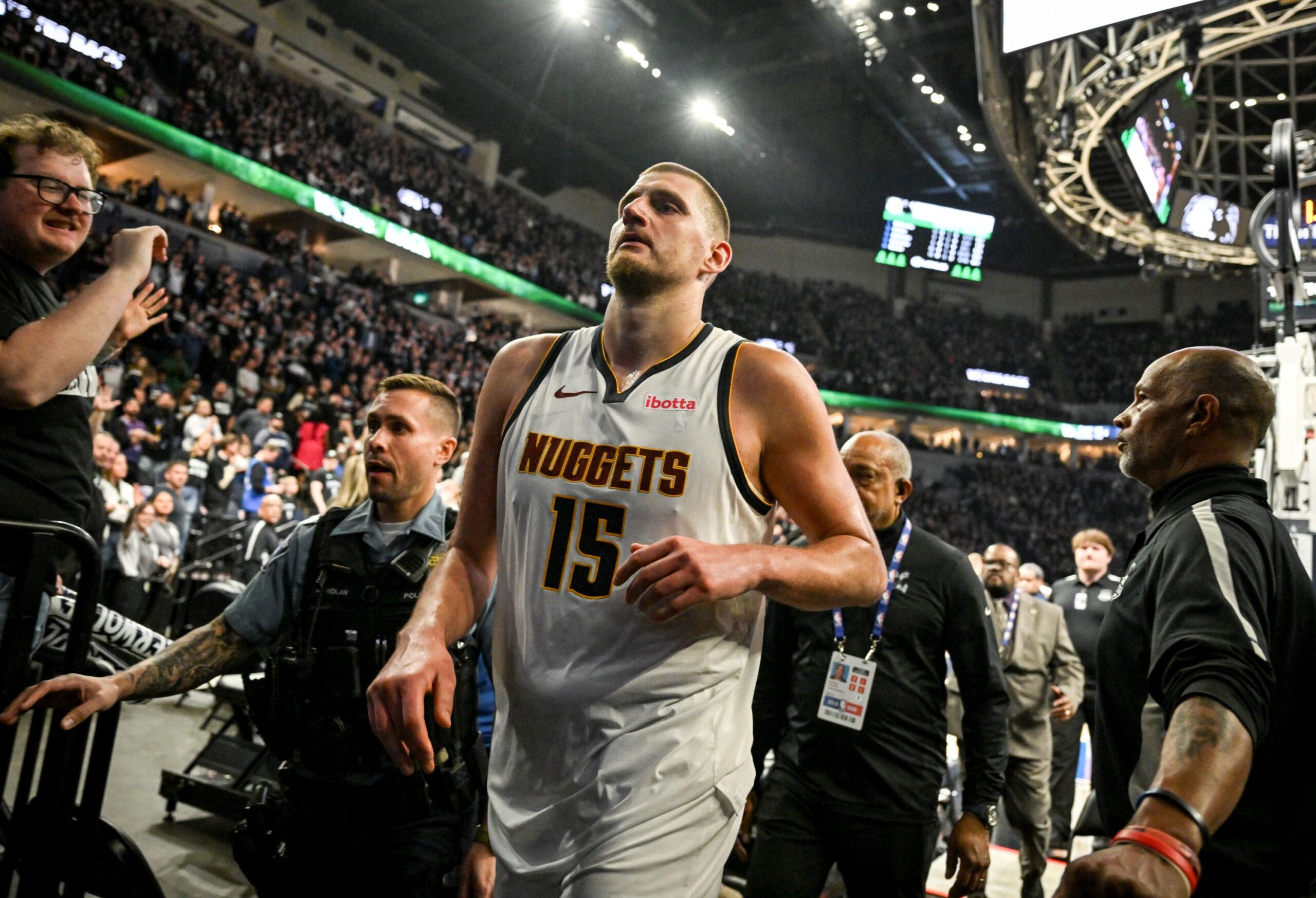
Three years later, the picture looks very different… Denver has now been eliminated in the first round of the playoffs for the second time in the last four seasons. A team that once looked like a potential dynasty now appears more like a contender fighting to remain among the league’s serious championship hopefuls.
Jokić, meanwhile, has continued to perform at a level that places him among the best players on the planet and among the greatest players in basketball history. Yet the question being asked after Denver’s recent elimination by Minnesota is very different from the one we were hearing just a few years ago. Once, we wondered whether Nikola Jokić could win an NBA championship. Now, we wonder whether he will be given enough opportunities to win another one.
Jokić Has Done His Part
Jokić has long since done everything necessary to secure his place among the greatest players of his era. More importantly, his impact extends far beyond the numbers, something that is often overlooked among basketball fans. Very few players in history have managed to alter the very logic of the game the way the man from Sombor has.
That is precisely why it is so fascinating that today the conversation revolves far more around Denver’s limitations than Jokić’s brilliance, because the team around him has gradually lost the qualities that once made it a champion.
Looking back at the 2023 roster, it is easy to see what is missing. The core remains intact. Jokić, Jamal Murray, and Aaron Gordon are still there, the players who formed the foundation of the championship run. Michael Porter Jr. was sacrificed due to salary cap concerns and a desire to inject freshness into the roster. The Cam Johnson experiment appears to have failed. The arrival of Tim Hardaway Jr. did not bring the stability the team had hoped for. Championship teams are never built solely around three or four stars. They are built on depth, on players who may not be stars but who make the difference between a good team and one capable of competing for and winning a championship.
Bruce Brown was exactly that kind of player during Denver’s title-winning season. His energy, versatility, and willingness to embrace any role made him the perfect teammate for Jokić. His departure was a significant blow, and his return to Colorado failed to produce the desired impact. The loss of Kentavious Caldwell-Pope may have been felt even more. He was one of the league’s best perimeter defenders and a player who provided security on both ends of the floor. Jeff Green brought experience and composure, although the team certainly needed further upgrades.
The Cost of a Thinner Roster
Players such as Christian Braun and Peyton Watson are approaching major paydays, while others merely fill roster spots without possessing the level of talent required for a team with championship aspirations. Of course, today’s NBA operates differently than it did ten or fifteen years ago. The new collective bargaining agreement has made life significantly more difficult for teams carrying multiple large contracts. Maintaining a quality rotation has become far more expensive and complicated. It requires people in the basketball operations department who are capable of thinking ahead, planning beyond the present moment, and anticipating future challenges.
Denver is not the only organization facing this problem, but it may be the clearest example of how quickly a championship window can begin to close. It is also an example of how the absence of elite front-office decision-makers has damaged Jokić’s chances and, above all, Denver’s chances of winning at least one more championship.
The League Is Getting Younger and Deeper
Oklahoma City Thunder emerged last season and will likely remain a major factor in every championship race for the next decade. The same can now be said about the San Antonio Spurs led by Victor Wembanyama. Minnesota Timberwolves possess enormous potential as well, with Anthony Edwards already established as one of the faces of the NBA. Detroit could continue developing into a serious contender, while the future of the New York Knicks remains an intriguing question. The number of contenders is undoubtedly growing.
There is an interesting paradox in modern basketball. The greatest privilege a franchise can have is an MVP player. When you have Nikola Jokić, there is no longer any luxury of patience. Every season must be a championship season. Every defeat feels significant. Every playoff exit creates the impression that another year of a once-in-a-generation talent’s prime has been wasted.
When Greatness Becomes Normal
Great players often become victims of their own greatness. The better they are, the more their brilliance is taken for granted. He has now averaged a triple-double for a second consecutive season, yet it no longer generates the same sense of amazement among fans and analysts.
At the same time, Jokić was not quite as dominant this season as he had been in previous years. When someone performs at an unimaginable level for so long, people eventually stop appreciating how remarkable it truly is. Yet the moment that level drops even slightly, he immediately becomes the subject of deeper scrutiny and criticism.
That is why it is hardly surprising that following the latest elimination, the discussion has focused more on what Jokić could have done better than on how much help he actually received.
Rings, Memory and the Simplification of History
Similar narratives surrounded Michael Jordan before his first championship. LeBron James during his first stint in Cleveland. Kevin Garnett in Minnesota. Greatness often comes with an invisible burden of expectation. And that burden may ultimately shape the way future generations view Jokić’s career. Sports history has an unfortunate tendency to simplify itself over time. The circumstances behind defeats are forgotten. Championships are remembered.
Michael Jordan has six. Kobe Bryant and Tim Duncan have five each. Stephen Curry and LeBron James have four… People remember championship rings far more easily than they remember the circumstances under which they were won or lost. Because of that, there is a very real possibility that one day someone will look at Jokić’s career and conclude that he was a phenomenal player who won “only” one championship.
How many championships are enough to ensure that a player is remembered not only as a transcendent talent but also as a great champion? Do three MVP awards, a championship, a Finals MVP trophy, and more than a decade of dominance become less valuable if there is only one title? Charles Barkley never won a championship. Neither did Karl Malone, Gary Payton, John Stockton, or Steve Nash for most of their careers. Kevin Garnett spent the majority of his prime in an organization that never figured out how to build a contender around him. Dirk Nowitzki won one championship, yet no serious observer questions his place among the game’s all-time greats, particularly because of the path he had to take and the opponents he had to overcome to reach the summit.
Yet almost all of them spent their careers hearing the same argument. As though genius itself required additional validation. Perhaps that is the greatest flaw in modern NBA culture. At some point, discussions about greatness were reduced to a checklist of MVP awards, Finals appearances, and championships.
Denver’s Real Responsibility
Nikola Jokić may be the best example of this reality. His individual brilliance has never been in question. What remains in question is Denver’s ability to build a roster capable of sustaining a long-term championship pursuit around him. So much so that the franchise has become financially overextended, handing out several questionable contracts that have clogged the salary cap and prompted discussions about a major rebuild this summer.
That is where the organization bears its greatest responsibility. Denver’s biggest fear should not be the possibility of Jokić leaving one day, because that is unlikely to happen and he has said so publicly on several occasions. The real fear should be a scenario in which he spends his entire career in Denver and, ten years from now, people ask how a franchise that employed the best player of his generation managed to win only one championship and reach only one NBA Finals.
The responsibility for that would not belong to Jokić. It would belong to those who assembled a roster lacking the depth and breadth required to achieve even greater success. Perhaps, then, the wrong question is how many championships a genius like Nikola Jokić needs to validate his greatness. The more important question is how many opportunities a genius deserves before he is finally given the roster he truly deserves.
If Nikola Jokić ultimately finishes his career with one championship, it will not change the fact that he redefined the center position. It will not change the way he showed generations of coaches and players that the game can be understood differently.
One of the biggest questions for all of us who follow the game is whether we will remember the number of rings, or the player who, night after night, showed that greatness cannot always be measured by a championship trophy.