











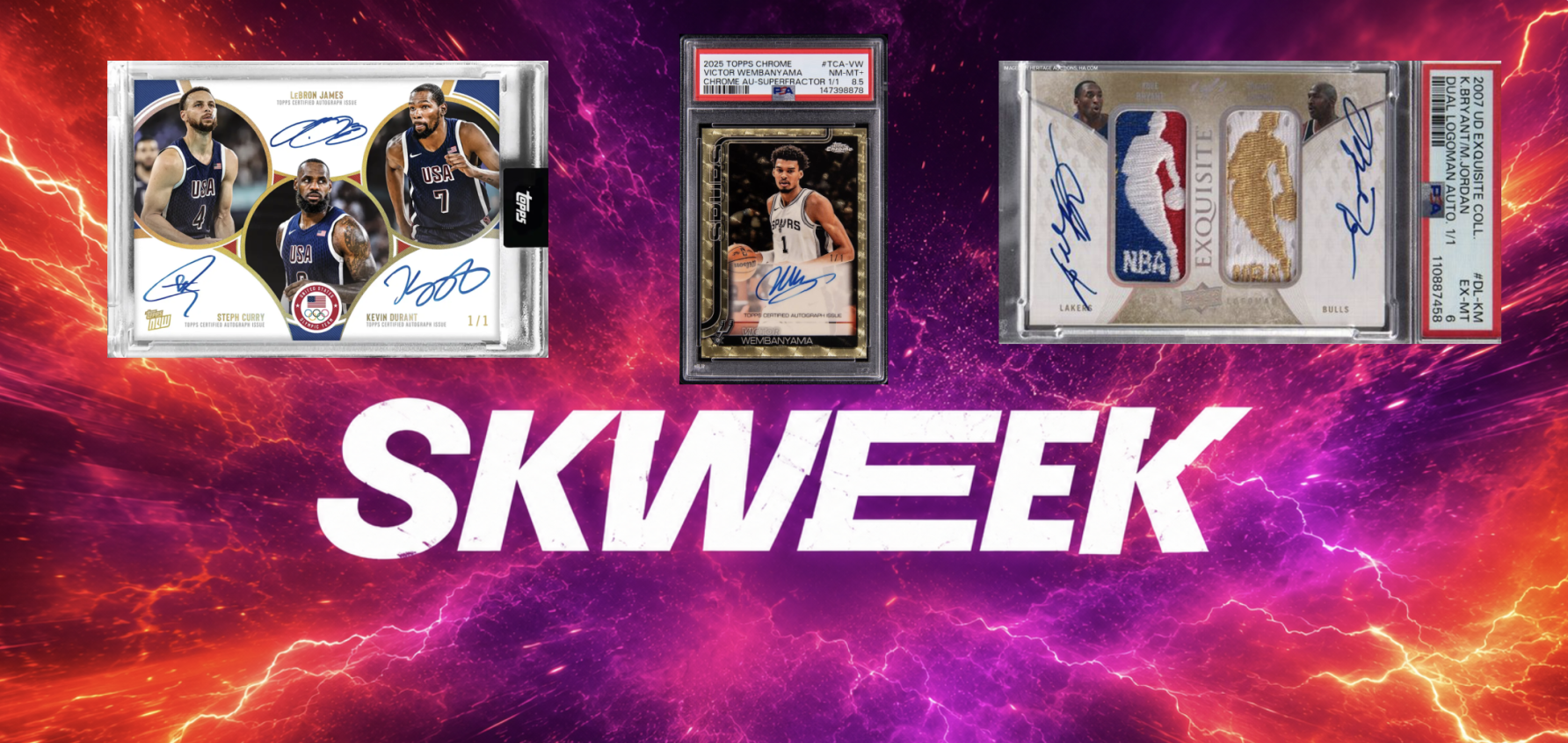

NBA and EuroLeague cards from Topps and Panini are driving basketball fans wild. Young and old alike are entering the hobby, which has long been hugely popular in the United States, prices are soaring, and collectors are breathing new life into an entire market. A SKWEEK feature packed with astronomical figures, Wembanyama and Flagg, and revenues measured in the billions.
NBA and EuroLeague cards from Topps and Panini have created a new reality for basketball fans. Young and old alike are getting involved in the hobby, which has been an integral part of American sports culture for decades, prices are spiraling, and collectors are reviving an entire market.
SKWEEK goes behind the curtain of a multibillion-dollar industry, featuring astronomical sales, rare rookie cards, Victor Wembanyama, Cooper Flagg, Lamine Yamal and one obvious question: are we talking about a beautiful, nostalgic hobby, an alternative form of investment or a modern form of gambling?


First things first… Trading cards are not an invention of the Instagram, livestream and online auction era, even if they have generated enormous hype in recent years. Their history stretches back more than 150 years, with the earliest examples linked to 19th-century baseball and commercial cards used as advertising material. They were later included in packs of tobacco, chewing gum and other products before gradually evolving into standalone collectibles. Cards from that era are now regarded as the “Holy Grails” of collectors around the world.
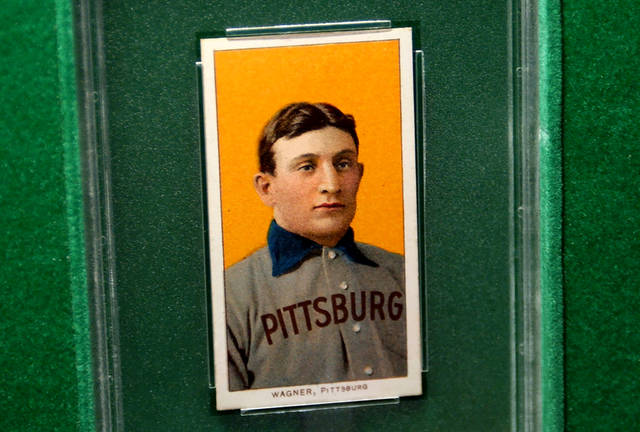
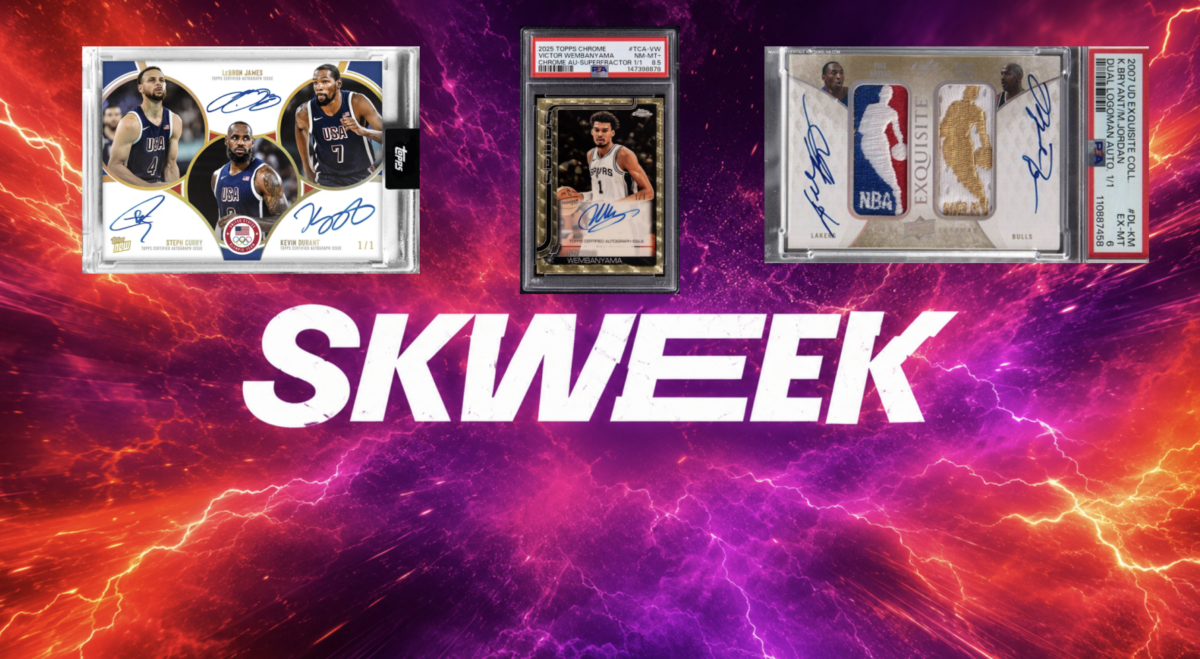
Today, the so-called “hobby” involves far more than simply collecting… photographs of athletes. There are base cards, rookie cards from a player’s first professional steps, numbered editions, different parallels, autographs, pieces of game-worn jerseys and unique 1/1 copies. One-of-one cards provide the ultimate sense of exclusivity: something owned by you and by nobody else on the planet in that exact version.
At the same time, grading companies such as PSA and Beckett assess the condition of cards. A tiny flaw on the surface, corners or centering can be the difference between an ordinary card and an item worth hundreds of thousands of dollars.
At SKWEEK, then, we are trying to explain what is really happening… behind the curtain. Why can a small piece of cardboard, laminated or otherwise, featuring the image of an athlete cost more than a luxury home? Why are millions of people now opening packs in front of cameras? How did cards move from children’s bedrooms into investment portfolios, and why is the EuroLeague beginning to claim a place in a market that had long revolved almost entirely around the NBA?
Wembanyama, Flagg and… Yamal
Just as on the court, potential can often cost more than the present in the trading card market. Collectors are not only buying what an athlete is today, but very often what they believe he could become in five, ten or twenty years.
Victor Wembanyama is the clearest example of this new era. Before he had even completed a significant portion of his NBA career, his rarest rookie cards had already earned a place alongside those of historic figures in the sport. In May 2026, his unique 2023-24 Panini Prizm Black 1/1 rookie card, graded PSA 10, changed hands in a private transaction for $5.11 million. Do not get dizzy from the numbers just yet. There is still a long way to go…
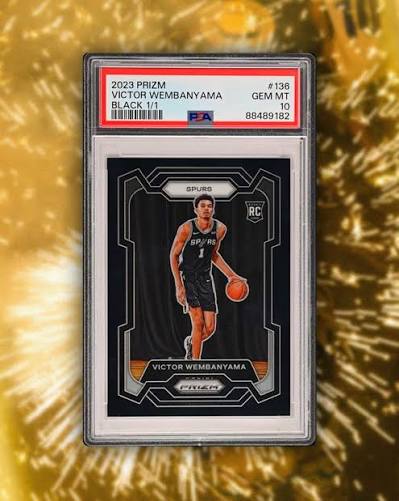
That price made it the most expensive known unsigned basketball card of all time. The previous record sale for a card featuring the Frenchman had reached $860,100 in February 2025. In the space of roughly 15 months, his record had therefore almost multiplied by six.
The market, you see, is not only paying for Wembanyama’s performances. In reality, it is paying a huge premium for the possibility that he could develop into one of the greatest players in the history of the game. For the potential to earn a place alongside the very best of all time. The rarer the card, the higher its grade and the greater the athlete’s perceived ceiling, the stronger the expectation becomes — and so does the final price.
There is similar excitement surrounding Cooper Flagg. His arrival in the NBA created a new wave of products, breaks and auctions, driven by the belief that he could become one of the faces of the league. His first major cards gained significant value before he had even had the chance to build the résumé enjoyed by the game’s biggest stars.
In March 2026 alone, sales of Flagg cards on eBay were estimated at approximately $5.76 million. That placed him above Wembanyama, who followed at around $5.65 million, and behind only Shohei Ohtani and Michael Jordan among all athletes.
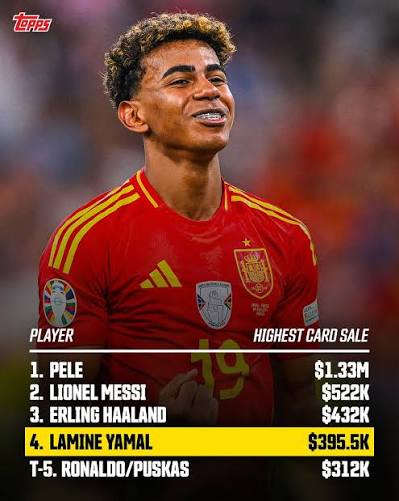
Naturally, the phenomenon is not limited to basketball. In football, Lamine Yamal represents the equivalent case. His earliest Barcelona cards attracted enormous demand, with collectors viewing him as the possible heir to a generation of historic stars. Rare, autographed and low-numbered versions have already reached five-figure sums despite his young age. Once again, collectors are buying the potential and the fact that the Spanish winger is already being discussed in terms of whether he could one day “reach” Lionel Messi.
In the NFL, the market chases every young quarterback who emerges as a potential face of an era. In the Pokémon market, nostalgia meets rarity and the global recognition of characters whose value does not depend on injuries or sporting decline. In baseball, however, the hottest name in the entire hobby right now is Shohei Ohtani.
The 32-year-old combines historic achievements, global fame, enormous appeal in Japan and the most traditional collecting culture in the United States. In March 2026, sales of his cards on eBay reached approximately $17.48 million. A month later, he remained in first place with around $16.58 million, more than double Wembanyama’s total.
The numbers have well and truly spiraled
To understand the scale of the madness, one only needs to look at the five most expensive known basketball card sales. This, then, is the moment when… you may need to hold your breath.
At the top sits the unique 2007-08 Upper Deck Exquisite Dual Logoman Autographs card featuring Michael Jordan and Kobe Bryant. It includes pieces of the logo patches from their jerseys, as well as their signatures. In August 2025, it sold at auction for $12.932 million, setting a world record for any sports card.
Its value is not based solely on the fact that it is a one-of-one. In essence, the card brings together two of the most powerful figures global basketball has ever known, through elements that can never be reproduced. A second identical card cannot be created, and no new Kobe Bryant autograph can ever return to the market following the tragic accident of January 26, 2020.
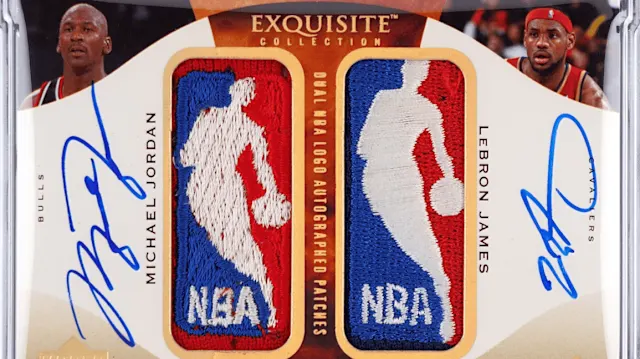
Second on this extraordinary list is another Upper Deck Dual Logoman, this time featuring Michael Jordan and LeBron James. The unique 2006-07 card was sold privately in September 2025 for $10 million. That transaction set a new record for a LeBron card.
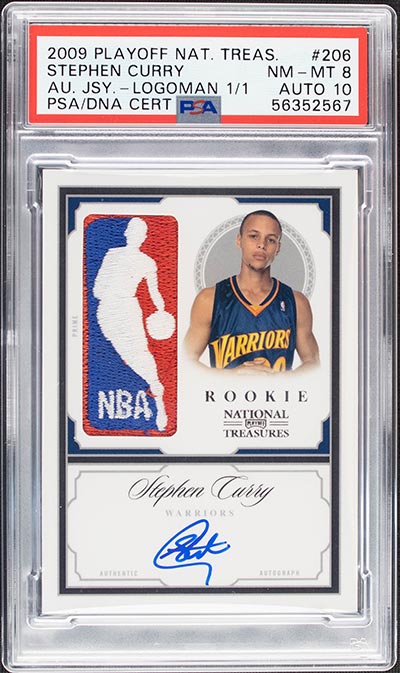
Next comes Stephen Curry’s 2009-10 Panini National Treasures Rookie Logoman Autograph 1/1. In 2021, it was valued at $5.9 million as part of a deal involving an investment fund acquiring a majority stake in the card. At the time, the sum represented a world record for a modern sports card. The mere fact that we are using the phrase “investment fund” in this article should give you an idea of the size of the market we are attempting to analyze.
At No. 4 is LeBron James’ 2003-04 Upper Deck Exquisite Rookie Patch Autograph Parallel, numbered to just 23 copies. It was sold privately in 2021 for $5.2 million. The Exquisite series is considered a landmark in the modern market, as it established luxury rookie cards featuring autographs and jersey patches as the pinnacle of the collecting pyramid.
Completing the top five is now Victor Wembanyama’s Panini Prizm Black 1/1, at $5.11 million, as mentioned above. Immediately behind it is Luka Doncic’s Panini National Treasures Logoman Autograph 1/1, which was initially sold privately for $4.6 million and later at public auction for $3.12 million.
The five biggest transactions also reflect the evolution of the hobby. Michael Jordan and Kobe Bryant represent timeless legacy. LeBron James and Stephen Curry represent modern history. Wembanyama, however, represents something different: a market willing to pay millions today for what it believes may happen over the next two decades.
The EuroLeague entered the game and is producing expensive sales
For years, the European basketball card market remained fragmented. There were stickers, local releases, team cards and limited collections, but no consistent, global and fully organized production comparable to that of the NBA.
That began to change in 2023, when the EuroLeague and Panini announced a multiyear partnership. The competition gained official products under established market brands such as Panini Donruss, Prizm and Crown Royale. The cards were not limited to the active stars of the competition, but also featured major names who had passed through European basketball, such as Luka Doncic and Victor Wembanyama.
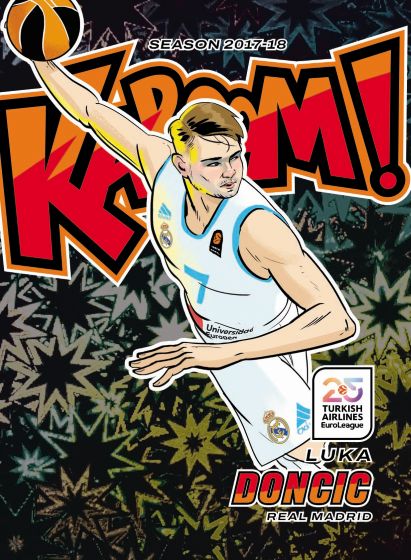
Their presence immediately increased interest. It was a clever move by Panini to attract buyers from all over the world. An NBA collector could now chase Doncic in a Real Madrid jersey or Wembanyama in an ASVEL uniform, connecting a player’s European journey with the global career that followed.
At this point, however, an important clarification is required. Unlike the NBA, there is still no complete, publicly accessible database that would allow for the creation of a reliable top five of completed sales exclusively involving EuroLeague cards. Or, to be more precise, sales have not yet reached the astronomical levels analyzed earlier.
Most transactions take place through eBay, European marketplaces, closed collector groups or directly between private individuals. Often, the listed asking price is published rather than the figure at which the card actually sold. At other times, it is reported that a card changed hands “for several thousand”, without a receipt, independent verification or disclosure of the terms.
As a result, any definitive top five featuring specific prices would be misleading. A card being offered for €10,000 is one thing; a card actually being sold for €10,000 is another — let alone for several million.
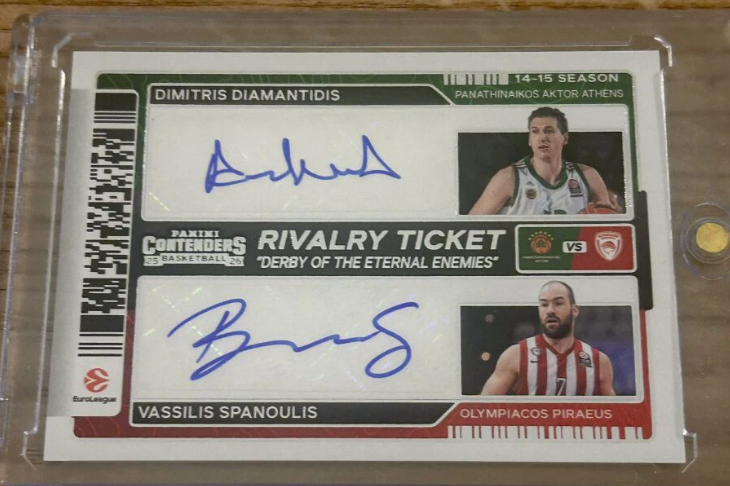
That does not mean the EuroLeague market is inactive. Quite the opposite. The most sought-after editions mainly involve Doncic, Wembanyama and unique or low-numbered cards of the competition’s biggest modern stars. There is also strong interest in 1/1s, Gold parallels, autographs and cards of popular players from clubs with powerful collector bases, such as Panathinaikos, Olympiacos, Real Madrid, Partizan, Crvena Zvezda and Fenerbahce.
The difference lies in scale. In the NBA, the biggest cards have already become multimillion-dollar assets. In the EuroLeague, the market is being shaped now, step by step. Limited production, the arrival of new series and the gradual growth of international interest could prove significant over the coming years.
For a collector, the EuroLeague has another major advantage: it still offers the opportunity to acquire rare cards of elite players without requiring NBA-level sums. That can make the market more accessible, more authentic and less prohibitive for fans who first want to collect and only then consider potential resale value.
The market is no joke
Million-dollar sales attract the headlines, but the true size of the market is reflected in everyday transactions. Not every card needs to cost a fortune. Billions are created through millions of smaller purchases, ranging from packs costing only a few euros to six- and seven-figure auctions.
Different market studies do not fully agree on the precise valuation, mainly because some count only sports cards while others also include Pokémon and other trading card games. The broader picture, however, is clear: this is a market worth more than $10 billion — yes, you read that correctly, 10,000,000,000 — with forecasts suggesting it could more than double over the next decade.
Card Ladder, one of the most important databases in the space, has tracked more than 100 million historical sales across platforms such as eBay, Goldin, Heritage and Fanatics Collect. In June 2025, recorded card transactions reached approximately $305 million. By August of the same year, monthly volume had risen to $416.8 million, setting a new record at the time.
More than $2.6 billion was spent on individual cards on eBay alone during 2025. And that concerns just one platform, without including all private transactions, card shows, brick-and-mortar stores and breaks. Are you beginning to understand why investors from all over the world have entered the game?
At the same time, Fanatics has turned trading cards into a central pillar of its business growth. It acquired Topps in 2022 and secured rights that have reshaped the balance of power across the NBA, NFL and baseball. Estimates suggested that revenue from the collectibles division would increase from approximately $1.6 billion in 2024 to more than $2 billion in 2025, with even greater ambitions for 2026.
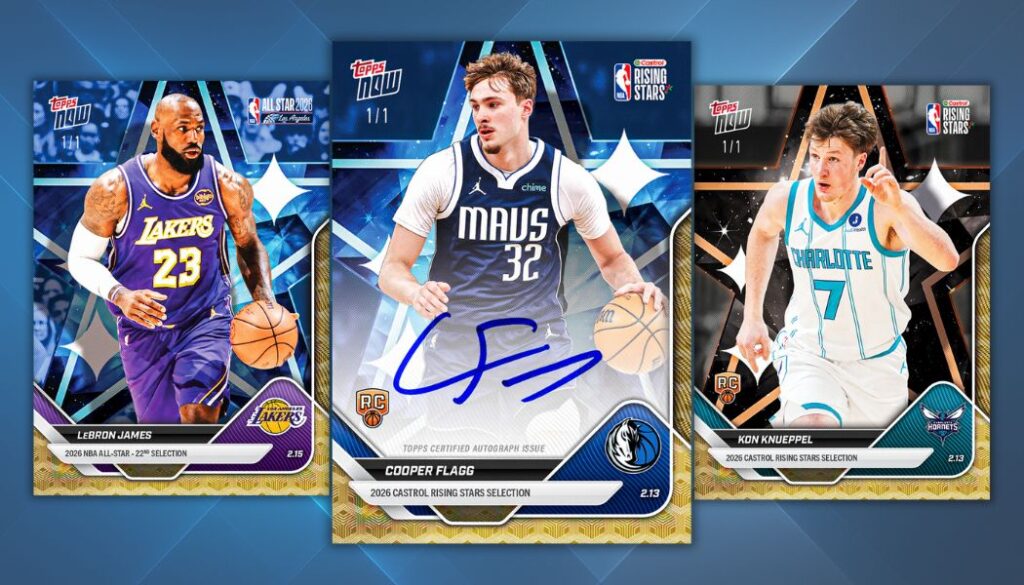
Topps returned to officially licensed NBA cards after an absence of more than 15 years. The change gradually completed the transition from the Panini era into a new reality, one in which Fanatics wants to control production, distribution, auctions, storage and live commerce at the same time.
The hobby is no longer simply the neighborhood card shop. In fact, it is something far more complex, a world well beyond the small packet on a store shelf. It is a mechanism connecting grading companies, secure vaults, insurance services, auction houses, streaming platforms, influencers and investment groups.
Celebrities are getting in on the action
The explosion would not have been nearly as intense without social media. Opening a pack became content, content became entertainment, and entertainment became sales.
Logan Paul is perhaps the clearest example. The American rose to fame as a YouTuber, evolved into an entrepreneur and professional wrestler, and used his enormous audience to transform Pokémon cards into mainstream entertainment.
The crown jewel of his collection was a PSA 10 Pikachu Illustrator, the only known copy of that particular card in perfect condition. Paul had acquired it in 2021 through a deal worth a total of $5.275 million and famously wore it around his neck in a special case and chain at WrestleMania.
In February 2026, he sold it at auction for $16.492 million. The sale was recognized as the most expensive card of any kind ever sold at auction. In the space of roughly five years, its value more than tripled.
Steve Aoki comes from a very different world. The famous DJ and producer owns a collection of tens of thousands of cards, ranging from sports products to Pokémon. He has collaborated with Topps to create his own series, participated in breaks and moved a large portion of his collection into a specially secured PSA vault. His involvement gave the hobby access to an audience that did not necessarily have a direct connection with American sports.
Ken Goldin, for his part, is not an influencer in the traditional sense, but he is one of the most powerful figures in the market. He built one of the leading auction houses for cards and sports memorabilia and managed to bring the entire collecting world to Netflix.
The series “King of Collectibles: The Goldin Touch” follows him and his team as they search for, evaluate and sell rare items. Cards, jerseys, shoes, historic artifacts and private athlete collections are presented as part of a market with its own language, its own protagonists and enormous sums of money. In this way, the hobby gained its own television series and reached millions of viewers who previously had no idea what “1/1” even meant.
Gary Vaynerchuk, the entrepreneur and content creator widely known as Gary Vee, has also played a significant role. He has nearly 12 million followers on Instagram and has argued for years that the market has not fully recognized the long-term value of many Kobe Bryant, LeBron James and Stephen Curry cards, especially those that do not currently belong to the flashiest or most expensive series.
His argument is that future generations will view those players in the same way today’s collectors view Michael Jordan. At the same time, he created VeeFriends, his own universe of characters that began as digital collectibles and later expanded into physical cards, collaborations and a Topps Chrome series.
Even NBA players themselves are becoming increasingly active in the space. Grant Williams has appeared at card shows, openings and podcasts, speaking openly about his NBA and Pokémon collection. He has even bought cards of his own teammates and publicly explained how he views the hobby as an active player.
There are also other current and former NBA players who collect, open packs or appear on specialist channels. Mo Bamba is another recent example. In football, the most prominent equivalent is Antoine Griezmann.
The trend is particularly interesting: the people featured on the cards are now becoming buyers of them as well.
A bubble? Gambling? The experts weigh in…
The most difficult question is not which card is the most expensive. It is what someone is actually buying when they pay for a sealed pack.
If the buyer knows which card he wants and purchases it directly from another collector, it is a straightforward transaction. If, however, he repeatedly buys packs or spots in breaks hoping to land a rare “hit”, the process begins to resemble gambling, as many experts have pointed out.
The buyer pays a fixed amount but does not know what he will receive. Most cards may have little value, or almost none at all, while very few can return several times the original cost. The uncertainty, anticipation and rush of excitement when a rare card appears create a mechanism similar to loot boxes in video games.
Studies have identified a connection between increased spending on booster packs and gambling-related behavior. That relationship does not prove that everyone who buys cards is a gambler, nor that the hobby as a whole should be equated with gambling. Such conclusions would be far too simplistic. It does show, however, that the model of randomized rewards can become problematic when the goal stops being collecting and becomes exclusively the pursuit of the next big hit.
The term “investment” also requires caution. Cards do not generate earnings, pay dividends or provide guaranteed liquidity. Their value depends on rarity, condition, how famous the athlete is, the direction of his career and the willingness of another buyer to pay in the future. This is where the word “potential”, mentioned earlier, returns once again and applies to a number of cases.
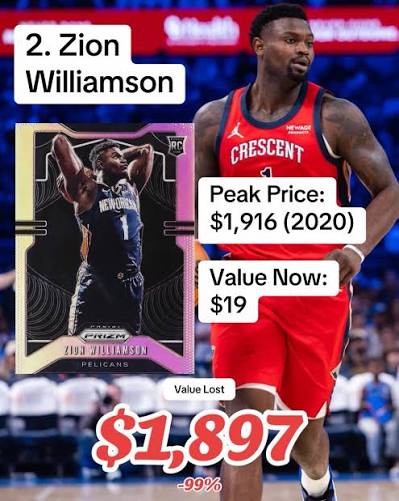
As you can imagine, an injury, poor performance, a scandal, overproduction or the simple shift of attention toward a new athlete can cause prices to fall sharply. The decline in the value of Zion Williamson cards, initially because he failed to reach the potential many expected, and Ja Morant cards, later because of the controversies in which he became involved, are among the clearest examples.
The market as a whole experienced the same thing after the pandemic, when many modern cards that had soared in 2020 and 2021 lost a large part of their value. That, however, does not mean the entire hobby is a bubble. Truly rare cards of historic athletes, unique items and editions with major cultural significance belong in a different category from the thousands of modern cards released every year.
The logic is similar to that of art, watches or classic cars. Nobody can guarantee future prices, but rarity, history and the desire for ownership create a real market. The key phrase in all of this is “desire for ownership”. The more people want a particular card, and the more strongly they want it, the more its value is likely to rise.
The problem begins when every pack is presented as an investment opportunity and every rookie as the next Michael Jordan. A sign of the times, perhaps…
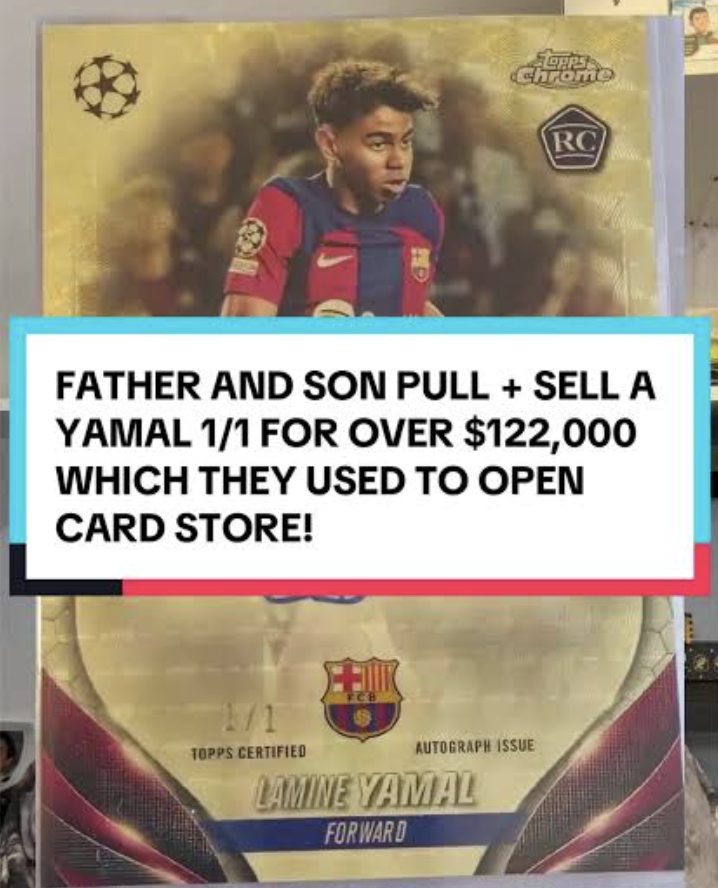
At the end of the day, though, the hobby cannot be measured only through million-dollar sales. The image of a father opening a pack with his child is far closer to the essence of collecting than a seven-figure private transaction.
Cards connect generations and bring back a sense of nostalgia and emotion that many people first experienced as children. An older collector may chase Michael Jordan while his son goes after Victor Wembanyama. A EuroLeague fan may buy an autographed card of his favorite player without caring whether its value will ever double.
It may be enough for him to have a Dimitris Diamantidis or Vassilis Spanoulis autograph on his desk, a rare Sergio Llull card or a hard-to-find Milos Teodosic edition. Someone else may complete a collection because it reminds him of the first album he owned as a child, while another may simply want to create an attractive frame and hang it on the wall at home.
Prices have indeed spiraled. The market has developed speculative elements, and the mechanics of sealed packs require responsibility, particularly when minors are involved. Yet behind the records, breaks and influencers, something simple and beautiful remains: the desire of fans to hold a small piece of the sport they love, or of the player they admire.
That is also the true power of the hobby: not that one card can cost 10 or 12 million dollars, but that the same small object can excite a 10-year-old and awaken memories in a 50-year-old.