

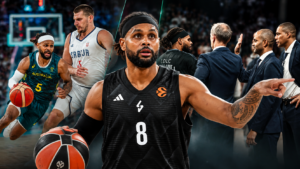



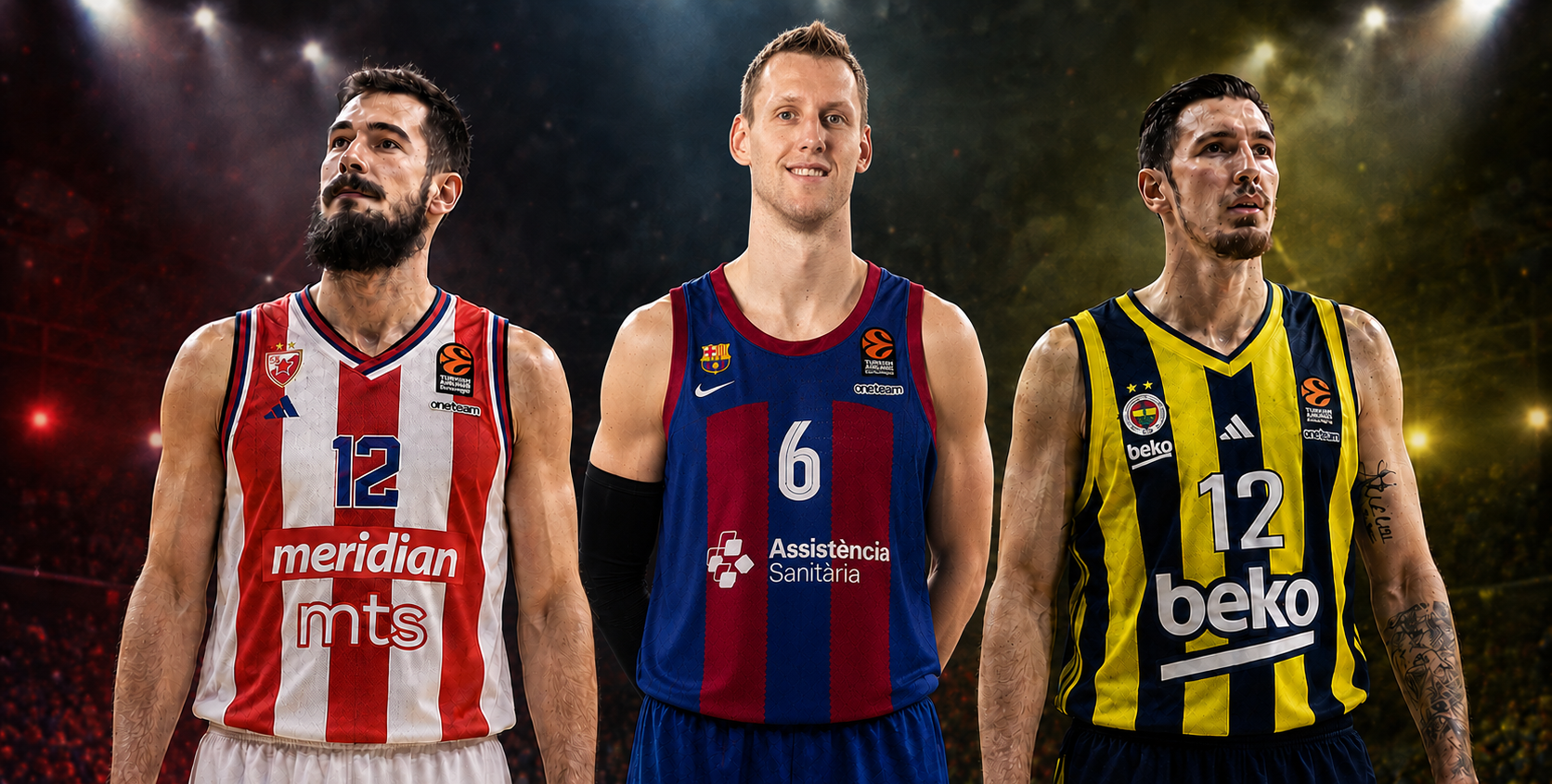

Nine years ago, inside Istanbul’s Sinan Erdem Dome, Nikola Kalinić, Jan Vesely and Nando De Colo had little reason to think about the end.


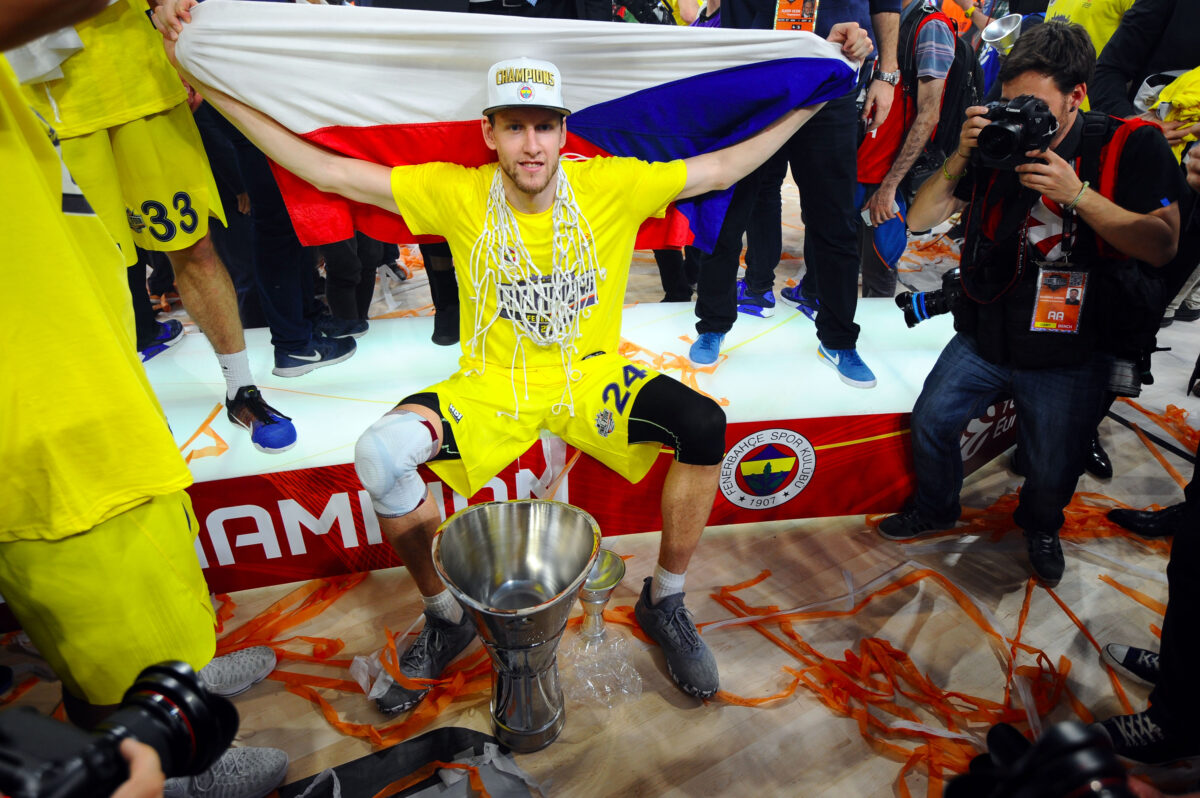
On May 21, 2017, Kalinić and Vesely played in the EuroLeague final in front of Fenerbahçe’s crowd. De Colo was in the same building with CSKA, the defending European champion, except his team had been eliminated by Olympiacos two days earlier. In the final, Kalinić played the kind of game he will always be remembered for in Istanbul: 17 points, five rebounds, five assists and 6 of 8 shooting. Vesely added eight, Fenerbahçe beat Olympiacos 80:64 and became European champion for the first time.
That weekend, three players whose careers had taken very different paths found themselves in the same place, close to the peak of their playing years. De Colo had won the EuroLeague a year earlier and been named both regular season and Final Four MVP. Vesely had already put his disappointing NBA chapter behind him and found the right role under Željko Obradović, while Kalinić was playing perhaps the best basketball of his career.
By August 2026, none of them are active players anymore…
Kalinić Was the Last One to Make the Call
De Colo was the first to announce the end, Vesely made his decision public a little later, and Kalinić was the last to make the call, just when it seemed the only question left was where he would play next season.
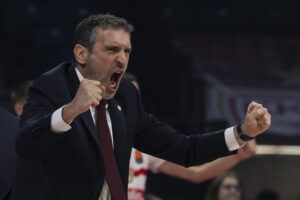
“Guys, I’m ending my career. I’m becoming an assistant coach at Red Star for the next two years, and in the meantime I’ll finish coaching school”, Kalinić wrote on Monday.
Almost nobody expected it. He is 34, coming off another EuroLeague season and still has the kind of profile that almost always has a market in Europe. For weeks, there had been talk about his next destination, different options were being weighed and there was every reason to believe he could keep going. In the end, what mattered most was that he wanted to stay in Belgrade and be close to his daughter.
From the outside, a professional career can sometimes look simpler than it really is. Fans see what happens on the court. People talk about contracts and money, wins and losses, good decisions and bad ones. Players see a much wider picture: practices, travel, recovery, hotels and another year in which a large part of their private life has to be adjusted to the schedule. Kalinić could have continued. He simply no longer wanted basketball deciding where he would live.
De Colo Had Been Ready for the End
His decision completed an unusual summer in European basketball. There was almost no surprise with De Colo. The French guard had been thinking about retirement long enough to calmly say that the result of his final season would not change his decision. When he returned to Fenerbahçe earlier this year at 38, he was not there for a farewell ovation. Šarūnas Jasikevičius wanted him because he could still play meaningful minutes, bring order to the offense and take responsibility.
That had always been a major part of his basketball. He was not the fastest player on the floor, nor did he play above the rim or break down defenses with raw strength. He did it with basketball intelligence. At his best, it often seemed as if he saw the floor a little earlier than everybody else. He fit perfectly next to Miloš Teodosić, and together they formed one of the best and most dangerous backcourts in Europe.
De Colo’s peak started in 2016. CSKA had spent years arriving at the Final Four with teams built to win Europe and going home without the trophy. The Frenchman came to Berlin as EuroLeague MVP, poured in 30 points against Lokomotiv in the semifinal, then added 22 points and seven assists against Fenerbahçe two days later. CSKA finally won the EuroLeague in overtime, and De Colo was named Final Four MVP.
Three years later, he was European champion again. When he spoke this spring about it being time to call it a career, he did not feel much need to explain the decision. There was not much to explain. He finished as one of the leading scorers of the modern EuroLeague era, with the best years of his career tied to teams that were always chasing the very top of the competition.
Vesely Had to Reinvent Himself
Jan Vesely reached that same level by taking a road that, at one point, forced him to almost rediscover himself from scratch. When he joined Partizan at 18, he was a skinny 6-foot-11 wing who was easiest to notice when he left the floor. It did not take long for the stands to fall in love with him. His athleticism quickly turned him into a “human highlight.” By 2010, Partizan had reached the Final Four in Paris and Vesely was part of that historic team under Dusko Vujošević. A year later, Washington selected him with the sixth pick in the NBA Draft.
It looked like the logical next step for a young athlete, but it turned out to be far from what he probably wanted. He played 162 games for Washington and Denver, but without the continuity or clearly defined role he had enjoyed in Europe. At the time, Vesely found himself caught between positions. He did not have the shooting and creation increasingly required from NBA wings, while he had not yet become the center he would be a few years later. His return to Europe in 2014 could have been seen as a defeat after the expectations that followed him into the draft. Instead, that was when the best part of his career began.
Obradović Built a Different Vesely
Željko Obradović did not try to bring back the old Vesely. At Fenerbahçe, he turned him into a completely different player. Vesely moved closer and closer to the basket, while athleticism stopped being the central part of his game. He learned how to read defenses after the pick and roll, improved as a passer, developed a midrange shot and became much more comfortable when he did not have to finish the possession immediately after catching the ball. The spectacular dunks gave way to a much broader game at center. He could score from 15 feet or find a teammate when the defense took away the rim.
Eight years with Fenerbahçe brought him a EuroLeague championship, five Final Four appearances and the 2019 MVP award. More important for his story is that the player who left Partizan and the veteran who later played for Barcelona were almost impossible to view in the same way. That also made the final years harder. His back gave him problems, he started missing games more often, and the body of a player whose game had relied so heavily on explosiveness for so long began sending clear signals.
Vesely made the decision before announcing it publicly. He later talked about how it changed the final months of his career, how some of the pressure disappeared once he knew there was no next contract to earn and no following season he had to preserve his body for.
His last game was not particularly romantic. Valencia beat Barcelona 108:84 at Palau Blaugrana on June 24, closed the finals 3:1 and won the title. Vesely did not leave under confetti or with a trophy in his hands. He played his final game, lost and was done. That is sports, and very few stories get a perfect ending.
Kalinić’s Career Still Leads Back to Istanbul
Kalinić could have postponed his retirement, but he decided to move into coaching and look at the bigger picture. He leaves behind 12 EuroLeague seasons and 383 games for Red Star, Fenerbahçe, Valencia and Barcelona, but it is hard to find a night that explains his European career better than the one at the beginning of this story. In the final against Olympiacos, he scored 17 points, grabbed five rebounds and handed out five assists while shooting 6 of 8 from the floor. Bogdan Bogdanović also scored 17, Ekpe Udoh was named Final Four MVP, Vesely set the tone with his energy around the rim, and Kalinić produced one of the best games of his career at exactly the moment Fenerbahçe needed it most.
Serbian fans, of course, have other memories. The dunk over Giannis Bourousis at the 2014 World Cup, when a 22-year-old Kalinić became one of the faces of the Serbian team that went on to win silver. A year later came his 25 points against Partizan in the ABA League playoffs, in a series that meant much more to Red Star than simply reaching another final. Then came the years with Obradović, Barcelona, Valencia and two major returns to Mali Kalemegdan.
A Player Who Rarely Had the Same Job Twice
Kalinić was never an easy player to explain through statistics. He could guard an opposing guard, then spend the next possession at power forward. He could help bring the ball up when pressure disrupted the primary ballhandlers, post up a smaller defender, set a screen or go three possessions without really asking for the ball. His temperament could also work against him. He could get into an argument his team did not need or push too hard trying to change the direction of a game. But he rarely went through one unnoticed.
Maybe that is why his decision to move straight into coaching feels less surprising than the decision to stop playing. It does not mean he will be a good coach, but neither does it mean his new role is doomed from the start. A playing résumé guarantees very little in coaching. Now he has to learn how to explain to somebody else all the things he used to recognize on the floor, how to manage a group and what responsibility feels like when he can no longer step into the game himself and fix something.
Three Careers That Never Followed the Same Route
De Colo and Vesely do not have that responsibility right now. After nearly two decades of professional routines, for the first time they do not have the start of preseason hanging over them. Put their careers next to each other and the story is not particularly neat, and each one was specific in its own way. De Colo reached the top of Europe as a guard who had the ball in the biggest possessions. Vesely had to survive his NBA disappointment and change positions to become the player European basketball expected him to be. Kalinić stayed with elite teams for years by accepting that his job would not always look the same from one game to the next.
What they have in common is something simpler: they lasted a very long time. De Colo played his first EuroLeague season at the beginning of the previous decade. Vesely was playing some of Europe’s biggest games with Partizan before many of today’s young EuroLeague players had even started elementary school. Kalinić entered the competition in 2014. During that time, the EuroLeague format changed, the number of games changed, roster construction changed, the market changed and the game itself changed. They kept finding ways to remain important through all of it.
European Basketball Moves On, Their Place in It Does Not
Still, their retirement does not mean that some better era of European basketball disappeared with them. It was not as romantic then as it might seem today, nor will the game suddenly become poorer without three players. New players are already coming, and some of them will win more and play longer.
Yet their years of service and everything they gave basketball on this side of the Atlantic will remain part of the game’s memory and will continue to be talked about.
Because they were, and will remain, giants.