




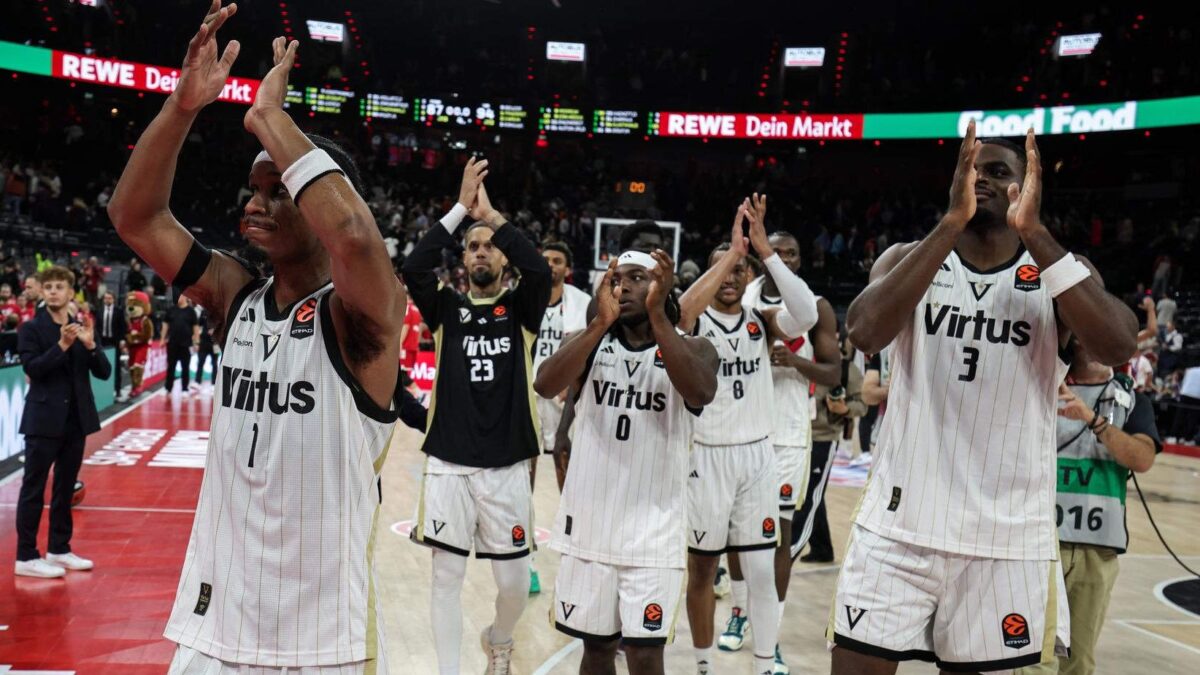










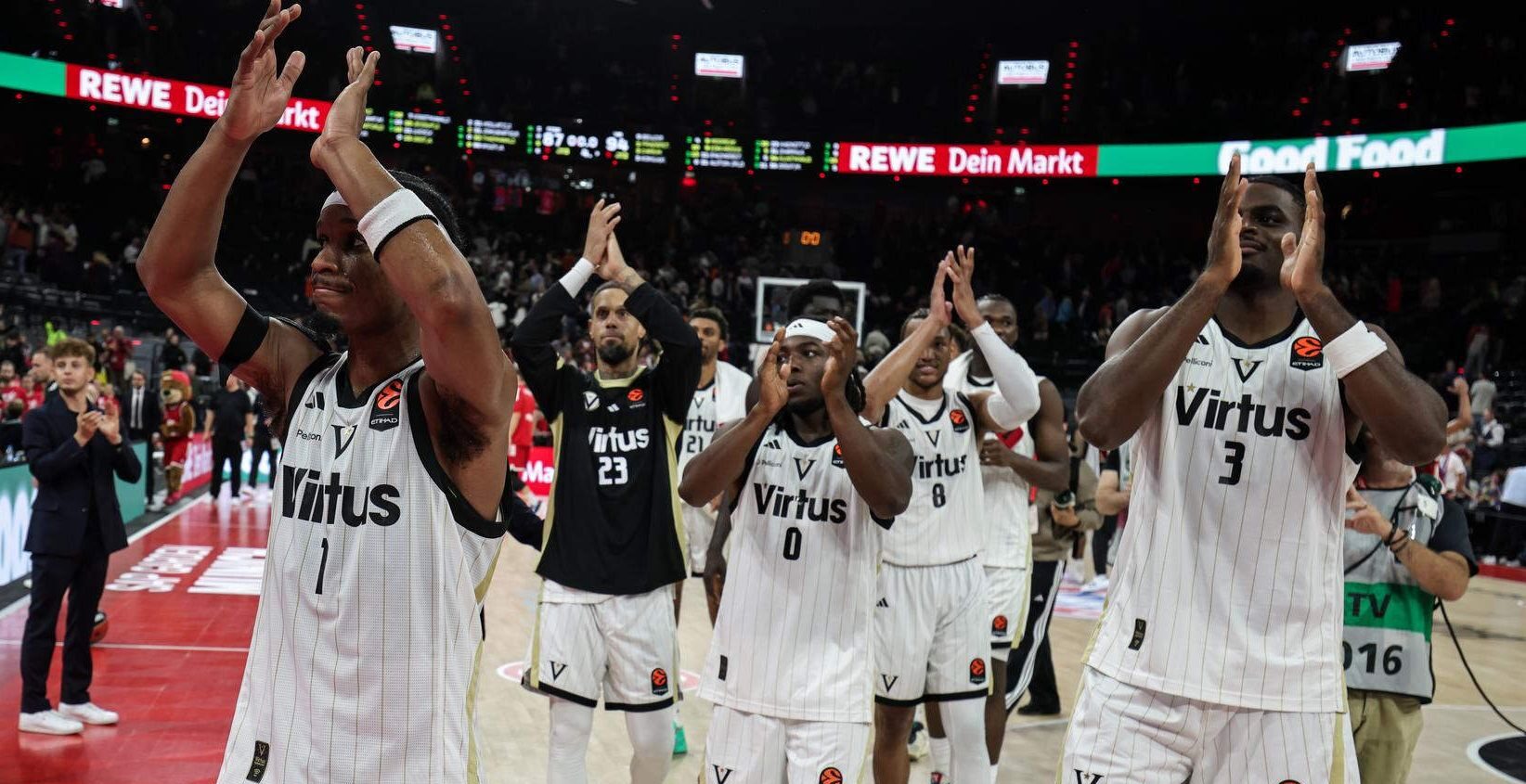

After Marcus Carr’s buzzer-beater against Olympiacos, Virtus Bologna followed it up with a 94-87 win over Bayern Munich. Alex Mumbrù’s team are building their game around pace, high three-point volume and physicality, looking for a way to bridge the individual talent gap between themselves and EuroLeague contenders.


A three-pointer at the buzzer can decide a game, but it cannot explain everything that came before it. When Marcus Carr gave Virtus Bologna a 96-94 win over Olympiacos with a last-second shot, it would have been easy to put the result down to one outstanding individual moment. A week later, their road win in Munich added a different dimension to the story.
Virtus beat Bayern Munich 94-87, opened the game with 35 points in the first quarter and held firm as the hosts tried to fight their way back. This time, they did not need to wait until the final possession. They had built a double-digit lead, found their offensive rhythm and managed to maintain control when the game became more demanding.


Two wins against different opponents are not enough to change expectations for the season, but they are enough to warrant a closer look at what Bologna are trying to do on the court.
More Threes, a Different Approach
The statistics after Round 4 clearly illustrate Virtus’ offensive direction. They attempt 30.3 three-pointers per game, with 44.3% of their field-goal attempts coming from beyond the arc. Their three-point percentage, however, stands at just 28.1%, while their estimated pace is 75.3 possessions per game.
The contrast is intriguing. Virtus consistently look to shoot from long range, yet they have not been particularly efficient from there so far. They are not winning because they have discovered extraordinary three-point shooting. Instead, they are trying to generate a high volume of opportunities, get their shots off quickly and force opposing defences to react under pressure.
The game against Olympiacos is a case in point. Virtus started with 10-of-11 shooting on two-pointers and nine assists in the first quarter, scoring 33 points, before finishing the game 11-of-40 from three-point range. Despite their struggles from beyond the arc, they scored 96 points and came away with the win.
In Munich, by contrast, their perimeter shooting clicked from the outset: Virtus made six of their nine three-point attempts in the first quarter. Their 35 points in the opening period laid the foundation for the road victory, forcing Bayern to chase the game from an early stage.
The difference between the two performances matters. When the shots went in, Virtus quickly opened up a lead. When they did not, against Olympiacos, they found other ways to stay competitive. That is the foundation of an offensive philosophy that cannot be judged by shooting percentages alone.
When Intensity Becomes an Advantage
Virtus do not have the depth of individual talent found on teams targeting the top of the EuroLeague. They cannot rely on players at every position who can create their own shot or resolve a difficult possession through individual brilliance. Their decision to play at a high pace and take the initiative offensively is therefore also a way to narrow that gap.
The logic is straightforward: the more situations a team creates during a game, the more opportunities it has to make the most of its energy, movement and teamwork. Physicality and pressure on the ball can make life difficult for opponents with greater individual quality, while quick offensive possessions leave them less time to organise their defence.
This approach, of course, comes with risks. Attempting 30.3 three-pointers per game is not an advantage in itself when efficiency remains low. If opponents manage to limit transition opportunities and force Virtus to attack against a set defence, it will become clear whether Bologna have the patience and alternative solutions required.
That is the next step for Mumbrù’s team: maintaining their aggression without becoming dependent on finding their rhythm from the perimeter. An identity is valuable when it can adapt to the demands of a game, not when it becomes an inflexible rule.
The Basketball of the Future Is About More Than Threes
The modern evolution of the game is not simply about taking more shots from beyond the arc. It is largely about a team’s ability to recognise advantages quickly, exploit the available space and make decisions before the opposing defence has time to adjust.
Virtus have not perfected this formula, and there is not yet enough evidence to know whether they can sustain it over the long term. Their two consecutive wins, however, offer different things to assess. Against Olympiacos, they had to find solutions despite their poor shooting from the perimeter. In Munich, they capitalised on an outstanding start to manage the rest of the game.
Individual talent still determines a team’s ceiling. Its playing identity, however, can determine how close it gets to reaching it. Virtus are trying to maximise their own strengths rather than compete with the EuroLeague’s leading teams on the same terms. We do not yet know how far they can go. What we do know is that the win over Olympiacos was not an isolated result: the victory in Munich has given further momentum to a team searching for its own place in modern European basketball.