












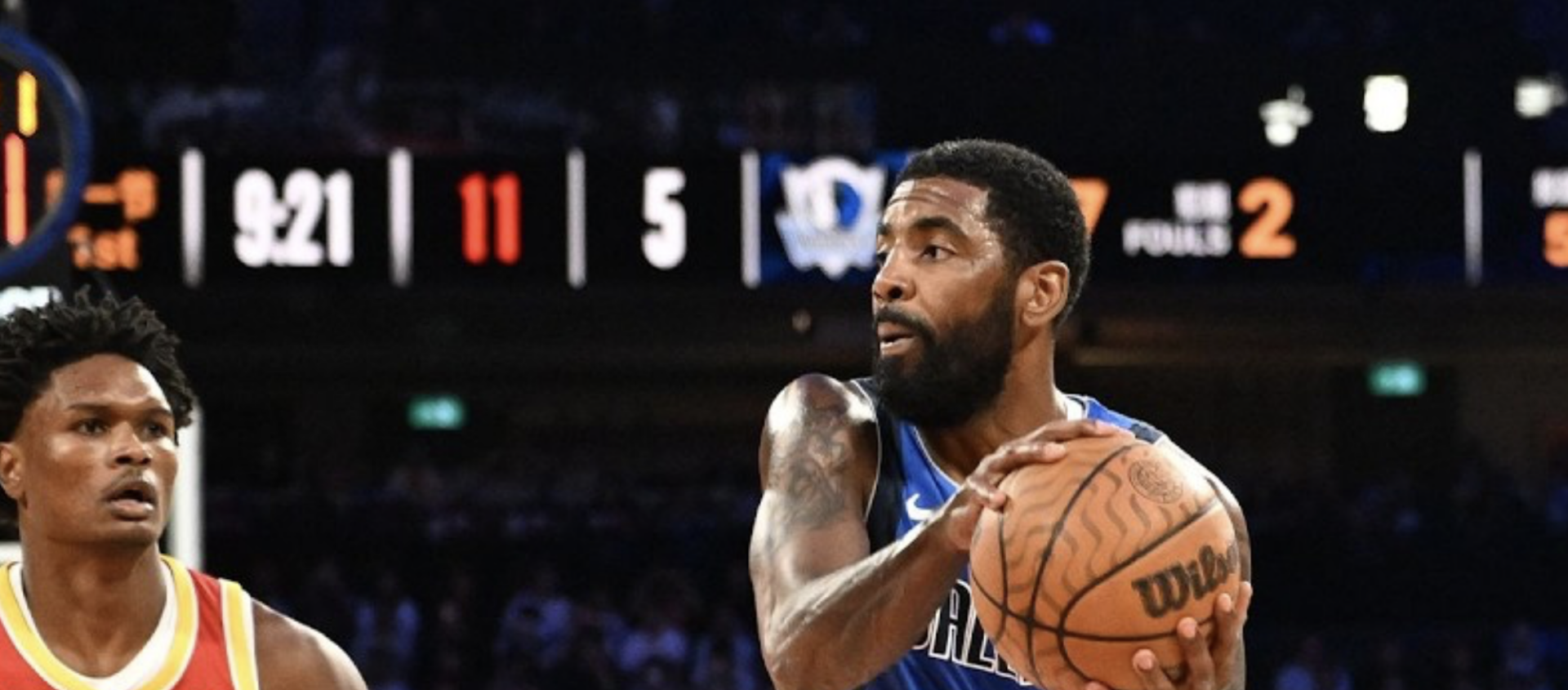
Kyrie Irving has concerns about the evolution of the NBA, the influence of social media and sports betting, and the pressure players face today. In the pursuit of greater efficiency and commercial success, is the league losing some of the magic that made the game special?


Kyrie Irving is not someone you would necessarily agree with on everything. This time, however, his concerns about the modern NBA deserve a closer look.
The 34-year-old guard spoke to reporters after a Dallas Mavericks practice about the changes he has witnessed since 2011, when he entered the league as the No. 1 overall pick in the Draft.
“This is not the same NBA I fell in love with as a kid,” he admitted, referring to the rise of social media and sports betting.
His comments were more than a simple expression of nostalgia. Irving acknowledged that the game is evolving, without necessarily viewing that evolution as a bad thing. What concerns him is the environment in which players are now expected to compete.
“The game has changed. It has become less human, more robotic,” he said.
And just like that, he raised a question that goes beyond the basketball court: Along with everything the NBA has gained in recent years, is it also at risk of losing some of its soul?
When the Game Becomes Content
Every possession can go viral, every mistake can trigger online criticism, and every poor performance can become the subject of endless debate. Players are no longer judged solely on what they do on the court. They are constantly exposed to an audience that comments on their every move.
At the same time, sports betting has changed the way a portion of the fanbase watches games. A player’s points, rebounds and assists can sometimes become more important than the final result or the actual flow of a game.
Irving also highlighted the difference between today’s environment and the early years of his career. As he explained, in 2011 there were not the same constant updates and discussions surrounding sports betting, while mental health remained a subject rarely addressed openly.
The NBA’s commercial growth and digital presence have undoubtedly brought the league closer to millions of people. The problem begins when the game is treated exclusively as content to be consumed, and the athlete as the permanent star of an endless reality show.
The Pressure That Doesn’t End When the Game Is Over
An NBA player’s daily life is not limited to games and practices. Physical conditioning, countless hours of work and the need to perform consistently at a high level now come alongside constant exposure to the media and social media.
Irving himself described this reality, referring to the demands of the NBA schedule, from weight training to the hours of preparation that the public never sees.
The question he raised was revealing:
“I love the game and the competition. But do I love all the noise that comes with it?”
The distinction matters. Loving the sport itself is one thing; accepting everything that has been added around it is another.
Players are constantly expected to manage their image, deal with criticism and meet the demands of an environment that never stops when the game ends.
Why Irving Doesn’t See Himself Playing Until He’s 42
These thoughts are also directly connected to his future.
Irving made it clear that he does not envision himself playing in the NBA until the age of 42 or 43, like LeBron James. That, of course, does not mean he is planning to retire anytime soon.
“Basketball is an eternal flame,” he said, explaining that he intends to remain connected to the game even after his professional career comes to an end.
Still, he admitted that his evolution as a person matters more to him than his development exclusively as a basketball player.
Irving recognizes the longevity and careers of players such as LeBron James, Stephen Curry, Kevin Durant and James Harden, whom he looked up to for years as older brothers. However, he does not believe he needs to follow the same path.
That is an interesting dimension of the discussion: success is not necessarily measured by how long someone remains at the highest level, but also by how they choose to live the years that follow.
Does the NBA Need to Rediscover Its Magic?
Every generation tends to romanticize the basketball it grew up watching.
Today’s NBA features elite players, extraordinary talent and a level of competition that is difficult to question. We do not need to return to the past to enjoy the sport.
What is worth asking, however, is whether the pursuit of making everything more measurable, commercial and efficient is limiting the space for the human side of the game.
Perhaps Irving is not right about everything. After all, he is not claiming that every change is bad. He is pointing out, though, that loving basketball is one thing, while loving the entire environment that has been built around it is another.
And that is the question that remains:
When the packaging becomes just as important as the game itself, are we losing a piece of the magic that made millions of people fall in love with basketball in the first place?