







Partizan barely had time to properly analyze their defeat in Villeurbanne before having to prepare for another road game. In the first half of the Euroleague double-round week, the Black and Whites missed an excellent opportunity to claim their fifth win, letting a game slip away after seemingly taking control early in the fourth quarter. Instead of arriving in Kaunas with five victories and renewed confidence, they now face a considerably tougher opponent.


Friday’s 7 p.m. visit to Žalgiris comes at a time when Joan Peñarroya’s team is still searching for consistency. The victory over Crvena Zvezda in the Belgrade derby showed how difficult Partizan can be when their aggressive defense works and their guards are playing well together. But the loss to ASVEL exposed how fragile that balance remains and how quickly it can disappear when the opposition raises its intensity.
Partizan led 69-58 with just over six minutes remaining in Villeurbanne and still held a 73-65 advantage with a little more than four minutes to play. ASVEL responded with a 17-2 run as Partizan’s offensive organization completely broke down, eventually winning 82-75. The French side deserved its victory, punishing Partizan’s mistakes through aggressive defense and better control of the paint. What makes the defeat particularly concerning is that Partizan shot an excellent 9-for-18 from three-point range and still lost. They missed nine free throws, committed 13 turnovers and allowed 15 offensive rebounds. Combined with the way they handled the closing minutes, those numbers explain why this missed opportunity was so costly.
The growing pains of a team that underwent significant changes over the summer and made further roster adjustments just days ago with the arrivals of Antonio Reeves and Robert Franks are still evident.
Žalgiris Is Finding Its Rhythm, and Its Strengths Are a Difficult Matchup for Partizan
At first glance, the standings suggest little separation between the two teams. Both Žalgiris and Partizan have four wins and four losses. Tomas Masiulis’ team recently defeated ASVEL 105-85 before claiming an impressive 91-74 road victory over Virtus Bologna. Those two wins, by a combined 37 points, suggest that Žalgiris is beginning to play closer to the level expected from a roster built to compete for a direct playoff spot.
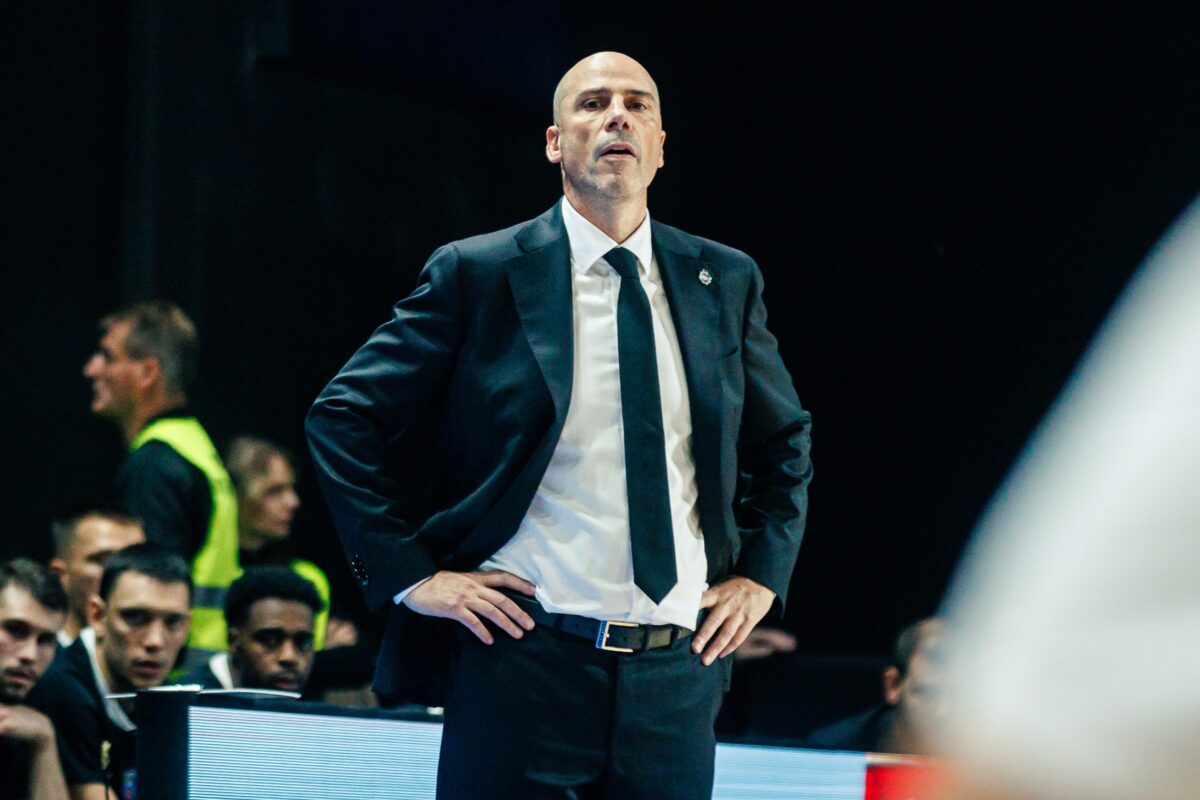
Peñarroya understands the challenge awaiting his players but emphasized that Partizan must move on to their next opponent and correct what went wrong in the closing minutes against ASVEL.
“Different game, different team, different players. They have several excellent players: Evans, Valančiūnas, Tubelis, Sleva. They’re an experienced team. It’s not easy to play in Kaunas because of the atmosphere. We have to be better. Yesterday, we played poorly in the last four or five minutes, but that’s basketball. We’ve analyzed everything, and tomorrow we have another chance to compete”, the Partizan coach said.
Jonas Valančiūnas returned to European basketball after a lengthy NBA career, while Carsen Edwards, Sterling Brown and Saben Lee also joined the club. Žalgiris also has a strong Lithuanian core featuring Edgaras Ulanovas, Marius Grigonis, Arnas Butkevičius and Ąžuolas Tubelis.
Žalgiris averages 39.4 rebounds per game, including an impressive 13.5 on the offensive glass. Partizan averages 34.1 rebounds, with 10.4 coming at the offensive end. That gap of more than five rebounds per game becomes particularly significant considering how much Partizan struggled to secure defensive rebounds against ASVEL.
In Bologna, Valančiūnas and Tubelis combined for 22 rebounds, grabbing 11 apiece. Žalgiris finished with 45 rebounds as its dominance on the glass helped the Lithuanian side gradually take control after a slow start. Valančiūnas currently leads the Euroleague in rebounding at 8.1 per game. He also averages 11.6 points and an 18.6 performance index rating. Those numbers are especially impressive considering that he plays just over 20 minutes per game. With 11.4 points and six rebounds per game, including 2.4 offensive boards, Tubelis poses a constant threat, particularly when opponents have to devote extra attention to Valančiūnas.
Hayes’ Athleticism Against Valančiūnas’ Experience
Partizan will have to deal with that frontcourt combination without the injuredTonye Jekiri. Kevarrius Hayes will likely carry most of the responsibility in direct matchups with Valančiūnas. Hayes has the mobility and explosiveness to make life difficult for the Lithuanian big man, particularly when the action moves away from the basket. Valančiūnas, however, has years of experience, knows how to establish position in the post and can punish physically overmatched defenders. His advantage becomes particularly pronounced when he establishes deep post position.
Peñarroya highlighted precisely that area, identifying low-post defense and rebounding as two important priorities for his team.
“There are no surprises. We have to play well, stop their low-post offense, especially Valančiūnas. They’re an excellent rebounding team, so we’ll have to pay attention to that as well. And of course, as in every game, we need to control the pace”.
Partizan will need to make post-entry passes more difficult and then secure the rebound when Valančiūnas manages to get his shot off. Just as important will be Hayes’ ability to keep him from establishing position in the areas where he is most effective. Hayes has ways to respond at the other end. His ability to roll to the basket after setting screens and finish above the rim could cause problems for Valančiūnas, who lacks the lateral quickness of more mobile, athletic centers.
Peñarroya could also turn to Joffrey Lauvergne. The French veteran has yet to find his rhythm, but he has enough experience to compete physically with Valančiūnas. After all, he spent two seasons with Žalgiris, so he knows the club and its environment well. Nikola Tanasković can contribute energy and aggressiveness, although extended one-on-one matchups with Valančiūnas would present a serious physical challenge. Robert Franks could provide additional options at power forward, but he has only just joined the team and is still learning Peñarroya’s system.
Žalgiris is also shooting 42.6 percent from three-point range, compared with Partizan’s 31.5 percent. Every extra defender sent to help against Valančiūnas carries the risk of leaving space for shooters who have been particularly effective at punishing those situations this season.
Sterling Brown Faces Partizan Again
Sterling Brown is one of those shooters, and his appearance on the court will carry particular significance for Partizan. The American left Belgrade this summer after two seasons with the Black and Whites, the second of which was marked by considerable turmoil. Following Željko Obradović’s departure, coaching changes and numerous problems surrounding the club, Brown spoke openly about the mental exhaustion he experienced and the difficulty of maintaining his focus on basketball.
In a September interview with BasketNews, he described how challenging it had been to maintain a professional approach amid constant changes and negativity. Brown opened the season with a good performance against Crvena Zvezda in Belgrade, scoring 10 points and making both of his three-point attempts in a Žalgiris victory. He is currently averaging 11.2 points while shooting an impressive 56.7 percent from beyond the arc.
Alongside him is Carsen Edwards, the team’s leading scorer at 15.6 points per game. The American guard can change the course of a game in just a few possessions, and his ability to shoot off the dribble makes him especially difficult to defend once he finds his rhythm.
Following another hamstring injury setback for Nigel Williams-Goss, who could miss approximately a month according to initial estimates, Žalgiris recalled Keenan Evans from his loan spell with the London Lions. A former fan favorite in Kaunas, Evans averaged 11.8 points and 2.8 assists in the EuroCup early this season, showing that he remains capable of playing at a high level after dealing with serious injuries.
Evans has already made his return to Žalgiris, recording four points, three rebounds and three assists in just over 18 minutes against Virtus Bologna. Masiulis acknowledged that the American is not yet at full strength but said he can currently play around 20 minutes without physical restrictions.
Speaking about Valančiūnas, Peñarroya also stressed that focusing exclusively on stopping the Lithuanian center would be a mistake.
“Yes, Valančiūnas is very important for them. He’s one of the best centers in the Euroleague. As I said, their low-post game through him is very important for Žalgiris. But he’s not the only one who matters. They have Edwards, who’s a great scorer. Sterling played well in the last game, and they have a new point guard in Evans. This is a team fighting for the playoffs, a team that feeds off the atmosphere created by its home fans”.
Who Can Take Some of the Load Off Carlik Jones?
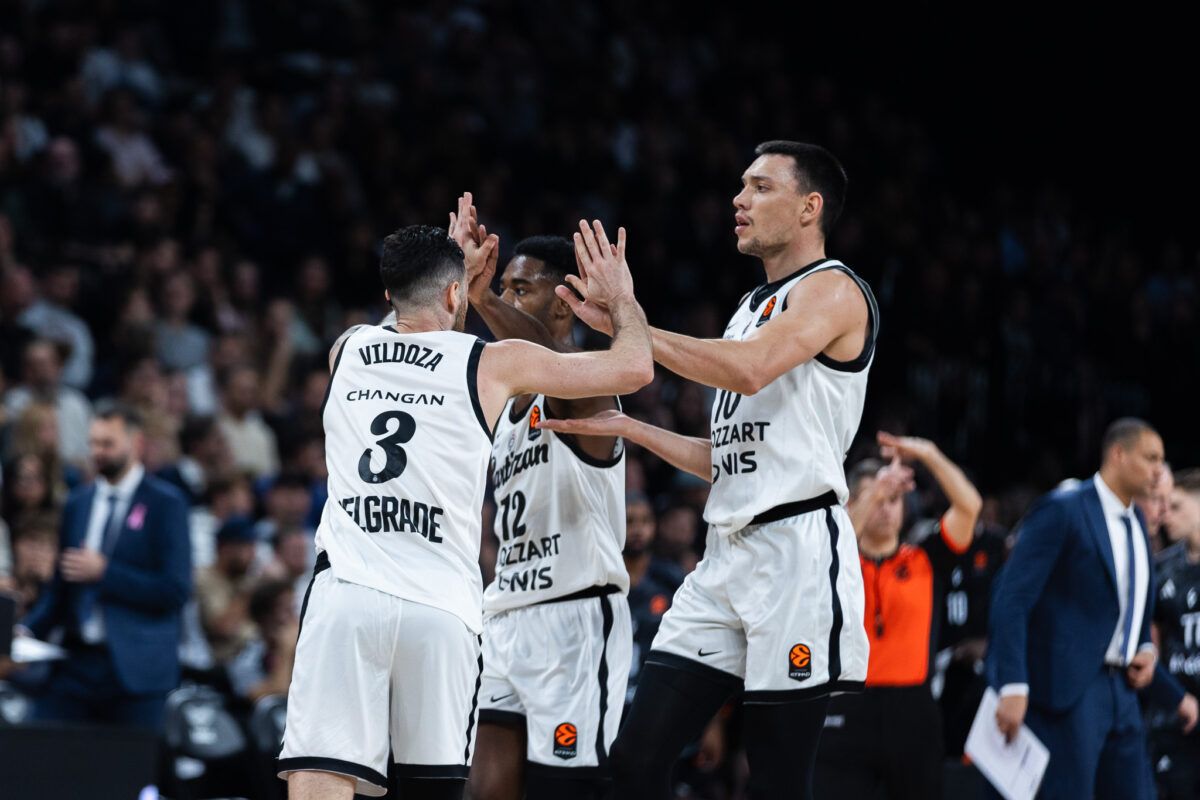
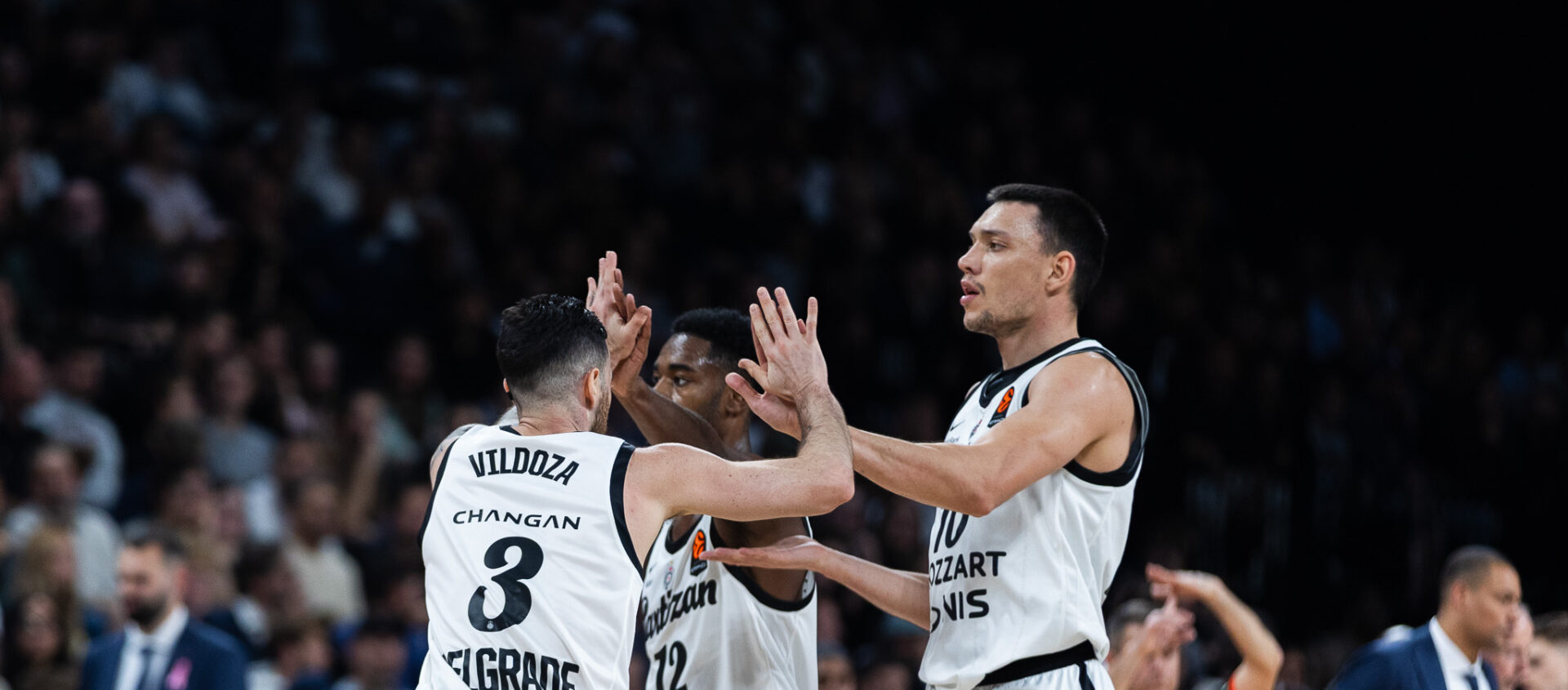
Partizan will need the kind of defensive pressure that Vildoza and Pajola have provided in their best performances this season. Luca Vildoza leads the Euroleague with 2.3 steals per game, while Alessandro Pajola is also among the league’s best in that category. Their ability to disrupt opposing offenses will be particularly important against a team with several talented guards that nevertheless averages more than 14 turnovers per game. But Partizan will also need considerably more offensive production from other players. Carlik Jones ranks second in the Euroleague with 5.8 assists per game. Against ASVEL, however, he delivered one of his weaker performances of the season. He scored just seven points, adding five assists and four turnovers, while Partizan was outscored by 15 points during his minutes on the floor.
Partizan runs much of its offense through Jones, but the team still lacks enough reliable alternatives when opponents manage to contain him. When his ability to organize the offense is disrupted, the Black and Whites often struggle to find a clear next option. Much will depend on Ethan Thompson and Antonio Reeves. Thompson is gradually finding his place in the system, but Partizan needs more consistent offensive production from him. Reeves is only beginning his European career, and it would be unrealistic to expect him to immediately take on major responsibilities. Still, he was brought in precisely because of his scoring ability and capacity to create his own shot.
Their contributions would allow Vildoza and Pajola to devote more energy to their defensive assignments, although both have already demonstrated that they can be highly effective at the offensive end as well. Masiulis specifically highlighted Partizan’s guards, describing the Black and Whites as a disciplined team that occasionally uses almost three primary ball handlers on the floor at the same time.
Kaunas Remembers Last Season’s 41-Point Rout
Playing in front of its home fans last December, Žalgiris crushed Partizan 109-68. It was the second-largest defeat in Partizan’s Euroleague history and a game in which the Lithuanian club set its own competition scoring record. Partizan was coached by Mirko Ocokoljić at the time, during a period of major changes following Željko Obradović’s departure. The team looked completely overmatched, particularly defensively, and Žalgiris punished its mistakes for almost the entire game.
Žalgirio Arena will be sold out for the 45th consecutive Euroleague home game. The support of the home crowd gives another advantage to a team that has made significant progress over its last two outings. Partizan arrives in Kaunas with a depleted rotation, two players who are still adjusting to the system and a defeat that could have been avoided. Their opponent has one of the Euroleague’s best centers and several guards capable of punishing poor switches or late defensive help.
In Villeurbanne, Partizan showed they could take control of a game, but lost when they needed to maintain it. In Kaunas, they will need to do both to come away with a victory.