


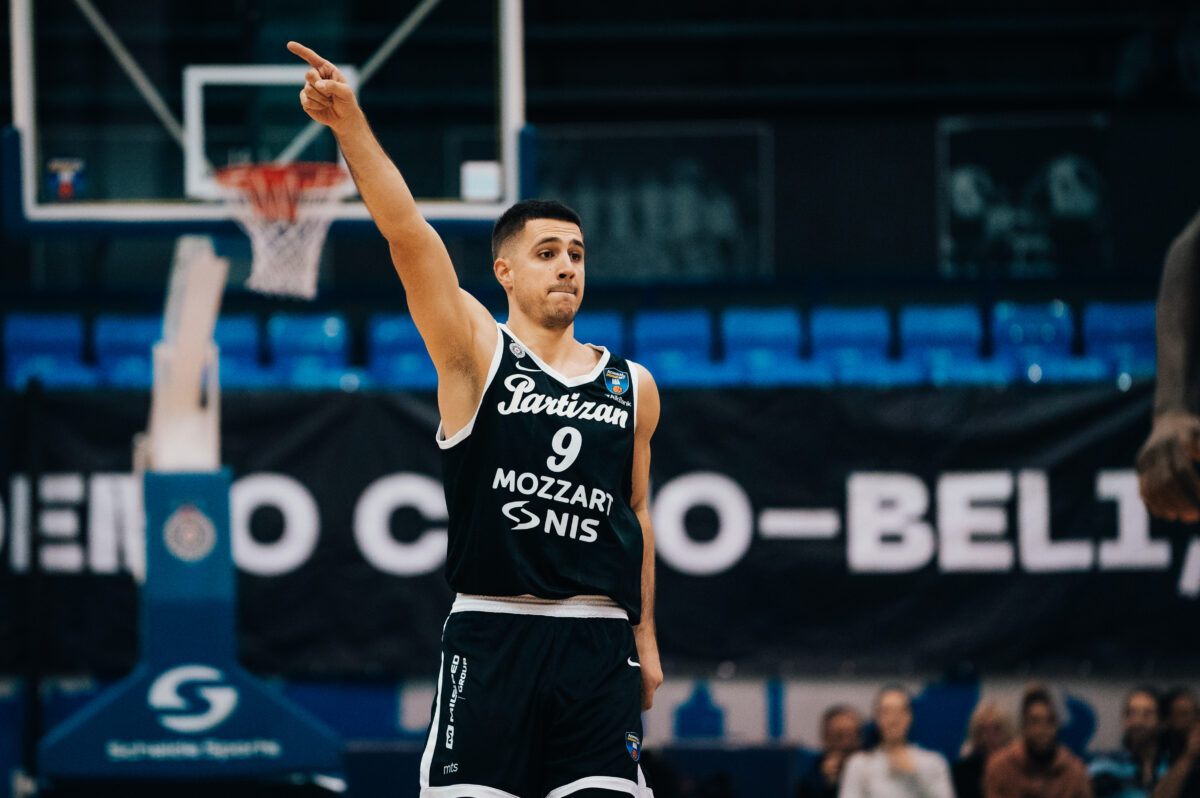










It took until mid-November, with 11 EuroLeague rounds already played, for Partizan to finally reach the point where it could consider its roster complete. Chris Silva’s arrival brought an end to a roster-building process that began in the summer and carried an unusual degree of uncertainty for a club with Partizan’s EuroLeague ambitions. Partizan took a considerable risk, but so far, it hasn’t paid nearly as heavy a price as many had predicted.


However, Joan Peñarroya will not have his full roster available for the game against Valencia, Partizan’s first since completing its roster, as Ethan Thompson, Kevarrius Hayes, and the already sidelined Derek Willis will all be absent.
Partizan Deliberately Chose to Wait
The plan was clear from the beginning. Partizan deliberately left room for additional signings, counting on players becoming available during the NBA’s mid-October roster cuts. There is nothing unusual about that approach in European basketball. Many EuroLeague clubs wait for the final round of NBA cuts, hoping to land higher-quality players, often on more favorable terms than they could secure during the summer.
Partizan, however, took that approach further than most. The team entered the season with several significant holes in its roster, particularly in the frontcourt, where the hierarchy had yet to be established. Tonye Jekiri, Kevarrius Hayes, and Joffrey Lauvergne were all available at center, but there was no clear indication of who would be the first option. The situation at power forward was even more concerning. Derek Willis suffered an injury almost immediately, leaving Nikola Tanasković to shoulder nearly the entire workload at the position. The backcourt also lacked the depth expected of a team looking to compete seriously in the EuroLeague.
Over a relatively short period, Partizan brought in four players, including one temporary addition. Antonio Reeves and Robert Franks arrived first, followed by Chris Silva, while Bandja Sy’s brief stint served mainly to bridge the gap until the roster was completed. Sy had signed a short-term contract, but once Reeves and Franks arrived, there was no longer a place for him.
Franks’ signing is particularly interesting. After months of discussion about waiting for players who failed to secure NBA contracts, Partizan ultimately found its power forward in China. Franks was not among the players released by NBA teams in October. He was a player Partizan could have pursued during the summer. Partizan chose to wait for other opportunities, only to eventually find its solution in a market that had been available to it all along.
Franks’ ability isn’t the issue here. The question is why Partizan waited until the season had already started to make that move, particularly given the problems it had at power forward.
Silva Was Already on Partizan’s Radar
The final addition to that process is Chris Silva, a player who had already been on Partizan’s radar. The club had been interested in him since the beginning of Joan Peñarroya’s tenure, but the center opted to leave AEK for Fenerbahce in early January of this year. Partizan was unable to sign him at the time, although the circumstances have since changed considerably.
Silva never found the role he had presumably hoped for at Fenerbahce. After a modest contribution last season, he was almost entirely out of the rotation at the start of the current campaign. He appeared in just four EuroLeague games, logging slightly more than 23 minutes in total and scoring seven points. An average of fewer than six minutes per game says plenty about how much Šarūnas Jasikevičius was relying on him.
His departure from Fenerbahce finally opened the door for Partizan to sign him. Silva is also a rather unusual center. At just 203 centimeters tall, he is undersized for the position, which presents certain challenges in the EuroLeague. Still, undersized centers have already shown they can succeed at the highest level of European basketball.
In Silva’s case, there is also the question of game rhythm, given how little he played for Fenerbahce over the past few months. And he may not have much time to work his way back into form, with Partizan already having two centers who have carried most of the workload so far.
Jekiri has effectively established himself as Partizan’s starting center during the opening stretch of the season, even though that hierarchy was far from clear when the roster was assembled. Hayes has also played an important role, and both will now have to share their minutes with another player who has been brought in with the expectation of making a significant contribution.
Lauvergne Has Already Lost His EuroLeague Place
For Joffrey Lauvergne, the consequences are already clear. Through the first 11 EuroLeague rounds, it has become fairly clear that the experienced Frenchman can no longer deliver the kind of performances Partizan had hoped to get from him at this level. His role was already limited, and Partizan has now removed him from its list of registered EuroLeague players, with Silva taking his place.
The logical next step would be for Lauvergne to take on a larger role in the ABA League, where he could receive more playing time and remain part of the rotation. Partizan has already adopted a similar approach with Kyle Allman, who currently plays primarily in the regional competition. His EuroLeague role is very limited, while the ABA League allows him to maintain his game rhythm.
When Partizan decided to delay certain signings during the summer, there was considerable skepticism among its supporters. The roster construction drew plenty of criticism, with many predicting that the lack of depth would cost the team dearly once EuroLeague competition began. Those concerns were hardly unreasonable, especially considering how demanding the competition is and the obvious weaknesses Partizan carried into the season at several positions.
Yet the team’s results so far have shown that the worst predictions have not materialized. Considering the circumstances, Partizan has produced a perfectly respectable record, even though the roster was still being assembled throughout the opening stretch of the season.
Peñarroya Had to Build While the Season Was Already Underway
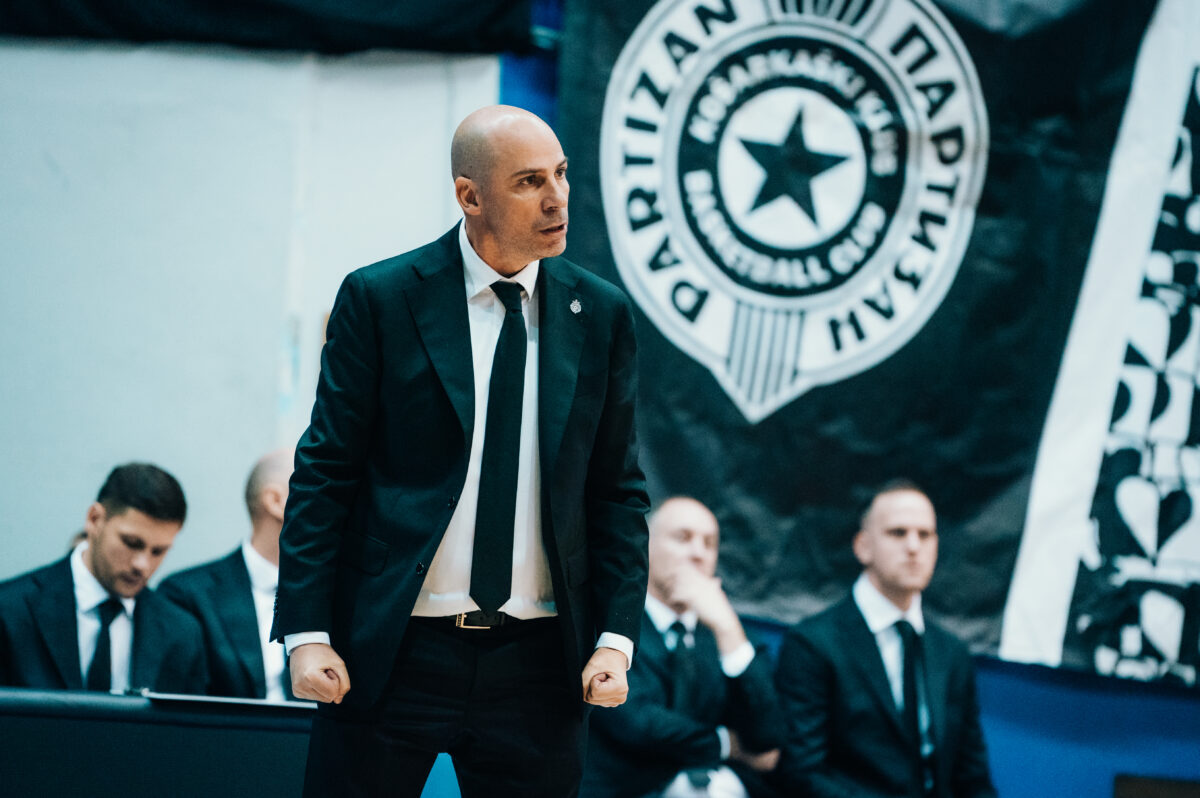
Joan Peñarroya deserves much of the credit for that. The Spanish coach had to prepare for and manage games knowing that the group of players at his disposal would continue to change. He had to keep Partizan competitive while adjusting players’ roles, all under constant criticism and pressure. Beyond the problems with roster depth, he was also trying to change the way the team had been playing.
Over the past several months, the Spanish coach has essentially been dismantling parts of the structure Željko Obradović had put in place, attempting to build a team around his own basketball ideas using both the players he inherited and those signed afterward. That kind of work takes time even when a roster is complete at the start of training camp. In Partizan’s case, the challenge was greater because some players arrived well after the season was underway.
Peñarroya can now plan around a settled roster, bolstered by captain Vanja Marinković’s return from a serious injury, without constantly waiting for another signing or having to adjust his rotation every time a new player arrives. While the roster was incomplete, some of Partizan’s shortcomings could at least partly be attributed to the coaching staff’s limited options. With Silva’s arrival, that particular explanation carries less weight. Peñarroya now has the personnel to establish a clearer hierarchy, especially in the frontcourt, where the team has faced most of its problems over the past few months.
Avoiding Serious Damage Does Not Mean the Gamble Was Optimal
Still, Partizan’s respectable results so far do not automatically mean that waiting through the summer was the best possible strategy. The club knowingly accepted the risk and managed to avoid serious damage to its results, but it also lost valuable time that could have been spent developing chemistry with a complete roster. That was particularly important for a new coach trying to implement his own ideas.
With Silva now in the rotation, Peñarroya has to determine how to distribute minutes among the players who have already carried much of the workload. Jekiri earned the starting center role during the fall, and Hayes has shown that he can be an important part of the rotation. Peñarroya must now decide how Silva fits alongside them and how much his arrival should change the hierarchy he has established over the first 11 rounds.
After so much waiting and so many changes, Partizan can finally settle these questions on the court rather than in the transfer market.