



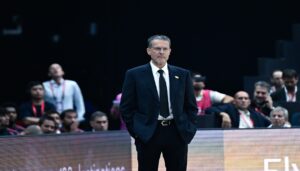

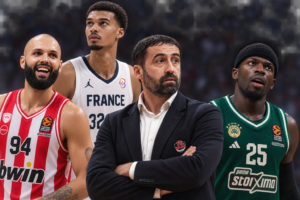


When a journalist starts writing a farewell piece about Svetislav Pešić, caution is required.


Knowing him, he could wake up tomorrow and sign a two-year deal with a EuroLeague club. That is how much he loves basketball. That is how deeply basketball is woven into his life.
Pešić turns 77 in August. He has spent more than six decades in the game.

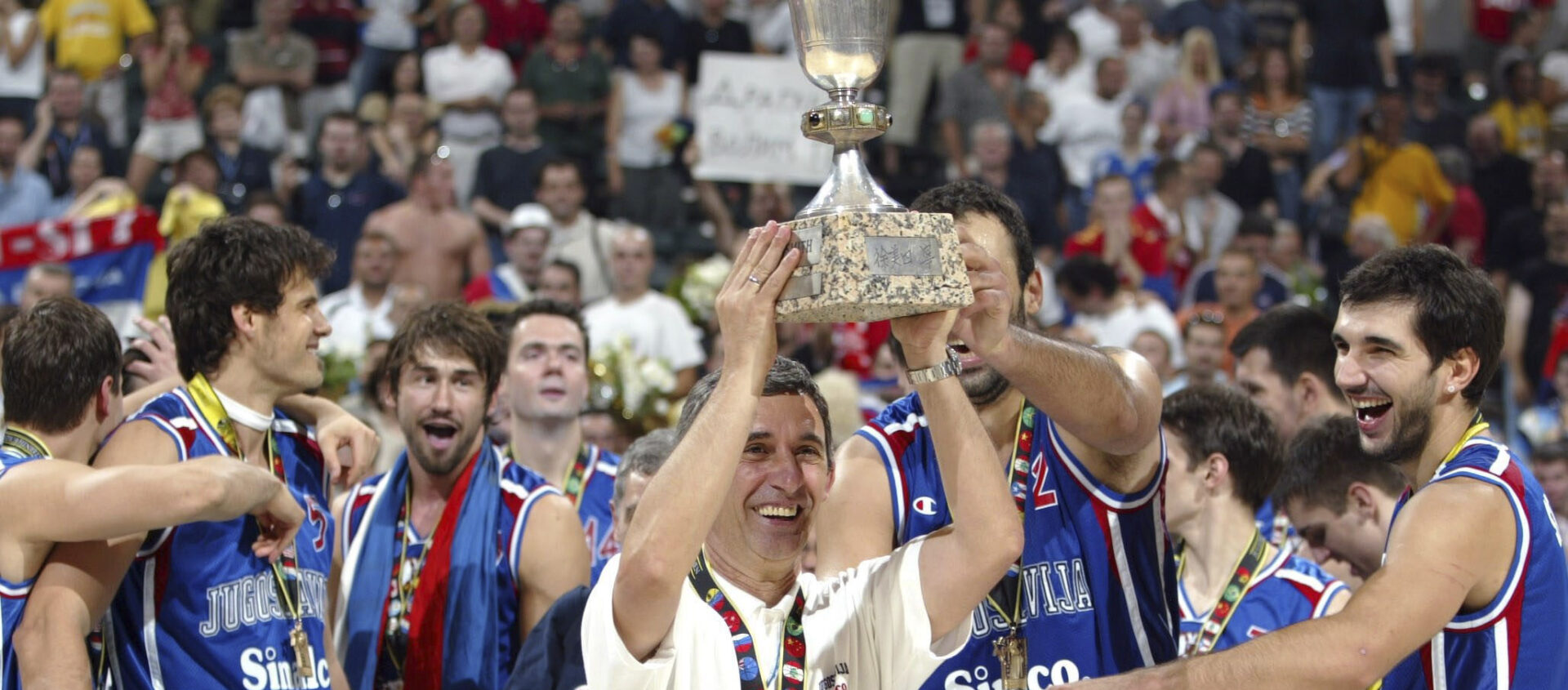
He won the Euroleague as both a player and a coach. He became a European and World champion with Yugoslavia. He transformed clubs, developed generations of players and left his mark on basketball across several countries.
Listing every trophy would take far too long.
Besides, Pešić’s legacy cannot be measured solely by silverware.
It is measured by the players he shaped, the teams he transformed and his willingness to speak honestly about what he believed was right and wrong in the game.
Longevity
Pešić landed his first head coaching job with Bosna in 1982.
At the time, there was no three-point line in FIBA basketball. The shot clock still lasted 30 seconds. It would not be reduced to 24 until 2000.
And those are only the rule changes.
The game itself changed beyond recognition. Basketball became faster. Players became stronger. Seasons became longer. Coaches were asked to do far more than simply coach.
A new generation arrived, and the old Yugoslav model built exclusively on discipline and authority had to evolve.
Many coaches disappeared with time. Others stubbornly refused to change. Pešić never abandoned the core of his philosophy. Hard work and physical preparation always remained central. More importantly, he understood people.
He knew how to push them, how to challenge them and how to earn their trust. After all, who else could convince Vlade Divac to come back and play at the 2002 World Championship in Indianapolis?
When Pešić returned to coach Serbia in 2022, one of the most common reactions among fans was simple:
“At least he’ll convince Jokić to play.”
We all saw what happened next.
Before the World Knew Their Names
In 2009, Crvena zvezda signed a little-known prospect from Austria named Nemanja Bjelica.
In his first game, he never left the bench. It did not take long for Pešić to see what others had missed.
He handed Bjelica the keys to the offense and turned a 209-centimeter forward into a playmaker.
“I have to thank coach Svetislav Pešić because at Crvena zvezda he made me play point guard. It was a huge opportunity and it made it much easier for me later in my career to create from the power-forward position,” Bjelica once said.
Bjelica would go on to become a EuroLeague MVP, one of Serbia’s most important national-team players and an NBA veteran.
Developing young players was always one of Pešić’s greatest passions.
One summer stands above all others. In 1987, Yugoslavia’s junior national team won the World Championship. Take a look at the names on that roster: Aleksandar Đorđević, Toni Kukoč, Vlade Divac, Dino Rađa and many others.
Few coaches in basketball history can point to a generation like that and say: “I had them all.”
A documentary was later made about that generation. Its title: 250 Steps. The name comes from the 250 steps players had to climb during training camp on Mount Igman.
At the film’s premiere, even legends like Đorđević and Rađa struggled to hide their emotions.
“They learned not only how to play elite basketball, but also how to train. Nobody likes running stairs, but that is the road to victory. Everyone wants to win trophies. Far fewer are willing to give everything during preparation and practice,” Pešić said.
That philosophy followed him throughout his entire career.
What Players Say About Pešić
Before Yugoslavia’s quarterfinal against the United States at the 2002 World Championship, Igor Rakočević witnessed one of the most memorable team meetings of his life.
“We had a meeting where Kari literally dropped to the floor and started rolling around, shouting: ‘Fight. Die. Leave everything out there.’ I got goosebumps. I’ve never experienced anything like it. It motivated us enormously.”
Another story comes from Marko Kešelj‘s time playing under Pešić in Girona.
“Marc Gasol was struggling with his weight back then. Pešić made him run before every practice in the park next to the arena. Marc would ride his bike to practice and put on puffer jackets, even though it was 40 degrees outside. He was trying to lose weight, he was fighting, but he was young, talented and worthy of respect.
Marc also had a habit of smoking – in the locker room, at dinner, in the hotel, pretty much everywhere we sat down. Then Pešić made a bet with him to see who could go longer without a cigarette, because Pešić himself was still smoking at the time.
They made the bet in front of the entire team.
And who won? Well, as far as I can tell, Pešić still doesn’t smoke today!”
Dino Rađa perhaps summarized Pešić’s impact best in 250 Steps.
“I truly love him. He left a huge mark on my life. It wasn’t only basketball. It was growing up.”
Nikola Jokić offered another perspective in X&O’s Chat:
“I love and respect Kari, especially for how much of himself he gives to basketball. People look at him differently now because of his age. Many players don’t like his system, and that’s normal. Not everyone will. But his belief in himself and his knowledge… whether he talks about his system for twenty minutes or an hour and a half, he never contradicts his own principles. He understands absolutely everything.”
Coming from a three-time NBA MVP, that says plenty.
Games We Will Never Forget
There were too many to count.
Pešić himself once called Serbia’s Olympic semifinal against the United States in Paris his greatest game. Serbia had what many considered the strongest American team ever assembled on the ropes, leading by 15 late in the third quarter.
Players later praised Pešić’s game plan as perfect.
The upset never happened, but the memories remain.
Yet for many Serbian fans, 2001 and 2002 remain the defining years. Yugoslavia stormed through EuroBasket 2001. Only Turkey managed to lose by fewer than ten points.
A year later came Indianapolis. The quarterfinal victory over the United States. The final against Argentina.
Those games became part of Serbia’s sporting identity. And Pešić became inseparable from some of the country’s greatest basketball memories.
There were others.
Chris Welp’s free throws in 1993, when Pešić led Germany to one of the biggest surprises in European basketball history. The 2003 EuroLeague title with Benetton. Barcelona’s triumph with Dejan Bodiroga.
The list goes on.
More Than a Coach
There were countless great games.
But Pešić will be remembered just as much for the way he communicated.
Sharp-minded and always ready for intellectual sparring, usually delivered through language that sounded simple until you thought about it a little longer.
He was ready for a joke. Ready for an argument. Never afraid of journalists. Never afraid of public scrutiny.
Basketball took him around the world, and his press conferences often became a blend of Serbian, German, Spanish and English.
A unique coach.
A unique personality.
A little more than two years ago, Pešić published a book titled My Game, My Journey.
Maybe the coaching chapter is finally coming to an end.
But Kari Pešić without basketball? That is much harder to imagine.
We’ll see you around the game, Coach. Nobody really expects you to stay away for long.