



In previous years, the EuroLeague often had a clear center of power. Sometimes two teams, sometimes three, already looked a step ahead of everyone else in September. It felt as though Final Four spots were reserved in advance for Real Madrid, Olympiacos, Panathinaikos… This season, the picture is different. Panathinaikos, Olympiacos, Real Madrid, Fenerbahçe, Dubai and Hapoel Tel Aviv all have enough quality to see themselves as legitimate title contenders, while several teams behind them are capable of challenging near the top of the standings.


The thing is, every one of those teams comes with a question mark. Panathinaikos may have the most individual quality. Olympiacos are defending champions with most of their core intact. Real have already won the first trophy. Fenerbahçe are loaded on the perimeter with players who know how to decide games. Dubai have built a roster with almost no obvious weakness, while Hapoel have strengthened a team that already had a serious foundation.
And with each of them, there is something worth examining more closely…
Obradović Has to Build the Hierarchy
Panathinaikos are probably the clearest example of how depth can be both an advantage and a problem. Željko Obradović has a roster featuring Kendrick Nunn, Kostas Sloukas, Sylvain Francisco, Jerian Grant, Buddy Hield, Nigel Hayes-Davis, Isaac Bonga, Juancho Hernangómez, Guerschon Yabusele, Dinos Mitoglou, Mathias Lessort and Moustapha Fall. On paper, there is hardly a position where Panathinaikos do not have two high-level options.
The issue is that this team has barely gone through a full preseason together. Since mid-September, Obradović has done a large part of his work with only ten players. Nunn, Hayes-Davis, Fall and Rogkavopoulos were among those who missed part of the preparation period, while injuries complicated things further. Fall underwent meniscus surgery, Hayes-Davis broke a bone in his hand, and there were also hamstring issues. A few days before the start of the season, Obradović spoke about having had only around ten full-team practices.
Once everyone is healthy, Panathinaikos will have to find the right balance between players accustomed to major responsibility. Nunn needs the ball. Sloukas is still the player you trust when a game comes down to a handful of possessions. Francisco is most dangerous when he has freedom to create, while Grant has already shown how much he can contribute without needing a high volume of shots. On the wings, Hayes-Davis, Bonga, Juancho and Yabusele are all players who would command major minutes on most EuroLeague teams. Inside, Obradović also has to find the right balance between Lessort and Fall, whose last two seasons have both been affected by injuries.
Obradović will have to establish a hierarchy among six or seven major names that can still function when someone gets 15 fewer minutes than expected or goes three straight possessions without touching the ball. That is the first real test for this version of Panathinaikos.
Olympiacos Changed the Part of the Team That Defined Their Identity
Olympiacos have a different issue. Georgios Bartzokas kept a large part of the championship core together, led by Sasha Vezenkov, Evan Fournier and Tyler Dorsey. The changes, however, came precisely in the part of the roster that had been central to his system for years.
Thomas Walkup was never the player carrying Olympiacos with scoring. His value was in allowing others to do exactly that. He organized the offense, controlled the pace, defended the opponent’s best perimeter player and usually made the decisions Bartzokas needed. That is why the Olympiacos coach described him as a fundamental part of the team’s tactical identity.
Along with Walkup, Keenan Evans, Shaquielle McKissic, Frank Ntilikina and Giannoulis Larentzakis also left the perimeter rotation, while Moustapha Fall and Alec Peters departed as well. Jean Montero and Codi Miller-McIntyre arrived in the backcourt.
Olympiacos have added more speed, individual creation and pressure on the rim, but they have also changed the nature of their offensive organization. Montero can create something out of a possession that appears dead. Miller-McIntyre wants the ball more, pushes the pace and attacks the paint. Both can give Olympiacos elements the previous version of the team did not always have, but they will also have to show how much of Walkup’s less visible work they can absorb.
Bartzokas is replacing one of the EuroLeague’s most disciplined organizers with guards who depend more on their own reads and creativity. Olympiacos can become more talented with the ball without losing what they have been for years without it. Walkup’s role will not be replaced by one player. His responsibilities will have to be redistributed through the system.
Real Have Already Shown That a New Team Does Not Need Months to Look Coherent
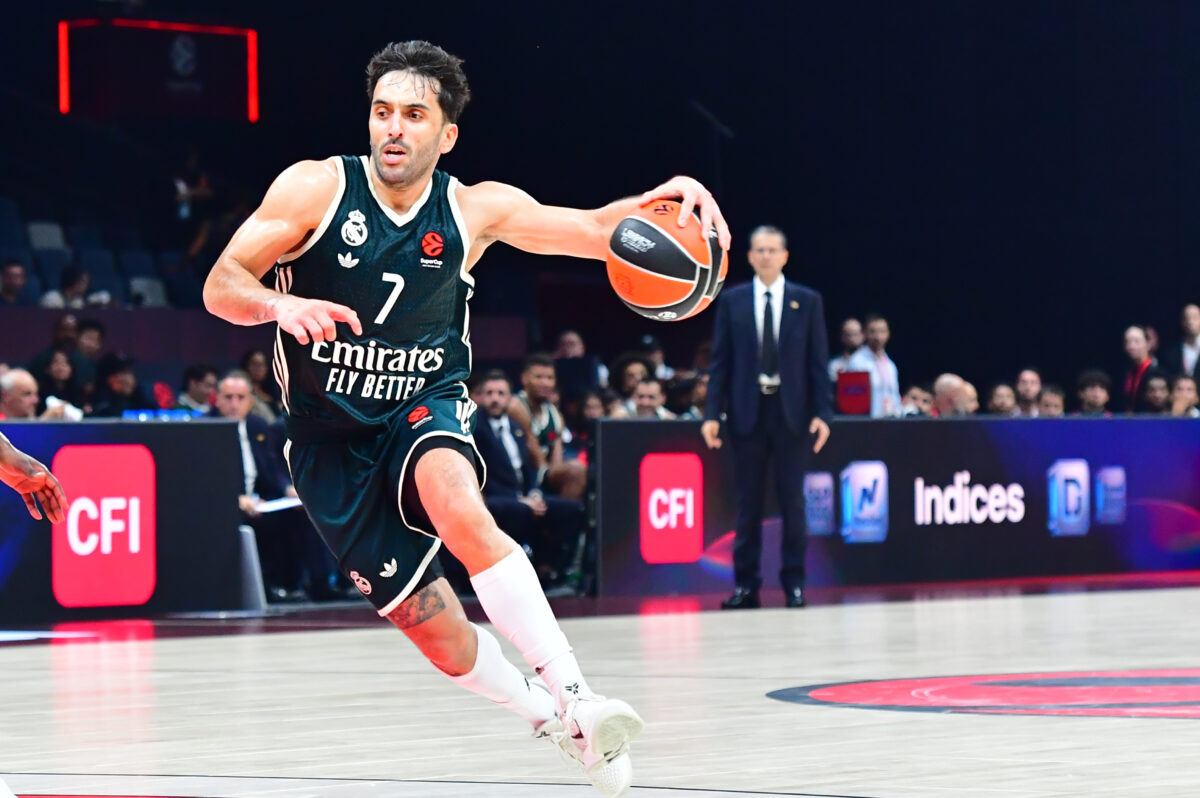
Real Madrid have already provided the first serious argument against the idea that a roster with many new players needs several months to look like a team. Pedro Martínez took over from Sergio Scariolo after a disappointing season. Real needed a reset and quickly changed a major part of their identity. Jaime Pradilla, Timothé Luwawu-Cabarrot, Mikael Jantunen, Maciej Szulga and Olivier Sarr arrived, with Nick Smith added last. Trey Lyles, Omer Yurtseven, Mady Sissoko, Alex Len, David Krämer and, most importantly, Mario Hezonja left.
Real lost their leading star and changed a large part of the rotation, but the new system came together faster than expected. During preseason, the team averaged around 106 points, played at a much faster pace and involved more players offensively before going on to win the EuroLeague Super Cup.
Luwawu-Cabarrot quickly became a good example of Martínez’s approach. He scored 20 points against Dubai and throughout the tournament looked like a player who had not arrived simply to fill out the rotation, but to serve a clear purpose within it. Even at this early stage, Real have shown a collective structure in which new players do not need long to find their place.
Madrid’s question is therefore different from the ones facing the teams in Athens and Piraeus. The new system has already produced a short-term result, but a season with 38 EuroLeague games, the ACB, the cup and the playoffs demands far more than a strong September. Martínez wants to play at a high pace and keep a large number of players involved. That kind of basketball requires freshness, discipline and enough rotation depth to sustain the same intensity into the spring. Real have already shown the idea can work. The real test will come over the course of the season.
Fenerbahçe Have Enough Creators — Maybe Too Many
Fenerbahçe are another team where both the strength and the potential complication are easy to see. Šarūnas Jasikevičius now has Shane Larkin, Wade Baldwin, Shavon Shields, Will Clyburn, Talen Horton-Tucker, Braxton Key and Johnny Juzang on the perimeter. It also matters that Jasikevičius enters the season with a somewhat different philosophy. He has spoken about wanting more players who can make decisions on their own, without every action depending on instructions from the sideline.
Larkin spent years deciding the biggest games for Efes. Baldwin carried similar responsibility for Fenerbahçe. Shields and Clyburn are used to having the ball when games are decided. Jasikevičius has brought in exactly the kind of players he wanted, but he now has to divide responsibilities among players who have spent much of their careers expecting to be among the first options in winning time.
The other issue is at center. Marcus Bingham, Nicolò Melli and Chris Silva provide mobility and different tactical options, but Fener do not have a classic dominant center with the size to match Nikola Milutinov or Edy Tavares. The Super Cup already showed why that kind of matchup can become a problem.
Fenerbahçe have found ways to build elite defenses without a huge center before. When they won the EuroLeague in 2025, much of the work at that position was handled by the 6-foot-9 Khem Birch. Jasikevičius is not going to change his philosophy because of a few unfavorable matchups, but against teams with major size inside, he will have to find ways to hide those missing centimeters.
Dubai Have an Answer for Almost Every Matchup
Dubai, by contrast, have an answer for almost everything. Xavi Pascual has a roster of 18 or 19 players, built specifically so the club would not have to panic and make midseason additions. Thomas Walkup, Élie Okobo, Tornike Shengelia, Jaron Blossomgame and Mamadi Diakite have arrived, joining Džanan Musa, Dwayne Bacon, McKinley Wright, Filip Petrušev and Mfiondu Kabengele.
The roster covers almost every type of matchup. Walkup can organize the team and take the toughest defensive assignment. Bacon can create points for himself in isolation. Okobo and Wright can attack out of pick-and-roll. Kabengele provides vertical spacing and finishing around the rim, Shengelia can play in the post and create out of the short roll, while Musa adds size and shotmaking in different areas of the floor.
Petrušev, for example, will compete for minutes with Shengelia, Kabengele and Diakite. The same applies at other positions. Dubai built a 16-point lead against Real in the Super Cup and still lost in overtime. Walkup had completed only a few practices with the team at that point, which makes it far too early for sweeping conclusions, but the game still showed how much work Pascual has left in defining roles.
Few people will question Dubai’s talent. The more important issue is whether Pascual can turn that versatility on paper into a clear rotation without constantly shifting roles or frustrating players who were used to far more responsibility elsewhere. Dubai have already built the depth they wanted. Now they have to turn it into a functional team.
Hapoel’s Biggest Question Is Not on the Roster
Hapoel Tel Aviv may be the most unusual team in that group of contenders because their biggest unknown is not found on the roster. Dimitris Itoudis has Vasilije Micić, Bryant, Blakeney and Oturu, while the team has added Zach LeDay, Tomáš Satoranský, Jacob Toppin, Max Heidegger and Amir Coffey. The framework of the system already exists, so Itoudis is not starting from scratch.
The bigger issue comes from the circumstances in which Hapoel again have to operate. They will begin the season away from their home arena and play their games in Sofia. In a competition where home-court advantage can often be the difference between sixth and tenth place, spending months without a true home game is not a minor detail. The roster may be good enough to handle that situation, but it is difficult to know in advance how much energy a season without a normal routine, home crowd or real home-court feel will take from the team.
Žalgiris Have Raised Both Their Budget and Expectations
That is roughly where the first group of contenders ends. Right behind them are teams that may not have the same ceiling but are capable of seriously disrupting the hierarchy. Žalgiris have made the biggest financial jump in club history, committing more than €20 million to player salaries alone. Jonas Valančiūnas brings nearly 15 years of NBA experience and a level of physical strength Kaunas has not had in a long time. Sterling Brown, Carsen Edwards and the return of Nigel Williams-Goss raise the overall level, while the Lithuanian core remains intact.
Valančiūnas’ offensive value is fairly clear. The more interesting part will be what happens when opponents pull him away from the paint. The EuroLeague has enough guards who will attack any slower center in pick-and-roll until the defense finds an answer.
Kao Akobundu-Ehiogu brings completely different athleticism and verticality, but this will be his first season at this level. At the same time, Žalgiris enter a season for the first time in a while with pressure that matches their investment. In previous years, they could be a pleasant surprise. Now they are expected to finish in the Top 6, which means a result that once would have been considered a major success can quickly become the minimum.
Efes Have Plenty of Ways to Score, but Who Controls the Last Three Minutes?
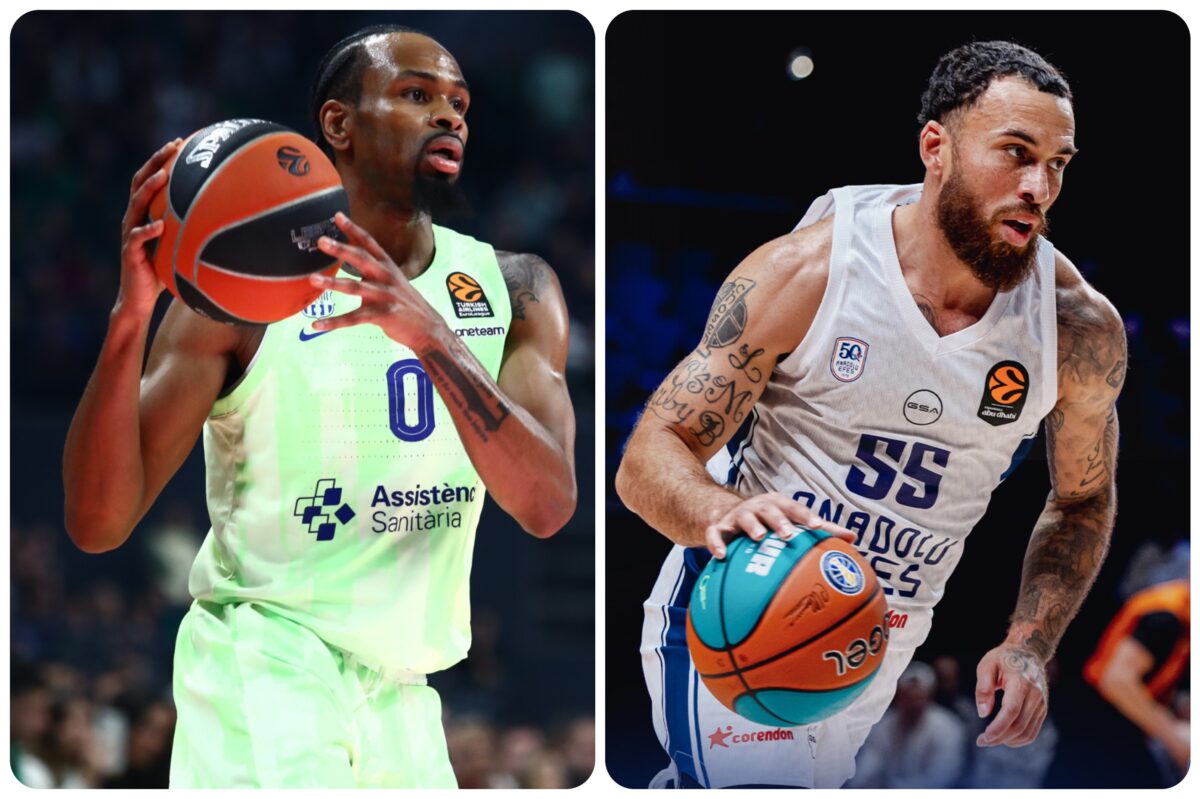
Efes are another serious candidate for that part of the standings. Pablo Laso received renewed trust after a poor season and has effectively changed the face of the team. Shane Larkin, Vincent Poirier, Nick Weiler-Babb, Rolands Šmits, Saben Lee and Rodrigue Beaubois left, while Mike James, Bruno Fernando, Matthew Strazel, Dario Šarić, Santi Yusta, Collin Malcolm and Fats Russell arrived.
Along with Jordan Loyd, Isaïa Cordinier and PJ Dozier, Efes once again have major individual quality on the perimeter. Georgios Papagiannis gives them size inside, Fernando and Kai Jones bring verticality, while Šarić showed during preseason that, after ten years in the NBA, he could become one of the central figures of the team.
Laso, however, faces a challenge similar to several of his colleagues near the top of the EuroLeague. Mike James, Loyd, Dozier, Strazel and Cordinier are all at their best when they get enough touches. The same is true of Šarić, who can hardly be reduced to another player the offense occasionally runs through. Efes have plenty of ways to create points, but they still have to establish who controls the team when a game reaches the final three minutes.
The EuroLeague Has Never Been Harder to Rank in September
That may be the clearest reason why this year’s EuroLeague is so difficult to rank in advance. The number of teams with legitimate Final Four ambitions has never been greater, yet none of them enter the season without an open question. For some, it is role distribution. For others, it is a change in identity, a lack of size inside, health or the circumstances in which the team will have to play. That is why the difference may ultimately come down to the things that are hardest to measure in September: how quickly coaches establish a hierarchy, how well players accept their roles and how healthy the best teams remain once the season reaches the point when it truly begins to be decided.