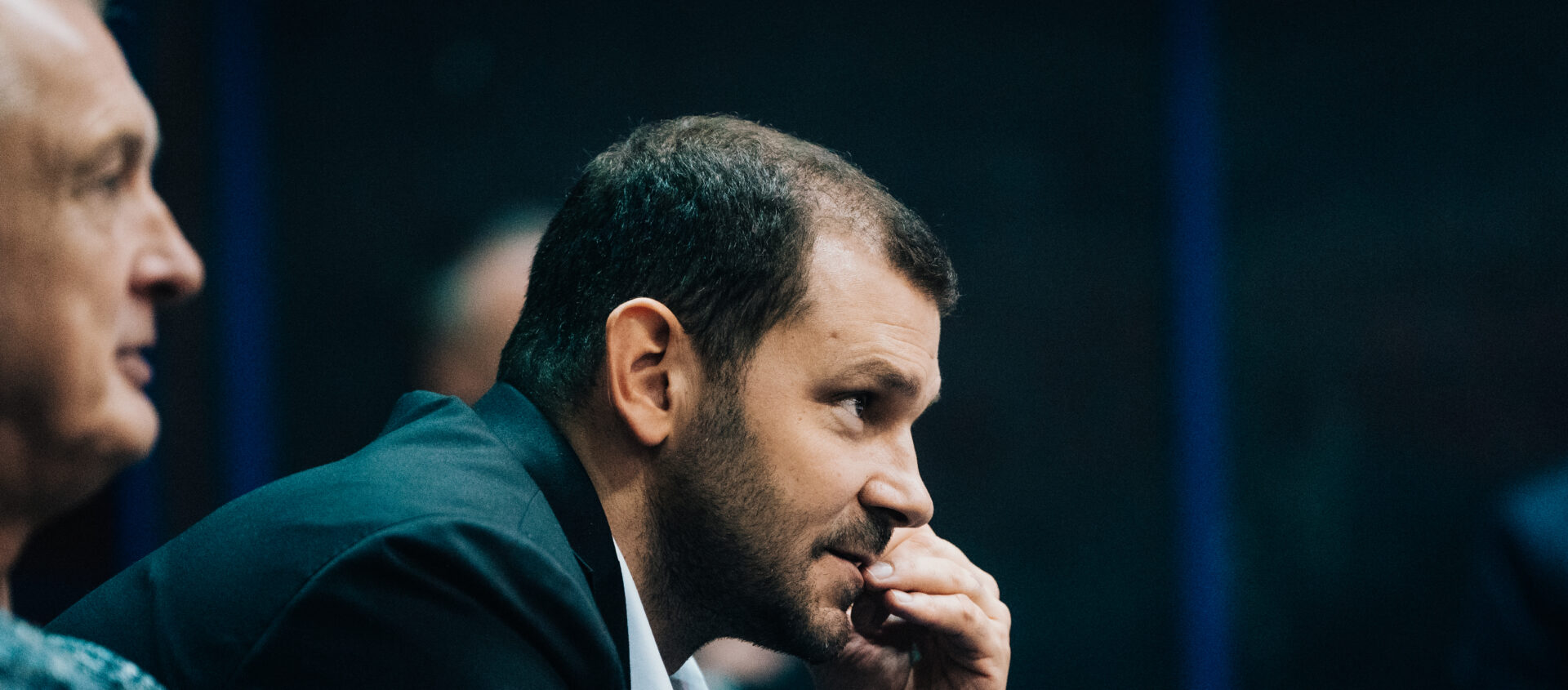

Željko Obradović’s departure left Partizan facing a difficult period of transition, with the club now working to rebuild its team and strengthen its position in the Euroleague. Speaking on the “Mozzart Sport 4×10 podcast” in Belgrade, director of basketball operations Vladimir Micov discusses the challenges of assembling a competitive roster, the circumstances surrounding Jabari Parker’s departure and the club’s ambitions for the season. He also addresses the uncertainty over state funding and the increasingly expensive battle for Partizan’s long-term future in the Euroleague.


It hasn’t been that long since you retired, but we can agree that European basketball has changed considerably over the past decade or so. Has the profile of players changed as well, along with their importance relative to coaches and the team? Has the Euroleague become a players’ league, like the NBA? How much harder is it today to approach a player and bring out the best in him through conversation?
“It has definitely changed. First of all, the number of games has changed. For example, when I was at CSKA, we played 31 games, including the final at the Final Four. Now you have many more than that in the regular season alone, and then you add the playoffs, the Final Four and the domestic championship, where there are also plenty of teams. In my last year in Milan, I played 96 official games.
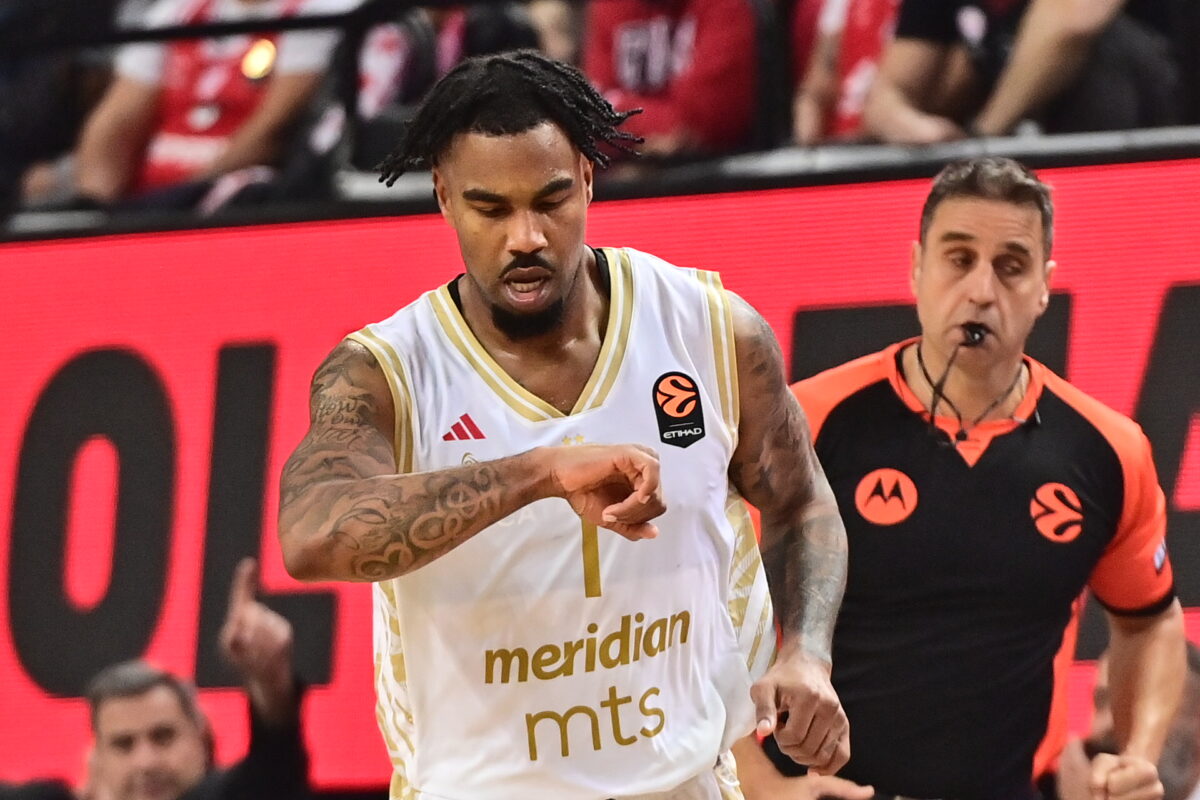
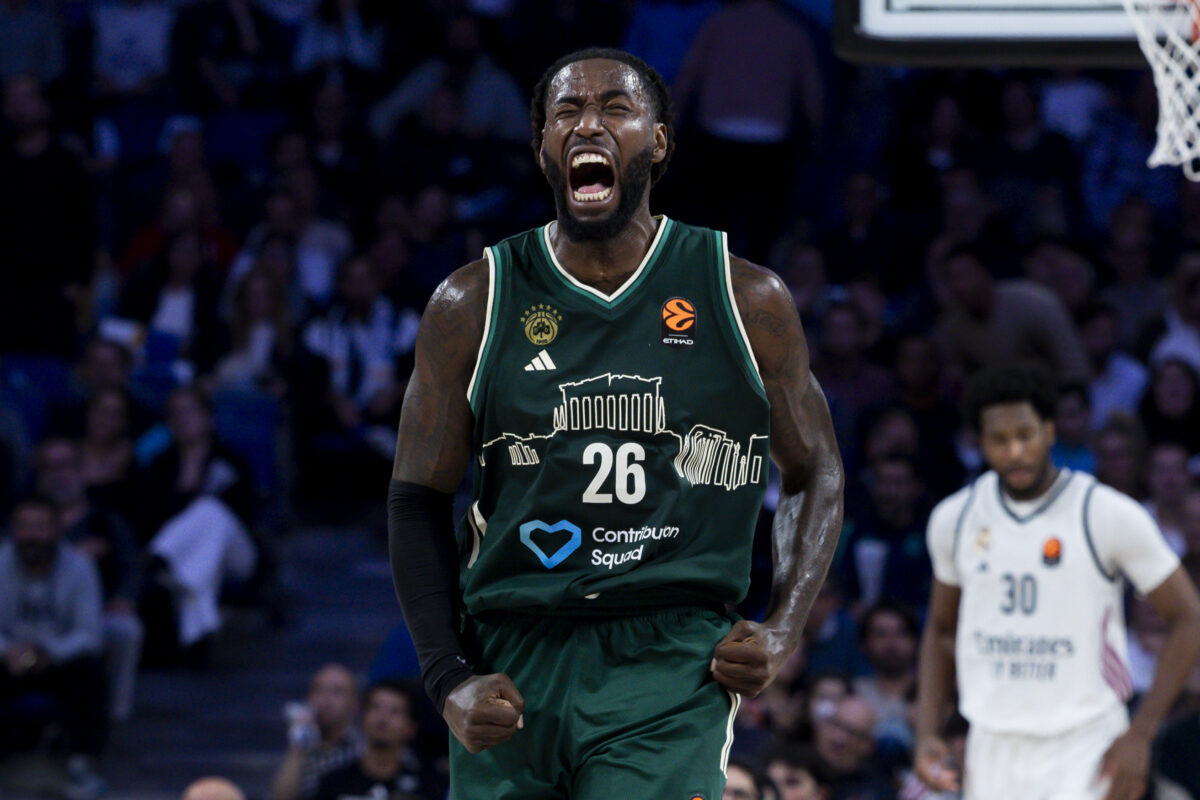
As for the players, there are far more Americans and basketball has become much faster. We often wait for players to be released by NBA teams, players coming from the G League or those who have had the chance to play a few NBA games. When they arrive in Europe, they practically don’t even know where Europe is, where Serbia is, or who Partizan and Zvezda are. They need a serious adjustment period — they have to get used to us, and we have to get used to them.
Talking to them, I’ve realised that many genuinely don’t know who we are. Look, I had a bit of a Euroleague career myself, and they know nothing about it. These are new generations. Whatever you tell them, sometimes their reaction is along the lines of, ‘Who are you, anyway? I’m going to be better than you.’ I had those kinds of problems even with younger players at Metalac. They probably don’t know who we are or what we’ve done either. Maybe their parents tell them something, and only then do they realise that the advice or criticism is coming from someone who has been through certain things and has earned the right to say it. So much has changed”.
Rebuilding Partizan after Željko Obradović’s departure
If we leave money aside, what are negotiations like with players who would be coming to Europe for the first time? How do you persuade them to choose Partizan? We know the club had trouble signing certain players this summer, including Armoni Brooks and Wendell Moore, who was reportedly virtually signed before ending up at Virtus. What was the summer like, and what arguments do you use when approaching those players?
“Over the summer, we were dealing with the situation created by Željko’s departure, followed by Peñarroya’s arrival and the decision to let several players go, in order to clear out the roster and change the poor atmosphere that existed at the time. I see it as a kind of recovery after some difficult situations. Obviously, all of that also affected our ability to attract big players and big names.
Just as we ask around other clubs and agents and try to gather as much information as possible about players, potential signings were obviously making enquiries too and hearing about the situation here. That probably influenced their decisions. It’s possible that some chose other destinations even when Partizan could offer them more money at that moment”.
We have to ask: did the players who left Partizan, or who were released, conduct some kind of negative campaign against the club?
“I’m not sure how to put it. I joined the club at the start of this season. Until then, of course, I had been reading and following what was happening. I have my own information, I know people and I communicate with them, but I wouldn’t get into those details. Just as we make enquiries when we want to sign a player, players talk among themselves too. There were certainly contacts and questions. That’s always the case. There will always be satisfied and dissatisfied players. Everyone has their own views and way of thinking. Did that have an impact? Probably”.
How much of an impact? Was anyone saying, for example, that Partizan was unstable?
“I don’t know that specifically; I can only speculate. One person will say one thing, someone else another. I’ve always said something that relates to this: as a player, you can be in the best city in the world, say Barcelona by the sea, or Athens. If you’re not playing, everything seems terrible to you — the city, the coach, everything. ‘It’s a disaster, the coach doesn’t like me. What beach? What sea? Everything is awful.’
But if you’re playing, then somewhere like Cantù, a small town of 35,000 people, where we played Euroleague basketball and had an outstanding atmosphere and results, can feel almost like the best city in the world. And your role on the team feels great. I connect all of that to sporting results. If you’re successful, if you’re playing and feel the team is using you in the right way, you all grow together, as a team and as a club. There is no bad place to be. But if you’re losing and the coach isn’t putting you on the court for one reason or another, everything bothers you. Then someone calls and asks, ‘What’s it like over there?’ and you say, ‘It’s all bad. The coach is this or that, the team is bad, the atmosphere is bad.’ It’s simply a chain reaction. At least, that’s how I see it”.
Let’s return to recruitment this summer. Some players did eventually arrive. How did that process unfold? There was a sense of impatience among the public over when the signings would come and who they would be.
“There was. I’ve already said several times that I understand both the fans and the public. There’s nothing worse than having an injury right at the start of the season. In our case, Derek Willis got injured in the first game and was then out for six or seven weeks. It’s far from easy. We can’t have a ready-made list in advance and simply say, ‘Right, you’re coming in now.’ And it’s unrealistic to sign players just for the sake of signing someone and satisfying the public. If that player then performs badly, we’ll be the ones to blame again.
That’s why we’re careful in everything we do. After everything that happened over the summer, we’re certainly operating within budget limits too. As for approaching players coming from America for the first time, we try to narrow our list of potential signings as early as possible, establish contact with them, their agents and possibly their clubs, and put ourselves first in line if they’re released by an NBA team. We want Partizan to be top of their list. We want them, somehow, to choose us ahead of Olympiacos, Real Madrid or Fenerbahçe, who might be able to offer two or three times as much money”, Micov said on the “4×10” podcast.
How do you manage that? How much of it is a trade secret?
“It’s not a trade secret. I don’t think I know everything there is to know, far from it. I still consider myself inexperienced in this role. I certainly have a wealth of playing experience. But I don’t think like someone who has come down from an office in some company. I’ve been on the court and played professionally for many years. I have a few tricks of my own when it comes to negotiating, ways of approaching a player and getting a message across.
Of course, the coach is involved too. I’m not a coach, and I can explain to a player, from my perspective, where he’s coming and what role we have in mind for him. But in the end, the coach has to speak to him and explain exactly what he expects, what he’ll work on and how he’ll use him. Then it’s up to the player to adapt to Europe. Most of the players on our list were almost certainly on other clubs’ lists as well”.
Was the idea to find players who would support Carlik Jones and build a team around him? He’s clearly the team’s best player, he’s extended his contract and so much revolves around him. Was that your guiding principle when looking for reinforcements?
“Yes and no. Primarily no, because last season, when Carlik got injured, Partizan started playing badly. Honestly, I’m not in favour of building a team around just one player. God forbid he gets injured with this crazy schedule — then what? Of course, Carlik is virtually the best player at Partizan, or one of the best, but I still maintain that basketball is a team sport and we shouldn’t talk only about individuals.
Of course, when you’re putting a team together, you consider how the pieces will fit. Carlik is a point guard and everyone also has to fit into his game. But at the same time, we think about how the others would respond if he got injured, and whether they can cover several positions. We’re dealing with injuries right now, which means everyone has to step outside their comfort zone and play in different positions. I think it’s a huge advantage to have players who can cover more than one spot”.
We know coaches play an important part in building a roster. How much was this team assembled to Joan Peñarroya’s liking, and how much was decided by the club, with the coach then expected, so to speak, to carry out the plan?
“No, that’s not how it works. The way I see my position, and I’ve told all the coaches this, is that we have to be, as they say in English, on the same page. I’m not here to do things behind the coach’s back, even if my position might allow me to do that.
All the players on Partizan’s radar, mine and Paspalj’s, go through our filter. We watch them and discuss them, and then we sit down with the coach and his staff and consider what’s best in the current situation: who would fit alongside Carlik, who suits the coach’s philosophy and what the team is missing.
Even when we decide on a player, that doesn’t mean we’ll sign him. Because of the situation in America, we often have to wait and see who ends up without an NBA contract. That’s why we might wait a month for someone. Injuries made things more urgent, and understandably the public kept asking, ‘When are the reinforcements finally coming?’ If everyone had been healthy since September, I don’t think that story would have been pushed so much in the newspapers.
There have been cases where we chose a player, but he decided to stay in the NBA, wait for a two-way contract or go to the G League, because many still believe they’re better off staying in America. They probably want to remain on NBA teams’ radar. So even when we identify someone we think is the best fit for Partizan, that doesn’t necessarily mean we’ll manage to sign him”.
Where does Partizan currently stand in the Euroleague transfer market? Did Željko Obradović’s departure weaken the club’s negotiating position? In previous years, Partizan brought in elite, proven names, players from the starting lineups of Real Madrid, Barcelona and Milan. Now the arrivals are mostly players who have yet to prove themselves at this level, including some coming from the NBA. How difficult was it to build the team this summer?
“I said at the start of the show that Željko’s departure left the club quite badly wounded, for various reasons. He had been here for almost four and a half years. Both the public and the team had grown used to him, and his name was, of course, used in negotiations. When Željko, the most decorated coach in Euroleague history, calls and tells you he wants to coach you, half the job is practically done. Then all that’s left is to discuss money and finances.
His arrival also created an incredible atmosphere among the fans. The Arena was constantly sold out, both in the ABA League and the Euroleague. All of that certainly helped. With Željko and certain players leaving, the club’s reputation was probably damaged to some extent. The club was wounded, and now we’re working on its recovery. That affected our negotiations and our ability to bring in certain big names this summer.
However, we’ve changed our playing philosophy somewhat, and I think we’re playing excellent basketball despite all the injuries we’ve had since the start of the season. It’s a long season, but I think we’re at a very good level right now and we at the club are pleased. I’d say the only real slip-up was the loss to ASVEL in Lyon. In my opinion, everything else was to be expected”.
The players who arrived have found good roles. Above all, there’s Hayes, who might currently be the best defensive center in the Euroleague. Stevens is playing very well, Pajola has surprised many who questioned why Partizan chose him, and there’s Vildoza too. It seems they’re all perhaps playing the best basketball of their careers.
“The team was carefully selected to fit coach Peñarroya’s philosophy. All those players had good roles on their previous teams too, but as we discussed over the summer, none was an especially big name. We’re not talking about a top Euroleague starter, someone who had been to the Final Four, whom Partizan somehow managed to sign.
But as I keep saying, basketball is a team sport. It’s very important that every player feels important on the court, gives his best and that it all fits together within the system so the team plays well. I think we’re showing that. Above all, we’re playing excellent defense, and on offense the ball is moving, players are moving, and everyone knows exactly which position he has to cover and what he needs to do on the court”, Micov said on the “4×10” podcast.
Injuries, financial limitations and the Jabari Parker situation
Is the roster complete?
“We’re always active in the market because the season is long and injuries are, unfortunately, part of sport. It doesn’t happen only to us; other teams have the same problems. But you’re restricted by your budget, and there are also rules governing how many players you can register at a given point.
On one hand, I understand the public, but on the other, I don’t understand why every injury immediately leads to calls for a new signing. It can’t work like that either. What happens when, hopefully, everyone eventually recovers and we have a full squad? Then we have too many players. Of course, I’m in favour of a deep bench, because a schedule like this requires you to balance the Euroleague and ABA League, rest certain players and rotate the roster. But you have to take everything into account”.
We still have to ask a follow-up. Under the current circumstances, does Partizan need another player at any position?
“You mean if everyone is healthy?”
No, as of today, when we know some injuries are less serious and others more serious.
“As of today — yes”.
So you do need another player? At which position — probably power forward or center?
“Yes. Right now we have two injured centers and a power forward who’s coming back, and he’s now approaching the seventh week of his absence”.
How is his recovery progressing?
“Well. Our medical staff are doing a good job, but it’s a specific injury, involving a ligament in the foot that’s constantly under stress. Derek Willis wore a protective boot, so his foot was practically immobilized as if it were in a cast. Now everything has to be brought back into motion and activated, and we hope there won’t be an adverse reaction during recovery. I hope he’ll be back very soon”.
You’ve mentioned financial constraints several times. What exactly do you mean? Has the Jabari Parker situation put a strain on Partizan, or is the budget smaller than last year? Is the club simply unable to pay, say, three million for a player?
“That’s not what I mean. I’m talking about what happened over the summer, and what is still happening now, when we’re waiting for players who might not stay in the NBA. We negotiate and try to be first on their list if they decide to come to Europe, so they choose Partizan. And then a player catches our eye, Barcelona or Olympiacos become interested too, and they offer crazy money. We can’t compete with that.
That’s what I mean when I talk about limitations. I try to explain to the player that he might get more playing time with us, what Partizan’s fans are like, what Serbia is like, and that a season here could help him move to an even bigger club afterwards. I try to show them that it isn’t all about the money straight away, that the money will come. These are young players, after all. At Real Madrid or another major club, they might play less and have a smaller role in the rotation, whereas with us they’d have a bigger role and more minutes. That’s perhaps a different approach, at least in my view.
That’s the sense in which we’re financially limited. If several clubs become interested in the same player, the market often works like an auction. Players are offered around Europe, clubs say they need a power forward, a center or a point guard, and then the bidding begins — who can offer more. We simply can’t compete with certain clubs in that situation”.
How did you eventually resolve situation with Jabari Parker? What was communication like while you were looking for a solution?
“Everything went very well, honestly, without any problems. It did take time, that’s for sure. It was, so to speak, a problem I inherited, and I started dealing with it practically every day. It took a while, but in the end we reached a mutual agreement to terminate his contract without any major problems”.
What does that mutual termination actually mean? I assume you can’t disclose all the details.
“It’s good for both the club and for him. He’s free to look for a new team if he wants to. The club managed to save some money, which was also one of our priorities. That’s the essence of it”.
Was Parker ever considered for this season when he returned from Spain? Was there any point at which he might have been given another chance?
“No. I can only speak with certainty about the period since I joined the club. I inherited that situation, and when I arrived I was told that Parker wasn’t in the plans for this season. And that was that”.
How did he conduct himself during that period?
“Great. Everything went without a single problem. We talked and worked on finding a solution. He and his agents want what’s best for him, which is understandable, and we want what’s best for the club. That’s why it’s called a mutual termination. Both sides sat down at the table. It did take time, but in the end we managed to agree, everyone softened their stance a little, and we came out of it well”.
He must have been eager to play basketball again, too.
“Yes. We’ll see now whether he continues playing”.
Partizan’s ambitions: Euroleague playoffs and the fight for trophies
What is Partizan’s goal in the Euroleague, and what is it in the ABA League? What do you expect from this team within the club, and what result would satisfy you?
“Of course I can speak on behalf of the club, but personally I’ve always aimed for the very top, whether that was realistic, modest or unrealistic. Why? If we, the people running the club, don’t believe in the highest goals, how can I tell the players, ‘Guys, we have to win a trophy’? I can’t bring a player here and tell him, ‘You know, we’re fighting for the playoffs, tenth place or just to avoid relegation.’ No. I’m fighting for a trophy, for a title. I try to instill that in the players and get them to feel that kind of pressure, to believe we can beat anyone. Panathinaikos away, Fenerbahçe away, Real Madrid away. That’s how I thought throughout my playing career and it’s how I think now.
We want every trophy, of course: the ABA League, the Serbian league, the Cup. As for the Euroleague, the idea is certainly to make the playoffs, let’s not fool ourselves. We can’t immediately say we want to win the whole thing; someone would say, ‘Guys, you’re crazy, that’s unrealistic.’ But I think we deserve to be in the playoffs.
There are plenty of teams spending much more. Still, finances aren’t the true measure. Year after year we’ve seen that budgets on paper don’t play games; players do. Right now, I think the playoffs are a realistic target for this team. It’s a long season and injuries disrupt plans a lot, but given the way we’re playing and functioning, I believe we can make the playoffs. I’d love us to get there because I think Partizan deserves it”, Micov said on the “4×10” podcast.
Two players have also arrived directly from America, from the NBA. How satisfied are you with their adjustment? Ethan Thompson has been here longer, while Antonio Reeves has only just arrived. The impression is that Thompson could perhaps have shown more so far, while Reeves has offered glimpses of what could make him a major signing.
“That’s what we’ve been talking about. Every player coming to Europe for the first time needs an adjustment period. In my experience, it’s roughly two or three months. And even after that, nobody can guarantee he’ll succeed. We often say, ‘He’s perfect for Europe, perfect for the Euroleague,’ and then the player arrives and it turns out he can’t find his feet. There have been cases like that. There are no guarantees.
Basketball here is much more physically demanding. The other day, even Patty Mills of ASVEL said that the NBA and European basketball look like two different sports. He had to respond to Gilbert Arenas, who hasn’t even watched the Euroleague on television. That’s why an adjustment period is necessary.
Ethan Thompson has been with us since early September, but he joined the group almost two weeks late because of his national-team commitments. Reeves and Franks have practically only just arrived. Antonio Reeves played a good game against Spartak without having practiced, while Franks played a double-round week without practicing. Now he’s about to play his first game in front of the home fans.
Reeves landed on the day of the derby, came to the game and saw the atmosphere, the flares and everything else. He was shocked. He recorded the whole game, probably out of curiosity, and sent the videos back to America. That’s exactly what we’re talking about. I have to explain to a potential signing where he’s coming and what he can expect. All of that affects these players, and they need time.
I hope we’ve done our job well. I assume we have, that they’ll turn out to be good players and that we’ve got what we needed — more depth and better three-point shooting percentages, which we now have. Yesterday we played a really good game offensively. They’ll certainly need more time, but the main thing is for us to stay healthy. I hope everyone will play the way we expect him to”.
The future of Partizan and Crvena Zvezda: state funding and Euroleague franchises
Your main responsibility is the sporting side, but you’re inside the club, so we have to touch on the situation that has developed in the country. Partizan, like Crvena Zvezda, depends to a significant extent on state funding. There is talk that 30 to 40 percent of both clubs’ budgets comes directly from the state. Is there uncertainty or concern that changing circumstances could create problems with getting through the rest of the season?
“Let me put it this way. As you said, I’m responsible for the sporting side. Of course, I communicate with the people at the top of the club, but that’s more a question for them. From my perspective, yes, there’s certainly some concern, but right now we simply don’t know. We’re in a kind of transitional period and we don’t know what to expect.
What’s particular about this situation is that it’s a year in which both Partizan and Zvezda are negotiating for a Euroleague franchise. As far as I remember, a payment of 12.5 million out of a total of 50 million was supposed to be made in November, but I think that was pushed back to February, if I remember correctly. I wouldn’t want someone to come along now and say, ‘Guys, we don’t want to invest in sport anymore, there’s no more support.’ I wouldn’t even want to imagine that scenario.
It’s certainly not a question for me, but that kind of concern exists because we don’t know what’s coming. Still, sport is the best ambassador, and I don’t think politics should get involved. Yes, both Partizan and Zvezda are state-backed clubs. We’ve received support from the state and, fortunately, we’re still receiving it. To what extent and in what amounts — that’s not a question for me, and I don’t get involved in that side of things”.
Let’s expand on that 50 million for a franchise. You spent many years playing in the Euroleague and represented major clubs such as CSKA, which invested huge amounts of money. Objectively, those investments never paid for themselves in full. Practically nobody in basketball managed to break even. Where does this drive to spend so much in the Euroleague come from? Hapoel, for example, has a budget of 70 million, and I covered one of their games in Botevgrad in front of around 70 spectators. They scored 118 points and played a perfect game, but the stands were almost empty. There are other examples. Clubs are investing far more than before, even though the earlier, smaller investments couldn’t be recouped either. How do you see that change in European basketball, and is it worth paying 50 million for a franchise in the expectation that the money will eventually come back?
“I like to say that, in that sense, the numbers simply don’t add up in basketball, especially when we’re talking about budgets. Football is profitable, and basketball isn’t”.
But that doesn’t stop people from spending enormous amounts of money.
“It’s probably down to great love and support for the sport. I’ve said this before: hats off to anyone putting their own money into basketball. I experienced that situation in my last season with Mr. Bokan, and I told him the same thing. Everyone who invests their own money deserves recognition.
When I was a player, I knew a little about that side of things, but I didn’t get involved. My job was to play. Now I’m behind the scenes, in management, with a position and a role in all this. But even now I don’t want to dig too deeply or ask how much revenue we’re bringing in, how much profit there is or whether it all makes financial sense.
From my perspective, basketball absolutely makes sense. To me, basketball is a much more beautiful and better sport than football. Every possession brings something. Even people who don’t follow sport at all sometimes say basketball is enjoyable because there’s constant action, scoring and something new happening. You can watch 90 minutes of football, on the other hand, have it finish 0-0 and see an ugly game.
Honestly, why would that man from Israel put in 70 million? There is probably a tremendous, perhaps even excessive love for the sport. And surely a desire to win a trophy, to be able to say he was the one who achieved it. But when you invest that much, nobody guarantees you success. Some clubs spent heavily for years and achieved nothing major. Hapoel was practically nowhere on the basketball map before, and now it’s gradually emerging and investing crazy amounts of money. Again, that doesn’t guarantee a title”.
We mentioned Hapoel as just one example. There’s Panathinaikos too, and look at what PAOK is doing now.
“Investing. Now there’s PAOK, then Aris in the EuroCup, potentially Bahçeşehir too… More and more money is coming into basketball”, Micov said on the “4×10” podcast.
PAOK, for example, could pose a threat to Zvezda and Partizan. Figures of more than 100 million for a franchise are being mentioned, and that kind of money is certainly attractive to the Euroleague.
“I don’t like that approach, which people were talking about a few years ago as well. It all looks like a marketplace. Dubai, I think, gets five years, while Partizan and Zvezda get three. Then it’s literally like a market: whoever has more money can pay more. Let’s also look at clubs’ history, their fans and their results.
Now there’s talk of a team from Abu Dhabi too. If they come in as well, what happens then? Depending on the criteria, everything changes completely”.
We’ve reached a point where Maccabi plays in an empty arena, Hapoel does too, and Dubai draws around 3,000 spectators, leaving its arena half-empty. Of course, under normal circumstances Maccabi would play in front of a full house, but even in Tel Aviv, Hapoel had games with about 5,000 people in a 10,000-seat arena. That’s not how a market would normally work. And clubs with huge budgets could seriously threaten the Euroleague futures of Crvena Zvezda and Partizan.
“I agree. But it’s up to the people at the top of our club who handle those matters to use their negotiating skills, backed by assurances from our marketing department, the people investing in basketball and support from the state. We need to be able to compete on equal terms with all of them, to play in the Euroleague and to have the Euroleague choose Partizan and Zvezda as its members”.
Do you think the Euroleague will appreciate what Zvezda and Partizan bring to the competition beyond just money?
“They probably have their own criteria. Of course, money matters in the end too. It depends on how people look at things and which criteria they consider important. From the perspective of our country, I genuinely believe both clubs deserve a place. Look at the 20,000 people in the stands, the serious history, the rivalry, the derby, where Partizan and Zvezda used to be and where they are now. Then look at some of the newer clubs, with no fans, no great history and no trophies. Which criteria carry more weight? I’m not entirely sure everyone looks at these things in the same way”.