




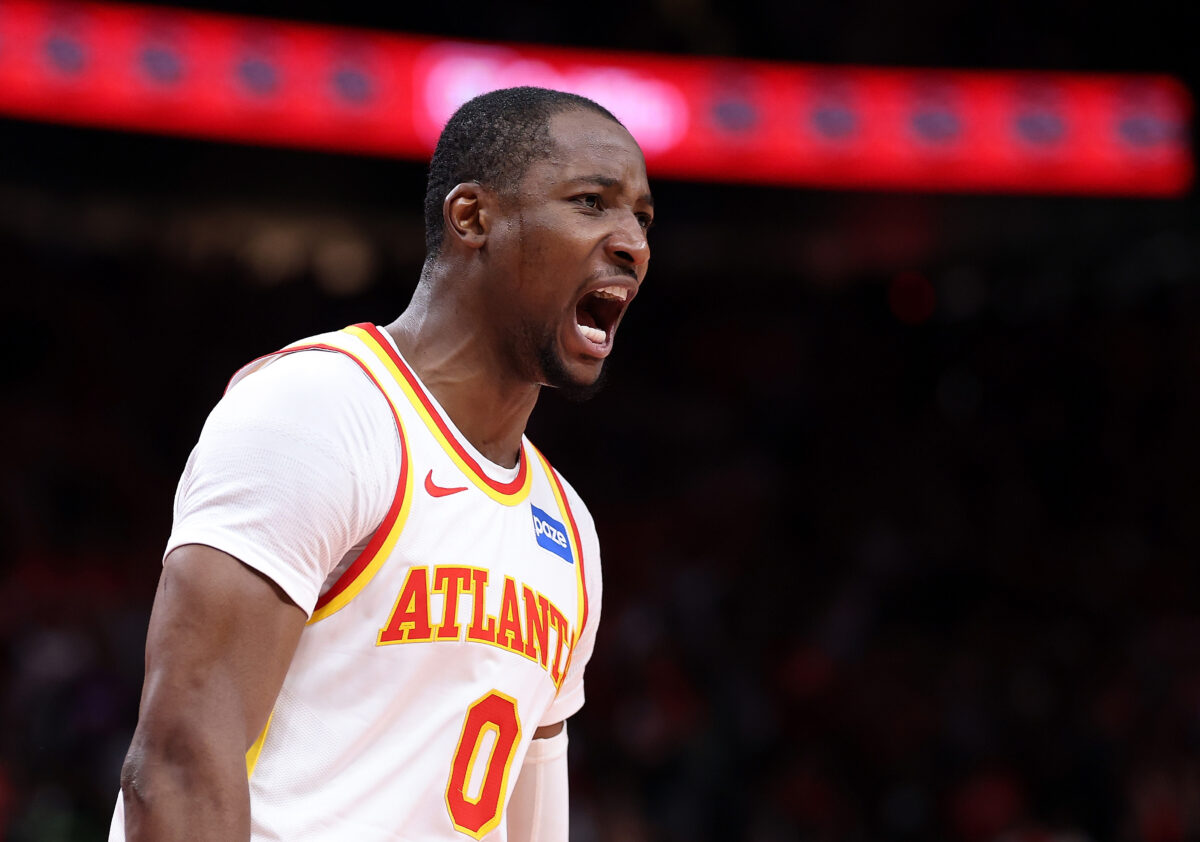









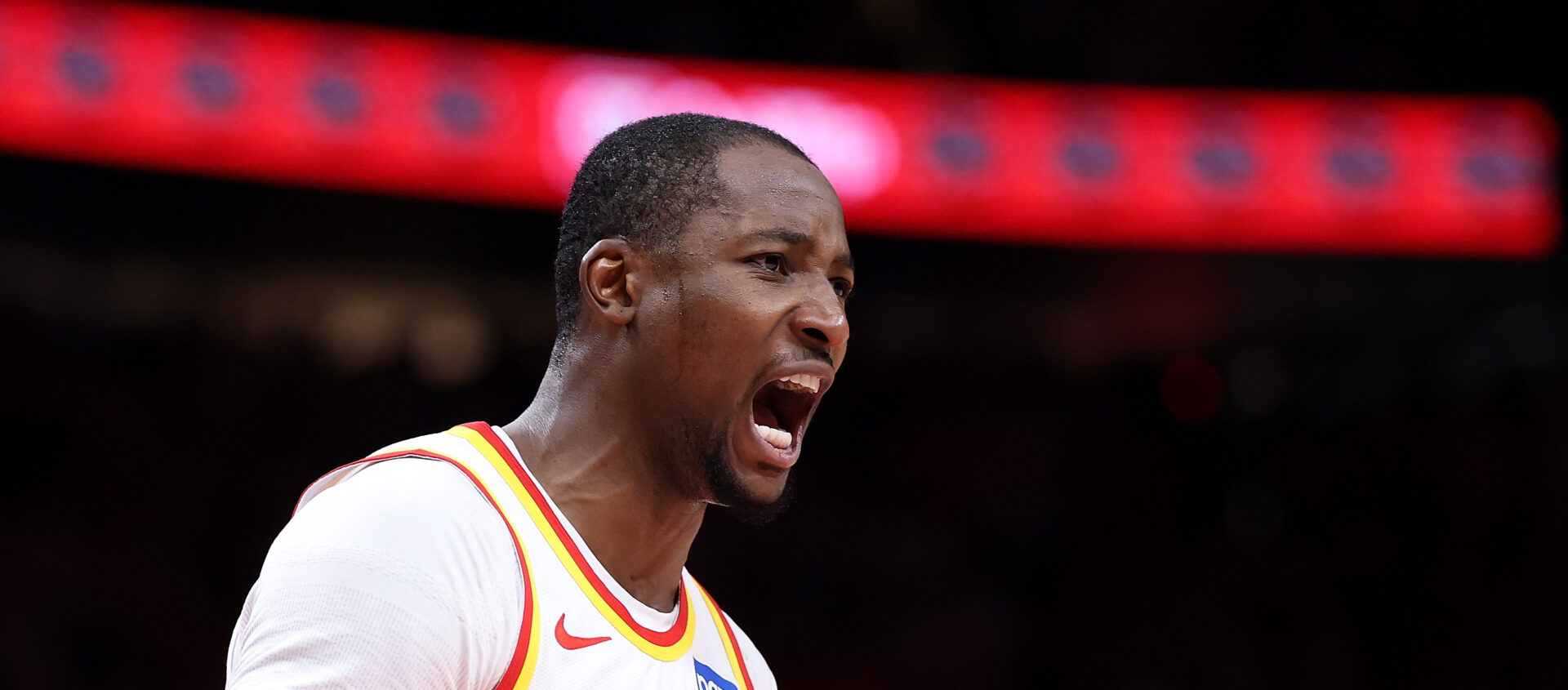

Jonathan Kuminga could have guaranteed himself nearly $50 million over two seasons last summer, and he initially sought a similar amount this summer. Instead, he chose Minnesota for $12.4 million in total, with a player option in the second year of the deal. Between those two figures lies a complicated story about his value around the NBA, but also the Timberwolves’ decision to significantly reshape the team around Anthony Edwards this summer.


From $48 Million Guaranteed to $12.4 Million
Kuminga spent much of 2025 negotiating with Golden State as a restricted free agent. The Warriors offered him three years and $75.2 million, with $48.3 million guaranteed over the first two seasons but a team option in Year 3. There was also a two-year offer worth around $46.8 million, again with the team controlling the second season. He eventually accepted that structure before being traded to Atlanta several months later. The Hawks declined his $24.3 million option in late June, making Kuminga an unrestricted free agent.
There was no shortage of interest. The Los Angeles Lakers were among his most serious suitors, while Chicago and Portland also made offers. According to ESPN, the Lakers were prepared to pay Kuminga more than $12 million annually over three seasons. He chose Minnesota instead, where he will make just over $6 million in the first year.

Kuminga Is Betting on Himself Again
At first glance, the decision is difficult to understand, but the calculation behind it is fairly clear. The second year belongs to Kuminga, meaning he can return to free agency as early as next summer. Rather than take three years of security at the price this market placed on him, he decided to use next season as an opportunity to change that price.
The risk is significant. A year ago, Kuminga was discussing contracts worth more than $20 million per season. Now he will play for a salary closer to that of a quality rotation player than a former No. 7 pick who has yet to turn 24. An injury, a poor season or another year without a clearly defined role could further damage his value. A strong season on a good team, however, would send him back onto the market as a 24-year-old starter with an opportunity to pursue another multiyear contract.
Anthony Edwards Helped Sell Minnesota
Minnesota’s appeal was not only about the money. Anthony Edwards took an active role in the recruitment, and what he presented to Kuminga’s camp as a major selling point was particularly interesting. According to Kuminga’s agent, Aaron Turner, Edwards emphasized the type of defense the Timberwolves want to play. Tim Connelly spoke with Kuminga over dinner in Miami, Chris Finch discussed his role and responsibilities within the team, while LaMelo Ball and Jaden McDaniels also reached out.
Minnesota initially could offer him only the veteran minimum, but then traded Josh Green, who was due $14.7 million, to Utah for Cody Williams and John Konchar. The Wolves then waived Konchar and stretched his $6.2 million salary over three years, lowering the cap charge for this season and creating enough room below the second apron to offer Kuminga the taxpayer mid-level exception worth a little more than $6 million.
The Timberwolves also believed in Kuminga for other reasons. In the 2025 playoff series against Minnesota, he averaged 20.8 points on 54 percent shooting. The people who have now brought him in had already seen firsthand how many problems his combination of strength, speed and rim pressure could create.
LaMelo Ball Was the Move That Changed Everything
The need for that kind of player came directly from everything Minnesota did this summer. The Timberwolves finished last regular season 49-33, sixth in the West, with the league’s 12th-ranked offense and eighth-ranked defense. They eliminated Denver 4-2 in the first round before San Antonio knocked them out by the same score in the conference semifinals.
After consecutive trips to the Western Conference finals in the previous two seasons, it became clear that Edwards needed another legitimate on-ball creator. The answer was LaMelo Ball.
In a major deal involving Charlotte, Brooklyn and Chicago, Minnesota gave up Julius Randle and Naz Reid while acquiring Ball, Josh Green and Isaiah Evans. The package for Ball included an unprotected 2033 first-round pick, three first-round pick swaps and three second-rounders. He averaged 20.1 points and 7.1 assists last season, and his arrival gave the Timberwolves a playmaker capable of taking a significant share of the creation burden off Edwards.
The cost was a major change in the roster’s construction. Randle provided strength and creation at power forward, while Reid had been one of Minnesota’s most important bench players for years, particularly because of his ability to space the floor as a big man. Their departures opened the spot Kuminga is now expected to fill.
The Starting Five Looks Built to Overwhelm Teams Physically
A projected starting five of LaMelo Ball, Edwards, Kuminga, McDaniels and Rudy Gobert looks physically imposing. Minnesota can put three big, athletic players on the perimeter while Gobert remains the last line of defense. Kuminga does not have to be a primary scorer to provide value. He can run in transition, attack weaker defenders, cut behind the defense and take advantage of the space Ball and Edwards create.
His Role Matters More Than His Shot Attempts
How he accepts that role will probably determine how well this deal works for both sides. Kuminga’s problem in the NBA has never been a lack of physical potential. Golden State spent years trying to find a stable balance between his individual development and the kind of basketball required to win immediately. His relationship with Steve Kerr became increasingly complicated, his minutes and role fluctuated, and even 16 games in Atlanta after the trade did not give him enough time to change the way the league viewed him. He finished last season averaging 12.2 points and 5.6 rebounds across 36 appearances.
Minnesota is now giving him what he has wanted for a long time: a starting job and a clear opportunity. It is not, however, giving him a team where he can simply play for his own numbers. The ball will spend most of its time with Ball and Edwards, while his responsibility at the other end will be significant. For a player who may return to free agency next summer, that makes this an interesting test. The best way to raise his value will not be to take as many shots as possible, but to show that he can be an important part of a winning team.
The Spacing Question Has Not Gone Away
There is also a basketball issue the Timberwolves still have to solve. Gobert does not space the floor, Kuminga has not developed into a reliable enough 3-point shooter to keep defenses consistently attached to him, and McDaniels’ greatest value does not come from shot creation either. Ball and Edwards can create plenty with the ball, but Finch will have to find enough space around them when playoff games slow down and opponents start loading up on the paint.
Minnesota Belongs in the Contender Conversation, With Questions
That is why Minnesota should not yet be placed alongside teams entering the season without major questions. San Antonio showed against the Timberwolves how far it has already come, Oklahoma City remains firmly among the best teams in the West, and Denver cannot be removed from serious consideration as long as Nikola Jokić is there.
The Timberwolves are, however, a championship contender. Not simply because of Kuminga, but because they decided to take risks this summer as Edwards enters his prime. Ball’s arrival cost them important players and a significant amount of future draft capital. Kuminga represents a very different kind of risk: for $12.4 million over two years, with the possibility that the partnership effectively lasts only one season, Minnesota has acquired a player whose ceiling is far higher than the value of his contract.
Minnesota’s Risk Is Limited. Kuminga’s Is Not
If he fits, the Timberwolves will have acquired a starter for a team trying to win the West at the price of a reserve. If it does not work, they have not tied up a significant portion of their payroll long term.
Kuminga does not have the same protection. He turned down a larger and more secure contract to give himself another chance to prove that his NBA value is higher than what the market offered him in August 2026. Minnesota has given him exactly that opportunity, but on a team where every weakness will be visible because the focus is no longer simply on development.
The Timberwolves are good enough that they do not need Kuminga to save them. They are ambitious enough that they will not be able to wait very long for him to find his role. For Kuminga, that makes the decision both the biggest risk and the strongest reason to choose Minnesota.