


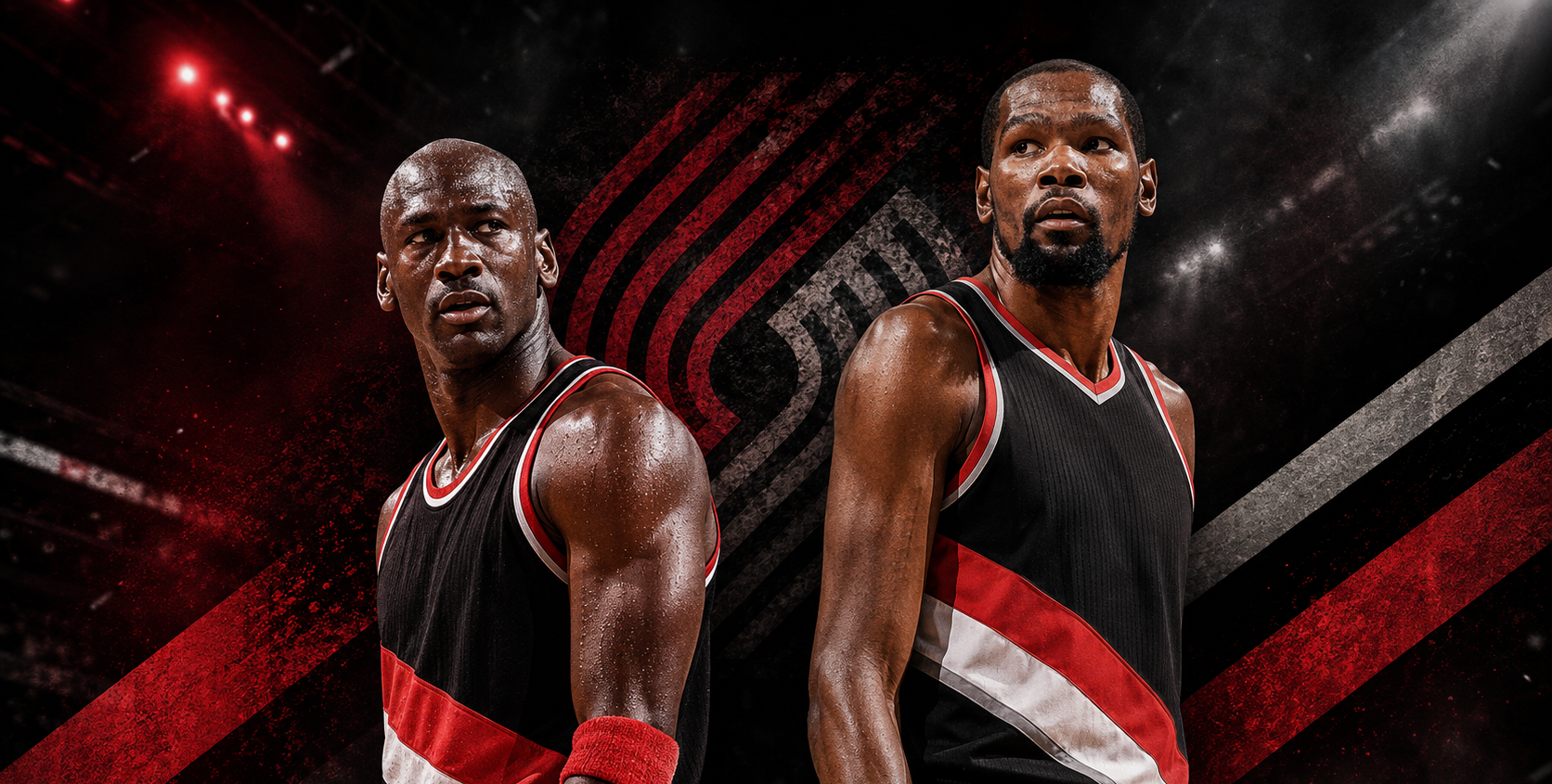

Twice, 23 years apart, Portland had a few minutes to make a decision that would change its history. In 1984, Michael Jordan was still on the board when the Trail Blazers called Sam Bowie’s name. In 2007, they owned the first pick and decided Greg Oden was the player they wanted to build around, leaving Kevin Durant for Seattle.


Hindsight always makes these things easier… Of course you’ll take Jordan, and of course you’ll take Durant. But the Blazers were making those decisions without everything we know now, which is why the two picks are not nearly as similar as the results make them seem.
Portland Was Not Looking for a Savior in 1984
Portland was not a bottom-feeding team in 1984 that had suddenly lucked into a chance to find a savior. The Blazers won 48 games and made the playoffs, and they held the second pick because of an earlier trade with Indiana. Houston took Hakeem Olajuwon first, leaving Portland with a choice that would follow the franchise for the next four decades: Michael Jordan or Sam Bowie.
One explanation has been repeated more than any other since then, that the Blazers already had a promising star in Clyde Drexler. True, but Drexler was not yet the face of the franchise we remember today. He had just finished a rookie season in which he played roughly 17 minutes per game and started only three times. Jim Paxson stood much higher in the pecking order. He was an All-Star, a second team All-NBA guard and a 20-plus point scorer. Portland believed it was set on the perimeter, and what it needed was a center.
That was hardly strange thinking in 1984. Kareem Abdul-Jabbar was still a pillar of the Lakers. Moses Malone was one of the most dominant players in basketball. Robert Parish was an important part of a championship team in Boston, and Houston had just paired Ralph Sampson with Olajuwon. Portland had its own evidence for building from the paint out. Its only championship had come in 1977 with Bill Walton.
Houston, though, makes Portland’s reasoning more interesting. The Rockets had used the first pick on Sampson only a year earlier. He became Rookie of the Year and an All-Star, a 7 foot 4 center who appeared capable of holding down the position for years. When Olajuwon became available, Houston did not get stuck on the fact that it already had a center. The Rockets took the best player on their board and worked out the rest afterward. Portland let the roster set the priority.
Bowie’s Medical Risk Was Already There
Then there was Bowie’s medical history. A stress fracture in his left leg had essentially cost him two seasons at Kentucky. Nobody doubted his talent, size, feel for the game or the possibility that he could become a high level NBA center. The concern was whether his body would allow it, and that concern was already there before the draft.
Chicago removed Bowie from its draft board because of those medical questions. Years later, Bowie also talked about his predraft examination in Portland. He said he felt pain when doctors tested his left tibia but told them it did not hurt. Bowie later pushed back against the idea that he had intentionally misled the Blazers, but the story still says plenty about how complicated his physical situation was before his NBA career even began.
Portland had people telling the organization to reconsider, too. Dean Smith was pushing for his North Carolina star. Bob Knight did the same. One of their conversations with Portland executive Stu Inman became part of draft folklore. When Inman explained that the Blazers needed a center, Knight reportedly told him to play Jordan at center. Mychal Thompson and Drexler had also publicly supported taking Jordan.
Nobody could have looked at Jordan that night and seen six championships, five MVP awards and the man who would help change the NBA’s place in global sports. Holding Portland responsible for failing to predict all of that would be ridiculous. There was enough information available, though, to make the actual decision uncomfortable. The Blazers could take an exceptional perimeter talent, or use the pick to fill a need with a center whose medical history already carried real risk.
Bowie was not a bad NBA player. When healthy, he was useful and at times very good. His career is not proof that scouts somehow failed to understand basketball. Portland saw real talent. It just never got a healthy enough body to carry that talent for very long.
Eight years later came the kind of ending that keeps an old draft decision alive. Drexler and the Blazers reached their second NBA Finals in three seasons. Jordan was on the other side. Chicago won in six games.
Oden Was a Very Different Kind of Decision
Bowie left Portland with reasonable questions about what it could have done differently, but Oden is harder to look at the same way. His story is closer to proof that sometimes a team can follow perfectly understandable basketball logic and still end up with the wrong outcome.
The Blazers entered the 2007 lottery with only a 5.3 percent chance of winning the first pick. They got it in a year when the debate at the top had been going on for months: Greg Oden or Kevin Durant. Oden was not some Portland-specific fascination, he was a huge prospect across the league. He had taken Ohio State to the NCAA championship game and finished with 25 points and 12 rebounds against a Florida front line featuring Al Horford and Joakim Noah. He had strength, rim protection and mobility, with the profile of a center capable of anchoring a defense for the next decade. Plenty of NBA teams would have taken him first.
Roy, Aldridge and Oden Looked Like a Championship Core
Portland also had a good basketball reason for wanting exactly that kind of player. Brandon Roy had just won Rookie of the Year. LaMarcus Aldridge had completed his first NBA season. Roy could run the offense with the ball, Aldridge could score from the frontcourt, and Oden was supposed to protect the rim and give Portland a physical answer to the big men who had caused it problems.
Coach Nate McMillan had openly talked about the trouble players such as Yao Ming and Dwight Howard gave the Blazers. Portland had been near the bottom of the league in blocked shots the year before. Oden was not picked because somebody in the front office stubbornly wanted a center. He filled an obvious need and was also viewed as a legitimate candidate to become the best player in the class.
Roy, Aldridge and Oden looked like the beginning of a team that could eventually contend for a championship, but they never really found out. Oden missed his entire first season after knee surgery, he returned, then came more injuries, more procedures and more rehabs. Over five years with Portland, he played 82 regular season games. One full NBA season, except spread across several comeback attempts.
Durant went in the other direction. He became an MVP, won four scoring titles and two championships, and built a career as one of the greatest offensive players the sport has seen. Durant himself has never liked calling Oden a draft bust. His point was simple enough, because injuries never allowed anyone to see what Oden actually could have become. That distinction matters when Portland’s decision in 2007 gets casually lumped together with what happened in 1984. There are legitimate questions about the process that led the Blazers to Bowie. There are far fewer with Oden.
Two Picks That Could Have Changed the Entire NBA
What makes Portland’s draft history so unusual is that choosing Jordan or Durant would have changed far more than one franchise. Jordan would have joined a 48-win team in 1984 instead of a Chicago team that had won 27 games the year before. Portland managed to build a roster without him that reached the NBA Finals twice. Nobody knows how Jordan and Drexler would have played together, whether both would have stayed or what trades and roster decisions might have followed. But Jordan in Oregon means Jordan is not in Chicago. That alone changes the NBA of the 1990s.
Durant in Portland creates even more possibilities, because Roy and Aldridge would have been there when he arrived. Drafting Durant would not have saved Roy’s knees, but even after Roy’s decline, the Blazers could have continued with Durant and Aldridge as the foundation.
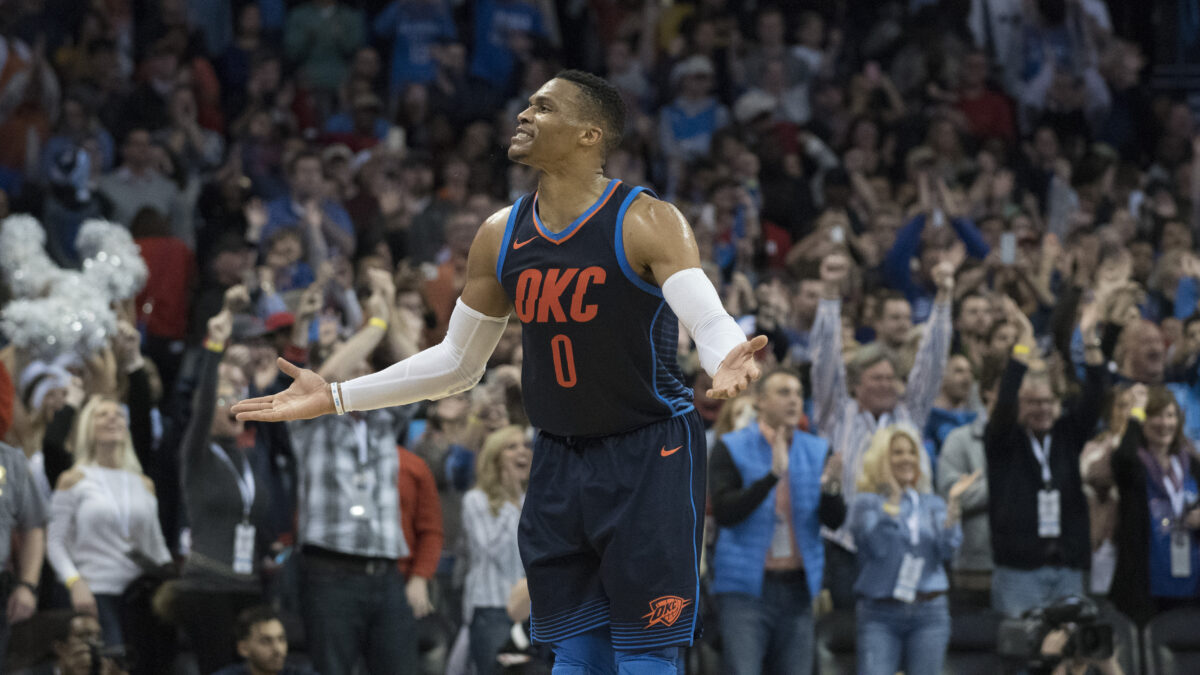
Seattle, meanwhile, never gets Durant before the franchise moves to Oklahoma City. Russell Westbrook and James Harden grow up in a different basketball environment. The road to the 2012 Finals changes. So does everything that followed. Without Durant in Oklahoma City, 2016 is a different story as well, and his eventual move to Golden State is no longer something that can simply be dropped into the same timeline.
There is not much value in going further. Alternate history turns into fantasy pretty quickly, and soon enough we are handing out championships that were never won. Portland does not need that to make the story interesting.
The Results Look Similar, the Decisions Do Not
In 1984, the Blazers took Bowie ahead of Jordan. Twenty three years later, they took Oden ahead of Durant. Written next to each other, they look like two almost impossibly similar draft mistakes. Go back to the circumstances in which they were made and they are anything but identical.
With Bowie, Portland can still be asked whether it trusted roster need too much and whether it took the warning signs seriously enough. The same criticism is much harder to make with Oden. The Blazers won the lottery, selected a player much of the league viewed as the best prospect available and tried to add him to one of the NBA’s most interesting young cores. Neither choice produced what Portland thought it was getting.
That is why the same four names keep coming up whenever the history of the Trail Blazers and the draft are discussed. Not really because Portland made the same mistake twice. More because, twice, it came close enough to a completely different future that wondering about it never quite goes away.