


When a $30 million fine appears in an official NBA announcement, it is difficult to describe the punishment as mild. The Los Angeles Clippers are also losing five first-round picks, Steve Ballmer has been suspended for one year, Lawrence Frank for six months without pay, president of business operations Gillian Zucker for one year without pay, and the organization will operate under special league oversight for the next five years.


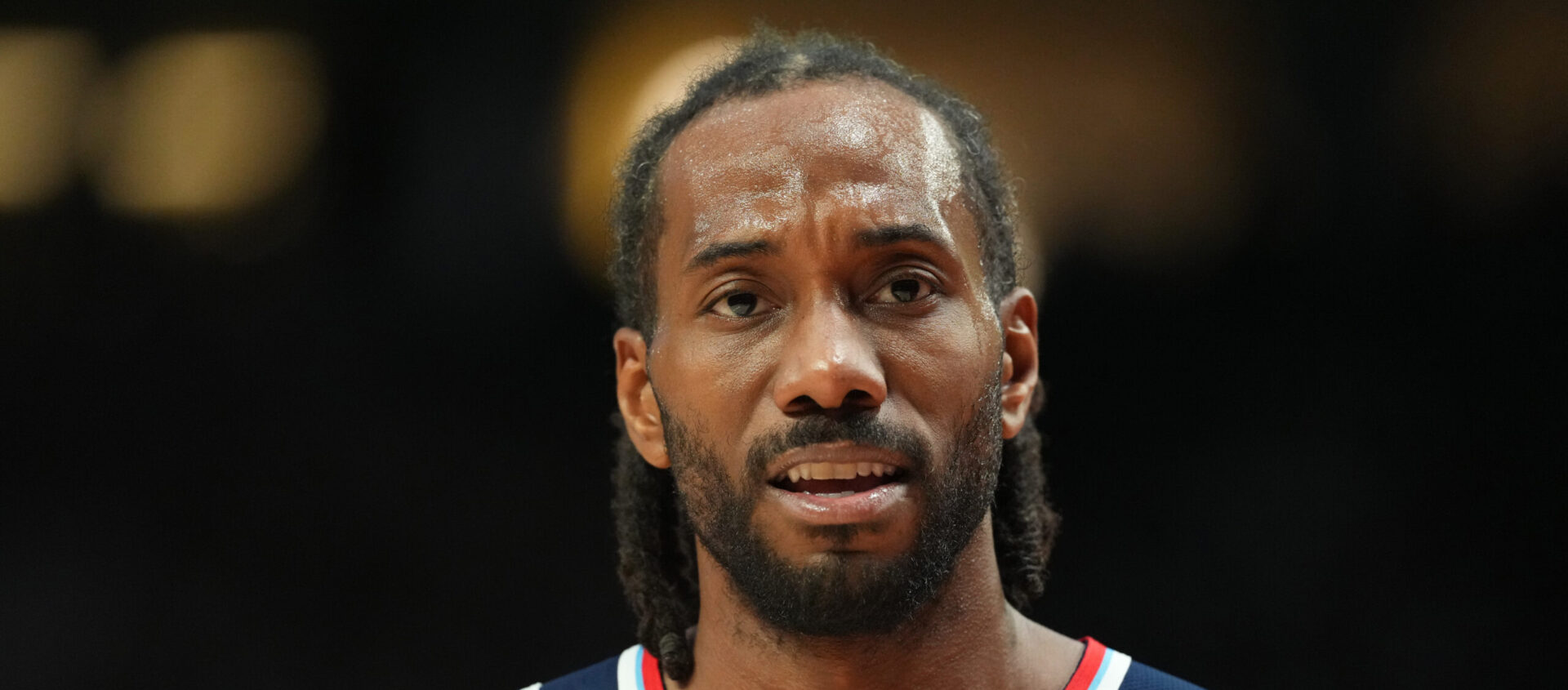
Still, the two people at the center of the entire case got off relatively well. The $30 million fine applies to the Clippers as an organization, while Ballmer is likely to feel the one-year suspension much more. The financial penalty can hardly have a serious impact on a man whose net worth Forbes estimated at around $155 billion at the beginning of September. Thirty million dollars represents roughly 0.02 percent of that figure. Kawhi Leonard will pay the NBA $700,000, with no suspension or contract termination, and can move on to the Toronto Raptors, the franchise he came from in 2019. Over seven seasons with the Clippers, he earned approximately $293 million in official NBA salary alone.
Five More Picks Added to an Already Enormous Cost
The much heavier bill has been left to the franchise, and its fans will feel the consequences for years. The NBA stripped the Clippers of first-round picks in five consecutive drafts, from 2029 through 2033. Add the picks the organization spent to bring Leonard to Los Angeles in the first place, and his seven-year era can be reduced to one figure that says plenty on its own: the Clippers lost 10 first-round picks because of the project built around him, along with two pick swaps from the original Paul George trade.
It all began in the summer of 2019, shortly after Leonard won the NBA championship with Toronto and was named Finals MVP. He was the most coveted free agent on the market, and the Clippers had spent considerable time preparing for his arrival. Leonard, however, set a condition: he wanted another major star.
The choice was Paul George. Oklahoma City understood the situation perfectly. It was not simply selling George to the Clippers, but effectively Leonard’s signature as well. The price was enormous: Shai Gilgeous-Alexander, Danilo Gallinari, five first-round picks and two pick swaps. ESPN later reconstructed the events of that summer and confirmed that Leonard had made it clear he would not sign with the Clippers unless they acquired George.
At the time, the risk seemed acceptable. Leonard was 28 years old, had just won his second NBA championship and second Finals MVP award, while George was coming off a season in which he had been an MVP candidate. The Clippers acquired two elite players in their primes and became championship contenders overnight.
The Championship Window Never Fully Opened
Seven years later, they have no championship to show for it. Their first attempt ended in one of the biggest collapses of that generation. The Clippers led Denver 3-1 in the 2020 Western Conference semifinals before losing three straight games. A year later, they reached the conference finals for the first time in franchise history, but without Leonard, who had torn his ACL in the previous series against Utah and did not return.
That remains the furthest the project ever went. The Clippers did reach the Western Conference finals during Leonard’s tenure, but he never played a single minute in that round. He missed the following season entirely. In 2023, he played the first two games against Phoenix before a knee injury ended his series. A year later, he appeared only twice in the loss to Dallas. Last season, he finally played an entire series against Denver, but the Clippers were eliminated in the first round again. This spring, they did not even reach the playoffs. Golden State eliminated them in the play-in, with Draymond Green making two crucial defensive plays against Leonard down the stretch.
The Problem Was Never Leonard’s Level When Healthy
Leonard’s problem was never the quality of his basketball when physically healthy, something last season showed clearly when he was once again one of the best players in the league. In 35 total playoff games for the Clippers, he averaged nearly 28 points and at times looked like the same player who once decided major series for San Antonio and Toronto.
The issue was how rarely the organization could count on that version of its most important player. Leonard appeared in 331 of a possible 554 regular-season games over seven seasons with the Clippers, or 59.7 percent of them. He missed 223 games, the equivalent of nearly three full NBA seasons. He played only 35 playoff games in seven years, yet the Clippers continued to invest.
When it became clear that the Leonard-George partnership lacked enough offensive creation, James Harden arrived in 2023. Philadelphia received, among other assets, an unprotected 2028 first-round pick, a 2029 pick swap and additional second-round selections. It all shows how long the Clippers tried to keep the same championship window open.
The Bigger Problem Was Developing Away From the Court
At the same time, another story was developing away from the court, one that would ultimately cost the Clippers five more first-round picks. The scandal became public last September, when journalist Pablo Torre reported details of Leonard’s contract with Aspiration. At the center of the case was a four-year marketing agreement worth $28 million. The concern was the company’s relationship with the Clippers and Ballmer, as well as the suspicion that Leonard had virtually no real marketing obligations in exchange for the money.
The NBA opened an investigation, and over the following months the case grew far beyond a single contract. An independent investigation by Wachtell, Lipton, Rosen & Katz found that the Clippers initiated and facilitated arrangements through which Leonard received additional income from four companies that did business with the organization: Aspiration Partners, Boingo Wireless, Daktronics and Lockton Insurance. According to the NBA’s official findings, the companies were offered business with the Clippers while simultaneously entering into agreements with Leonard, while the team also covered certain personal expenses for the player and his representatives.
Dennis Robertson Was at the Center of the Off-Court Arrangements
A particularly significant role was attributed to Dennis Robertson, Leonard’s uncle and then-business manager. The NBA concluded that Robertson pressured the Clippers on Leonard’s behalf to secure additional sources of income outside his player contract, totaling $10 million per year. Robertson was given a five-year ban from doing business with NBA teams.
Ballmer was suspended because, according to the investigation, he knew about the efforts to provide Leonard with additional income and approved a business arrangement that served as a prerequisite for Aspiration to sign a deal with the player. Zucker was punished for her direct involvement and for providing investigators with false or misleading information, while Frank was sanctioned for participating in the arrangements and approving impermissible expenses.
The Clippers reject the investigation’s findings. Leonard said he was not directly aware of any rules violations. The NBA and the Players Association, however, announced that the penalties are final and binding.
The Harshest Basketball Punishment Falls on the Franchise
The result is a rather unusual distribution of consequences. Leonard, the player for whom the disputed income was being secured, will pay $700,000 without missing games or having his contract voided. Ballmer will be unable to participate in team or league activities for a year, but the organization’s financial penalty represents a negligible portion of his wealth. The biggest basketball blow falls on the Clippers, who have lost five consecutive first-round picks, a punishment that now connects directly to the decision they made seven years earlier.
The first five picks were surrendered to satisfy Leonard’s demand and acquire George. The second group of five was lost because the NBA concluded that the organization violated league rules while attempting to provide Leonard with additional financial benefits. Between those two decisions came seven seasons without an NBA Finals appearance, only one Western Conference finals run in which Leonard could not play, and 223 regular-season games he missed.
The most painful part of the original deal today may not even be the picks. Shai Gilgeous-Alexander left Los Angeles as a promising 20-year-old guard after one NBA season. In Oklahoma City, he developed into one of the best players in the league. The Clippers gave him up to create a team built to win immediately. That decision was not unreasonable in 2019. Franchises accumulate picks and young players precisely so they can one day turn them into superstars. The problem comes when, seven years later, you look at what that risk actually produced.
The Signing Was Not a Basketball Disaster. The Project Became One
It is possible to debate whether Leonard was the worst free-agent signing in NBA history. As a basketball argument, that probably goes too far. He was excellent when he played, reached All-Star and All-NBA levels multiple times, and his arrival made the Clippers a franchise genuinely expected to compete for a championship for the first time.
It is much harder, however, to dispute that this project became one of the most expensive failures the NBA has seen. Five picks and two swaps to bring Leonard in. More draft capital spent trying to extend the championship window around him. Nearly $300 million in official salary. Five more first-round picks lost through league punishment. Suspensions for the owner and senior executives. Seven seasons without an NBA Finals appearance.
Toronto Gives the Clippers a Chance to Recover Something
Leonard is now set to return to Toronto, the franchise with which he won his most recent championship in 2019. In the trade, the Clippers will receive Brandon Ingram, Gradey Dick, two first-round picks, two second-round selections and a pick swap, allowing them to recover at least some of the draft capital they lost.
That still does not change the final accounting of his seven years in Los Angeles. The Clippers accepted an enormous risk in 2019 because they believed they were buying a championship era. Instead, they got brief stretches of elite basketball, much longer periods spent waiting for a healthy Leonard, and a series of decisions aimed at saving a project whose cost kept rising.
The $700,000 Fine Will Be a Footnote. The Lost Future Will Not
The $700,000 fine will therefore probably amount to little more than a footnote in Leonard’s career. The problem is that his actions, directly or indirectly, have provided others with a blueprint for similar forms of circumvention, raising the question of why the authorities did not punish Leonard, Ballmer or Robertson more severely. In the end, the people who will suffer are the fans of a franchise that has always lived in the shadow of the far more popular and successful team in Los Angeles. On top of everything else, those five lost first-round picks will remain a problem for the Clippers through 2033. They have not only paid for everything that has happened since 2019. Their future does not look particularly good either.
That is a far more serious punishment than any amount of money anyone involved in this case will have to pay the NBA.