






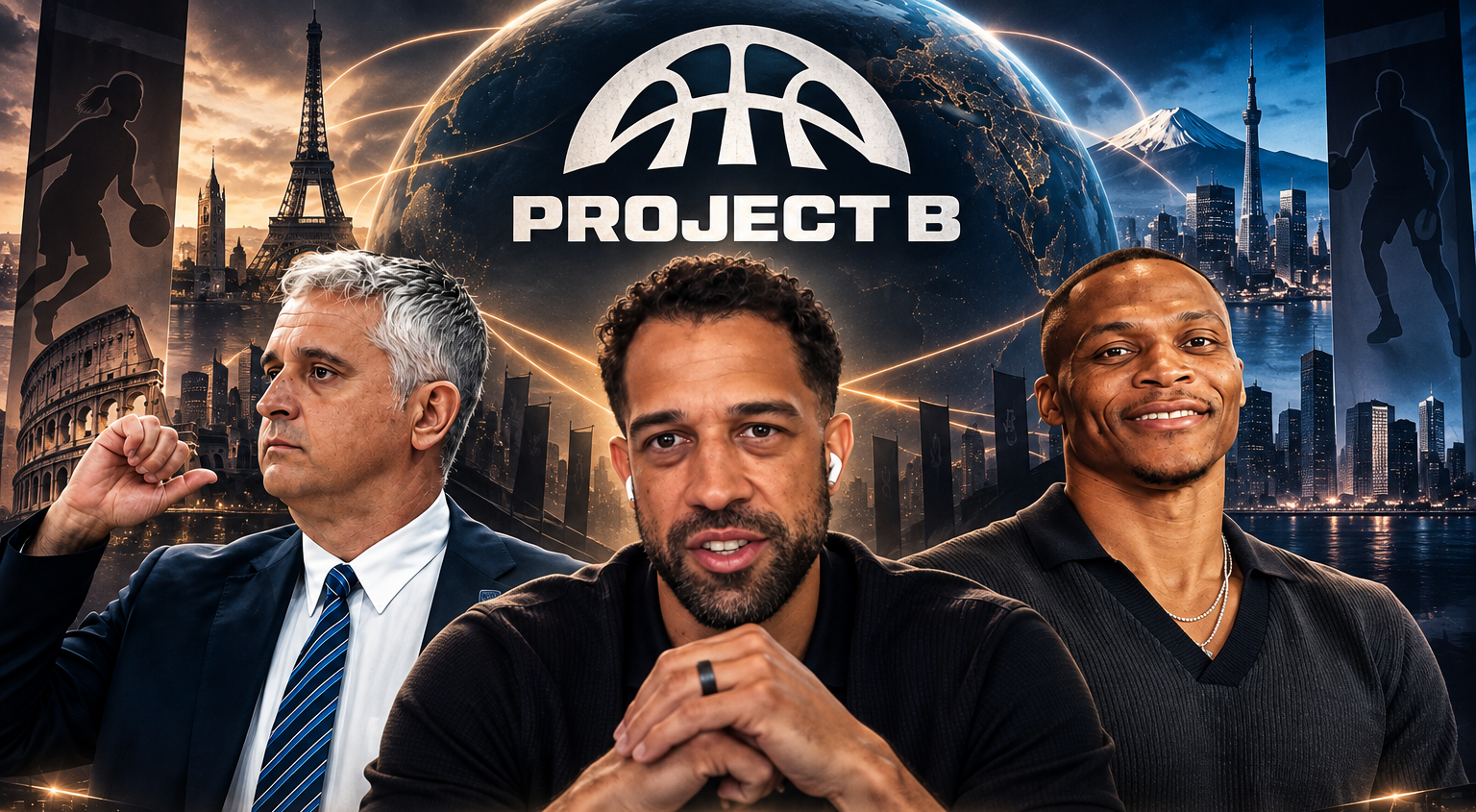

Project B does not want to become another basketball league fighting for a small piece of an already crowded calendar. Its stated ambition is considerably larger: to rethink where elite basketball is played, how players participate in the business they create, how fans consume the sport and, ultimately, whether basketball can become the biggest sport in the world.


That can sound like the familiar language of a start-up promising disruption. But Project B is beginning to acquire enough basketball credibility, capital and recognizable names for the concept to demand attention.
The international men’s and women’s circuit is scheduled to launch in January 2027, taking basketball through cities in Europe, Asia and the Americas instead of attaching its teams permanently to individual markets. Tokyo and Valencia are among the announced destinations, while the broader model calls for a series of tournament stops combining men’s and women’s competition, culture, entertainment and digital content.
The people behind it are equally unconventional. Co-founders Grady Burnett and Geoff Prentice come largely from the technology world—Burnett held senior roles at Google and Facebook, while Prentice was a co-founder of Skype. Four-time WNBA All-Star Alana Beard is a co-founder and Chief Basketball Officer. The investor group includes venture-capital firms Mangrove Capital Partners, Quiet Capital and Sequence, alongside names such as Novak Djokovic, Candace Parker, Sloane Stephens, Steve Young and former Olympiacos forward Josh Childress.
And Project B has just added perhaps its most recognizable basketball stakeholder yet. Russell Westbrook, the 2017 NBA MVP who retired after an 18-year NBA career, has joined as a co-founder and Chief Strategy Officer, receiving an ownership stake and a seat on the board.
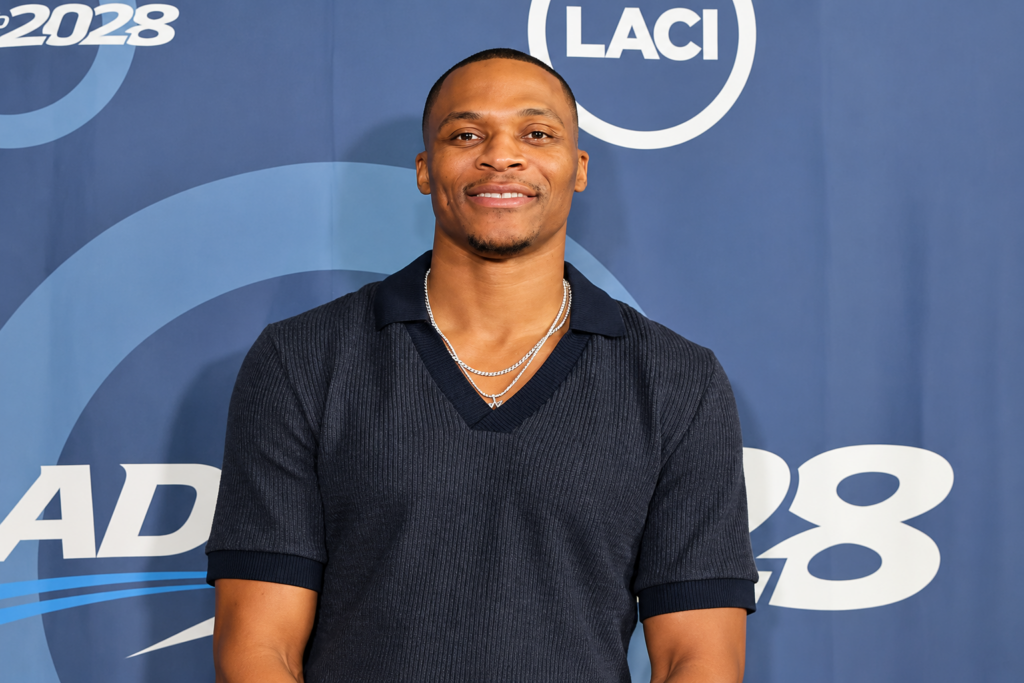
His appointment fits directly into Project B’s central proposition: players should not merely perform for a league. They should participate in its value and its decisions.
That same idea repeatedly surfaced when Landry Fields, Project B’s Head of Men’s Basketball, spoke to SKWEEK about what exactly the organization is attempting to build.
From the Knicks to running Project B’s men’s operation
Fields, 38, offers an interesting bridge between the different worlds Project B is attempting to connect.
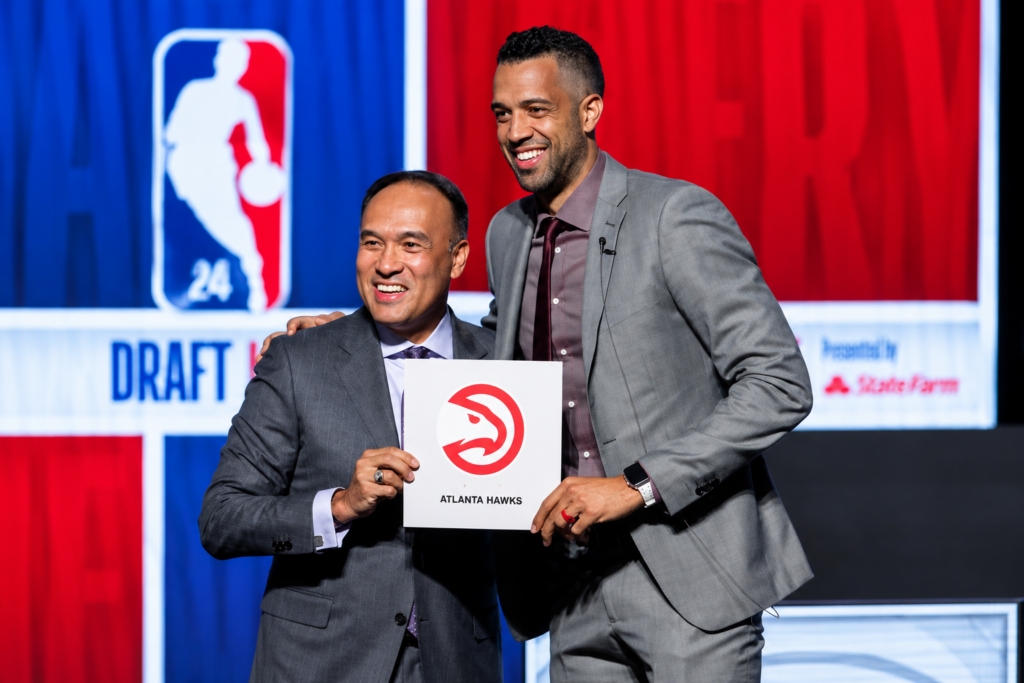
A former NBA player with the New York Knicks and Toronto Raptors, he moved into management after his playing career, beginning within the San Antonio Spurs organization before eventually becoming general manager of the Atlanta Hawks. He later worked as President of Basketball Operations at Overtime Elite, another project that challenged conventional assumptions about how young basketball players should develop, before taking charge of Project B’s men’s basketball operation.
His job now is unusually broad. Project B still has to construct the men’s player pool, develop its talent pipeline and establish a basketball identity capable of working across continents.
For Fields, however, the starting point is much simpler: “It is a vision of the future where we’re making basketball the biggest sport in the world,” he pointed out.
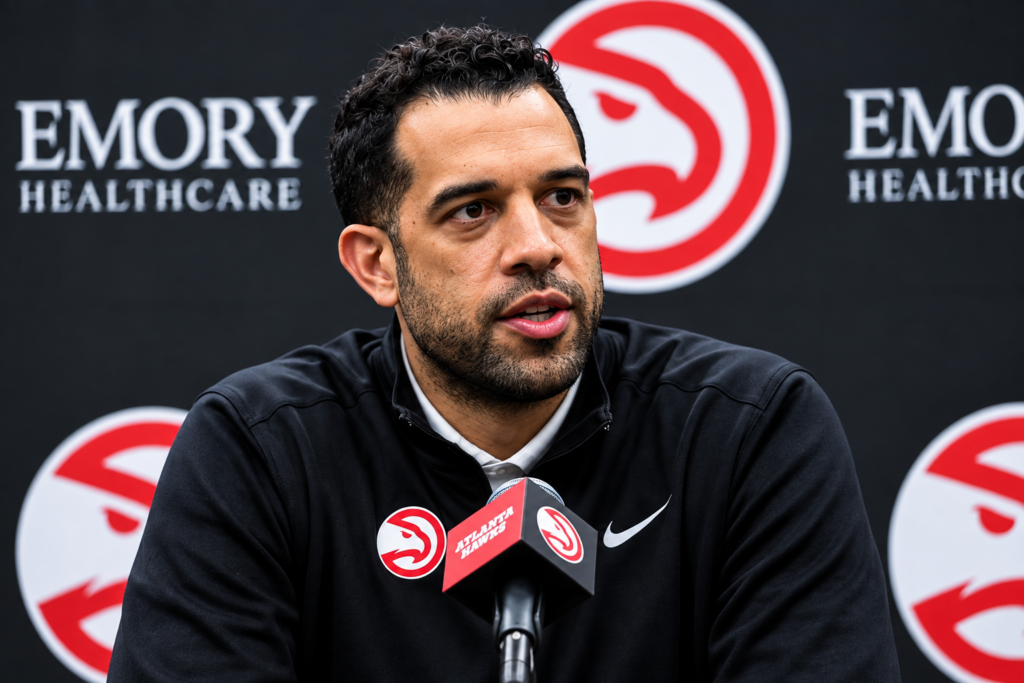
What Project B sees, he explained, is a sport whose geography has already changed.
“We’re witnessing right now, and something that we are incredibly passionate about, is just the global nature of the sport,” Fields told SKWEEK. “Even outside of where I’m from, the U.S., just how many basketball fans are out there.”
The intention is therefore to build around the reality that basketball audiences, athletes and culture no longer fit comfortably inside national borders.
“We want to continuously emerge within the larger basketball ecosystem into a global market,” he said.
Basketball’s Formula 1 experiment
The easiest way to understand Project B is perhaps to forget the conventional league structure.
There are no traditional permanent home markets in the initial concept. Instead, the competition travels. Its inspiration comes partly from Formula 1 and Grand Slam tennis: major events arrive in international cities, occupy those markets for a limited period and then move elsewhere.
The planned format has six teams and 66 players per division, with tournament stops lasting roughly 10 days. Men’s and women’s basketball will be presented on the same platform. Project B’s broader plan has called for three stops in Europe, three in Asia and one in the Americas.
Fields sees the city itself as part of the product.
“Each tournament stop will be different in and of itself,” he said. “That’ll be a moment to celebrate those cultures in those cities at large.”
That extends beyond games.
Fields imagines events in which fans encounter “multiple activations” surrounding basketball, while athletes interact with different markets and expand their identities beyond the court.
Five years from now, he would consider it a success to see men’s and women’s basketball “seamlessly working together,” with Project B athletes expanding their international influence and developing opportunities beyond sport.
“Seeing our athletes on both sides, from men and women, just continuously growing their influence through their global branding,” he said, “and starting to see them integrate themselves more and more into areas even outside of the sport—that for us would be huge.”
The word Fields keeps returning to
For European basketball, however, the central question is unavoidable.
Where do the players come from?
Unlike the women’s competition, which can more naturally complement the WNBA calendar, Project B’s men’s season enters territory already occupied by the NBA, EuroLeague and domestic championships.
Fields does not frame Project B as an attempt to destroy those competitions. Throughout the conversation, he repeatedly used one word.
“The key word is actually optionality,” he said. “It’s no secret, there are a variety of leagues in the world. What we’re doing and what we’re about is presenting something different, something that is new.”
That package, according to Fields, includes equity, compensation, international brand-building and access to influential partners around the world.
“We’re entering into a market that, of course, exists already,” he explained. “And we’re here to present a different option, an alternative for incredible athletes within the sport of basketball.”
That distinction becomes particularly important in Europe.
Asked what Project B could offer a star already playing for a EuroLeague powerhouse such as Real Madrid, Panathinaikos, Olympiacos or Fenerbahce, Fields was careful not to present the organization as actively targeting contracted players.
“When there’s players that are under contract, we are respecting and honoring players that are already within spaces and under contract,” he stressed.
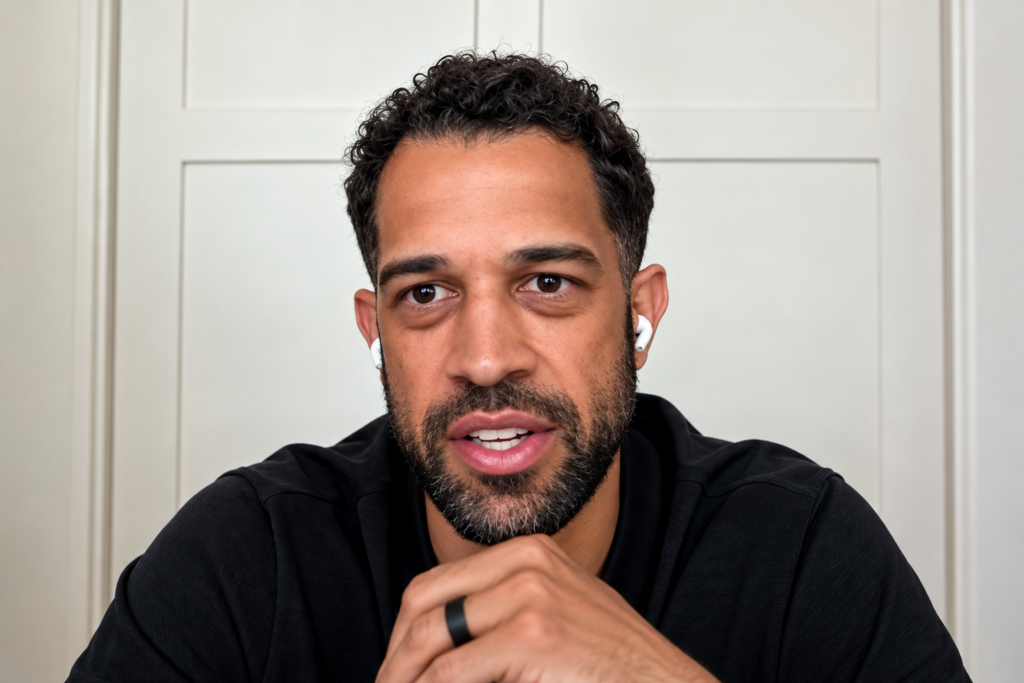
But once a player has a decision to make, Project B wants to be one of those choices.
“Players want to be able to see everything that’s available to them, all the different value propositions, everything from equity stakes that we have, as well as the compensation and as well as the global branding. Our players are partners and they have equity within this league.”
What does player ownership actually mean?
That concept is arguably Project B’s most consequential experiment.
Equity is not being presented merely as an additional bonus attached to a player’s salary. Project B wants athletes to have a financial stake in the enterprise they are helping create.
Westbrook’s arrival strengthens that message. In announcing his involvement, he described players not only as the league’s principal value drivers but as shareholders and decision-makers.
Fields made essentially the same argument to SKWEEK.
“We want our athletes to have a stake in it,” he said. “We want their voices. We want their feedback.”
The ambition is to turn the normal employer-athlete relationship into something closer to a partnership. “For them, we see them as partners, and their feedback is crucial to how we’re building things,” Fields explained.
And he means feedback at an unusually granular level.
“I want to know from a player’s perspective how they’re experiencing Project B. How are they experiencing everything in between from the baskets to the lighting? I mean, it doesn’t matter. We want to hear that because we’re in this together.”
For Fields, that ownership model reflects a wider transformation in professional sports: athletes increasingly drive audiences, content, sponsorship and culture themselves.
“Players, they’re driving so much of what is happening within the sport,” he said. “That’s why the equity piece is so monumental.”
The model already has prominent advocates. Sloane Stephens has argued that athletes deserve genuine ownership in the value they create, while Project B uses a centrally owned structure rather than selling traditional city franchises.
Who will actually play?
The women’s side already provides a glimpse of the level Project B wants.
The announced group includes established WNBA stars and international names, while the more recent additions include 2026 No. 1 draft pick Azzi Fudd. Nneka Ogwumike, Alyssa Thomas, Jonquel Jones, Jewell Loyd and Awa Fam are also among those committed.
Project B has said its women’s salaries will exceed those available in the WNBA, while previous reporting has indicated offers beginning at seven figures for prominent players. The equity component comes on top of the traditional compensation model.
The men’s side remains much more mysterious.
Fields confirmed before his SKWEEK interview that players had already been signed, but no men’s roster has yet been publicly unveiled. Asked directly what level fans should expect, he deliberately avoided names.
“You’re going to see professionals. You’re going to see ones that come from all over the world,” he said.
Pressed for greater specificity, he smiled at the premise: “That’s pretty specific. We’ve got them from all over the world.”
What he did explain more clearly was the profile Project B values.
Talent comes first—”they have to be pretty good at the sport,” as Fields put it—but basketball ability is not the only criterion. Project B wants players capable of connecting with audiences, carrying cultures and developing recognizable identities internationally.
“These are individuals that have brands,” he said. “They want to continuously build those for more and more influence.”
The ideal Project B athlete, in other words, is simultaneously competitor, personality, global ambassador and business partner.
Europe as part of the basketball blueprint
There is another reason European basketball matters to Project B. The league wants its players to develop, and Fields makes no attempt to disguise how highly he rates the European system.
“The European system and the ways in which they’ve gone about development, starting from a young age all the way through until they’re professionals a little bit younger… you see just how they learn the game,” he said. “You see how they interact with one another as teammates.”
Rather than declaring an American or European development model superior, Fields sees value in cross-pollination.
“Talent comes from anywhere,” he said. “The systems that are in place from a development standpoint overseas and in Europe and across the globe, they’re excellent.”
He has seen that influence before. San Antonio, he noted, incorporated international ideas into its own developmental philosophy.
“There’ll be a ton of hints of that into what it is that we’re doing, just given my background with them and my love for development in this game as well.”
Why Igor Kokoskov matters
That brings Igor Kokoskov into the equation.
The Serbian-American coach has been appointed Project B’s Head of Player Development, giving the organization someone whose career has moved repeatedly between precisely the worlds it wants to connect: NBA basketball, EuroLeague clubs and international national teams.
For Fields, the appointment was anything but accidental.
“Us hiring him was a massive gift for us,” he said, pointing to Kokoskov’s experience with “national teams, the NBA, EuroLeague” and the range of players and coaches he has worked with.
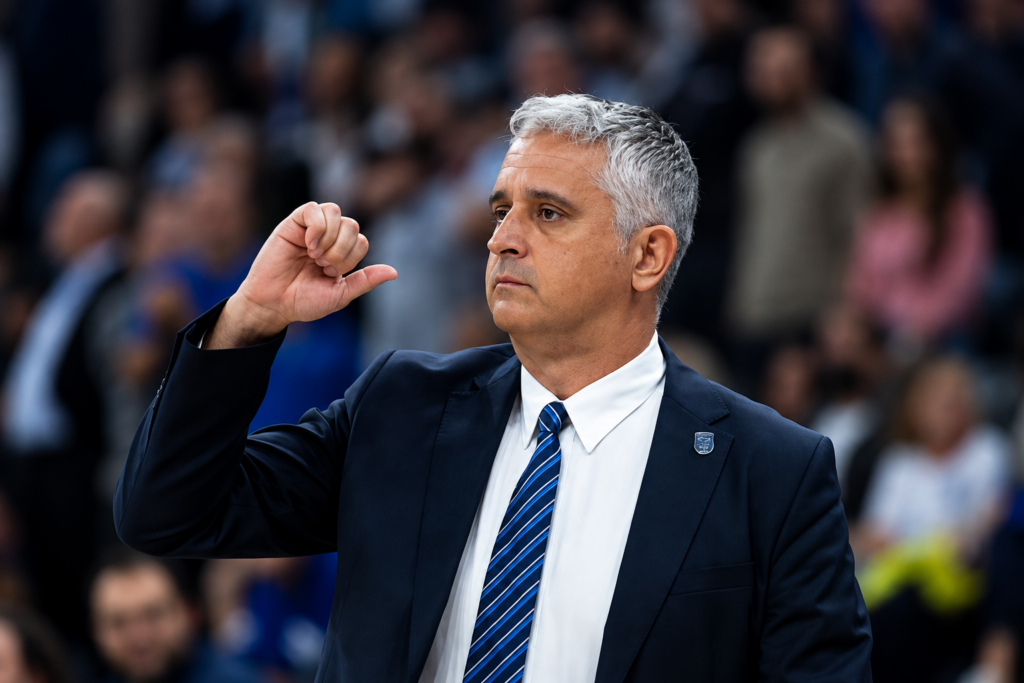
Fields had previously worked alongside Kokoskov, making the relationship personal as well as professional.
“First and foremost, it’s just Igor as a person,” he said. “His knowledge of the game, his ability to connect with players, to communicate the game, and build out structures and systems that all the athletes can thrive and develop on.”
Kokoskov’s job will extend beyond individual workouts. Fields envisages a broader development structure capable of integrating different coaches into one system. That should serve established professionals, but Project B is also looking much younger.
Fields would not commit to a specific minimum age when asked whether Project B could recruit 16- or 17-year-old Europeans—”Maybe. Maybe,” he replied—but confirmed the organization will enter the youth-development space.
The important qualification, he argued, is infrastructure.
“There’ll be young players, but we want to have the infrastructure and we want to have the support in place for those players,” Fields said. “As they continuously move along, as they continue to grow their games and just as human beings in general, we’ve got to make sure that we have the support in place.”
That creates an intriguing European angle. Project B may eventually compete not only for established professionals but for talent developing inside systems that have traditionally fed EuroLeague clubs and, increasingly, the NCAA and NBA.
A place for veterans, too
Project B is not being constructed exclusively around prospects. Fields sees the other end of the career spectrum as equally important.
“Veteran players? Of course, across the board,” he said.
This is where another part of the league’s value proposition becomes important: workload.
European stars can currently move through seasons involving domestic leagues, national cups, EuroLeague and national-team windows. NBA players face an 82-game regular season before the playoffs. Project B intends to offer considerably fewer games and fewer back-to-backs.
For older players, Fields sees that as potentially career-extending.
“They want to play for a really long time,” he said. “What’s a way in which we can build out a model? That’s what we’ve done, to ensure we give them the ability to do less back-to-backs, less games, but still an incredible footing and influence and impact.”
Asked whether basketball as a whole simply plays too many games, Fields declined to criticize rival competitions.
“There are a lot of games out there to be played, regardless of the league,” he said. “I can only speak for what it is that we’re building and what we’re offering players. It is a different option.”
Project B, EuroLeague and NBA Europe
All of this arrives at an unusually volatile moment for European basketball.
EuroLeague clubs are investing heavily. The NCAA has become an increasingly powerful competitor for young European talent. The NBA is pursuing a deeper presence on the continent. Existing domestic leagues remain central to local basketball cultures.
Project B is entering the same landscape. Fields nevertheless refuses to frame the NBA’s European expansion as a threat.
“I see those ambitions as a great thing for the game,” he said. “Whether it’s with us or the NBA, you’re seeing fans outside of the U.S. or outside of wherever they’re from. And you’re seeing a place where we want to bring the game to them. We’re all looking at the same fans and wanting to reach them in places that the game has never seen before.”
Nor does he dismiss EuroLeague’s enormous advantage in tradition.
“They have incredible talent. They have rich history behind them,” he said.
Project B cannot replicate that history. Its argument is that it does not need to.
“Project B right now, we’re doing something that is unprecedented,” Fields said. “The sheer nature of evolution and the differentiation in which we bring is enough to bring optionality to the table for athletes.”
The Spurs lesson Fields wants to carry with him
Fields’ own résumé explains part of that worldview.
His first front-office experience after retiring came with San Antonio, an organization famous for embracing international basketball long before doing so became standard NBA practice. But when Fields talks about what he took from the Spurs, he does not begin with scouting.
“The Spurs are always going to have an influence for me,” he said. “What I learned from them all came from leadership.”
The lesson was to regard unfamiliar environments not as threats but as rare chances.
“Looking at everything and seeing it as your teacher,” Fields explained. “Seeing it as an opportunity to learn, and seeing the value that goes beyond just what’s right in front of you.”
That applies directly to Project B’s global ambitions.
“There’s so many amazing things that are happening that are just out there,” he said. “The more and more we can familiarize ourselves with that, get to know it, and see that cross-pollination that could happen, all that does at the end of the day is elevate the game. The posture, it’s the humility. And that was a core element of what it meant to be a part of that organization. And that’s something that’s going to be important for us as well.”
Atlanta, failure and another chance to build
His subsequent experience running the Atlanta Hawks was more complicated.
Fields has acknowledged that being the ultimate decision-maker taught him the importance of establishing a vision, owning it and accepting responsibility for the decisions that follow.
He did not identify a specific Atlanta decision he regrets when asked by SKWEEK. Instead, he described failure and success as information.
“As a leader, you’re making decisions and you’re constantly going back and you’re looking at the decisions that you made,” he said. “Whether you deemed them successful or unsuccessful, there’s something to learn from that.”
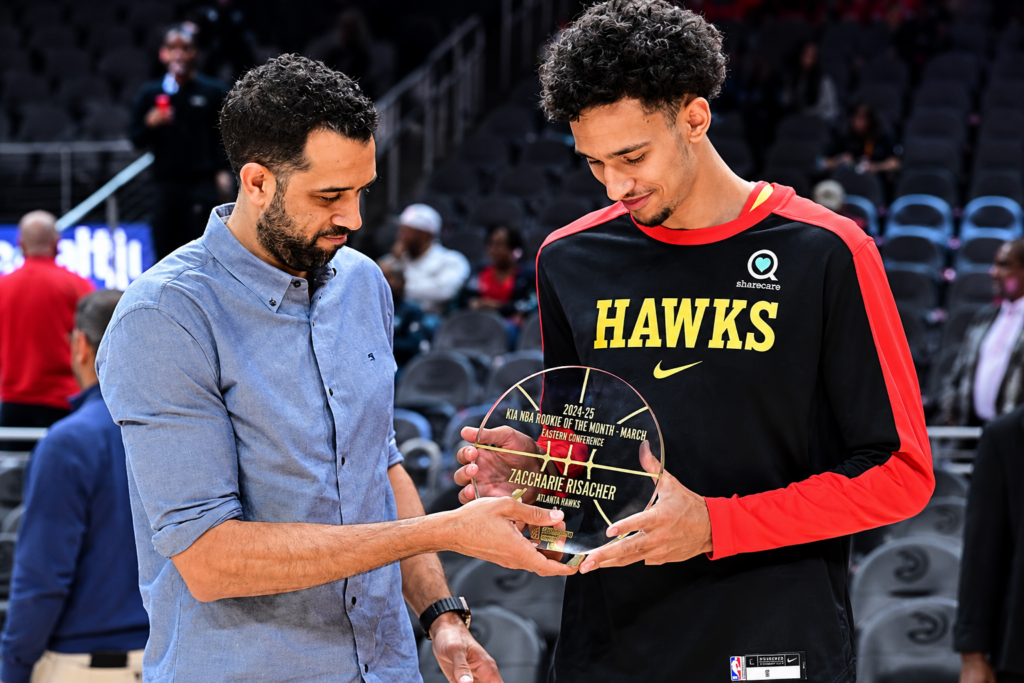
Does he regard Project B as an opportunity to apply those lessons?
“Oh, yeah, absolutely. I want to bring all the value and gold that I’ve learned from the past into this space and enter in one space and then absolutely make it even better.”
A league or something larger?
Project B therefore sits somewhere between several existing concepts.
It is basketball, but not a conventional domestic league. It borrows the travelling-event logic of Formula 1, the concentrated prestige of tennis tournaments and the athlete-equity philosophy increasingly appearing in newer sports ventures. Its teams are centrally organized rather than conventional permanent franchises, while the wider product is intended to incorporate fashion, culture, storytelling and digital distribution.
Its backers are deliberately drawn from several worlds. Burnett and Prentice provide the technology-business background; Beard gives the operation elite basketball credibility; investors such as Djokovic, Parker and Stephens bring experience from global individual sports and women’s basketball; Kokoskov oversees player development; Fields runs the men’s basketball side; and Westbrook now enters at ownership and strategic level.
There is still plenty that Project B must prove.
The men’s players have not been revealed. Its ability to coexist with existing contracts and calendars remains one of the fundamental questions surrounding the concept. Building meaningful fan attachment to teams that travel rather than represent permanent cities will be another challenge. And no amount of equity, branding or entertainment can compensate if the basketball itself fails to reach the elite level Project B promises.
Fields does not pretend that every detail is ready to be disclosed. Asked about expansion, he returned to what is immediately ahead.
“Our focus right now is what’s right in front of us,” he said. “Just focusing on that and being intentional and disciplined with our ability and creating an incredible product for the world to see and to become more and more attracted to. We’ll see what happens in time.”
That uncertainty is part of what makes Project B fascinating.
It is entering basketball at precisely the moment when the sport’s old geographical boundaries are weakening. The NBA’s greatest stars increasingly come from outside the United States. Europe is attracting unprecedented investment while simultaneously losing young talent to American colleges. Athletes are becoming media properties and businesses in their own right. Fans can follow a player thousands of kilometres away without ever watching traditional television.
Project B wants to build a competition around that new reality—and give the people actually playing the game a piece of what they help create.