



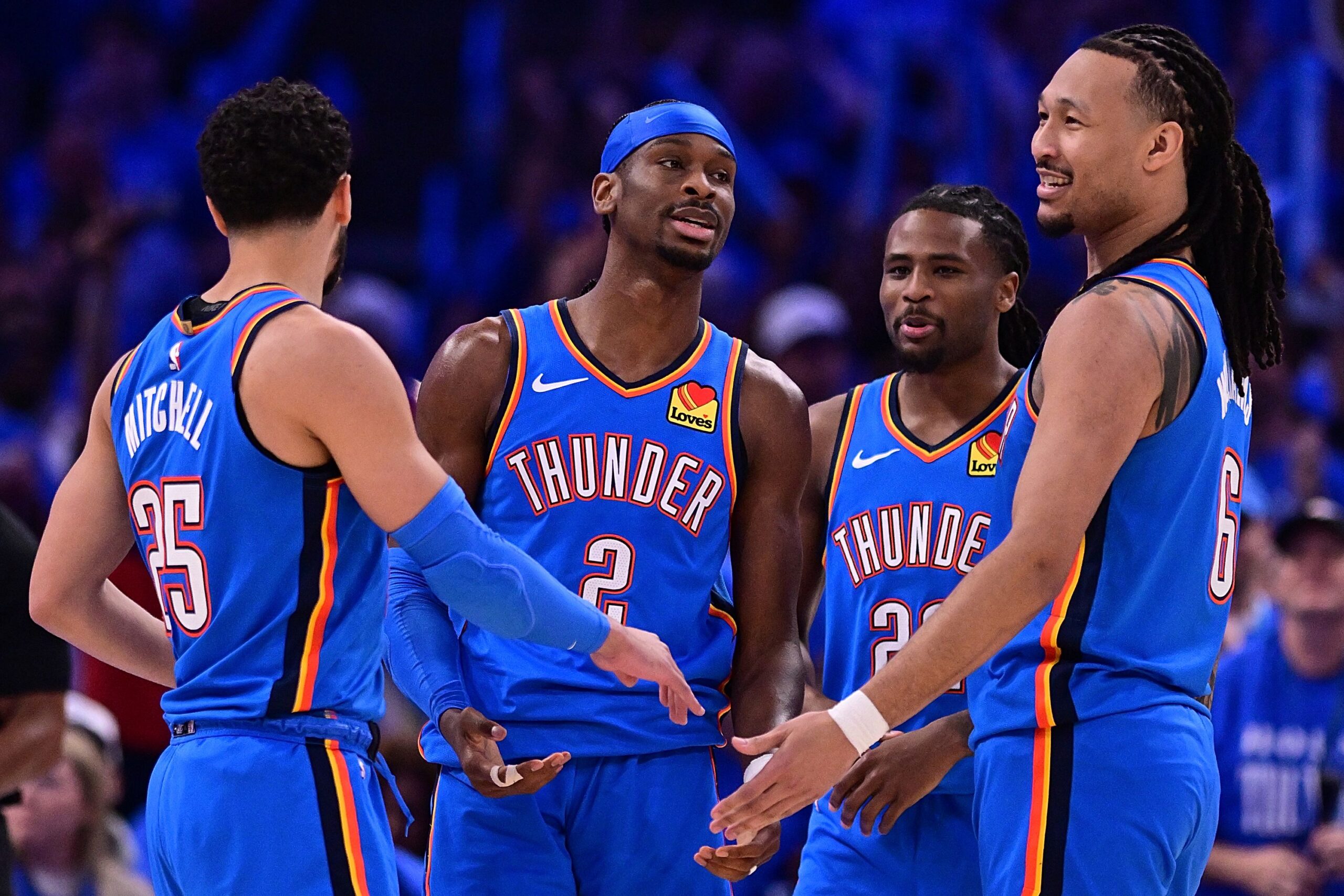

In the NBA, we are seeing more and more often that franchises simply do not have enough patience for that patience to ever be rewarded. In a sea of attempts that have ended badly over the past several years, the Oklahoma City Thunder look like an exception that survived every rule of the modern league. The 2025 champions and recent Western Conference finalists have become one of the most important teams of the next decade.


At first glance, the story seems simple. You break up the old team, collect draft picks, choose the right players and wait for them to grow. Picks become misses, young players are not given enough patience, coaches become expendable, and fans grow tired of waiting for something concrete to happen. Oklahoma succeeded because its process managed to turn losses into capital. The man who made that difference is Sam Presti.
When Presti Chose the Future
When Paul George and Russell Westbrook left Oklahoma in 2019, it felt as though one of the most exciting eras in the young franchise’s history was coming to an end. Kevin Durant and James Harden were already part of the past, and Westbrook was the final symbol of a city that saw in him something more than just a player. Presti did then what good executives do before it becomes too late. He admitted that the previous version of the team no longer had a championship direction.
In the trade that sent Paul George to the Los Angeles Clippers, Oklahoma received Shai Gilgeous-Alexander, Danilo Gallinari, a haul of first-round picks and pick-swap rights. A few days later, Westbrook went to Houston, and the Thunder received Chris Paul and additional draft capital. The most important thing at that moment was that Oklahoma did not try to pretend it was still close to a title. In the NBA, there is a particular kind of danger when a franchise falls in love with its own past. It starts spending the future to extend the illusion of the present. They sold value while value still existed and entered a rebuild without rushing, but also without empty slogans.
Turning Someone Else’s Urgency Into Shai
Shai Gilgeous-Alexander was the first major proof of Presti’s eye. The Clippers were chasing Paul George and Kawhi Leonard, trying to make an immediate run at the title. Oklahoma accepted someone else’s hunger for instant success and turned it into the player around whom it would later build a championship team. Some moves look like accounting on the day they are made. This one now looks like history.
Over the next few years, Presti turned flexibility into a weapon. The Thunder took on large contracts other teams no longer wanted, accepted short-term discomfort, charged a price for other teams’ need for salary-cap space and patiently stacked resources. Al Horford, Kemba Walker and similar deals were not the kind of moves that fill front pages, but they built the foundation that later allowed Oklahoma to stay a step ahead.
Building a Culture Before Building a Champion
Meanwhile, a culture was taking shape on the floor. Chris Paul, during the 2019/20 season, became a bridge between the old and the new Oklahoma. His time there did not disrupt the rebuild. It gave it dignity. Young players learned what professional routine looks like, how to manage a game, how details are not skipped. The organization was not just losing so it could draft high. It was teaching young players how to win one day.
Then came Chet Holmgren, Jalen Williams, Cason Wallace and the other pieces of the core. Holmgren was high risk and later high reward, even if it may not look that way from this angle after his weaker performances in the Western Conference finals. Still, there is no question that Holmgren is a player with a rare combination of length, defense, shooting and feel for the game. When he missed his entire first season because of injury, Oklahoma did not panic. It did not change the plan or try to make up for a lost summer with reckless moves. Oklahoma waited.
Jalen Williams gave Oklahoma a different kind of confirmation among its rivals. He was not the first or second pick, nor a global phenomenon, but within the Thunder system he quickly became a player capable of doing many things at a high level. It knew how to find players who fit an idea, develop them and trust them before the rest of the league fully understood them.
The same applies to Mark Daigneault. Oklahoma developed its coach in the same way it developed its players. Daigneault did not arrive as a big name meant to save the project. He grew within the organization, understood its logic and, over time, became an extension of Presti’s philosophy. His team played with discipline, modern pace and speed, but not chaos. It had youth that could be shaped into something much bigger.
From Patience to Aggression
The turning point came when Presti judged that it was time to change gears. Oklahoma turned Josh Giddey into Alex Caruso because it understood what it needed for the next level. Giddey was talented, but Caruso brought defense, experience and playoff reliability. The arrival of Isaiah Hartenstein followed a similar logic. The Thunder filled holes, added size, rebounding, toughness and another dimension.
Oklahoma won, and it did so with a team that looked as if it was only entering its best years. Shai was the leader, Jalen Williams the second pillar, Holmgren a defensive and tactical rarity, and around them was a group of players who understood their roles. It looked like a team that had arrived earlier than the league was ready to admit.
But it did open the next, and perhaps most difficult, chapter of Presti’s plan. Oklahoma can no longer present itself as a young team with time on its side. The Thunder has now entered a zone where every decision has a price, where players who until recently were developmental capital are now becoming expensive pillars of the system. Shai Gilgeous-Alexander, Jalen Williams and Chet Holmgren are no longer only the foundation of the future.
Too Many Picks, Too Little Room
This is where Oklahoma faces the problem created by its early success. For years, it had more picks than room for all the players it could draft. Now that luxury is slowly becoming a problem. According to current projections and reports, the Thunder still hold a huge package of draft capital through 2033, including a double-digit number of first-round picks and a large number of second-rounders. ESPN, in its assessment of league assets, noted that Oklahoma has seven maximum available future tradable first-round picks and 12 second-round picks, while other reviews of draft capital show just how full its cupboard still is.
In practice, a champion cannot add two or three rookies every year and expect to find minutes, development space and a place in the financial structure for all of them. Especially not under the new collective bargaining rules. That is why a logical question is being asked more and more often around Oklahoma: will Presti have to trade picks for future selections, for a higher pick, for a veteran who can help immediately, or simply for flexibility?
This summer, that problem becomes even more complicated. Ahead of the 2026 draft, Oklahoma had first-round selections, including picks No. 12 and No. 17, and reports had already surfaced that the Thunder could try to turn one of those picks into future compensation instead of adding another young player to an already crowded roster.
The Second Apron Changes Everything
Yahoo Sports reported rumors that Oklahoma was trying to “sell” one of its two top-20 picks for a future first-round pick. Reuters reported in early June that Oklahoma’s payroll for the 2026/27 season is projected to climb above $260 million, with major contracts for Shai, Jalen Williams and Chet Holmgren, and with the team approaching the second apron.
ESPN emphasized how dramatic the internal salary jump is, with Holmgren’s salary rising from $13.7 million to $41.5 million and Williams’s from $6.5 million to $41.5 million. Bleacher Report therefore correctly identified the second apron as a line Oklahoma will most likely try to avoid, because under the new rules that threshold brings not only a larger bill, but serious restrictions on roster construction.
If the Thunder keep all of their selections, they will have to pay guaranteed rookie contracts to players who may not have a real role. And if they trade them, they will have to get the timing and value right. If they try to consolidate picks to move higher in the draft, they risk overpaying for projection. Again, if they turn them into future picks, they extend their flexibility, but may pass on the chance to add someone now who could help the championship core.
The Cold-Blooded Part of Team Building
The rebuild required patience. The title required courage. Keeping Oklahoma at the top will require cold-blooded selection. Some good players will not stay, some picks will not be used. Some decisions will look harsh at the moment they are made. There is already speculation about the futures of Lu Dort and Isaiah Hartenstein, because their contracts, team options and roles have to be viewed in the context of a more expensive core and a new financial reality.
Good rebuilds find talent, and great organizations know when an excess of talent begins to crowd the system. Oklahoma now has to do something that sounds simple only from the outside: remain young, keep a deep roster, but avoid becoming too expensive.
The Thunder no longer have much to prove. Now they have to show that their model can withstand the things that often threaten to break young champions: major contracts, a shorter rotation and the pressure of results.
It can also be seen as an important lesson for future generations of sports executives on how to build a team around patience, discipline and timing. Presti did not build the Thunder by simply waiting for the perfect moment. He built them by knowing when to stay on the sideline and when to be aggressive in the market.
There is no doubt that parts of the competition will now look toward Oklahoma and try to copy the recipe. But it is not simple to copy someone’s system, because the essence is not in the number of picks. It is in knowing what you want to become before the opportunity to become it actually appears.
And perhaps that is Presti’s greatest victory.