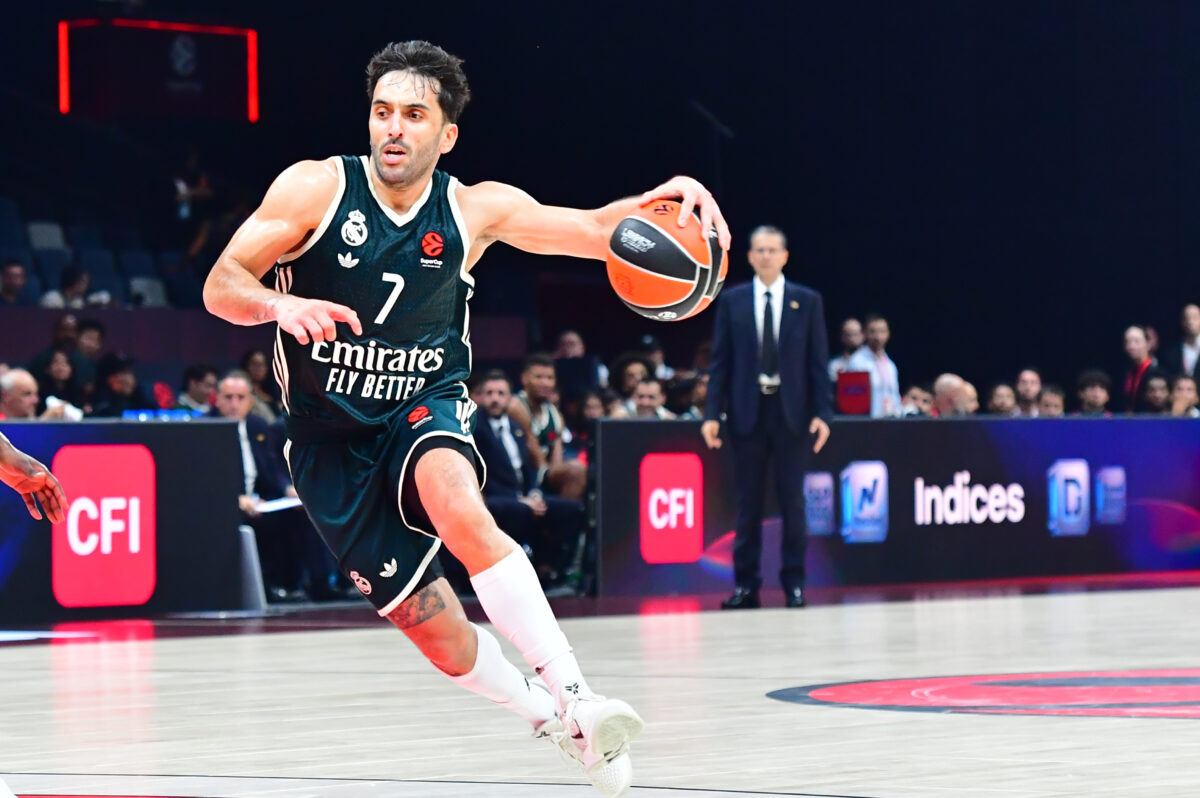










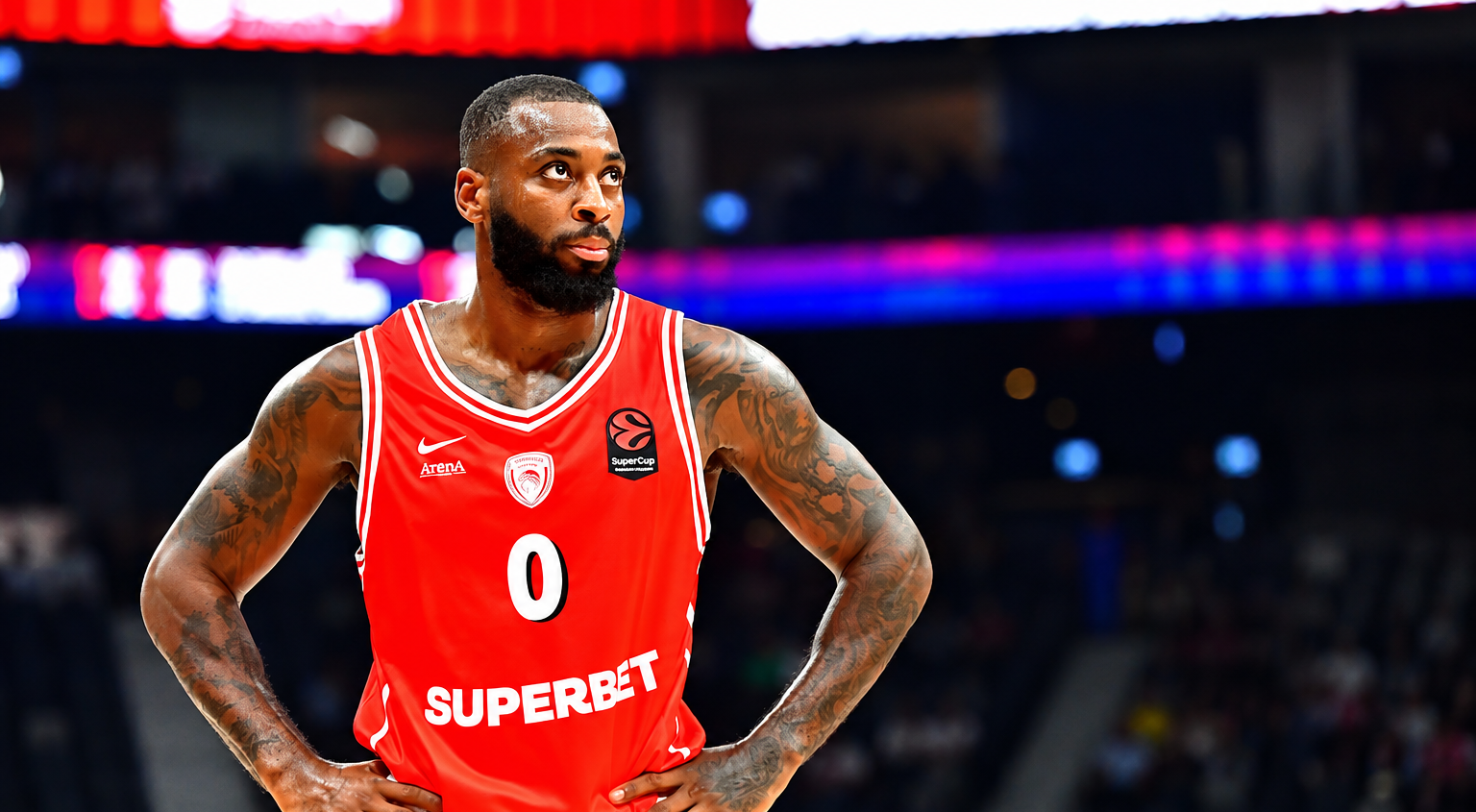

Codi Miller-McIntyre arrived at Olympiacos after leading the EuroLeague in assists for two consecutive seasons, but his first official outings saw him average around 17 minutes per game, contribute very little as a scorer and show that he is still learning how to operate within Georgios Bartzokas’ system.


His 13 assists at the SuperCup, however, underline that neither his quality nor his playmaking ability is in question. What matters is how quickly he can transfer those strengths into a team whose offensive demands are considerably different from those he encountered at Crvena Zvezda.
The first meaningful sample of the new-look Olympiacos at the Abu Dhabi SuperCup inevitably invited comparisons between the team’s two new point guards. Jean Montero started the season more aggressively, looked more comfortable and finished the games against Fenerbahce and Real Madrid with a combined 25 points, 7 assists and 5 rebounds in roughly 44 minutes, while Miller-McIntyre recorded 5 points, 13 assists, 3 rebounds and 3 steals in 34:25.
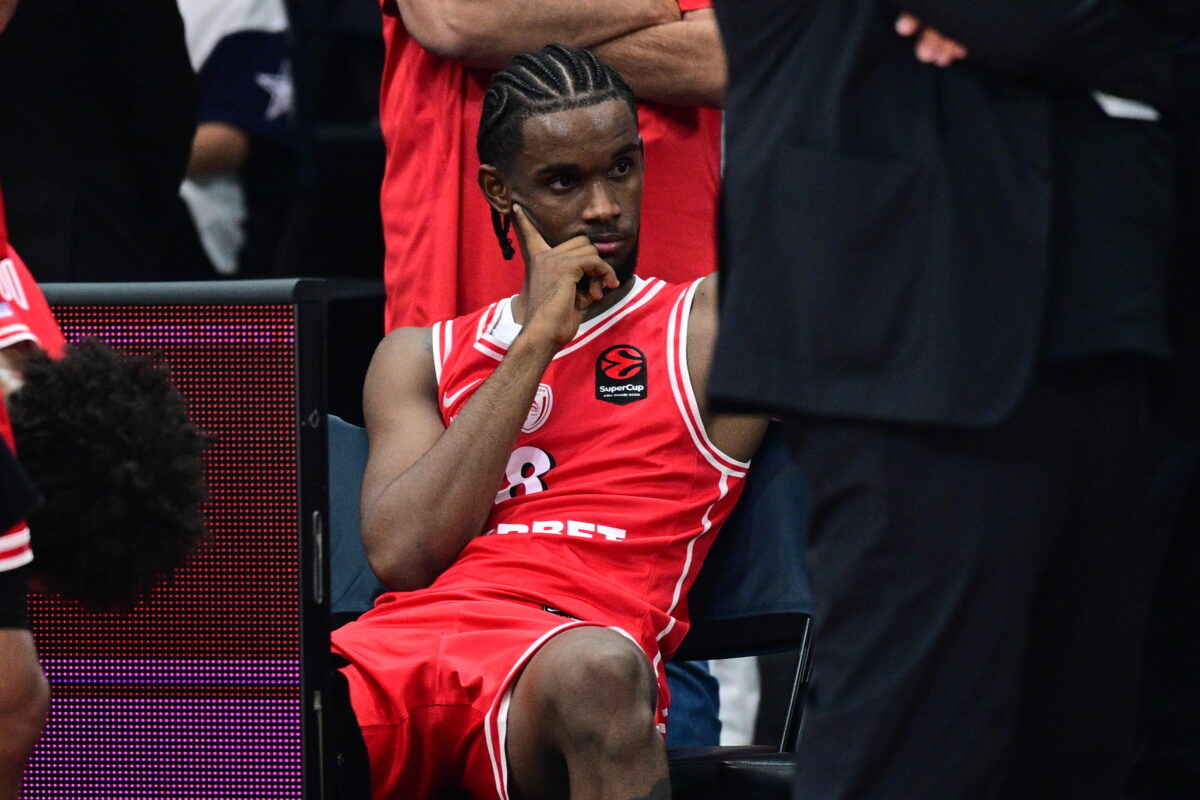
The scoring gap is considerable, although the two guards were recruited for different purposes. Montero can create through his own scoring threat and put pressure on defenses with his speed and one-on-one ability, while Miller-McIntyre is expected to exert greater control over the offense, organize possessions and create for others. That makes his 13 assists in just over 34 minutes the standout figure from his weekend, a rate equivalent to approximately 15.1 assists per 40 minutes.
The first real question concerns his playing time. Miller-McIntyre started both games but played 16:52 against Fenerbahce and 17:33 against Real Madrid, never reaching 18 minutes, while Montero logged 21:50 and 22:27 respectively. For a guard who averaged 30.5 minutes for Crvena Zvezda last season and played 1,177 minutes during the EuroLeague regular season, that represents a significant change.
The issue is fitting the system, not the assists
Miller-McIntyre’s numbers from last season offer a clear picture of the player Olympiacos signed. Across 39 games, he averaged 12.6 points, 7.4 assists, 4.5 rebounds and one steal, while posting a 37.2% assist percentage and a 21.7% usage rate. Crvena Zvezda recorded a positive +4.1 Net Rating with him on the floor, while his on/off figure stood at +2.8.
He is a primary creator accustomed to influencing a large percentage of his team’s possessions with the ball in his hands, operating in pick-and-roll, waiting for the defense to react and then finding the final pass. Bartzokas’ Olympiacos also demand quick ball movement, constant changes of side and decisions in which the primary ball-handler may have to release the ball long before the eventual shot is created.
This is also where the most important difference with Thomas Walkup becomes apparent. The former Olympiacos guard had learned to operate with a much lower offensive workload and posted a usage rate of just 12.5% last season, alongside 12.8 assists per 100 possessions and a 33.2% assist percentage. With Walkup on the floor, Olympiacos recorded a 122.7 Offensive Rating and a +14.1 Net Rating, while his on/off differential reached +9.7.
Those numbers should not be treated as a direct comparison between two players operating in different roles and environments, but they highlight the nature of the transition. Miller-McIntyre comes from a role with considerably more responsibility on the ball and is now being asked to organize an offense in which the ball often needs to leave his hands before the assist itself is created.
He has already acknowledged that this process remains at an early stage.
“I wouldn’t say [adapting to the new system] is easy, but it’s part of the job. I’ve watched them for many years, so I already have somewhat of an understanding of the system, but it’s different between watching and actually being a part of it. It’s the difference between being a spectator and actually having to do everything live,” he recently told the EuroLeague website.
Watch Miller-McIntyre discuss his game
He added: “Obviously, I’m going to have to adjust a lot in my playing style, but also try to find ways to maintain my playing style. It’s going to take a little bit of time, which is normal.”
The third quarter against Real showed the way forward
Miller-McIntyre attempted only two shots in the semifinal against Fenerbahce and finished his 16:52 with 2 points, 4 assists, 2 rebounds and one steal. He was similarly quiet during the first half of the final against Real Madrid, before producing his best stretch in an Olympiacos jersey after halftime.
In the third quarter, he increased his defensive pressure, pushed the pace and handed out six assists, while adding three points and a steal. Olympiacos’ offense immediately played with greater speed and, after falling behind by double digits several times, the Greek side moved ahead 61-56. Miller-McIntyre eventually finished the final with 9 assists in 17:33, matching Facundo Campazzo’s total.
Watch Real Madrid vs Olympiacos
That stretch offers more useful evidence for evaluating his potential role than the five points he scored across the weekend. Olympiacos did not sign Miller-McIntyre to become another high-volume scorer alongside Evan Fournier, Tyler Dorsey, Sasha Vezenkov and Montero, but he still needs to provide enough of a scoring threat to prevent defenses from consistently going under screens and closing down his passing lanes.
He shot around 32-33% from three last season, while at the SuperCup he went 0/2 from beyond the arc, 1/4 from two and 3/4 from the free-throw line. Olympiacos do not necessarily need him to increase his volume significantly, but they do need opponents to respect the shots that become available to him.
The Vezenkov connection could be crucial
One of the clearest indicators of how quickly Miller-McIntyre is settling in could be his partnership with Sasha Vezenkov, with whom he already shares experience from the Bulgarian national team.
Vezenkov generates a significant portion of his offense through cuts, quick finishes, transition opportunities and off-ball movement, so maximizing his strengths requires an offense capable of moving the ball rapidly from one side of the floor to the other.
Their relationship was already strong before Miller-McIntyre joined Olympiacos. In March 2025, Vezenkov told Telegraf that he had personally encouraged his Bulgaria teammate to come to Piraeus: “I called him to Olympiacos. We talk, he’s a good guy, a great player. I watch every game he plays.”
Miller-McIntyre and Vezenkov image
Their existing relationship certainly helps, although the on-court process is more complicated. Miller-McIntyre has to learn when and where every teammate wants the ball, something he considers a fundamental part of his job as a point guard.
“It’s definitely going to take time, especially with me and the way I study my teammates, learning where they like the ball, how they like to score, which side of the court they like to score from.”
In the same answer, he also emphasized the importance of understanding personalities: “Seeing who needs to touch the ball, who hasn’t touched the ball for a while, who’s ‘on fire’ at that moment.”
That understanding reached a very high level during his full season at Crvena Zvezda. At Olympiacos, the process has essentially started again from scratch.
Montero changes the conversation around his role
Jean Montero’s performances in Abu Dhabi added another dimension to the discussion. The 23-year-old Dominican recorded 13 points and 3 assists against Fenerbahce, followed by 12 points and 4 assists against Real Madrid, for a combined 25 points and seven assists.
Comparing their scoring numbers alone offers limited insight given their different roles. Montero creates more through his individual scoring threat, while Miller-McIntyre carries greater responsibility for organizing the offense. Still, the presence of Montero alongside Cory Joseph, Dorsey, Fournier and the rest of Olympiacos’ perimeter options places Miller-McIntyre in a very different rotation from the one he occupied at Crvena Zvezda, where he averaged more than 30 minutes per game.
That depth may partly explain his 17-minute average at the SuperCup and does not necessarily indicate what his workload will look like over the course of the season. Bartzokas now has several different types of ball-handlers and can distribute responsibilities that previously rested more heavily with Walkup.
Jean Montero and Codi Miller-McIntyre image
So, is there an issue with Miller-McIntyre?
Based on the first two official games, there is clearly an adjustment process underway, but the evidence does not support a stronger conclusion at this stage.
His five points and roughly 17 minutes per game are a long way from last season’s Miller-McIntyre, who averaged 12.6 points and 30.5 minutes, while Montero appeared more immediately comfortable and received more playing time. On the other hand, the 13 assists in 34:25, including nine against Real Madrid, and particularly his excellent third quarter in the final showed that his primary strength is already translating to his new environment.
The next steps are more specific: finding a better balance between creating with the ball and moving it quickly within Olympiacos’ offense, becoming a more credible scoring threat, developing a deeper understanding of his teammates’ tendencies and gradually increasing his influence without necessarily returning to the 30-minute workload and usage he had in Belgrade.
Miller-McIntyre predicted from the outset that it would “take a little bit of time.” The SuperCup suggested that he was right, while also providing a small but revealing glimpse of why Olympiacos invested in him.
For now, the Miller-McIntyre file remains open. The question is not whether last season’s EuroLeague assists leader can create at this level, but how quickly he can become the player this version of Olympiacos needs.