










Losing a game always hurts. Seeing an 11-game winning streak come to an end, including six straight EuroLeague victories, hurts too. And falling further behind in the race for the top spot in a competition you aspire to win is hardly an easy pill to swallow.


Yet despite all that, Real Madrid can take many of positives from Wednesday’s 112-115 overtime loss to Panathinaikos in Round 10 of the EuroLeague, following a thrilling contest that ultimately went the Greek side’s way.

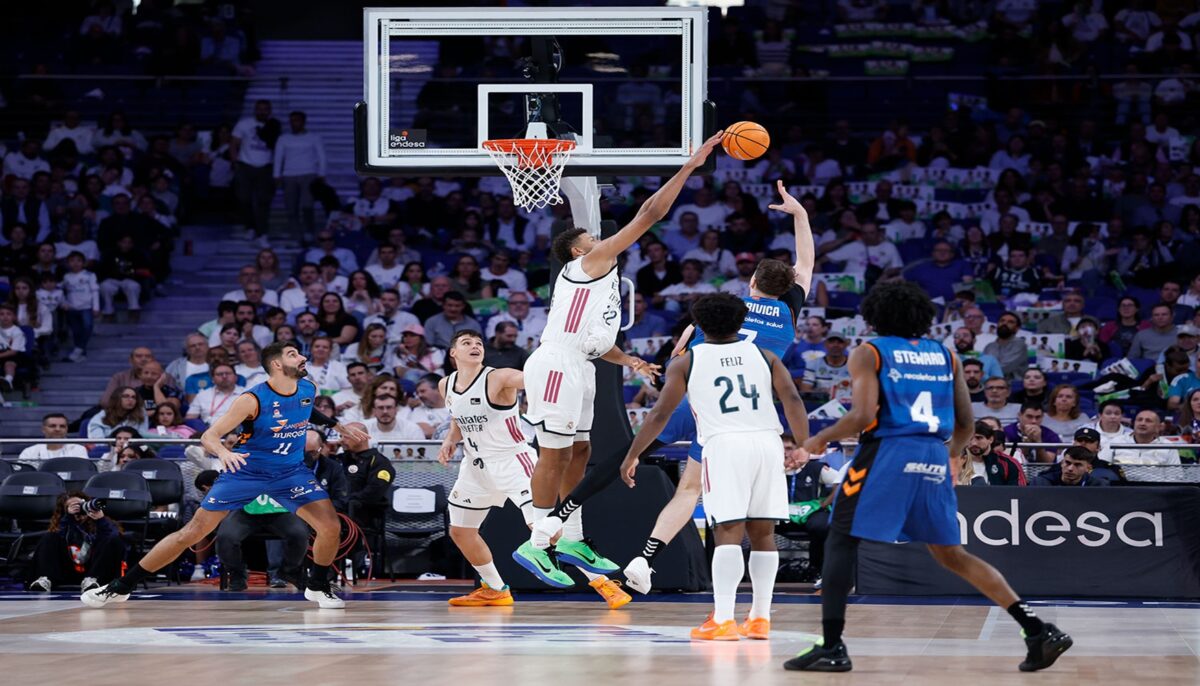
Beyond the final score, what stood out was the way Los Blancos competed. Without Facundo Campazzo, Théo Maledon, Mikael Jantunen, Gabriel Deck and Usman Garuba, who is sidelined for the entire season, a resilient Madrid side managed to take the EuroLeague leaders to overtime. Panathinaikos arrived with a point to prove after two defeats to Anadolu Efes in Europe and Aris in domestic competition. And although the Greeks led for most of the night, they were never able to put the game away.
Pedro Martínez’s team showed that it is moving in the direction its head coach wants. Despite being severely shorthanded, Madrid went toe-to-toe with Panathinaikos without compromising its principles. After all, if there is one thing that has always defined the veteran Spanish coach’s teams, it is their clear identity. Regardless of the opponent, the score or the circumstances, they know exactly how they want to play and execute their game plan with conviction. Even in such challenging circumstances, Madrid stayed true to that philosophy, providing further evidence that Martínez’s blueprint is taking hold in the locker room.
The numbers back up that impression. Having scored at least 95 points in each of its previous five games —an unprecedented feat in EuroLeague history— Madrid reached 101 by the end of regulation and finished with 112. It wasn’t the team’s most efficient night from beyond the arc, as Los Blancos knocked down 12 three-pointers at a 37.5% clip, below their recent standards, with Timothé Luwawu-Cabarrot struggling in particular (0/4). Nevertheless, their offensive mindset remained firmly intact.
Nor did Madrid unravel when Panathinaikos threatened to blow the game open. The visitors raced out to a commanding 4-13 lead and stretched their advantage to 15 points in the second quarter. Later, with the Greeks seemingly in control at 90-97 and just two minutes remaining, Madrid once again refused to go away. Andrés Feliz eventually capped another comeback with a drive to the basket that sent the game into overtime.
Perhaps the biggest positive for Martínez, however, was the response from his less-used players. Sergio Llull, who had yet to play a single minute in this EuroLeague campaign, stepped up when injuries forced his coach to look for alternatives. The veteran guard contributed eight points, experience and leadership, with his introduction proving instrumental in turning around a poor start.
Max Shulga also made the most of his opportunity, scoring six points on a perfect 2-for-2 shooting from downtown in the first half. Meanwhile, Alberto Abalde delivered the highest-scoring EuroLeague performance of his career, finishing with 23 points and five assists. He also showed tremendous composure when it mattered most, pouring in 15 points in the fourth quarter alone.

Then there was an outstanding Andrés Feliz, who led Madrid with 27 points and six assists, alongside Damian Jones, who built on his encouraging recent performances with 15 points and several high-quality stretches. His contribution was particularly valuable in allowing Walter Tavares to spend extended periods on the bench.
The emergence of players who had barely featured until now, combined with the willingness of established rotation pieces to shoulder greater responsibility when the situation demanded it, was hugely encouraging. Despite the defeat, it showed that Martínez has more weapons at his disposal than just his usual go-to options.

Of course, the loss carries consequences in the standings, particularly for a club like Real Madrid, where almost every setback comes under intense scrutiny and generates endless debate. But there are genuine reasons for optimism.
The Spanish powerhouse came up short against an elite opponent, inspired by Kendrick Nunn’s 33 points —including 21 in the fourth quarter— but reinforced the feeling that this team is heading in the right direction. Madrid competed until the very end, got valuable contributions from its second unit and, above all, remained faithful to its identity.

In fact, the standing ovation the players received from their fans after the final buzzer told the story better than any statistic could.
Real Madrid lost a game, but gained confidence, showed the depth of its roster and provided further evidence that its approach is working. And over the course of a season as long and demanding as this one, those small victories might ultimately prove far more valuable than a win in November.