











As FIBA has aptly reminded us on more than one occasion with its slogan Basketball is Everywhere, no matter how remote a place may seem, there is always a chance of finding an orange ball bouncing somewhere. Even in locations that might appear particularly inhospitable to the sport, such as deep inside the Arctic Circle, home to Tromsø Storm, a modest Norwegian club founded in 1977 that can proudly claim to be the northernmost basketball team on the planet.


There, surrounded by snow-capped mountains, fjords and long winters, basketball has also found a place to call home. In a city where the Northern Lights provide a spectacular natural backdrop during the winter months, when daylight is virtually nonexistent, basketball remains very much alive. This is one of European basketball’s most unusual stories: that of a club striving to establish itself in the top flight of a country where the sport remains a distinctly minor attraction and where even its best players can hardly be considered stars.
Basketball is certainly far from being one of Norway’s most popular sports. With a population of around 5.5 million, the country boasts a deeply rooted sporting culture, but its priorities lie elsewhere. Winter sports are an integral part of Norwegian identity, while football commands much of the media spotlight. Handball, ice hockey and several other disciplines also enjoy levels of popularity that basketball has yet to come close to matching. Tennis player Casper Ruud, middle-distance runner Jakob Ingebrigtsen and, above all, football superstar Erling Haaland regularly dominate the headlines, much as cross-country skiing legend Marit Bjørgen, an eight-time Olympic champion and 18-time world champion, once did. Yet Norway’s leading basketball player, Harald Frey, currently playing for Spain’s Surne Bilbao Basket, could probably walk around the country without attracting much attention, even in his hometown of Oslo.


“It’s a minority sport,” acknowledges Sergio Vicente, Tromsø’s Spanish head coach, who previously worked with Luka Dončić in Real Madrid’s youth system. Vicente is well aware that basketball ranks “fourth or fifth among the country’s sports,” although he sees encouraging signs of progress. More and more boys and girls are taking up the game, he believes, and the grassroots scene is gradually expanding. Nevertheless, there is still a long road ahead before Norway can establish a strong domestic competition capable of attracting investment, building an audience and creating genuine professional opportunities.

Having previously coached in Norway, Sweden, El Salvador and, naturally, his native Spain, Vicente returned to northern Norway this season to take charge of a newly promoted team whose ambitions extend beyond results on the court.
Norway’s top division, the BLNO, brings together clubs operating under vastly different circumstances. Unbeaten league leaders Gimle and defending champions Fyllingen, who are also competing in this season’s European North Basketball League against opponents from countries including Poland, the Czech Republic, Lithuania, Latvia and Estonia, operate at a high level of professionalism.
Tromsø Storm, however, inhabit a very different reality. Only two players on their roster make a full-time living from basketball: Americans Garrett Denbow and Grant Sitton. Denbow, who arrived from the NBA G League, has emerged as the league’s leading scorer, putting up a remarkable 33.7 points per game. Sitton, a center with extensive experience in European and Asian leagues, is looking to rediscover his best form in Norway after suffering a serious knee injury last season.

For the Norwegian players, however, things are rather different. Beyond their two American imports, Tromsø —currently sixth in the BLNO standings with five wins from nine games— have no other fully professional players. Not even point guard Johannes Lange, a regular member of Norway’s national team, earns his living exclusively from basketball. Instead, he works for a company specializing in industrial spare parts and supplies.
Lange, who is set to represent his country again during the upcoming November international window, has chosen to prioritize his personal life and career outside basketball, despite having received several offers from foreign clubs that would have allowed him to pursue the sport full-time.
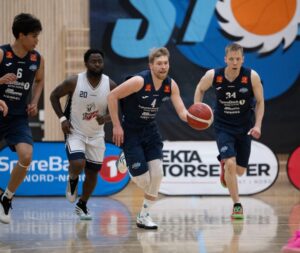
Unsurprisingly, this reality has a significant impact on the team’s day-to-day operations, as does its extraordinary geographical location. “As a coach, it’s really rewarding to see guys who aren’t getting paid to play basketball giving everything they’ve got on the court. They’re a pleasure to coach,” Vicente says.
In fact, local players often have to request special leave from their employers just to travel to away games. Tromsø lies more than 1,600 kilometers by road from Oslo and over 2,000 from Bergen, meaning Storm’s road trips are almost always organized as back-to-backs. By scheduling two games on consecutive days, the Norwegian basketball federation seeks to reduce travel expenses for Storm, the only top-flight club based in the northern part of the country, making their participation in the BLNO financially more manageable.
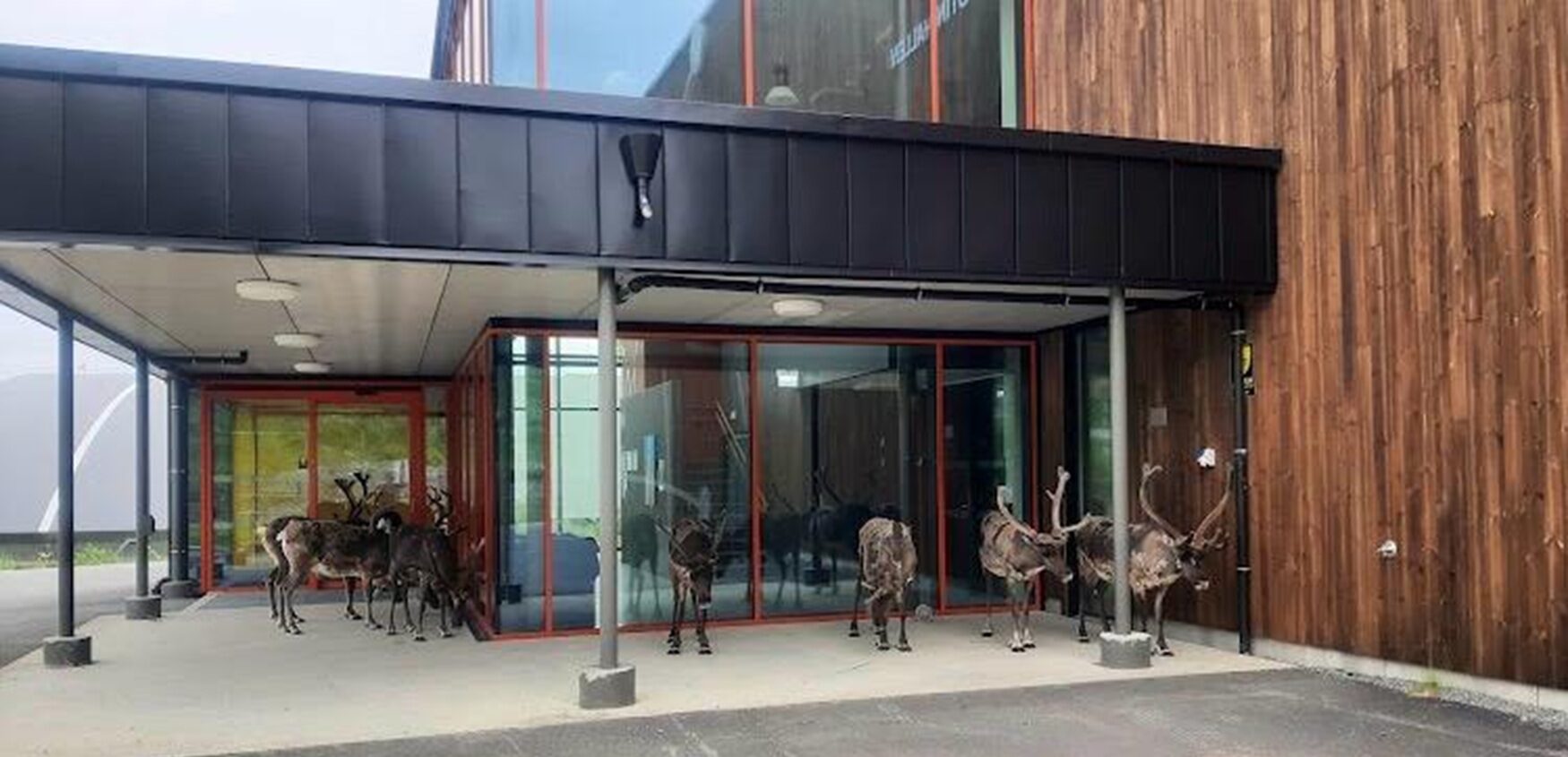
These unique circumstances also help explain the contrast between Tromsø’s performances at home and on the road. The club, which won the Norwegian championship in 1997, plays its home games at Rødtindhallen, a modern 700-seat arena where encountering a family of reindeer nearby would hardly be out of the ordinary.
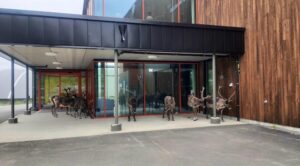
Road games, on the other hand, present a completely different challenge, particularly the second contest of a back-to-back, played less than 24 hours after the first. Visiting teams must also contend with the lengthy journey north to face Vicente’s squad. Home games are therefore generally scheduled for Sundays at 3 p.m., allowing opponents to begin their return journeys from this remote corner of the world.
Yet perhaps the most extraordinary aspect of life in Tromsø has little to do with the cold —Norwegian indoor arenas are, after all, perfectly well heated— or even the possibility of finding several meters of snow outside the gym before a practice or game.
Instead, it is the dramatic variation in daylight hours between summer and winter that makes life here so unusual: During the summer, Tromsø experiences almost 24 hours of daylight thanks to the phenomenon known as the midnight sun. But just a few weeks from now, the opposite extreme will arrive. During the polar night, which stretches across parts of December and January, the sun never rises above the horizon, creating conditions that require considerable adjustment for anyone unfamiliar with them.

Taking supplements, such as fish oil to help compensate for the lack of vitamin D associated with limited sunlight exposure, is commonplace in the region. And the unusual living conditions have produced more than a few memorable anecdotes.
Vicente recalls one particular episode from his first spell with the club, during the COVID-19 pandemic: “We signed two Americans who, as winter went on, started falling asleep in the stands. But I can’t blame them for that. Dealing with the lack of daylight is really difficult,” he admits.
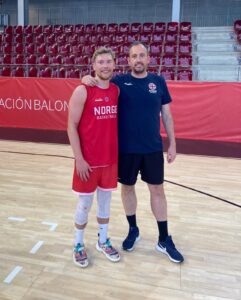
Indeed, the prolonged absence of natural light can have a serious impact on fatigue, particularly for foreign players who also need to stay in touch with family members living in completely different time zones. It is simply another aspect of life in the Arctic that players and coaches must learn to live with.
Back in Norway’s top division this season, Tromsø Storm are aiming to establish themselves among the country’s best teams. Their immediate objective is to reach the playoffs, contested by the BLNO’s top eight finishers.
But the club’s ambitions go further, particularly in a city that, despite its seemingly inhospitable location, offers considerable potential. With a population approaching 80,000, a sizeable university community, a vibrant cultural scene and a steady stream of tourists eager to witness the Northern Lights and the midnight sun, Tromsø provides an environment in which basketball hopes to become an increasingly prominent part of local life.
The city’s close connection to nature is also a valuable asset for the club, which has already launched striking promotional campaigns making the most of the breathtaking scenery surrounding it.
Because basketball exists even at the northern edge of the world. There may be no global superstars, but through dedication and hard work, Tromsø Storm are making a compelling case for basketball’s place inside the Arctic Circle.
There are no multimillion-strong television audiences or tens of thousands of fans packing Rødtindhallen. Yet the very existence of this club, together with its determination to grow and become increasingly professional, is already a story worth telling.