



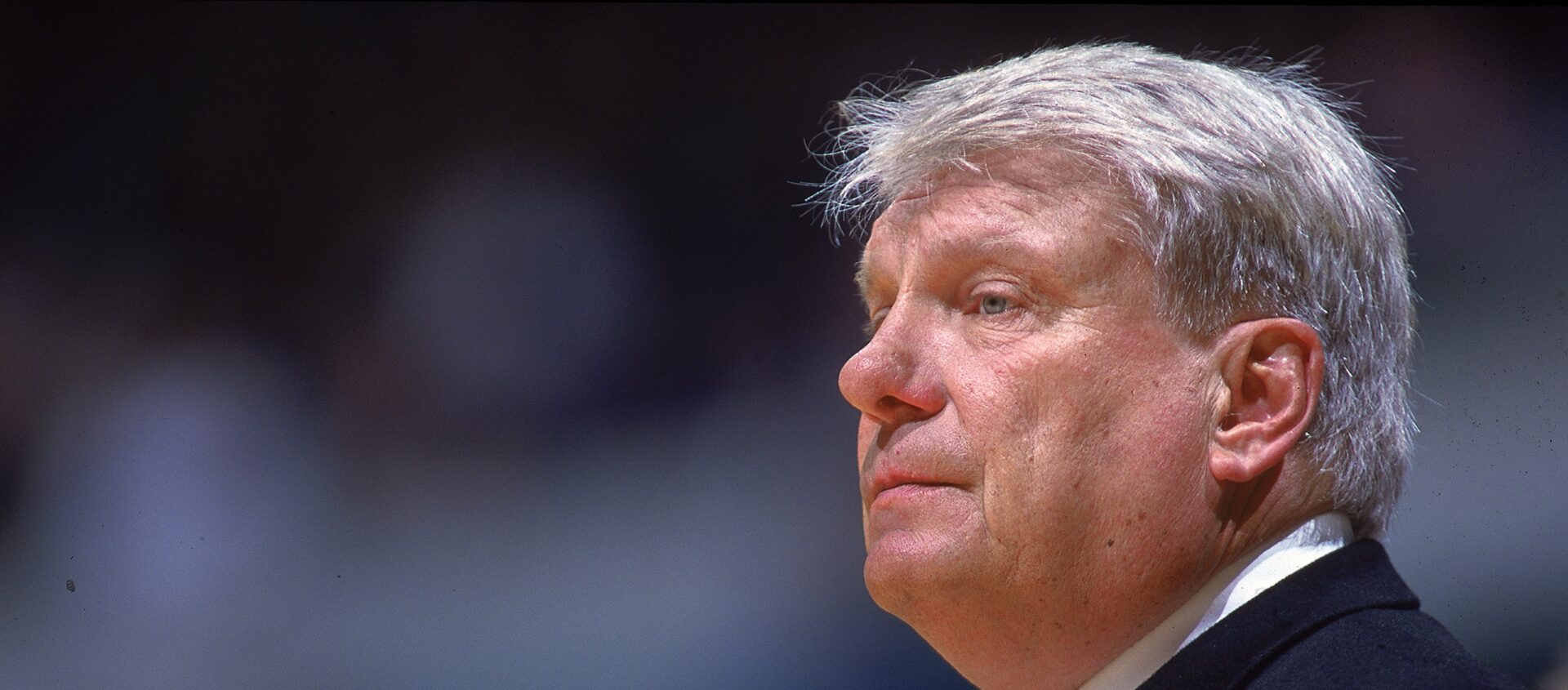

Last summer, when Don Nelson stepped in front of reporters to receive a lifetime achievement award, he was wearing Luka Dončić’s shoes. At 85, with enough years in the NBA behind him that he no longer had anything to prove, Nelson used the moment to say exactly what he thought about the Dallas move that had shaken the league several months earlier.


He called Dončić’s trade to the Lakers a tremendous mistake. One of the most important lessons he had taken from his years in Boston under Red Auerbach, Nelson explained, was simple: when you get a great player, you keep him, build around him and, eventually, put his jersey in the rafters.
A little more than a year later, after Nelson died at 86, Luka was among the many NBA stars who paid tribute to him. He mentioned Nelson’s influence on basketball, with particular emphasis on how much he believed in international players. Dirk Nowitzki went further, he thanked Nelson for believing in him before Dirk fully understood himself what kind of player he could become.
Those two messages probably explain Don Nelson better than a list of 1,335 coaching wins, three Coach of the Year awards and a place in the Basketball Hall of Fame.
He Saw Possibilities Before Positions
Nelson was more than a coach who won a lot of games for a long time. He could look at a player without getting too hung up on what that player was supposed to be under the basketball rules of the day. He was usually more interested in what the player could become if some of those rules were loosened.
Nowitzki might be the best example. In the late 1990s, the NBA was still not particularly comfortable with the idea of a 7-footer regularly operating on the perimeter, attacking face-up, shooting over defenders and spending much of the game somewhere outside the traditional positional boxes. A tall European prospect in those days was more likely to be treated as a risk than a luxury.
Nelson and his son Donnie watched Nowitzki before the 1998 draft and quickly decided they were looking at something unusual. Don later talked about trying to keep him away from competing eyes as much as possible. Dallas eventually acquired his rights through Milwaukee, and Nelson ended up with a player whose basketball identity did not need to be rebuilt.
Dirk’s rookie season gave nobody much reason to romanticize the story. He averaged 8.2 points, struggled with the physical jump from European basketball to the NBA and went through the kind of season that could easily have turned him into another piece of evidence for the old argument that European players could not handle the American game.
Nelson did not strip away the parts that made him different just to make him fit. He did not send Nowitzki to the low post and ask him to become a traditional center simply because he was taller than almost everyone around him. He let him shoot, attack from the perimeter, put the ball on the floor and drag slower big men into places where they did not want to defend. The production came quickly. Nowitzki averaged 17.5 points in his second season and 21.8 in his third.
Two decades later, nobody needs to be told what Dirk did to the way basketball looks at big men. When Nelson started using him that way, the idea still required some explaining.
Modern Basketball Before It Had a Name
That part of Nelson’s coaching career matters because he was experimenting with pieces of modern basketball long before they became ordinary. In Milwaukee, he gave Paul Pressey playmaking responsibilities that helped popularize the term “point forward.” He used smaller lineups before small ball became part of the NBA vocabulary. He pulled big men away from the paint, moved conventional responsibilities around, pushed the pace and looked for advantages without first asking what a particular position was traditionally supposed to do.
At the time, much of it looked like another Nelson eccentricity. Now it looks familiar. The NBA eventually embraced big playmakers, centers who can initiate offense, lineups without a traditional five and guards for whom a shot from 26 feet is simply part of the offense.
Nelson did not forecast every part of the game that followed. What he understood earlier than most was that once a player gives the defense a problem it cannot comfortably solve, limiting that player because he does not fit an established positional definition makes little sense.
Curry Was Another Player Who Did Not Need to Be Normalized
Steph Curry belongs in this story for much the same reason. Golden State selected him seventh in 2009, with Nelson still on the bench. Curry later recalled that Nellie was one of the people who strongly wanted the Warriors to take him. More importantly, once Curry arrived, Nelson gave him the ball and enough room to show what his game could become.
Nelson’s last game as an NBA coach came at the end of Curry’s rookie season. Steph scored 42 points against Portland. Nelson would later say that he recognized an All-Star point guard very early. There was no way for him to know that Curry would eventually stretch the practical limits of shooting in professional basketball. He did know that there was little reason to coach the unusual parts out of him.
Being Ahead of the Game Did Not Make Him Always Right
Of course, Nelson did not get everything right. He never won an NBA championship as a coach. His stint in New York was difficult and short, he clashed with players, and the breakdown of his relationship with Chris Webber remains one of the major stains on his first run with Golden State. His teams were also criticized for playing a style that could be more entertaining than dependable once the playoffs started, especially when defensive weaknesses and Nelson’s most aggressive lineup experiments were exposed. There were times when he was ahead of the game, and then, there were others when he was simply stubborn.
The 2007 Upset Showed Nelson at His Best
The 2007 playoffs showed the best side of that stubbornness. Dallas had won 67 games, the best record in the league, and Nowitzki was about to be named MVP. Golden State entered the postseason as the eighth seed. Nelson had helped build that Mavericks team only a few years earlier and knew both what made it great and where it could be bothered. The Warriors produced one of the biggest upsets in NBA playoff history, eliminating the top seed in six games.
The irony was hard to miss. The coach who had helped Dirk become Dirk was the one who found a way to make his life miserable when the Mavericks seemed ready to chase a championship.
His Influence Was Never About Owning Someone Else’s Career
Nowitzki got that title four years later, with Nelson long gone from the Dallas bench. Curry’s greatest seasons came after Nellie had left the NBA. Luka never played for him at all. None of their careers belongs to Nelson, and giving him too much ownership over what they became would distort the point.
His influence is easier to see in smaller things. With Dirk, Nelson understood that height did not have to decide where a player operated on the floor. With Curry, he did not allow physical limitations or the conventional idea of a point guard to shrink what was possible. And years later, when he looked at Dončić, he saw something he had valued throughout his coaching life, he saw a player good enough that an organization should figure out how to live with his differences rather than casually give him away.
Luka’s Shoes Fit the Story
That makes the image of Nelson in Luka’s shoes last summer feel a little different now. There is no need to turn it into some perfect basketball circle. It simply fits the man.
When Don Nelson saw something unusual that could help win a basketball game, his first instinct was rarely to make it look more conventional, he wanted to see how far it could go…