




The most striking Spanish presence in the 2026-27 EuroLeague may not be found on the floor at all. It is sitting on the sidelines, holding clipboards, managing rotations and increasingly exporting a particular basketball education across the continent.


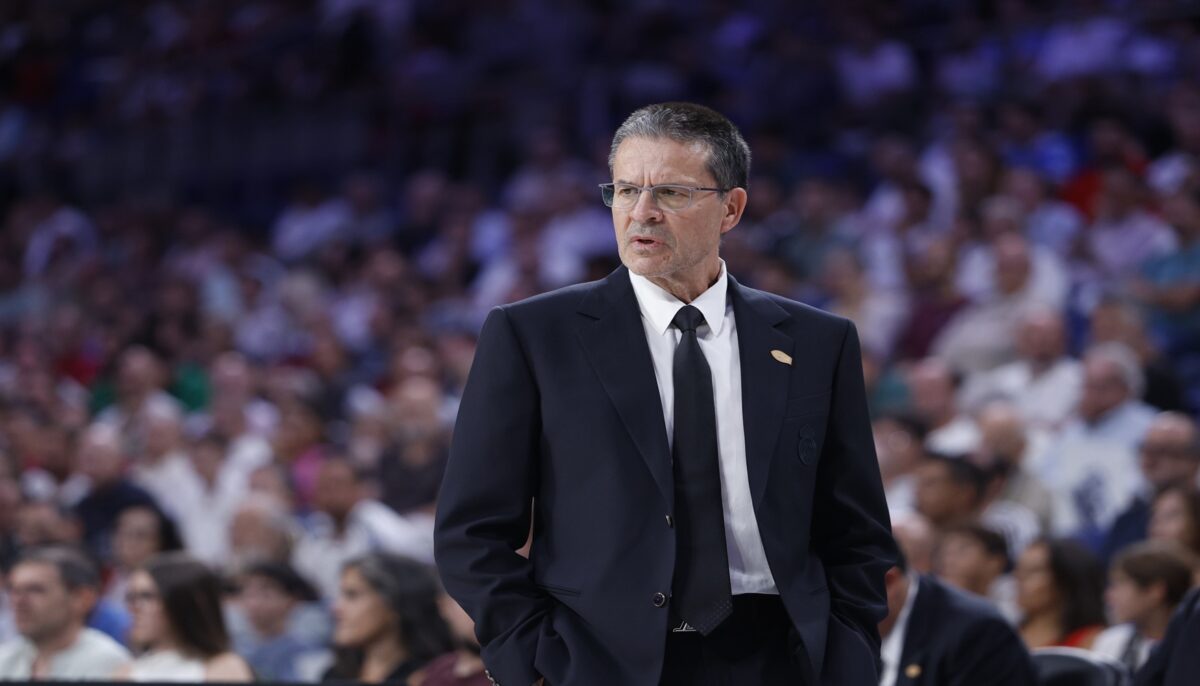
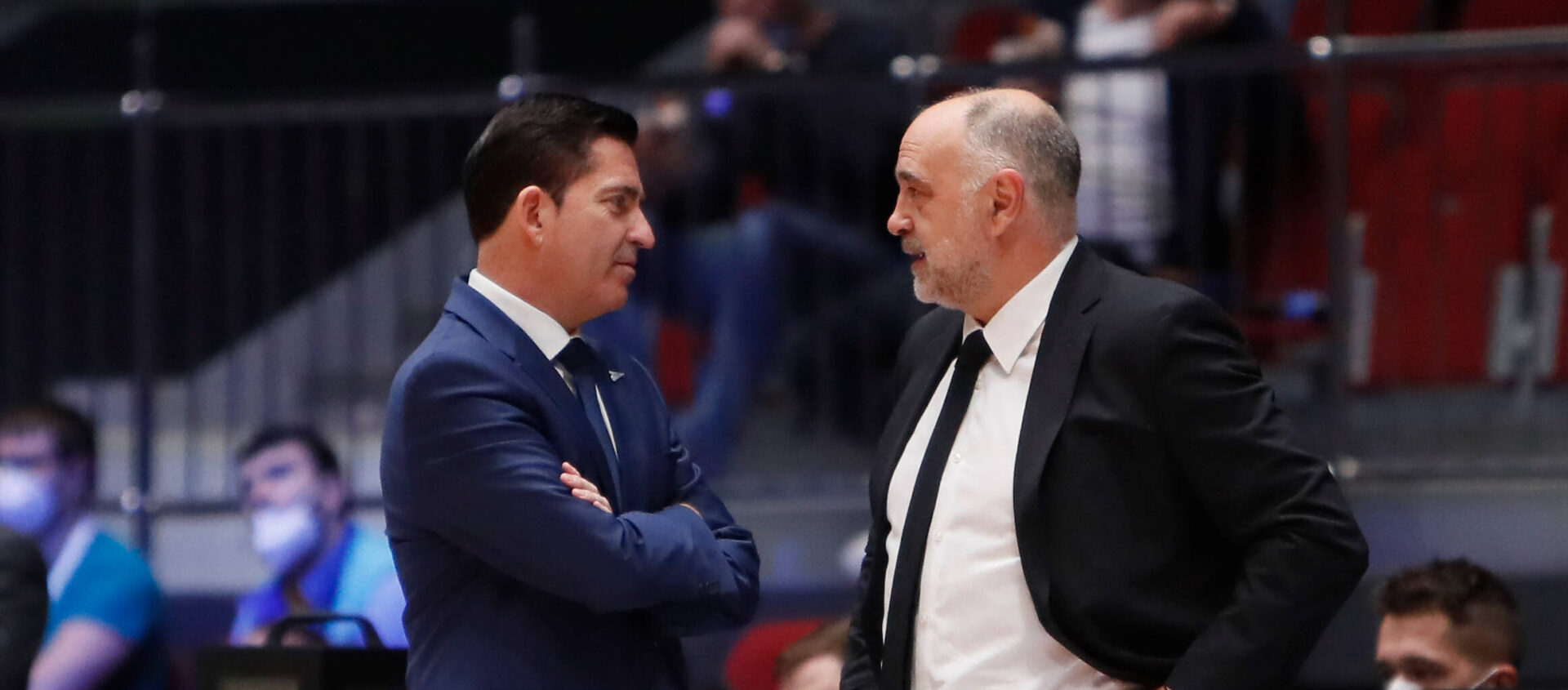
Seven of the competition’s 20 head coaches are Spanish, an unprecedented figure in EuroLeague history: Pedro Martinez at Real Madrid, Xavi Albert at Valencia Basket, Xavi Pascual at Dubai Basketball, Pablo Laso at Anadolu Efes, Alex Mumbru at Virtus Bologna, Joan Penarroya at Partizan and Ibon Navarro at Crvena Zvezda. No other country comes close, with Serbia, Lithuania, Greece, France and Italy represented by two coaches each.
Yet the more revealing number is not seven, but 15.
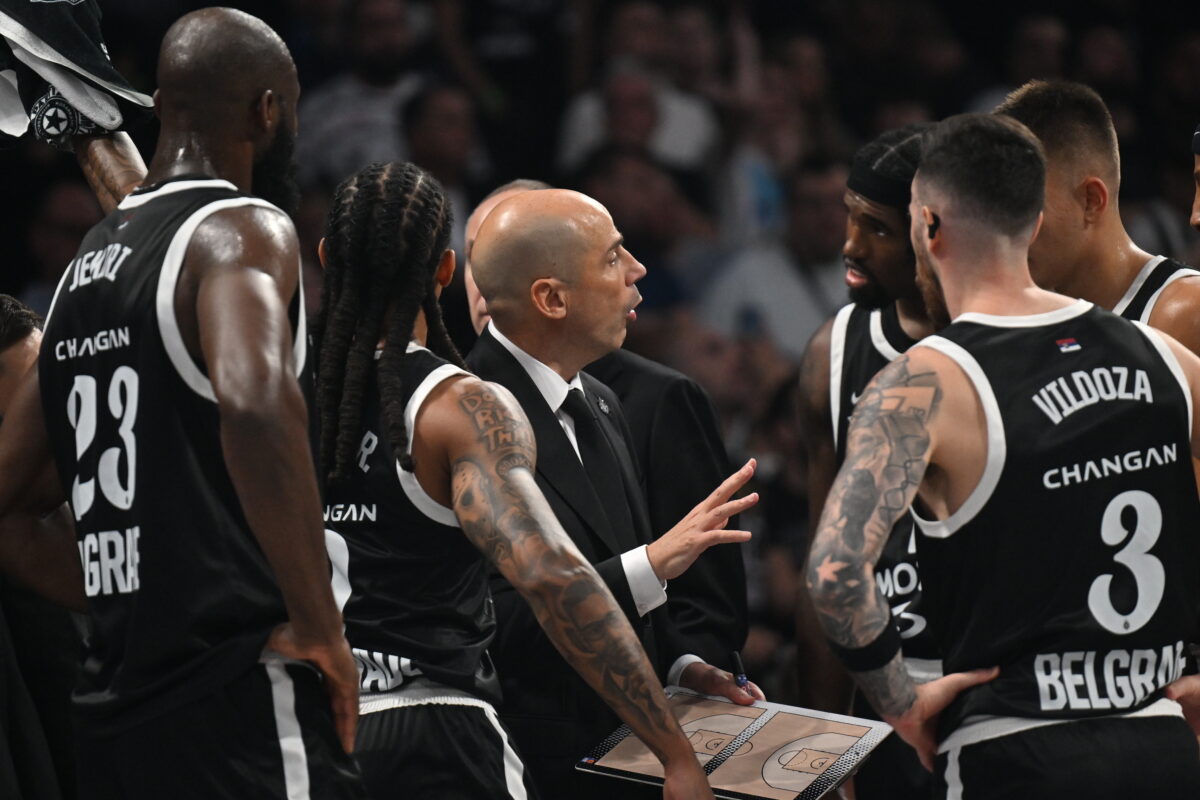
Fifteen of the EuroLeague’s 20 head coaches have some form of previous connection to Spanish club basketball, whether through nationality or experience working in the ACB. In other words, three quarters of the coaches beginning this EuroLeague season have been directly exposed to the Spanish basketball ecosystem at some point in their careers.
What initially looks like an extraordinary statistical coincidence therefore points towards something considerably bigger. Spain is no longer simply exporting players, clubs and a recognizable style of basketball. It has become arguably the most influential coaching laboratory in the European game.
Several generations, no single formula
Even the seven Spaniards themselves make it difficult to speak about a single Spanish coaching prototype, because they arrive in EuroLeague from very different generations, backgrounds and career paths.
At one end stands 65-year-old Pedro Martinez, whose decades in Spanish basketball have finally taken him to Real Madrid after a remarkable season with Valencia, which reached the EuroLeague Final Four and won the Liga Endesa.
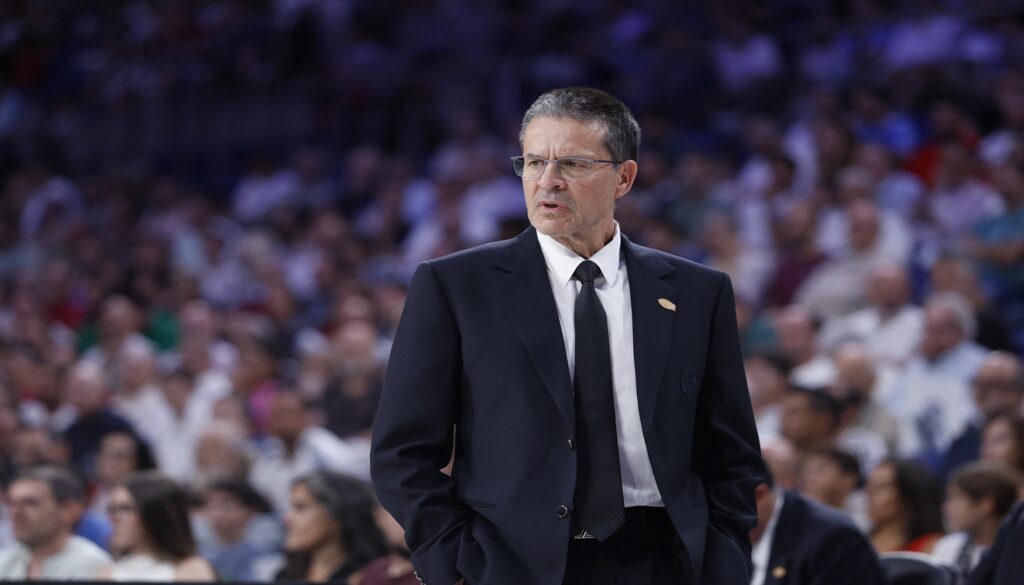
At the other is 39-year-old Xavi Albert, promoted from within Valencia after working through the club’s structure and serving as an assistant to both Mumbru and Martinez. Between them are EuroLeague champions Laso and Pascual, former Spanish international Mumbru, and two coaches in Navarro and Penarroya whose careers were forged through years of work at different levels of the Spanish system before taking them to perhaps the most demanding basketball city in Europe: Belgrade.
That diversity is important because Spain’s influence cannot simply be reduced to one offensive system or one tactical fashion. Laso’s Real Madrid was not Pascual’s Barcelona, Navarro’s Unicaja was not Penarroya’s Baskonia or Barcelona, and Martinez has built successful teams under very different circumstances throughout his career.
What connects them is less a common playbook than a shared environment.
The ACB has spent decades forcing coaches to solve different problems almost every week, against deep tactical preparation and clubs with widely varying resources. Fourteen of the 18 head coaches beginning the new Liga Endesa season are Spanish, meaning the domestic competition continues to reproduce the same coaching depth that EuroLeague clubs are increasingly buying into.
The result is a coaching culture associated with tactical preparation, collective play and an ability to build teams whose identity does not depend entirely on individual talent.
Laso describes the Spanish coach as someone with a particularly complete education.
“The feeling is that, at the highest level of basketball, the Spanish coach is very well prepared in terms of tactics and knowledge of the game and, above all, is very capable of managing the group,” Laso explained to El Pais. “He has complete preparation. That gives him a special value which, even if it sounds bad, is sometimes appreciated more abroad than in Spain.”
For Laso, the current expansion is also the consequence of results. Spanish coaches have gone abroad, succeeded and gradually established a reputation that makes the next appointment easier.
“Spanish coaches have been successful in Europe and have implemented a philosophy that convinces many clubs,” he added.
The ACB connection goes much further than nationality
This is where the 15-out-of-20 figure becomes particularly significant.
The seven Spanish coaches are the most visible expression of the phenomenon, but EuroLeague’s relationship with the ACB goes much deeper. Coaches from elsewhere in Europe have also spent meaningful periods inside Spanish basketball, absorbing its competitive demands and adding those experiences to their own coaching identities.
The consequence is that the ACB increasingly functions as something resembling a finishing school for European coaches. Success there does not guarantee success elsewhere, but surviving and establishing an identity in Spain carries weight when EuroLeague clubs search for coaches capable of managing complex rosters, congested calendars and opponents that can punish tactical weaknesses immediately.
That influence is reinforced by the results of Spanish clubs themselves. Liga Endesa teams have now won at least one European trophy in each of the last 10 seasons, with Bilbao Basket, Valencia, Gran Canaria, Tenerife, Burgos and Unicaja among the clubs contributing continental titles during that period. The coaching export is therefore taking place alongside sustained club success rather than existing independently of it.
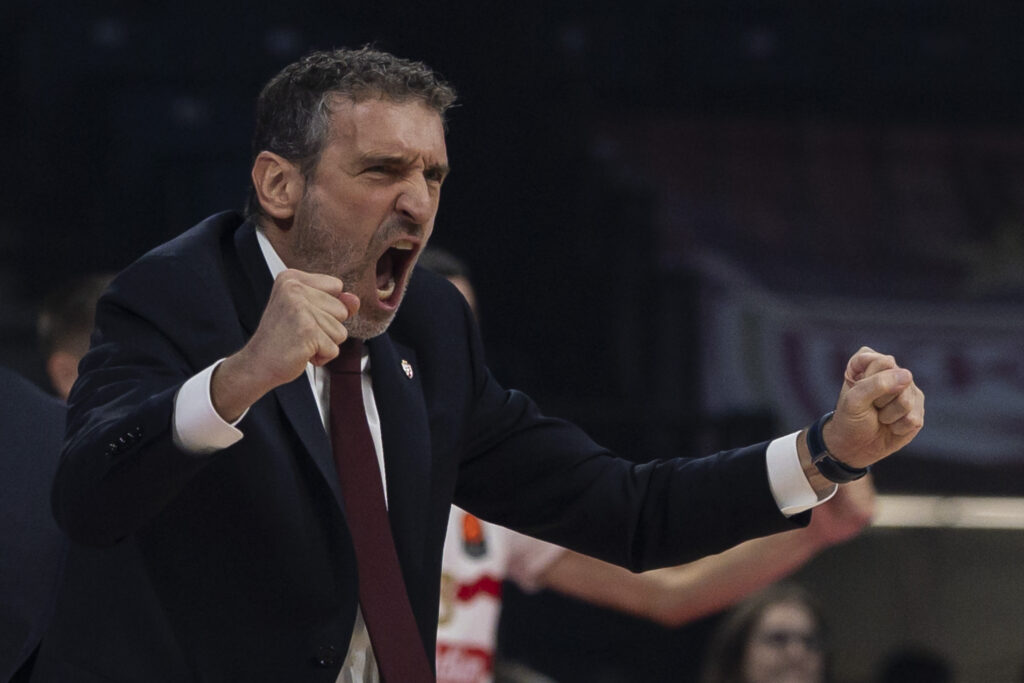
There is historical depth too. Six Spanish coaches have won Europe’s premier club competition, and the source material credits them with 11 of the 14 titles won by Spanish clubs across the competition’s history. The lineage stretches from Joaquin Hernandez, Pedro Ferrandiz and Lolo Sainz to Pascual, Laso and Chus Mateo.
What has changed is not Spain’s ability to produce coaches, but their willingness to leave.
From a domestic school to an export industry
Pascual considers that cultural shift fundamental to understanding why Spanish coaches are suddenly so visible across Europe.
“There have always been very good Spanish coaches, but for different reasons they didn’t end up leaving Spain,” he explained to El Pais. “Now it has coincided that some of us have taken that step with a wave of emerging coaches playing very dynamic basketball, with a lot of speed, which is very popular in Europe.”
For Pascual, the combination of tactical depth and a more dynamic style has opened doors that previously remained closed.
“This combination, together with the tactical side, has opened up the European landscape. There are many of us abroad and many coaches in ACB basketball who are capable of leaving whenever they want.”
The destinations of this season’s seven Spaniards illustrate the transformation better than almost anything else.
Pascual is in Dubai, working for one of European basketball’s most ambitious new projects. Laso is at Anadolu Efes, attempting to return a recent champion to the top level. Navarro and Penarroya are on opposite sides of Belgrade’s rivalry with Crvena Zvezda and Partizan, environments in which every defeat carries enormous scrutiny.
Mumbru has taken over Virtus Bologna while simultaneously holding the German national-team position, while Martinez has been entrusted with Real Madrid and Albert has inherited the Valencia project from which Martinez departed.
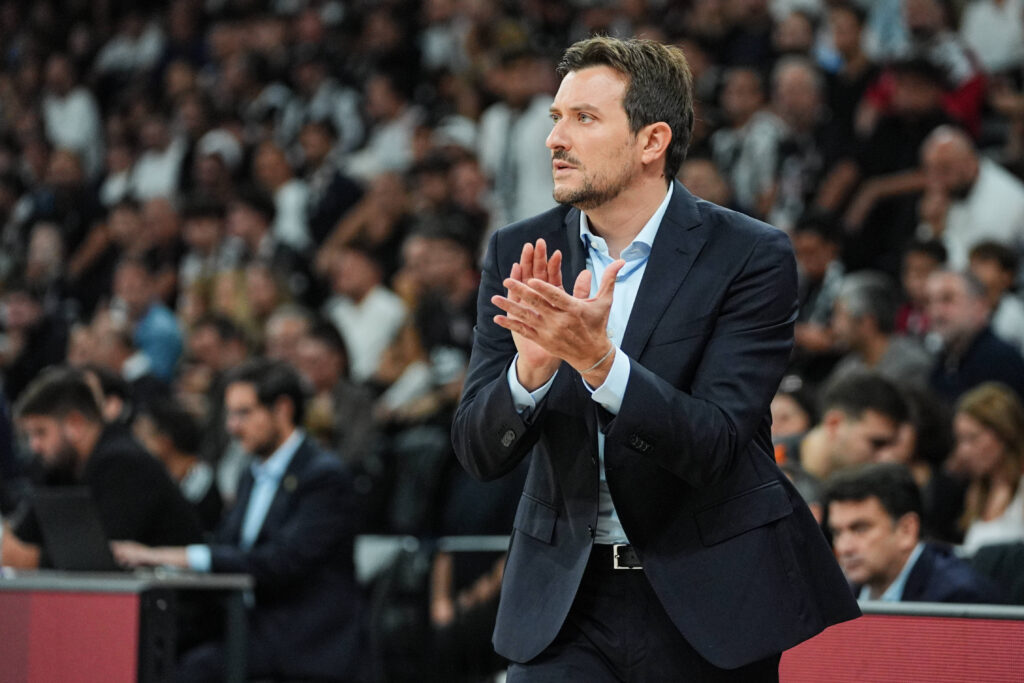
These are not peripheral appointments. They cover traditional powers, wealthy projects, volatile environments and clubs expecting immediate results.
That may be the clearest indication of how the perception of Spanish coaching has changed: EuroLeague clubs are no longer simply interested in Spanish coaches when they want a particular style. They are hiring them for radically different jobs.
What exactly is Spain exporting?
Trying to identify a single Spanish basketball philosophy would probably miss the point. What the ACB appears to export more successfully is a set of coaching habits.
The first is tactical flexibility. Spanish basketball has traditionally placed considerable demands on preparation, scouting and the ability to alter solutions within games, something that becomes increasingly valuable in a EuroLeague where teams regularly play multiple games per week and face dramatically different opponents within days.
The second is collective organisation. Laso’s comments about the beginning of Pedro Martinez’s Real Madrid project are instructive in this respect. After winning the EuroLeague Super Cup, Martinez stressed the importance of making every player feel relevant and establishing a culture in which the team stands above any individual, while Madrid’s senior players were described as responding positively to a less predictable collective structure.
The third is adaptability to resources. A coach who develops in Spain may work with a EuroLeague roster at one point, a EuroCup or Basketball Champions League team at another, or a club whose primary objective is simply remaining competitive domestically. Penarroya’s journey from the lower divisions with Andorra to Burgos, Valencia, Baskonia and Barcelona is one example; Navarro’s path through assistant roles and clubs such as Murcia, Andorra and Unicaja before returning to EuroLeague with Crvena Zvezda is another.
Two fellow countrymen go head-to-head in Serbia tonight 🇪🇸 @kkcrvenazvezda vs @AnadoluEfesSK tips off shortly! pic.twitter.com/Kb5AV2jgoZ
— EuroLeague (@EuroLeague) October 1, 2026
There is also an established development pathway. Albert’s career is perhaps the clearest current example: from Valencia’s structure and youth basketball through assistant roles to becoming a EuroLeague head coach at 39. His appointment illustrates that the Spanish coaching boom is not being sustained only by the famous names of the previous generation.
The Spanish school has become a European one
There is an irony to all this. EuroLeague is becoming more international than ever, with new markets, increasingly global investment and an ongoing debate about the future structure of elite European basketball, yet the people entrusted with organising teams on the court increasingly come through one domestic basketball culture.
Seven of 20 head coaches being Spanish would already represent an extraordinary concentration. Fifteen having some connection to Spanish club basketball makes the trend much harder to dismiss as the product of one unusually successful generation.
Spain’s greatest coaching achievement may therefore be that there is no longer one obvious “Spanish coach.” There are veterans and newcomers, offensive innovators and detail-oriented tacticians, former elite players and lifelong coaches, EuroLeague champions and pros still searching for their first breakthrough at this level.
What they increasingly share is an education shaped, directly or indirectly, by the ACB.
For decades, Spanish basketball’s international reputation was constructed around its golden generations of players, the success of its national teams and the power of clubs such as Real Madrid and Barcelona. The current EuroLeague landscape suggests another export should now be placed alongside them.
In many ways, EuroLeague now speaks Spanish from the bench.