








From adidas’ ambitious experiment and LeBron James’ infamous outburst to the Cavaliers’ 2016 championship and Panathinaikos’ distinctive uniforms: How short-sleeved jerseys entered basketball and why they have almost completely disappeared.


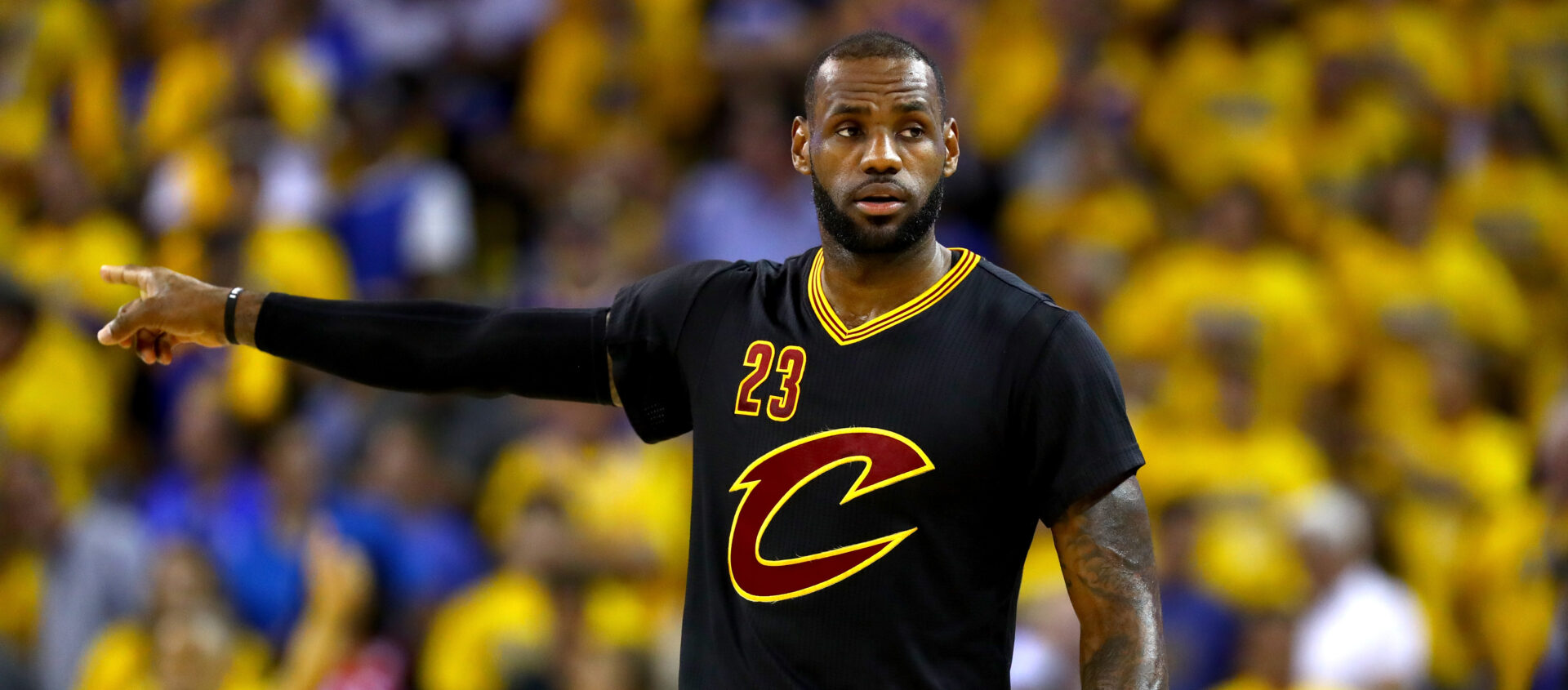
Looking back at the Cleveland Cavaliers’ celebration after winning the 2016 NBA championship, one detail now seems almost unusual. LeBron James, Kyrie Irving and their teammates are celebrating the greatest moment in the franchise’s history while wearing black, short-sleeved jerseys.
They were the same jerseys that had caused LeBron to lose his temper and rip the sleeves apart during a game only a few months earlier. So, how did this particular design enter basketball and why do we hardly ever see it anymore?


A jersey designed for the fans

The experiment began in 2013, when adidas — the NBA’s official uniform supplier at the time — introduced the Golden State Warriors’ short-sleeved jerseys. The idea was not based exclusively on performance.
A sleeveless basketball jersey is not always an obvious choice for casual wear, while a design resembling a T-shirt could be worn much more comfortably away from the court. The objective was to appeal to a broader audience and increase merchandise sales.
At the same time, sleeves provided additional space for commercial use and potential sponsor logos, although NBA commissioner Adam Silver insisted that advertising had not been part of the original plan.
Adidas promoted the technology and flexibility of the material, arguing that it did not restrict the players’ movement. The players themselves, however, were not particularly enthusiastic about the change.
LeBron’s reaction became the defining image
The criticism started almost immediately. Stephen Curry described the Warriors’ new jerseys as “ugly”, while Dirk Nowitzki, Robin Lopez and several other players publicly expressed their dislike for them.
The main complaints concerned the tightness around the shoulders, freedom of movement while shooting, sweat management and, of course, their overall appearance.
The moment that came to define the short-sleeved jersey era occurred in November 2015. After struggling early against the New York Knicks, LeBron James grabbed the sleeves of Cleveland’s black jersey and ripped them open, trying to give his arms more freedom.
James later explained that his reaction had more to do with his poor performance than the jersey itself. However, the images had already travelled around the world.
The irony is that only a few months later, those uniforms became associated with the greatest achievement of his career. LeBron reportedly chose the black short-sleeved jerseys for Game 5 of the 2016 NBA Finals, when he and Kyrie Irving scored 41 points each.
The Cavaliers wore them again in Game 7, completing their historic comeback from a 3-1 deficit to defeat the Warriors and win the first NBA championship in franchise history.
LeBron’s legendary block on Andre Iguodala and Irving’s decisive three-pointer over Curry both happened while Cleveland were wearing the jerseys that had received so much criticism.
The Panathinaikos experiment

The trend also reached Greece through Panathinaikos, who were working with adidas at the time. During the 2015/16 season, the Greens unveiled an all-green, short-sleeved uniform that was intended to be used in selected Greek League games.
According to the club’s official presentation, the jersey was 26% lighter and featured adidas’ adizero technology. Panathinaikos retained the concept the following season, presenting a dark green short-sleeved design with turquoise details as their third uniform.
However, the design never became the club’s main on-court identity. It remained an alternative choice, closely connected to the direction adidas was following with its basketball uniforms at the time.
Why did they disappear?
There is no rule prohibiting short-sleeved basketball jerseys. FIBA’s regulations explicitly allow uniforms with sleeves, as long as those sleeves end above the elbow.
Their disappearance was mainly caused by four factors:
- Most players never embraced them, with some believing that the sleeves affected their shooting motion.
- Many fans felt that they did not resemble traditional basketball uniforms.
- Their commercial advantage was limited, as supporters could simply purchase a cheaper team T-shirt offering a similar look.
- The NBA’s partnership with adidas ended in 2017, and Nike decided not to continue the short-sleeved concept after taking over as the league’s uniform supplier.
Short-sleeved jerseys did not disappear because they failed technologically or because they were banned. They faded away because they were unable to change one of basketball’s strongest traditions.
The sleeveless jersey remains inseparable from the sport’s identity, and the players never found a convincing reason to abandon it.
Still, the only championship in Cleveland Cavaliers history was won in short sleeves. That alone was enough to secure adidas’ brief and controversial experiment a permanent place in basketball history.