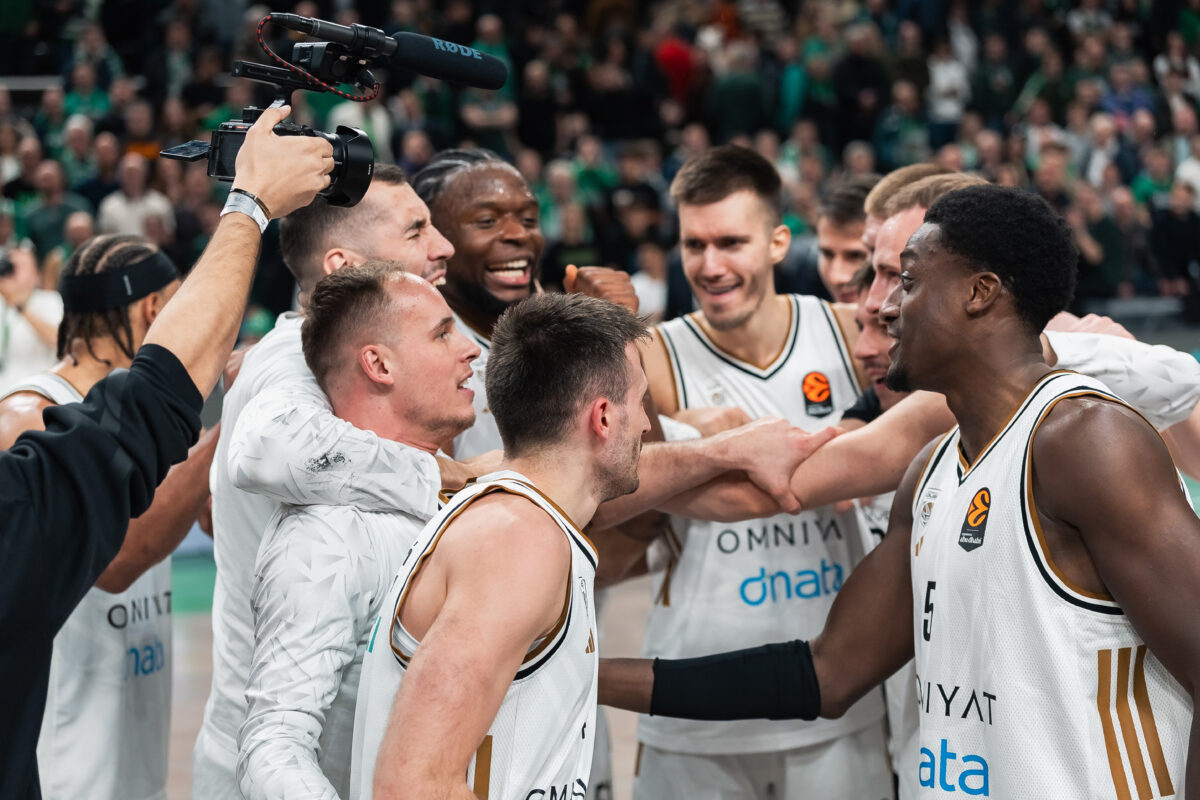




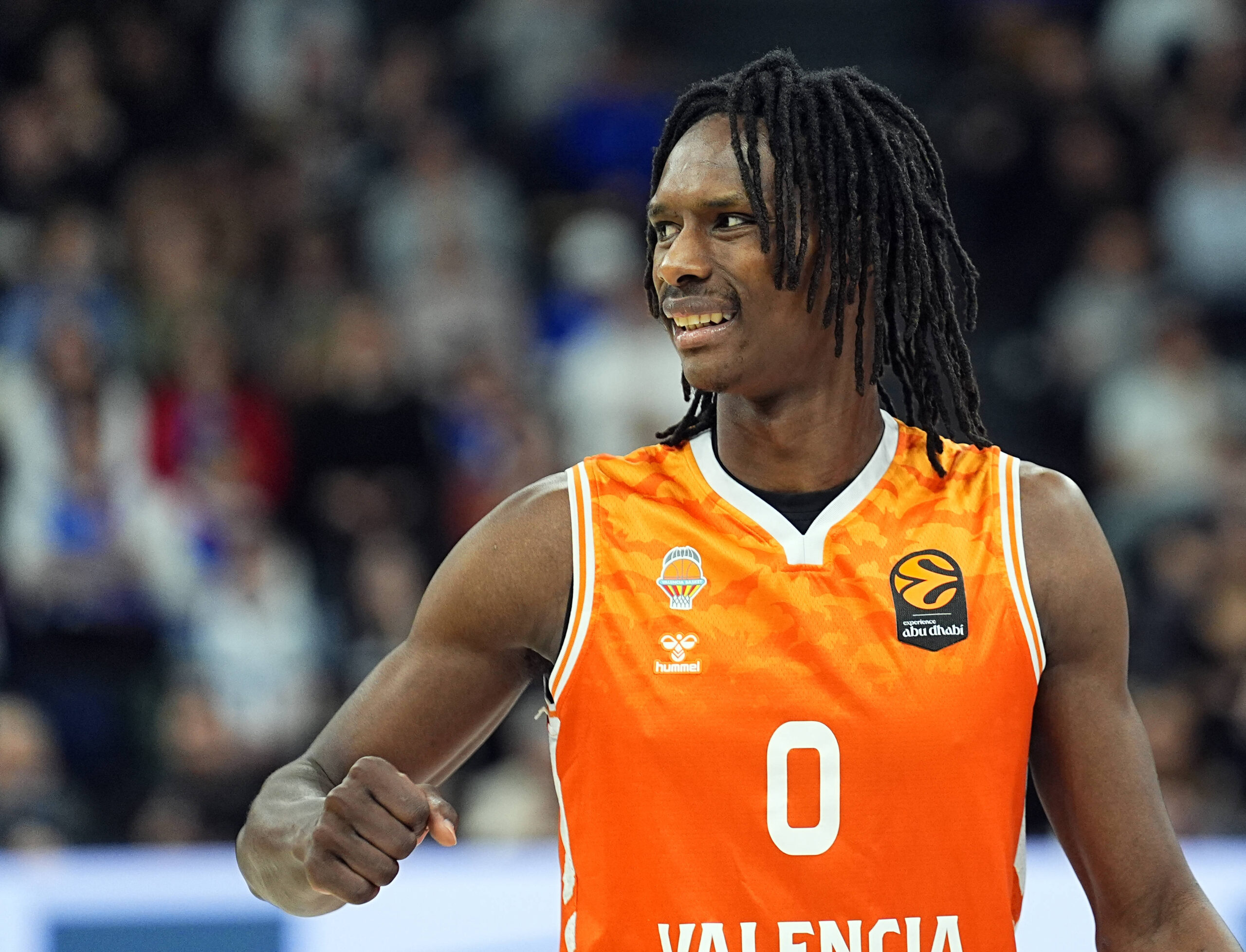

When Valencia Basket announced in mid-April 2026 that Brancou Badio had signed a contract extension through the summer of 2029, the move felt less like a routine piece of roster management and more like the formal recognition of a relationship that had been years in the making.


For Valencia, retaining the Senegalese guard was not simply about keeping one of the most versatile perimeter players in Europe. It was an investment in a player who had become synonymous with the values the club increasingly wants to represent: patience over shortcuts, development over hype, and continuity over constant reinvention.
For Badio himself, the extension represented something even more meaningful. It was another milestone in a journey that began more than a decade earlier in Rufisque, a coastal city near Dakar, when a teenager who spent his afternoons studying Kobe Bryant’s footwork boarded a plane for Spain without any guarantees that basketball would ever become his profession.
At the time, neither Valencia Basket nor the EuroLeague formed part of the immediate picture. The dream was much simpler. Like countless young players growing up in Senegal, Badio wanted an opportunity.
Everything that followed would be built one step at a time.
Growing up in Rufisque
Long before he became known across European basketball circles, Brancou Badio was known at home as “Papi.”
The nickname came from his mother, who affectionately called her youngest son by the name of his grandfather. Years later, after professional contracts, international appearances and EuroLeague success, the nickname has remained one of the few public reminders of the quiet family environment from which he emerged.
Rufisque, located on Senegal’s Atlantic coast not far from Dakar, has never been considered one of the world’s basketball capitals. Yet the sport occupies a special place in Senegalese culture. The country has produced generations of talented players and remains one of Africa’s most consistent basketball powers, creating a pathway that allows young athletes to dream beyond their immediate surroundings.
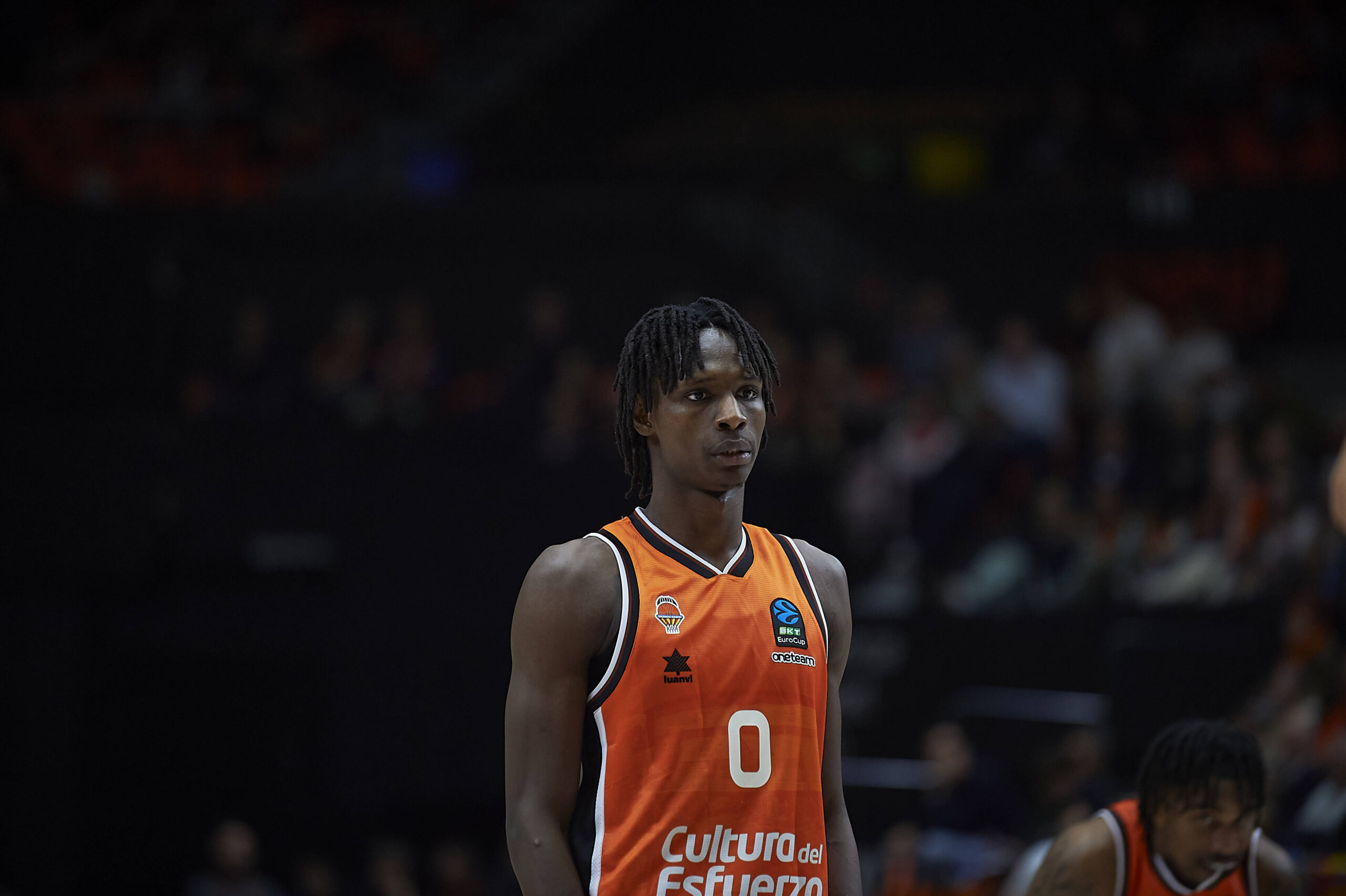
Badio was one of those dreamers.
Like many boys his age, he spent countless hours watching NBA games and studying his favorite players. Among all of them, one athlete left a particularly strong impression: Kobe Bryant.
What fascinated Badio was not merely Bryant’s ability to score points or win championships. It was the obsessive attention to detail that defined his approach to the game.
“I watched Kobe Bryant a lot, especially how he worked and how he moved on the court,” Badio recalled in an interview with Las Provincias. “I practiced a lot of mid-range shots, turnarounds and shots after fakes. Those mid-range shots are not very fashionable nowadays, but they are still a weapon.”
The quote reveals something important about the player Badio would eventually become.
Many young athletes fall in love with the glamour of basketball. Badio became fascinated by the process. Even as a teenager, he paid attention to the hours of repetition behind the highlights, to the technical details hidden behind the spectacular moments. Looking back, that fascination with improvement rather than immediate results would become one of the defining characteristics of his career.
At the time, however, professional basketball remained little more than a distant aspiration.
“In Rufisque, all of us kids who played basketball dreamed of playing for the big clubs in Europe or in the NBA,” he remembered.
The challenge was finding a way there.
The video that changed his life
That opportunity arrived unexpectedly in 2014.
Badio was only 15 years old when a friend sent a video featuring some of his highlights to Canarias Basketball Academy, one of Spain’s most respected development programs. The footage attracted attention and eventually led to an invitation that would alter the course of his life.
For many European prospects, moving from one academy to another is a relatively ordinary step in their development.
For Badio, the decision involved crossing continents.
Leaving Senegal meant leaving family, friends, language and familiarity behind. It meant entering a country he barely knew and a basketball culture radically different from the one he had grown up with.
Many talented young players struggle with that transition. Some never fully adapt to the emotional demands that accompany such a move.
Badio approached the challenge with a mindset that has remained remarkably consistent throughout his life.
“I’ve always kept my feet on the ground and focused on working,” he explained. “My mentality has always been to go little by little. I’ve always worked step by step and that has allowed me to keep moving up levels since arriving in Spain.”
What sounds like a simple statement today carried enormous significance at 15.
While many young prospects become consumed by long-term ambitions, Badio concentrated on adaptation: learning Spanish, understanding European basketball, and improving every day.
The destination could wait.
Four years inside Barcelona’s system
The next major chapter of Badio’s development began in 2017, when he joined FC Barcelona’s basketball structure.
For most young players, signing with Barcelona would represent the culmination of years of effort. The club remains one of the most prestigious institutions in European basketball, with a developmental system that has produced countless elite players.
Yet Badio’s years in Catalonia were defined less by glory than by education.
Between 2017 and 2021, he spent four seasons with Barcelona B, competing primarily in Spain’s lower professional divisions while attempting to navigate one of the most competitive basketball environments on the continent.
Every season introduced a new generation of highly regarded prospects. Every practice session became a competition for opportunities. Every player understood that only a select few would eventually reach the first team.
Those years helped shape Badio’s understanding of professional basketball in ways that statistics cannot easily measure.
He learned defensive discipline, how to prepare professionally, how to compete every day against talented players fighting for the same opportunities.
By 2021, however, it had become increasingly clear that the pathway to Barcelona’s senior roster remained uncertain. Many players in that situation become trapped between potential and opportunity. Some stay too long. Others leave prematurely.
Badio made a difficult decision.
At 22 years old, he chose to leave one of Europe’s biggest clubs in search of a chance to build his own career elsewhere.
Germany and the first taste of professional responsibility
The next stop was Frankfurt.
When Badio joined the Fraport Skyliners in 2021, he entered a completely different environment from the one he had known at Barcelona.
For the first time in his career, he was no longer being evaluated primarily as a prospect. Coaches were not asking what he might become three years later. They needed production immediately.
The Bundesliga proved to be a crucial stage in his development.
German basketball’s physicality and athletic demands forced him to accelerate his growth. The league’s intensity exposed weaknesses that still required improvement while simultaneously highlighting strengths that would later define his career.
During his season with Frankfurt, Badio averaged double figures and established himself as a player capable of impacting games on both ends of the floor. More importantly, he demonstrated that he could thrive when entrusted with genuine responsibility.
The experience transformed him from an interesting developmental prospect into a legitimate professional player.
The coach who changed his career
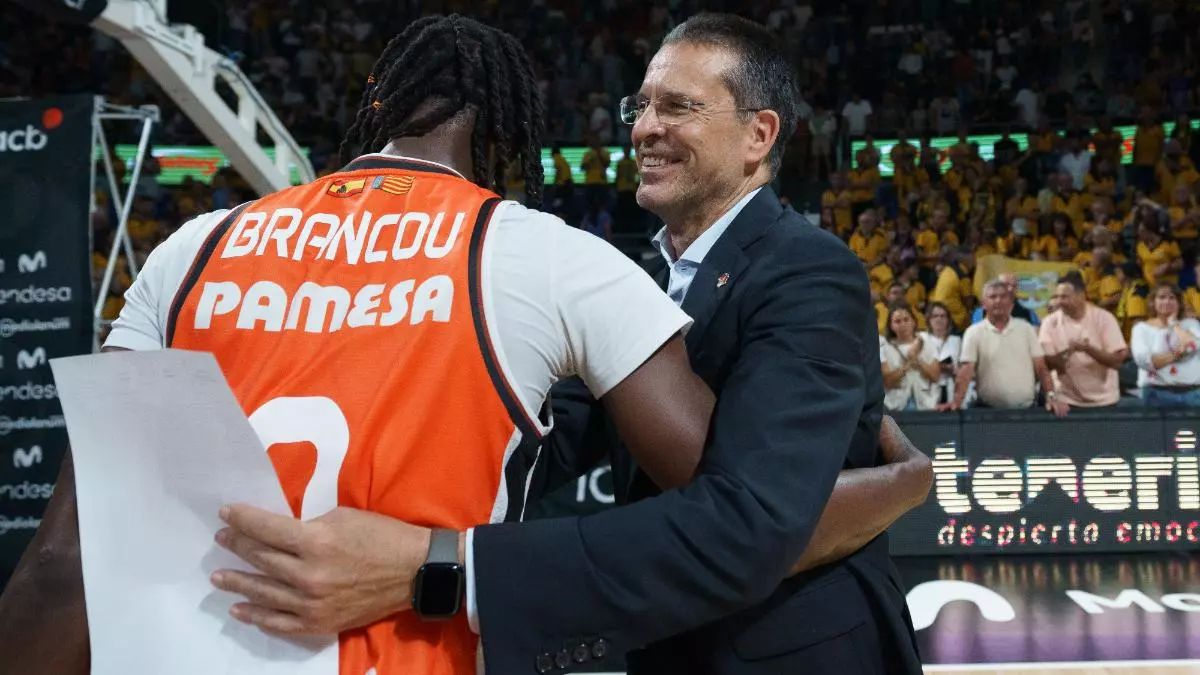
If Frankfurt provided proof that Badio belonged at the professional level, Pedro Martinez provided the environment that allowed him to flourish.
When the veteran coach brought him to BAXI Manresa in 2021, he was making a bet on potential. Martinez believed there was far more to Badio’s game than most observers had recognized.
Over the next two seasons, that belief would be rewarded.
Under Martinez, Badio’s offensive responsibilities increased dramatically. His confidence grew. His decision-making improved. The raw athleticism and defensive intensity that had always characterized his game were complemented by a much deeper understanding of how to influence winning basketball.
Few people have played a more important role in his development.
“He has helped me a lot not only in my career but also in my personal life,” Badio said. “Beyond being a great coach, he is a very good person and always helps you however he can. In basketball, he has given me a lot of confidence and I have improved a lot as a player with him.”
The relationship extended beyond tactics or strategy.
Martinez gave Badio something every player needs at a critical stage of development: belief.
By the conclusion of his second season in Manresa, Badio was no longer viewed as a promising player with potential. He had become one of the most dynamic guards in the Spanish league.
Following Pedro to Valencia
When Pedro Martinez returned to Valencia Basket in 2024, it was hardly surprising that he wanted Badio to join him.
The coach understood exactly what he was getting.
Valencia’s decision to sign the Senegalese guard did not generate the same excitement as some of the club’s higher-profile acquisitions. Yet internally there was a clear conviction that Badio possessed qualities that extended beyond statistics.
He was fiercely competitive, as could defend with relentless intensity, and play multiple roles.
The fit proved almost immediate.
As Valencia entered one of the most ambitious periods in its history, with the Roig Arena project on the horizon and growing expectations both domestically and in Europe, Badio emerged as one of the players who best reflected the club’s long-term vision.
More than basketball
One of the most revealing aspects of Badio’s recent interviews has little to do with basketball.
Discussing Awa Fam, the Valencia-born daughter of Senegalese immigrants who became the No. 3 pick in the 2025 WNBA Draft, Badio spoke passionately about representation and opportunity.
“I’m very proud of everything she is achieving and everything she has ahead of her,” he said. “I’d like examples like hers to show that the only important thing is being a good person and working hard, no matter where you come from.”
The comment offers insight into how Badio views his own story.
Despite everything he has accomplished, he rarely frames his journey in terms of personal success. Instead, he often returns to broader themes: opportunity, effort and responsibility.
Now a father himself, he frequently speaks about the future through a different lens. In the same interview, he admitted that his concerns extend beyond basketball and toward the challenges younger generations may face.
“As a father, what worries me most about the future is everything that can come through the internet and social media,” he said. “Artificial intelligence scares me more than people.”
The comment reflects a player whose priorities have evolved significantly since leaving Senegal as a teenager. Basketball remains central to his life, but it’s no longer the only thing that matters.
Finding home
When Badio signed his extension until 2029, he was committing to a city.
“My family and I have found the perfect city to live in,” he explained. “We’re very happy here and with the club. We like Valencia Basket’s project and hopefully we can stay for many more years.”
For someone who left home at 15 and spent more than a decade adapting to new environments, the statement carries particular weight.
Valencia represents something his career rarely offered during its early years: permanence.
More than a decade has passed since a teenager from Rufisque boarded a plane bound for Spain after a friend sent a highlight video to Canarias Basketball Academy. Along the way there were years spent learning inside Barcelona’s developmental structure, a crucial season in Germany that transformed him from prospect to professional, and a partnership with Pedro Martinez that unlocked levels of confidence he had never previously experienced.
There were moments when the future seemed uncertain, opportunities that required courage, and decisions that demanded patience.
Through all those changes, however, one principle remained remarkably consistent.
Brancou Badio never rushed the process.
The teenager who once spent afternoons studying Kobe Bryant’s footwork under the Senegalese sun ultimately reached the EuroLeague not because he was the most celebrated prospect of his generation, but because he embraced a philosophy that modern basketball rarely celebrates and even more rarely rewards.
He simply kept working, one step at a time, until the rest of the basketball world finally caught up.