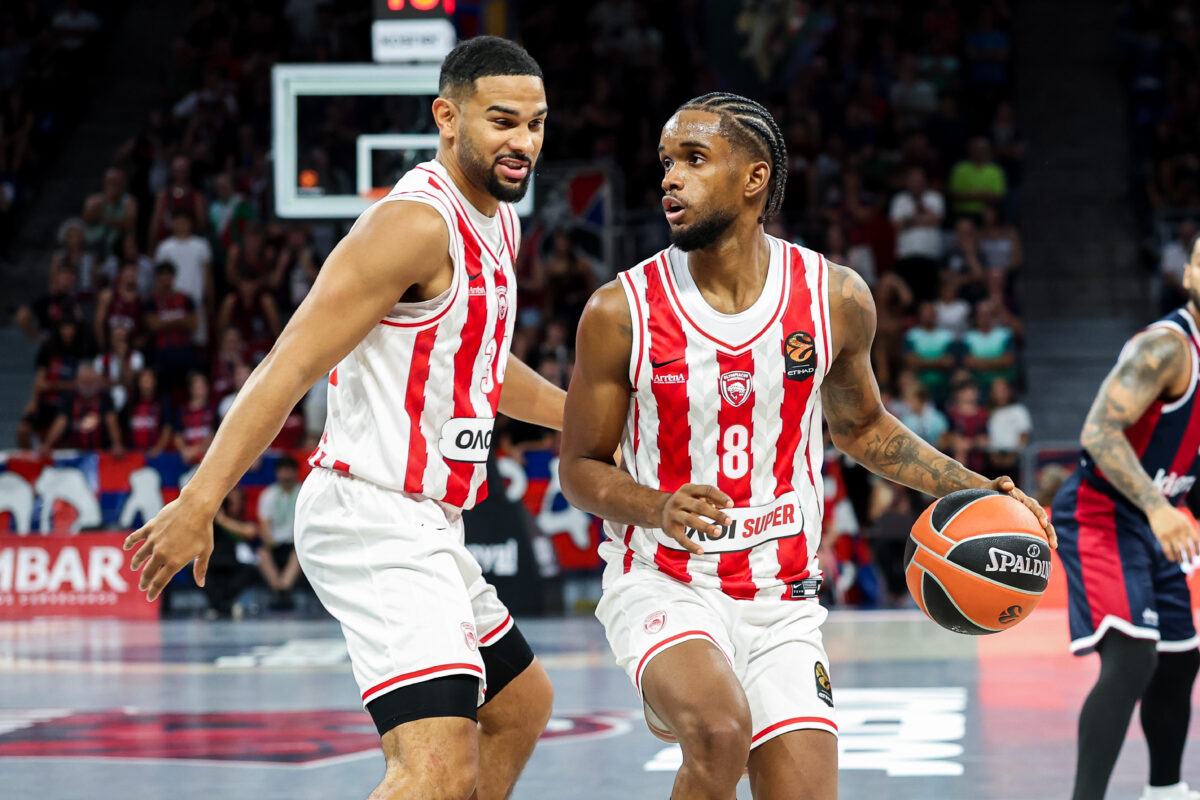









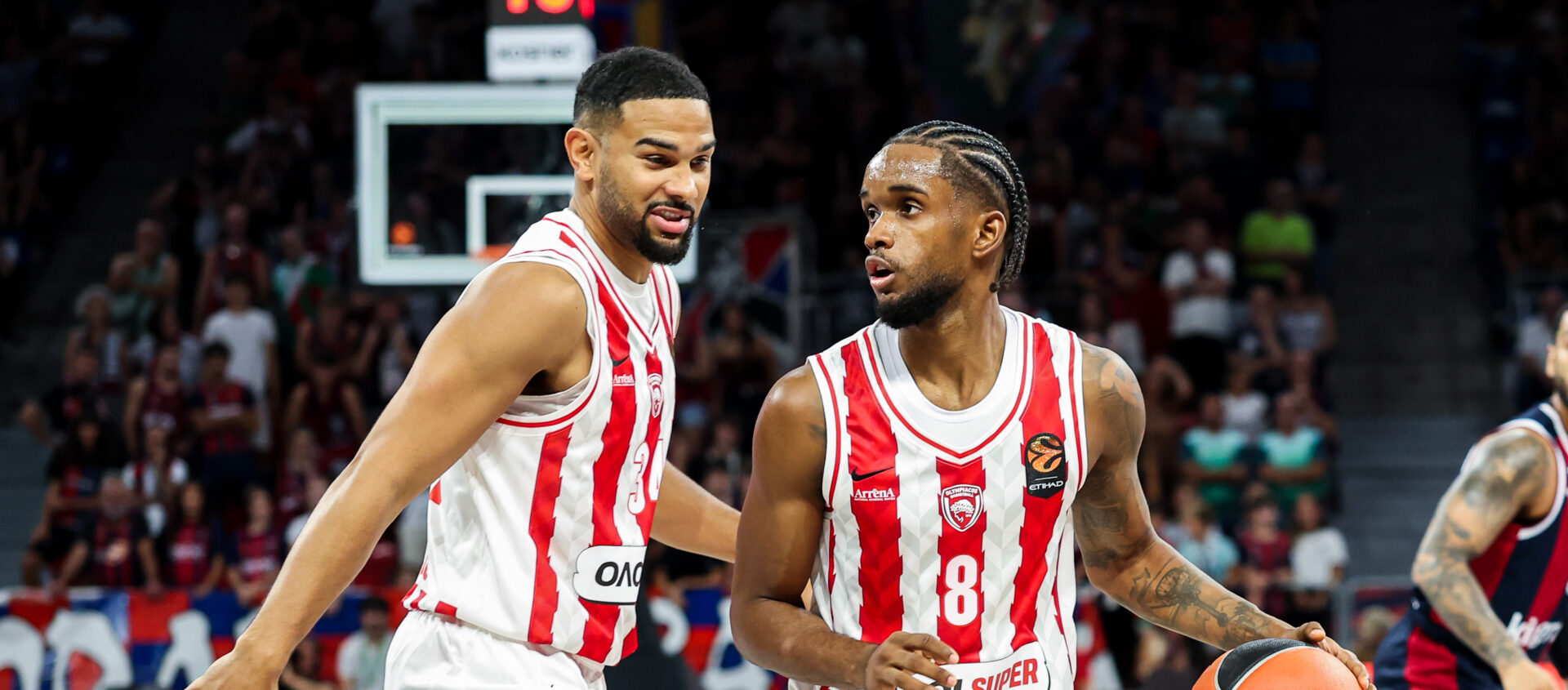

There is an easy way to read Olympiacos’ 106-89 win over Baskonia in Vitoria. Sasha Vezenkov scored 22 points, Tyler Dorsey added 25, the pair combined for 47 and the reigning European champions opened their EuroLeague season with an emphatic road victory. But there is another, far more interesting way to look at it.


Baskonia made 16 three-pointers. Olympiacos made just eight. The Spanish side attempted 80 field goals, compared to only 64 for Olympiacos and yet, when the final buzzer sounded, Georgios Bartzokas’ team had won by 17 points.
This is more than an interesting statistical oddity. It might actually be the clearest early indication of how Olympiacos want to generate offense this season.
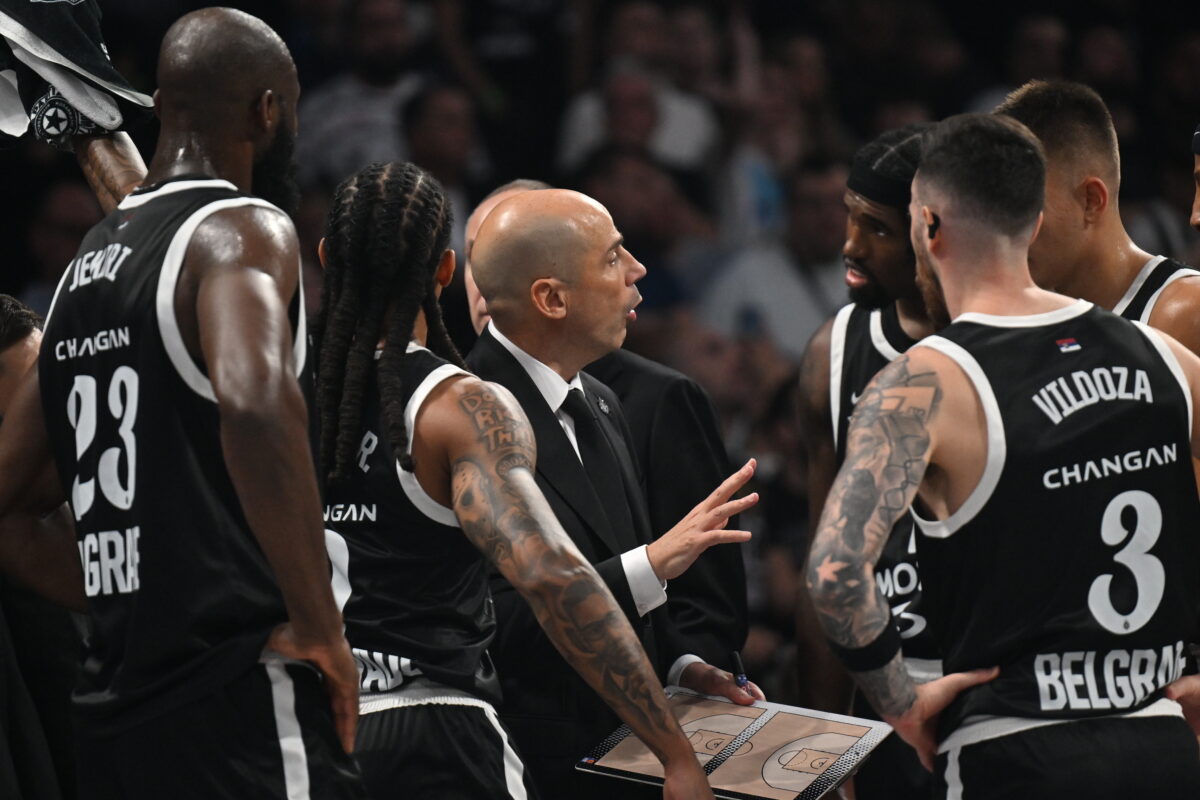
The 28-of-42 that explains almost everything
Olympiacos finished the game shooting 28-of-42 from two-point range — 66.7%. From beyond the arc, they went 8-of-22, a perfectly respectable 36.4%, but they never needed to rely on high-volume three-point shooting to produce an elite offensive night. Baskonia, on the other hand, converted 16 of their 44 attempts from deep but made only 14 of 36 shots inside the arc. There was another major difference.
Olympiacos reached the free-throw line 28 times and converted 26 of those attempts. That created a rather unusual equation. Baskonia took 16 more field-goal attempts and made eight more three-pointers, yet never truly came close to controlling the game, because basketball is not simply about how many shots you take.
It is about which shots you create. Olympiacos consistently managed to move their offense towards the most efficient areas of the floor. At the rim. On cuts. In transition. Through short-roll situations. At the free-throw line. The three-pointer was part of the offense, but it was not the offense itself.
Vezenkov and Dorsey are the result, not the entire explanation
Dorsey finished with 25 points on 8-of-11 shooting, including 4-of-6 from three, without committing a single turnover. Vezenkov added 22 points, shooting 8-of-10 from two and a perfect 6-of-6 from the free-throw line. Jean Montero provided another dimension with 15 points and five assists, while Tyrique Jones produced 12 points and eight rebounds in just over 12 minutes.
The individual numbers were impressive, but the way those numbers were created matters even more. Vezenkov remains one of the best players in Europe at producing points without stopping the flow of an offense. Cuts, transition opportunities, offensive rebounds, quick post-ups and his constant shooting threat force defenses to remain in motion. He does not need endless isolation possessions to dominate a game.
That, in turn, creates a much cleaner environment for Dorsey. When the defense is already moving, Dorsey does not have to operate as a full-time primary creator. He can attack closeouts, punish late rotations and use his shot-making against a defense that has already been forced out of its preferred shape.
Montero adds another ball-handler capable of breaking the first line of defense and that might be the key to everything.
Olympiacos do not need every possession to end with a difficult three because nothing else was available. They can use the three-pointer as the consequence of good offense, rather than as a substitute for it.
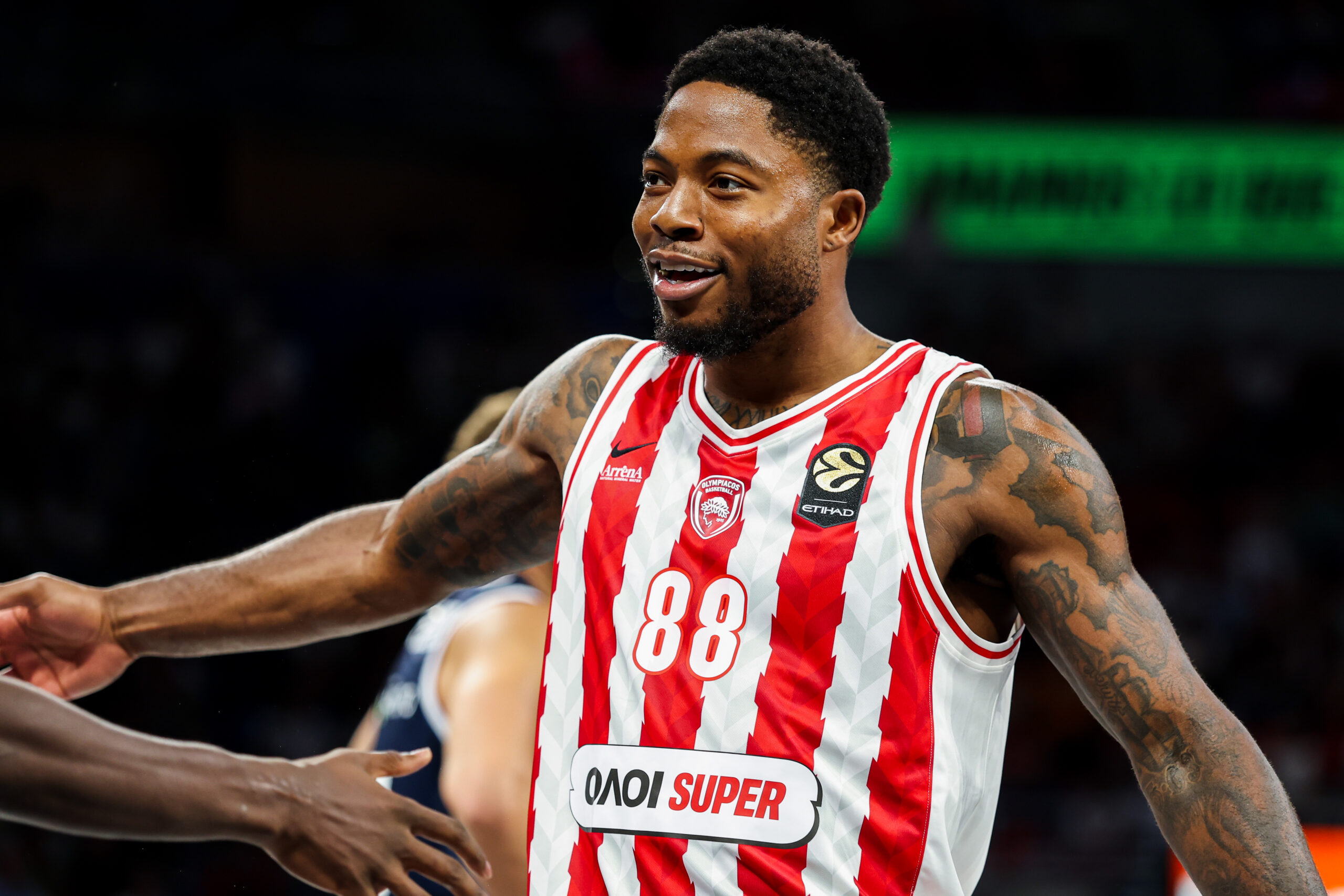
Going against the modern trend without ignoring it
Modern basketball has become increasingly obsessed with three-point volume. The logic is understandable. More spacing, more attempts from behind the arc and fewer inefficient mid-range shots generally produce better offensive results over a large sample. Olympiacos are not rejecting that philosophy. They are simply showing that there is more than one way to build an elite offense.
In Vitoria, they scored 106 points while attempting only 22 threes. They attacked the paint, generated free throws and converted almost 67% of their two-point attempts. That is not an anti-analytics approach. Quite the opposite. It is about creating the most valuable shot available rather than chasing one particular type of shot regardless of context.
When Vezenkov cuts into an open lane, when Dorsey attacks a rotating defense or when Jones finishes around the rim, Olympiacos do not need to move the ball back outside simply because modern basketball says they should shoot more threes. Efficiency remains the goal. The route towards it can change.
Now comes the real stress test
Of course, one game is not enough to establish a season-long trend. Olympiacos will not shoot 67% from two every night, nor will they convert 26 of 28 free throws in every road game. That is why the next stretch becomes particularly interesting.
Their upcoming games will offer different defensive challenges and give us a much better idea of whether Vitoria was simply an exceptional offensive night or the first clear example of a repeatable model. Because the wider trend in basketball is obvious.
More threes. More spacing. More lineups designed around shooting. Olympiacos are not fighting against any of that. But their EuroLeague opener showed that there is another way to reach the same destination.
You can score 106 points without taking 40 three-pointers. You just have to create enough space, movement and pressure to keep reaching the places on the floor where points are easiest to find.