









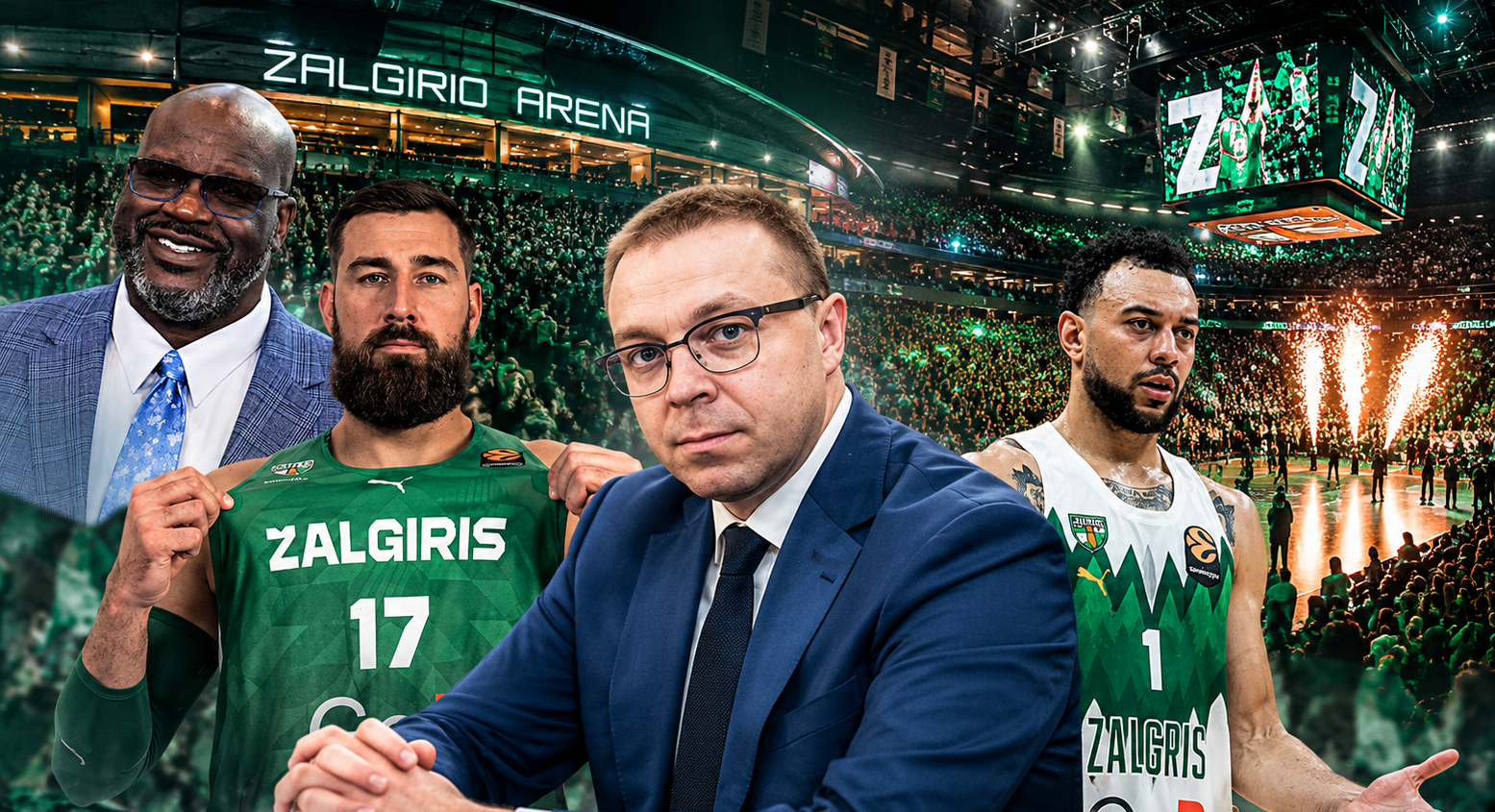

Zalgiris Kaunas has long occupied a unique position in European basketball: a club representing a relatively small market while consistently generating the crowds, identity and relevance normally associated with some of the continent’s biggest cities. In 2026, however, the Lithuanian powerhouse appears to be entering a different phase of its development.


The numbers illustrate the scale of that transformation. Zalgiris has reached 42 consecutive EuroLeague home sellouts, while its overall budget for the 2026-27 season has climbed to a club-record €28.8 million, including €19.7 million allocated to players and coaches. That is a remarkable departure from the financial reality Paulius Motiejunas remembers from previous eras — he once believed approximately €14 million represented the club’s realistic ceiling.
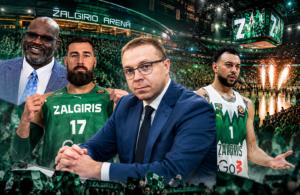
Now Zalgiris is trying to turn that commercial progress into permanent sporting ambition. The arrival of Tesonet as a major partner has brought capital, technological expertise and a different approach to generating revenue, while Shaquille O’Neal’s visit to Kaunas through his connection with NordVPN offers perhaps the most striking example yet of Zalgiris combining basketball with globally recognisable brands.

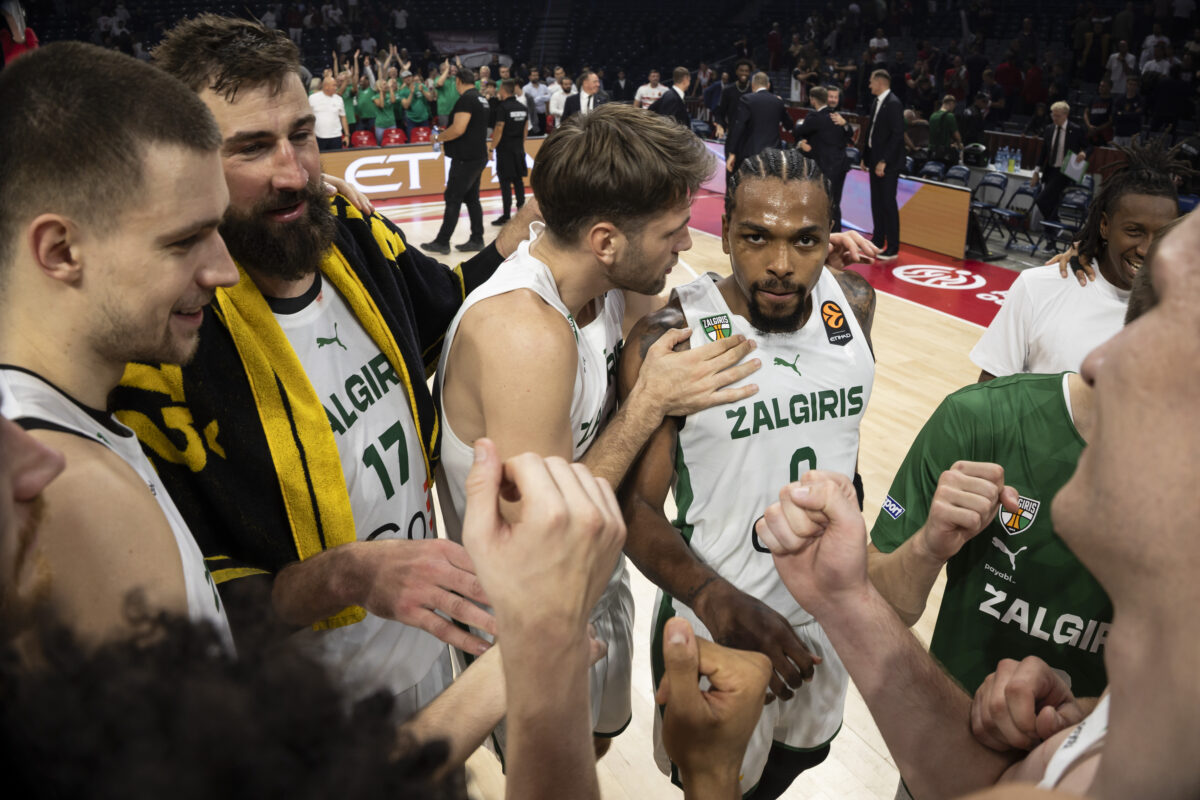
For Motiejunas, however, growth cannot come at the expense of sustainability. Having lived through two periods in which Zalgiris came close to bankruptcy, he insists that the objective is to “dream big on the court, but dream realistically off the court.” Arena control, merchandise, sponsorship, municipal support and the wider game-day experience are all integral parts of that philosophy.
The sporting consequences are equally significant. Zalgiris now wants to retain players it might once have been forced to lose, compete more aggressively in the transfer market and establish itself as a regular play-in or playoff team.
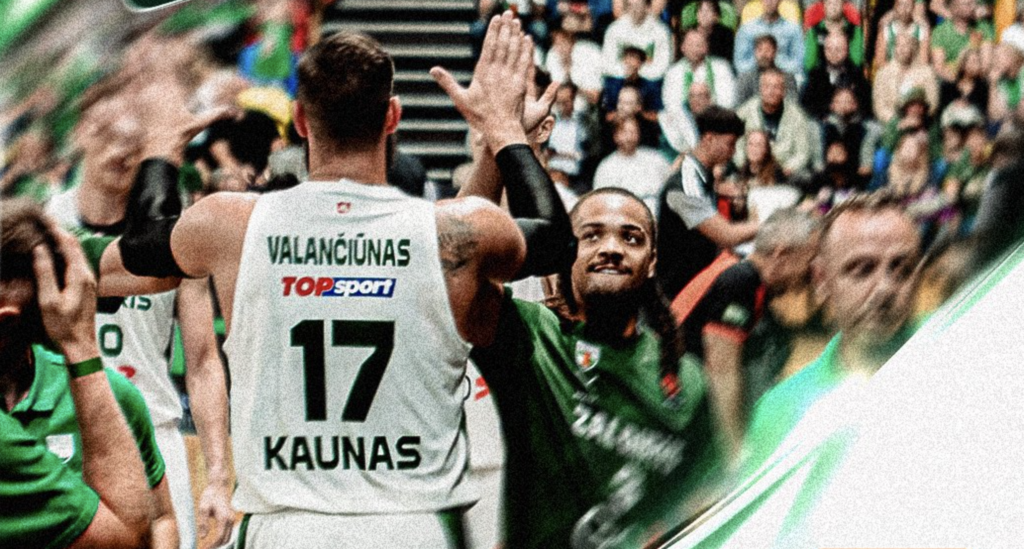
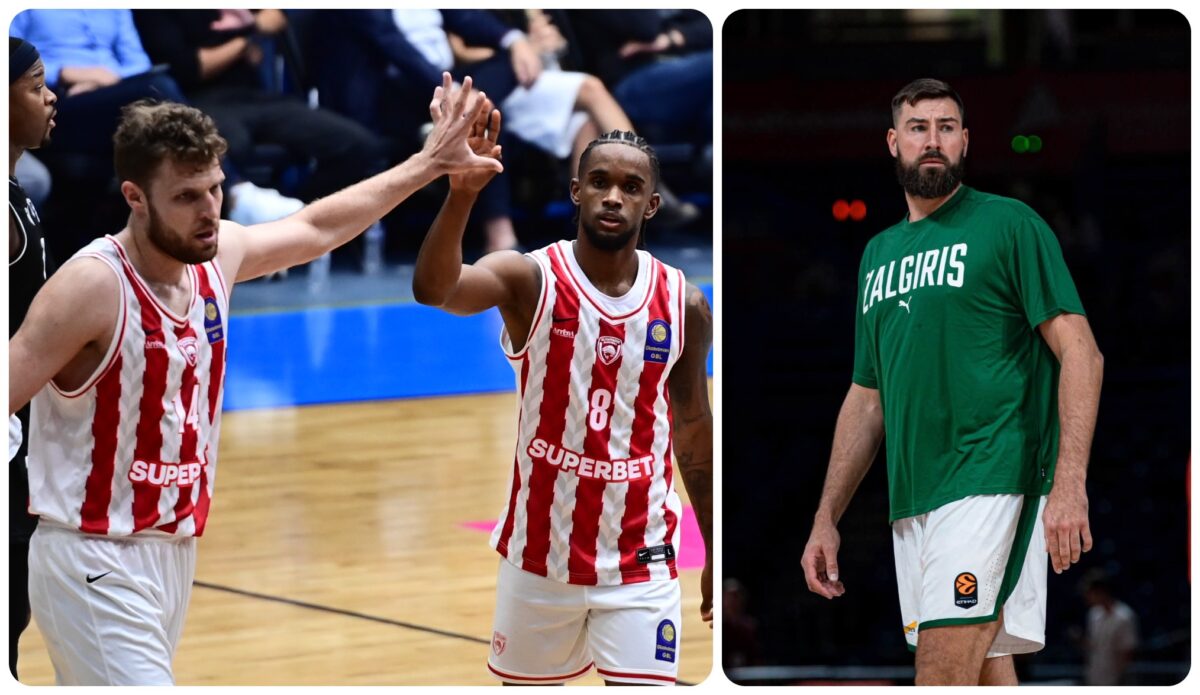
Motiejunas discusses the situations of Nigel Williams-Goss and Sylvain Francisco in detail, while revealing the dramatic change that allowed Zalgiris to compete for Jonas Valanciunas after being unable to do so when Panathinaikos pursued the Lithuanian center one year earlier.
Here is the first part of the conversation.
An ongoing success story
Zalgiris has now reached 42 consecutive sold-out EuroLeague home games. You’ve been running this club for a very long time, looking at your past tenure as well. What does that streak tell you about where Zalgiris is today? And perhaps more importantly, is there still room to grow commercially when you’re already selling every seat in the arena?
Some time ago, I said that the maximum budget that we could have would be €14 million, and now it is more than double. So, I would say that there is always room to grow because this game is growing in Europe and the EuroLeague is getting stronger.
So, it’s not only the fans, it’s not only the sponsors, it’s not only the arena, but everything around it. And I would say there are two reasons for this. One is, obviously, the people who are around the club, who are doing a great job.
I was out for three years and the club continued to grow daily and yearly. And second of all, it was the help of our new partner. When Tesonet came in, they provided a lot of uplift, both in know-how and also on the technological side, where we created our own app that helps us generate more revenue and grow the budget.
So, yes, I think there’s still room to grow and I hope the club will continue to grow and the streak will not end soon.
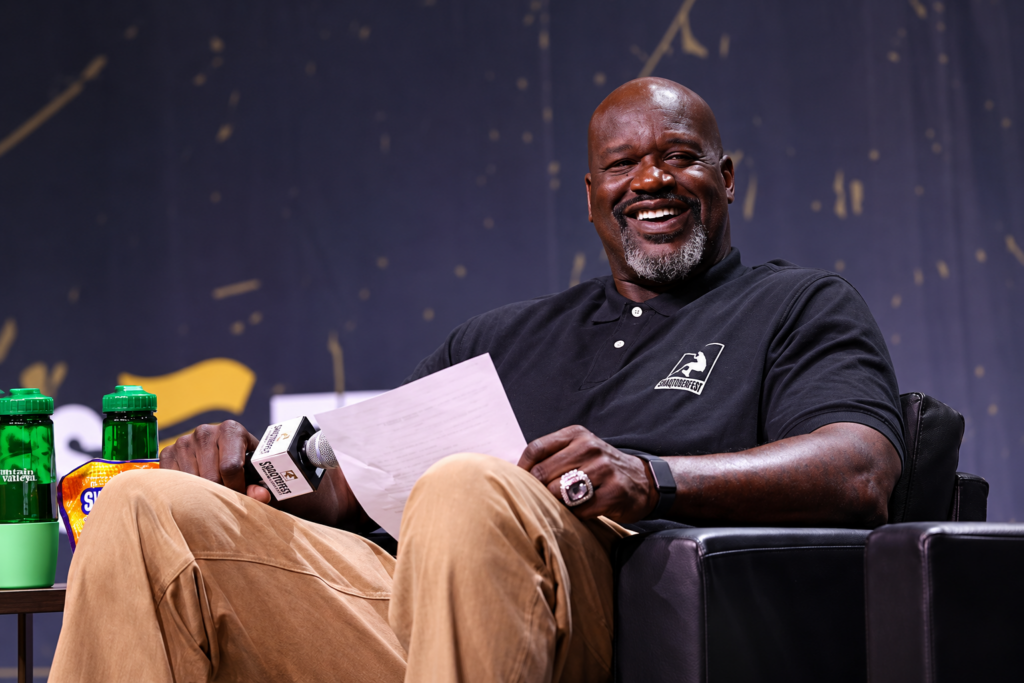
This upcoming Olympiacos game also brings Shaquille O’Neal to Kaunas through the connection with Tesonet and NordVPN. How important is it for Zalgiris to build events around the game itself and work with a Lithuanian company that has now become a global business?
It is a great success story. So, it’s very good to have people like Tom Okman and Eimantas Sabaliauskas on board, who share the passion and share the knowledge.
If you had asked me 10 years ago about Shaquille O’Neal in Kaunas, I would have said it was impossible. But tomorrow I will need to pinch myself to understand that I’m not dreaming.
To have this kind of player and this kind of brand, a world-class brand, in our small market and in our small city, it’s a huge achievement, not only for the club, but I think for the whole Lithuanian country as a nation.
Ownership, budget and Lithuanian identity
Do you believe partnerships like this can become a major part of the club’s next stage of growth?
It’s a very interesting and delicate question because you always want partners who share the same vision and share the same interests.
In our case, it’s the same interest: to see how the club grows. And I think recently, with this NBA Europe coming in and with all the investment funds investing not only in the NBA, but also in different sports — we know they invested in La Liga, they have rugby and so on and so forth — I’m happy that I have a partner who’s not only looking at the numbers, but also shares the passion.
The company is Lithuanian, they want to cherish the tradition that Zalgiris created. And it’s really a success story. I hope there will be more success stories like this because, with those investment funds coming in, it is very important not to lose the mentality and the approach of protecting basketball and growing basketball.
It’s not only about the numbers in the Excel sheets. Especially in our case, you see the fans in the arena and you see the support. So we need to cherish this and protect it.
There is also the ownership side of Zalgiris. You personally hold a 55% stake in the club. Why did you decide that taking a majority position was the right step for you? And what does being the majority shareholder change in the way you think about Zalgiris?
I took this position because we had the crisis and there was no other option. But for me, it’s not about owning a club or calling yourself an owner or being a shareholder.
Zalgiris is a more than 80-year-old club. People tend to forget who was the CEO, who was the GM, and who was the shareholder. So my mentality never changed. I always need to protect the history. I always need to push the club forward, to see that it is doing better than it was before. And it not only covers the business side, but it also covers the sporting side of it.
We are, we were and we will be the Lithuanian-rooted club. We will have the strongest Lithuanians playing and we will protect that by all means, and hopefully win games, leagues and titles. So this is the goal.
But being a shareholder is not some obligation. It’s just a responsibility to take care of what was built more than 80 years ago.
How has your day-to-day reality changed now compared with when you were an executive?
When I was an executive, you had to care about everything. You went to practices, you talked to sponsors. Now you have a whole team working around it.
I can focus on different things and let the people work. Like I said, we have great staff. We have great people working and I only need to not get in the way, help them if I can and not get in the way if possible.
So that’s the difference. You care about the game as much as you did, but you have to find good people who will do the job.
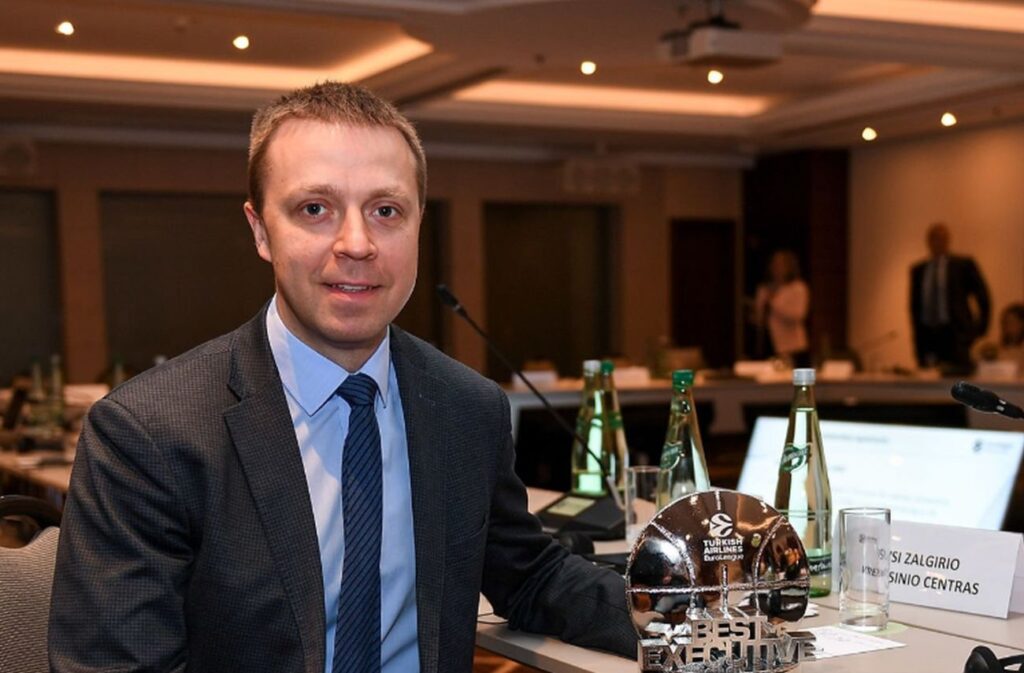
What’s the financial reality of Zalgiris today? How much further can the club realistically grow while remaining sustainable in a EuroLeague market where player salaries continue to rise?
That’s the main question. We will be sustainable. I was here for two crises when the club almost went bankrupt. I said, and I will repeat that to everybody around us, that we don’t want to go into the same situation.
So we need to dream big on the court, but dream realistically off the court when it comes to finances. Our budget continues to grow because we grow our business, and we will continue to grow our business in different markets, in different locations. But the core is that we will care about sustainability and being, if not profitable, at least breaking even.
So this is the goal, and I hope that is enough to compete in the basketball world where, like you said, salaries are going crazy.
But I would also say that there are good examples where clubs find and unlock this business model that we have had for 15 years, which is operating the arena themselves. I know Olympiacos is going through construction of the arena. They finally have the chance to run it, and the revenue side from ticket sales, commercial activities, catering and everything around it will increase dramatically. We saw that happen with Panathinaikos.
There are a couple of clubs that have been doing this, like Baskonia, like Fenerbahce, but still we are a minority in the EuroLeague where the club has its own arena and gets a piece of that business.
So yes, I think this is the future and the competition will be great. But I also believe that, by going to this business model, clubs will understand that they can earn enough money to be sustainable.
That’s my hope and my dream because that makes the league stronger and the clubs stronger and less reliant on the owners’ pockets.
Municipal support
There has also been significant support from the municipality of Kaunas. How important is that relationship?
Of course. We are a big part of Kaunas and Kaunas is a very important part for us.
We’ve been working all these years with the municipality and they increased the sponsorship. We had €2 million for the last couple of years — or many years — and now it’s €3 million for the next three years. So it’s huge support for us.
A big thank you to our mayor. It’s good to see that they recognise the importance of the club and we go hand in hand.
By Greek standards, direct municipal support for an elite basketball club would be quite unusual. How do you see that relationship?
Yes, but I would say it’s because it’s direct help. We don’t have other businesses where the city can help.
So we run the arena and we run the football club. We take care of the city’s infrastructure and we bring events that help boost the economy of the city.
I would suppose that if you are a big business, you can find ways to work with the municipality and the government together.
Williams-Goss, Francisco and the new Ζalgiris
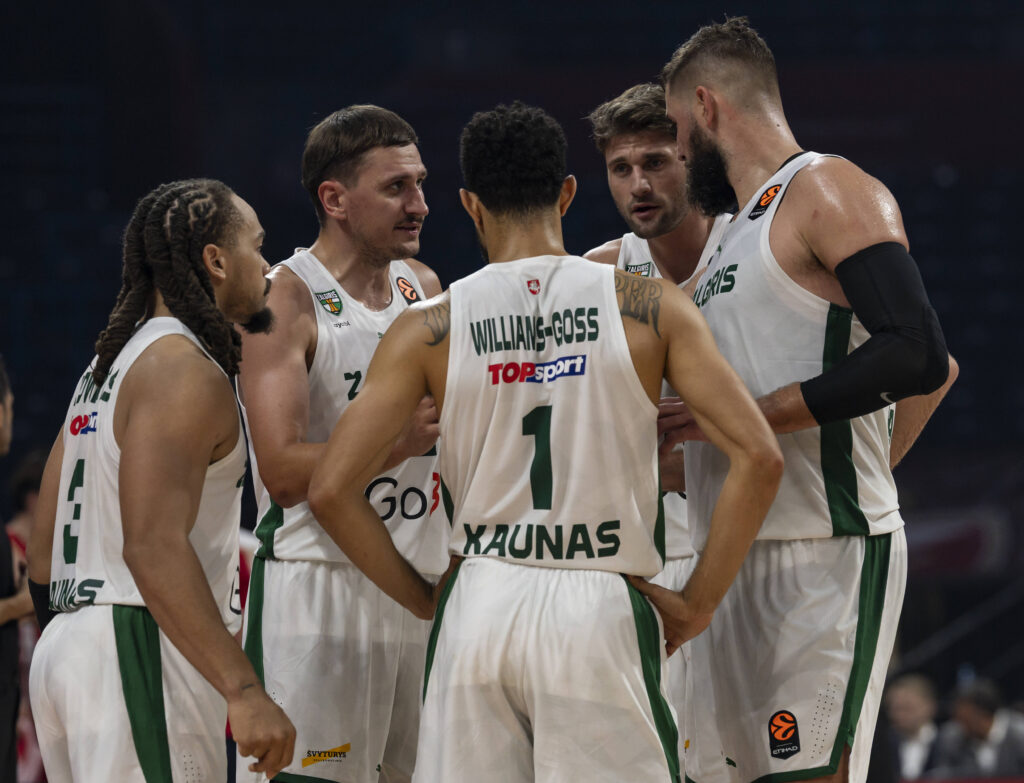
Nigel Williams-Goss was linked with Panathinaikos before eventually staying with Zalgiris. From your side, how did that situation actually develop?
I don’t want to go into details. I think it’s the same thing we can say about [Thomas] Walkup in Olympiacos’ case.
What we need to understand is that if you sign the contract and there’s no buyout, there’s no buyout. The clubs need to talk to each other, but unfortunately, it doesn’t always happen.
There are many small details that you need to talk about and get into to know the full picture. And of course, I don’t know the situation of Thomas, but the same with Nigel: he had a valid contract.
We were not approached by the club and that’s it. So whatever is in the media, it’s in the media. We talked to the player, we talked to the agent.
But again, we as clubs need to respect each other and the agents need to learn to do that too.
It seems that everything was solved in Thomas’ case and everything is solved in Nigel’s case. So, it’s more like a buzz in the newspapers, which I like because it means that basketball is important.
But going into the details, there are always things under the table that we don’t want to discuss in the media.
So you were never approached by Panathinaikos, at least officially?
I don’t want to go into details. Nigel is our player, always was, and hopefully he will recover [from injury] and play many games for Zalgiris.
Sylvain Francisco is another player whose value increased significantly during his time at Zalgiris before eventually moving on. Is that part of a model you accept, or does Zalgiris now want to become capable of keeping those players?
We want to be capable. I think the market needs to understand that we are ready for that: to compete on salaries, to compete on the fan base and the conditions that we have, especially what we can give to the players.
What we cannot compete with are bigger markets, better climates and bigger cities. So we understand our limitations, but we also understand our benefits.
We want to be considered a playoff team or play-in team each year. This is what we need to put as a goal. And it’s normal because the budgets are increasing, so the expectations have to be higher.
We understand that we need to prove it. It’s easy to say. And there are 20 teams who say they want to be in the play-ins. We are one of the 20 at the moment.
But we need to put our money where our mouth is. We need to prove that we can do it. Our goal is to say that we are ready to compete and to keep these players.
And Sylvain stayed for a couple of years, which normally he would have left earlier. I think it was a good example. The same example is with Nigel.
It’s important because we all know that the stability of the team is one of the key factors to success. We want to unlock it and we want to get there.
Realistically, what’s Zalgiris’ goal this season? The play-ins, the playoffs or even the Final Four?
Let’s go step by step. Let’s be in the play-ins and playoffs. It’s good to have more games and continue the season in the EuroLeague. We don’t want it to finish with the regular season.
And then, the competition is huge even to get to that. But going to 10 or to 8 is even more competition, and it’s only one game in the play-ins.
So we know how difficult it is to get to the Final Four. Let’s take it step by step.
The Valanciunas case
How realistic was it financially for Zalgiris to bring Jonas Valančiūnas home while he could still play at the highest level?
We always want to have the best Lithuanians playing for Zalgiris. And in Jonas’ case, we analysed the situation last year when he was close to coming back, and obviously we kept in touch.
Financially, it’s the biggest contract in our history. But this is the best Lithuanian who’s coming to Europe, and for him to be in Zalgiris is a huge buzz for all the fans and everybody.
This is also the future that we want to continue to pursue.
You mentioned last year, when he ultimately travelled to Athens for Panathinaikos. How different was Zalgiris’ position then?
That year, we couldn’t compete. This year, we were ready to compete because the budget is bigger and the expectations, I think.
So Zalgiris was interested in Valanciunas last summer as well?
We were following the situation, obviously, but we were not competing and discussing. Like I said, we were not ready last year.
Building a winning team
When you build Zalgiris today, what’s the priority: talent, continuity, character, fit with the coach or finding players whose market value can grow?
Winning.
Finding a team that’s winning and also having Lithuanians who are the best to play in the competition. The core is to keep the Lithuanian passion.
This year we have Jonas, we have [Edgaras] Ulanovas, we have Azuolas [Tubelis]. There are six or seven strong Lithuanians who are not benchwarmers, but they can come from the bench and support and help the team.
Marek [Blazevic] is a young guy. [Dovydas] Giedraitis is there for many seasons. [Deividas] Sirvydis is there.
We want to have a team that can win, but without forgetting that the Lithuanians need to be involved and be part of the winning formula.
Who do you see as the strongest teams in the EuroLeague this season?
There’s always this top four. We all know that we speak about the two Greek clubs. We always speak about Fenerbahce. We always speak about Madrid. These are the teams that are always competing to be in the Final Four.
Then, to add to that, Dubai has a strong roster and we want to be in there. Valencia had a great season. Efes is rebuilding. Bayern is there. Milano is there.
You’re talking to me at the end of September. So we’re just coming back after the honeymoon where everybody created the team that they think can win.
Let’s have this question in December and then we will more or less understand who is gelling, who is growing and who is not fitting with the roster.
Because right now everybody is 1-0 or 0-1. We really don’t see the real face of the teams yet.