














Partizan’s first EuroLeague game of the new season offered two numbers that tell us quite a bit about where the club stands. On the court, Partizan defeated Olimpia Milano convincingly, 92-76, while 13,783 spectators watched from the stands of Belgrade Arena. For most of European basketball, that would be an impressive attendance figure, but by the standards Partizan had established in recent years, it represented a noticeable decline. Against the same opponent in last season’s first EuroLeague home game, 19,214 fans were in attendance.


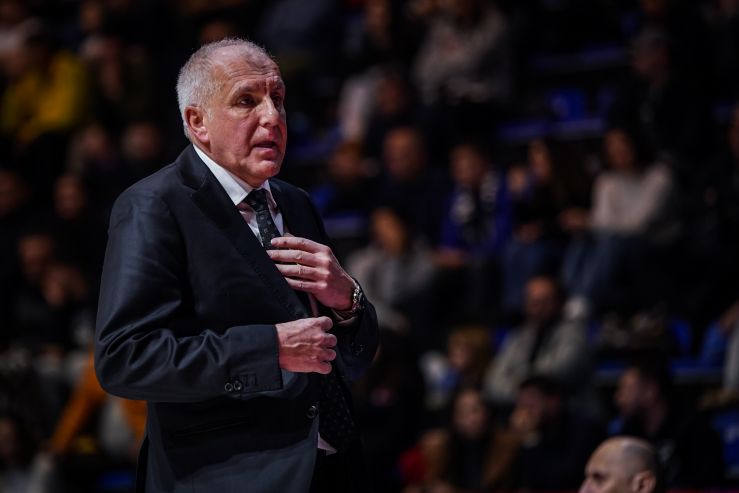
It would be unfair to attribute the difference of nearly 5,500 spectators solely to Željko Obradović’s departure, because several factors influence attendance, from ticket prices to expectations surrounding the team. Still, the change is noticeable at a club where virtually every home game had become a major event during Obradović’s second tenure. He had been the central figure behind that project, and the circumstances of his departure left deep divisions among supporters.
Peñarroya Inherited Much More Than a Basketball Team
Partizan went through one of the most turbulent seasons in its recent history. Obradović’s resignation following the defeat to Panathinaikos in Athens, the unsuccessful attempts to persuade him to reconsider, the confrontation between sections of the fan base and club management, changes to the roster, and a season that ended without a trophy. Joan Peñarroya took over amid those problems, but managed to stabilize the team over the following months and lead it to the ABA League Finals, where Dubai ultimately proved too strong.

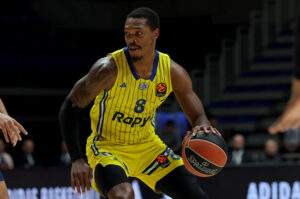
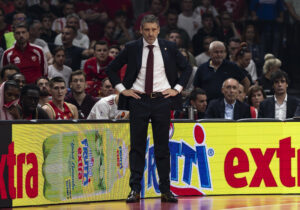
The Spaniard has since received a new contract and the opportunity to build a team around his own ideas this summer. That is an important difference from last season, when he had to deal with huge problems he inherited and work with a roster he had little say in assembling. The roles are now distributed differently, with Alessandro Pajola and Luca Vildoza providing important defensive support on the perimeter, Kehvarrius Hayes protecting the rim, and Carlik Jones serving as the primary playmaker. Tonye Jekiri has already shown that he can make a significant offensive contribution alongside his responsibilities in the paint.
The First Three Wins Gave This Team an Identity
Against Milano, Partizan’s aggressive defense produced 12 steals, while Carlik Jones finished with 20 points and 10 assists. In Paris, Partizan recovered from an early 10-0 deficit, took control of the game, forced 21 turnovers and came away with a 92-79 victory. Vildoza was particularly impressive with six steals, another indication of how difficult Partizan’s perimeter defense has been for opposing guards to deal with in the opening rounds.
In Munich, Bayern held a 13-point lead late in the third quarter, but Partizan found a way back, scored 29 points in the final ten minutes and won 86-84. Carlik Jones took responsibility down the stretch, while Tonye Jekiri led the winners with 17 points. Partizan also committed just eight turnovers compared with Bayern’s 17, a significant factor in such a close game.
Three consecutive victories marked Partizan’s best start in EuroLeague history, including two road wins, both achieved after falling behind. For a team that entered the season facing skepticism, roster issues and plenty of questions about its ceiling, those results provided an important early boost in confidence.
Madrid Showed How Much Work Still Remains
The 86-76 loss to Real Madrid, however, was a reminder of how much work Peñarroya still has ahead of him. Madrid dominated the first half, built a 53-37 lead and punished Partizan’s problems on the defensive glass. On offense, the team’s dependence on Carlik Jones was once again apparent. Partizan cut into the deficit after halftime, but Real largely controlled the game. Against more physically imposing opponents, Partizan will need to find additional solutions, particularly when its transition game is slowed and its primary playmaker is contained.
Partizan’s defensive pressure, ball security and ability to respond after falling behind have helped produce three victories, while the trip to Madrid exposed weaknesses that stronger opponents will look to exploit.
The Mood Around Partizan Is No Longer Defined Only by Last Season
After years in which Obradović’s return had fueled ambitions of competing at the highest level, Partizan entered this season with far more uncertainty. The disappointing results of the previous season, extensive roster changes and everything that had happened around the club hardly provided a foundation for optimism.
Peñarroya has begun to earn recognition for his own work rather than being viewed primarily as Obradović’s successor. Fans once again have concrete reasons to discuss the team’s play, individual performances and potential, even though dissatisfaction with club management over last season’s events has not disappeared.
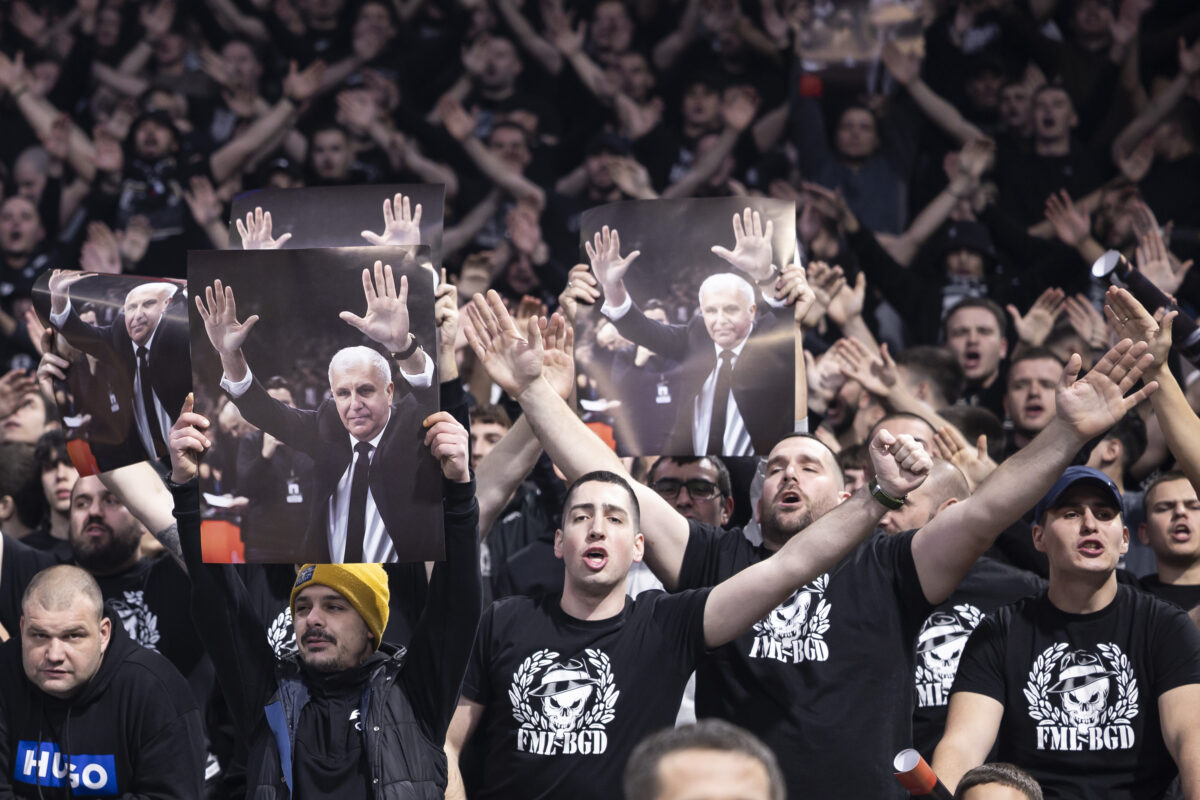
For many Partizan supporters, Obradović’s departure remains an injustice that seriously damaged their trust in those running the club. The depth of that relationship was evident again when Željko returned to Panathinaikos this summer. Among the many messages from his former supporters, one stood out: “May they take care of you, since we didn’t know how”. For many of those fans, his return in 2021 was supposed to mark the beginning of a much longer chapter. His resignation brought an ending they had never wanted to accept.
Winning Has Given Peñarroya Breathing Room
Had Partizan lost all four games, the conversation ahead of Panathinaikos’ visit would probably have been far more uncomfortable for the club’s leadership. Poor results would have, probably, given supporters another reason for their dissatisfaction, and comparisons with the Obradović era would have been inevitable. Instead, Peñarroya has managed, at least at the beginning of the season, to shift attention away from the circumstances in which he inherited the job and toward what his team is doing on the court.
His position is hardly straightforward, though. Any losing streak or heavy defeat could reopen old arguments, particularly while relations between sections of the fan base and club management remain strained by unresolved issues. But, Peñarroya’s team deserves to be judged on its own results, with all the strengths and weaknesses it has shown.
Partizan Is Learning to Exist Beyond What It Lost
Nor can this team’s strong results retroactively answer the question of whether Obradović had to leave. His resignation, the responsibility of club management and the circumstances that led to their separation remain separate issues, regardless of how many games Peñarroya’s team wins. Partizan stands at 3-1, its former coach at 4-0, and both clubs have ambitions for the season that extend well beyond the symbolism of this particular matchup. For Partizan, beating one of the leading title contenders would provide further evidence that its strong start has a solid foundation.
Obradović will return to Belgrade Arena on Tuesday as Panathinaikos’ coach, facing a Partizan team that has begun developing its own identity under Joan Peñarroya. Partizan has shown that it can play and win without him. The fans cannot be expected to forget how he left or feel any less affection for him than before. But they now have a team giving them reasons to support it for what it is doing on the court, rather than viewing it only through what the club lost last November.