




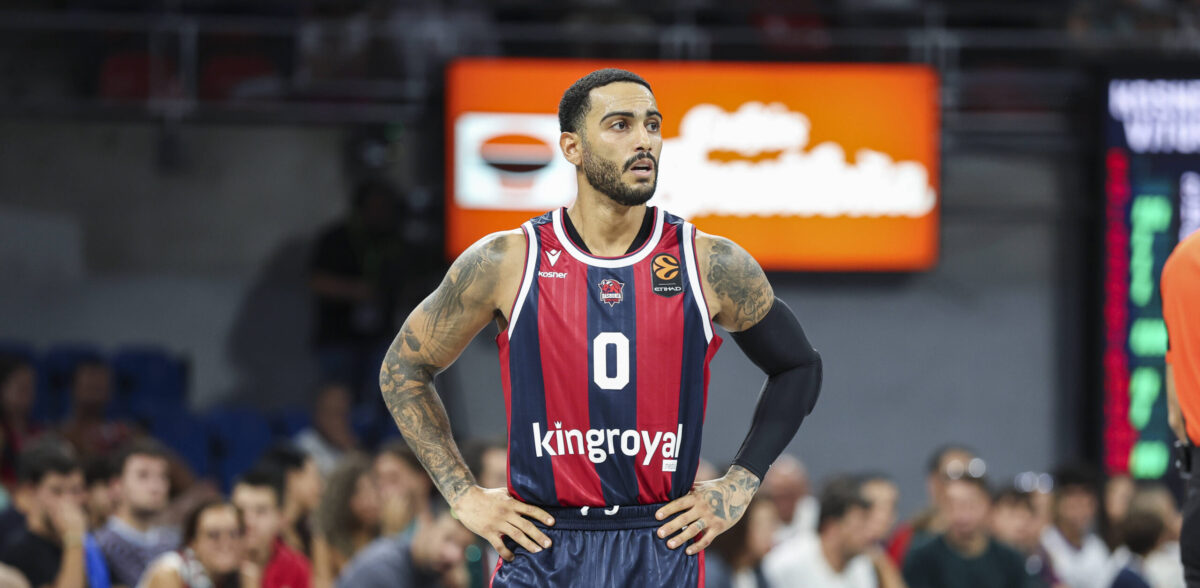




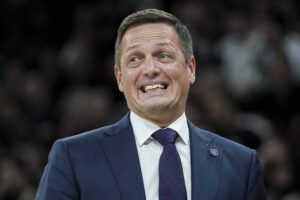
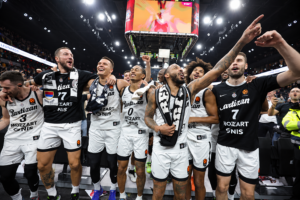

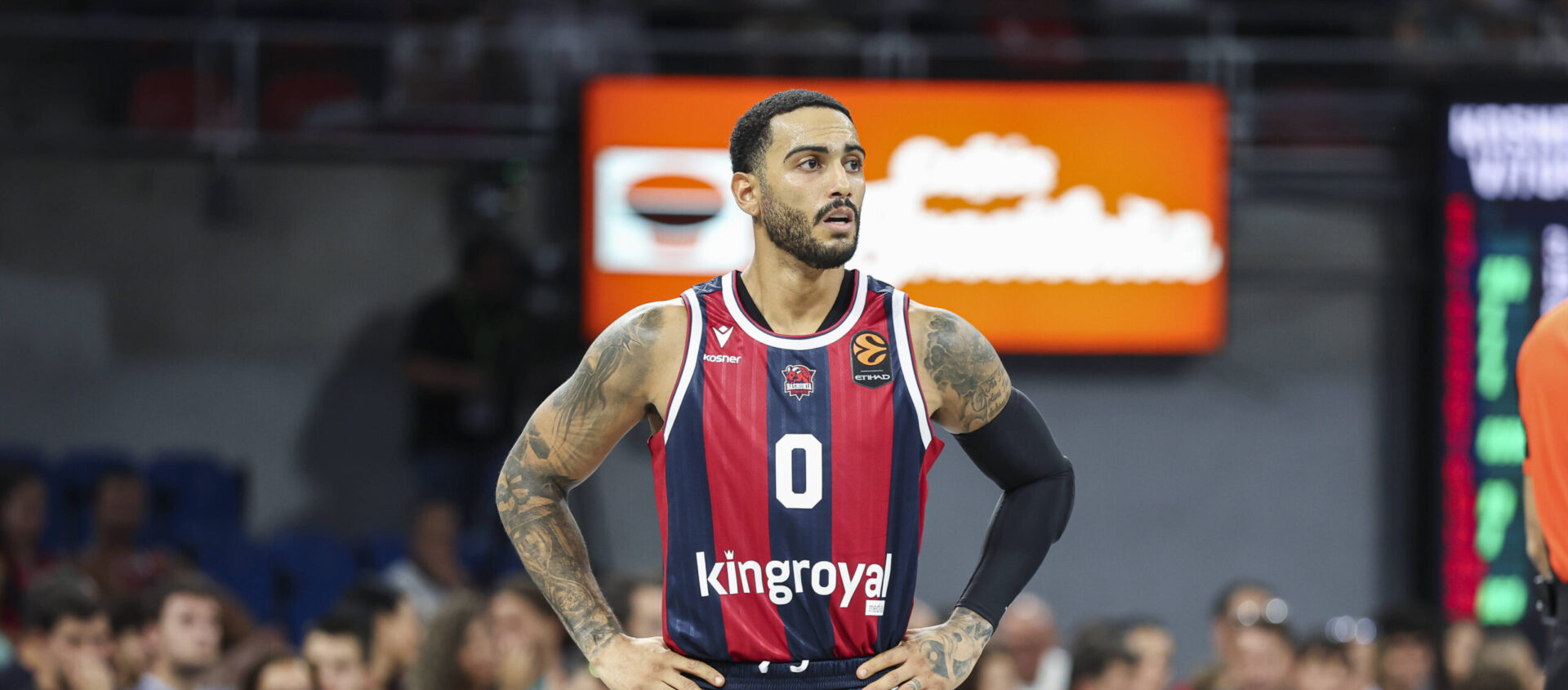

In May 2024, Markus Howard was the most prolific scorer in the EuroLeague, the face of Baskonia’s offense and the recipient of the most lucrative contract in the club’s history. Less than two and a half years later, he is negotiating a departure from Vitoria, having lost his place in the rotation and much of the influence that once made him one of European basketball’s most feared players.


His potential reunion with Dusko Ivanovic at Zenit St. Petersburg could offer a way out of a remarkable decline, but it also raises an uncomfortable question: how did one of the continent’s most explosive scorers become expendable before turning 28?
From NBA uncertainty to a spectacular breakthrough
When Markus Howard arrived in Vitoria in the summer of 2022, Baskonia were acquiring a player whose scoring reputation had been established in American college basketball but whose ability to translate that talent to the European game remained uncertain.
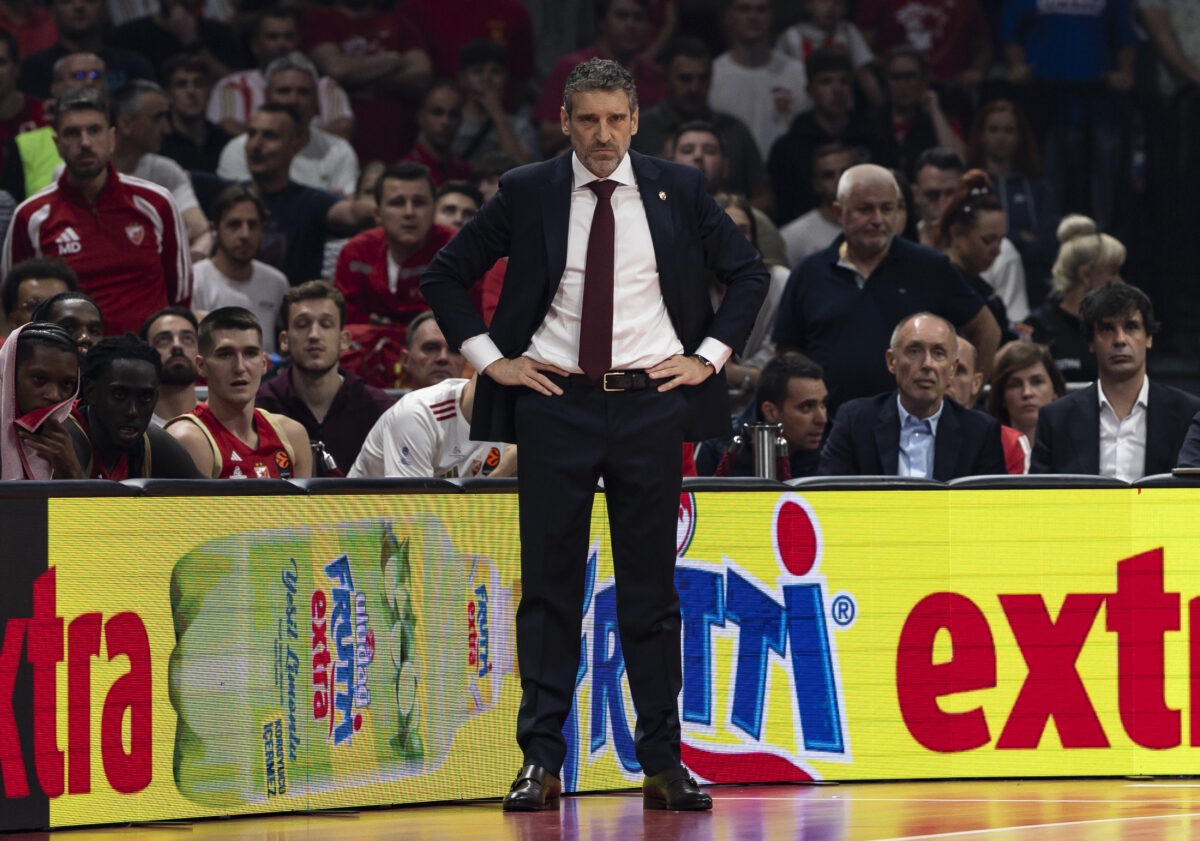
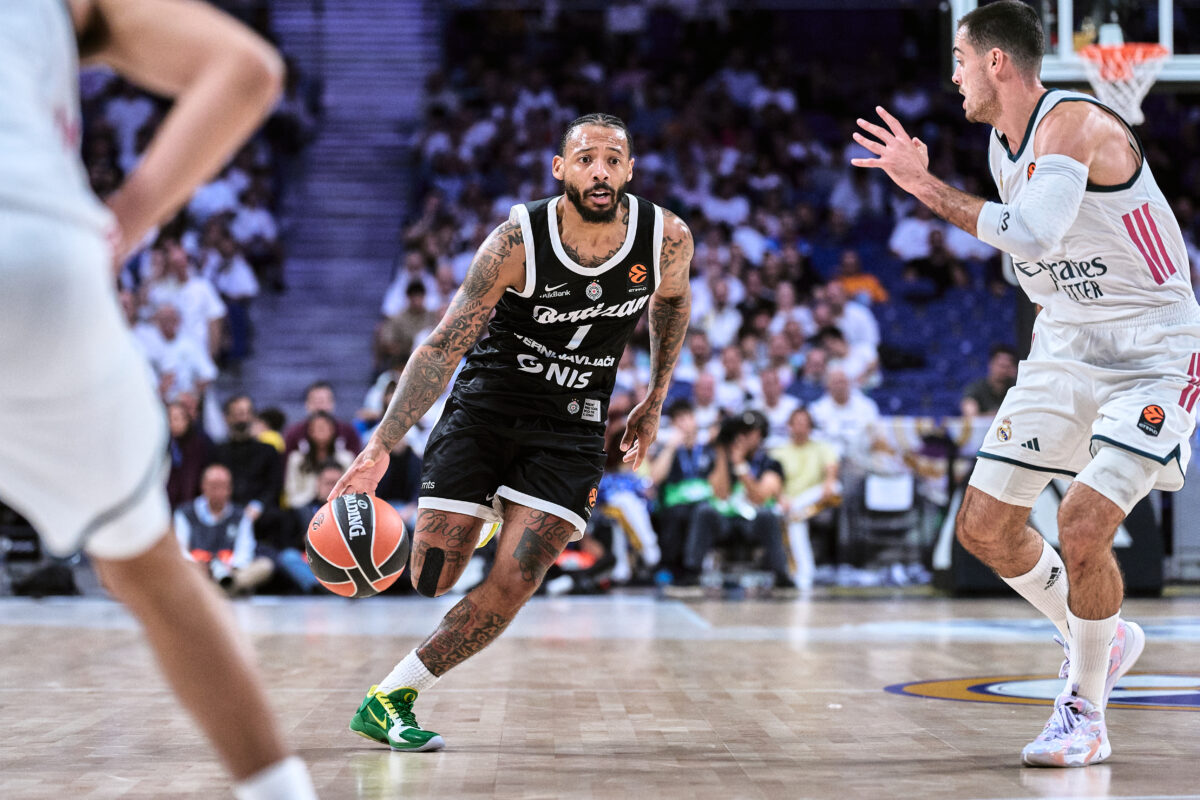
The former Marquette standout had spent two seasons with the Denver Nuggets, without establishing himself as a regular NBA rotation player. At 1.78 meters, he lacked the physical dimensions traditionally associated with high-level professional guards, and his offensive profile depended heavily on a difficult combination of shooting accuracy, speed and individual shot creation.
Yet Baskonia offered precisely the environment in which those qualities could flourish. Rather than treating Howard as a conventional point guard, the Spanish club gave him opportunities to operate as a specialist scorer, attacking defenses through movement, rapid releases and an almost unlimited shooting range.
Under Joan Penarroya, Howard immediately demonstrated why his offensive talent had attracted attention. He became only the eighth player in EuroLeague history to register consecutive 30-point performances and, in February 2023, produced an extraordinary ACB display by scoring 30 points in fewer than 20 minutes.
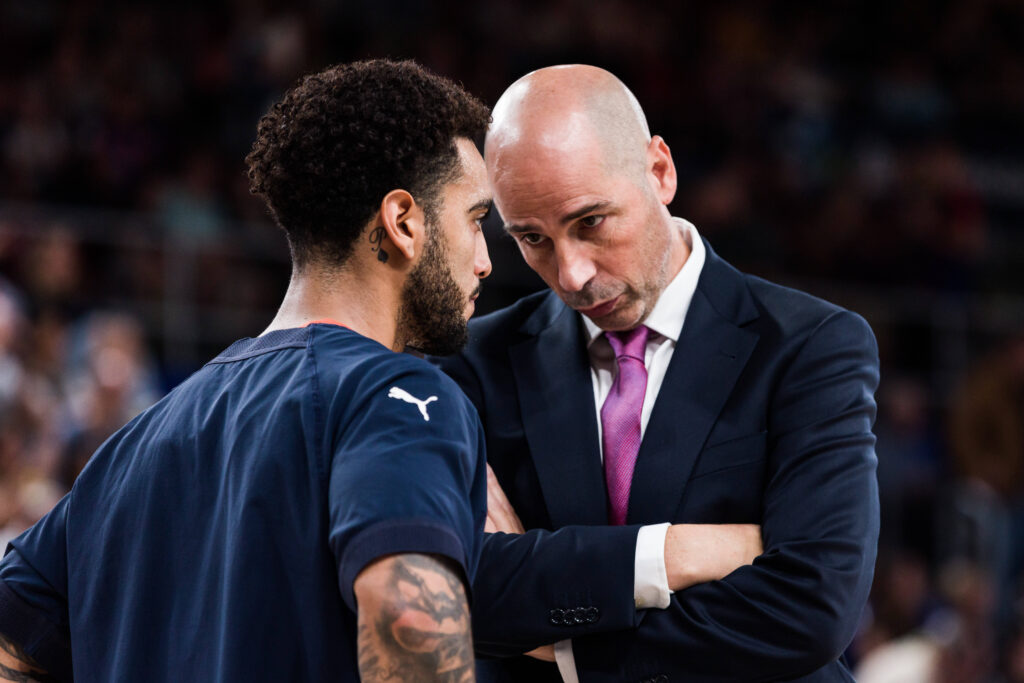
His first EuroLeague campaign ended with an average of 14.2 points, an impressive return for a player adapting to a different style of basketball, unfamiliar defensive schemes and a demanding schedule.
More importantly, Howard quickly developed a relationship with the Buesa Arena crowd. His long-range shooting and ability to transform a game within minutes made him a genuine attraction. Baskonia had discovered a player capable of producing something increasingly rare in European basketball: spectacular individual offense without needing to dominate possession for an entire game.
Ivanovic and the season that changed everything
Howard’s transformation into a EuroLeague superstar reached its peak during the 2023-24 season, particularly after Dusko Ivanovic returned to Baskonia.
At first, their partnership appeared far from guaranteed to succeed. Ivanovic’s demanding defensive principles and emphasis on physical discipline were not necessarily an obvious fit for a relatively undersized guard whose greatest value came from his offensive freedom.
Instead, the Montenegrin coach found a way to accommodate Howard’s limitations without sacrificing his defining strengths.
Baskonia developed offensive sequences that created favorable shooting situations for their American guard, while Howard learned to thrive within a system that demanded responsibility without suppressing his instincts.
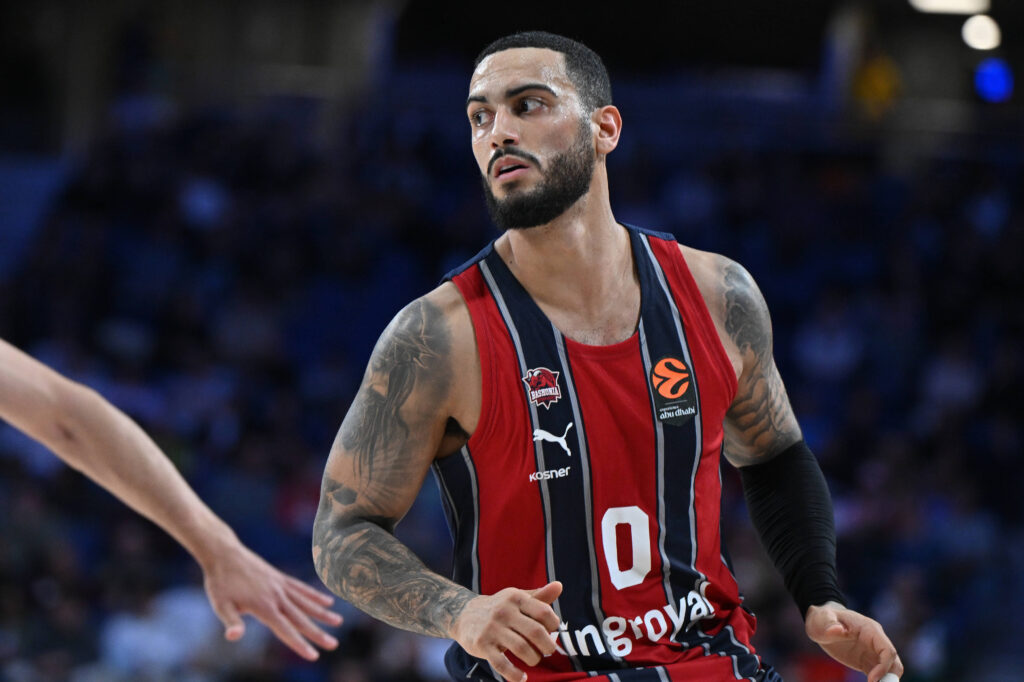
The results were extraordinary. Across 39 EuroLeague appearances, Howard averaged 19.5 points in approximately 23 minutes, finishing as the competition’s leading scorer and claiming the Alphonso Ford Trophy. He also topped the ACB scoring charts, establishing himself as one of the most devastating offensive players on the continent.
The statistical achievement was particularly remarkable because Howard did not require the minutes normally associated with a leading scorer. His production was based on extraordinary efficiency of opportunity: a few possessions could be enough for him to produce a scoring explosion.
There were still defensive weaknesses, difficult shooting nights and occasions when his aggressive selection of attempts created problems. But those shortcomings were easier to absorb when his offense regularly changed the outcome of games.
Howard was no longer simply an exciting signing. He had become Baskonia’s principal attraction, a player around whom expectations, marketing and offensive identity were increasingly organized.
The club responded accordingly. Following two improved contractual agreements within approximately eight months, Baskonia secured his future until 2028, committing to what was reported as the most expensive player contract in their history.
The decision made sense in the context of 2024. Baskonia believed they were retaining an elite scorer approaching his prime, while Howard was rewarded for delivering performances that had substantially exceeded expectations.
What neither side anticipated was how quickly that investment would become a source of tension.
The first warning signs under Pablo Laso
The deterioration began well before Howard became a regular omission from Baskonia’s matchday squads.
By November 2024, the statistical evidence already suggested that his role and effectiveness were changing. In an analysis published by BasketNews on November 21, Howard’s EuroLeague average had fallen to 10.2 points through ten appearances, accompanied by 32.7% shooting from the field and just 31% from three-point range.
In the ACB, he was producing 14.6 points across eight games, shooting 37.4% overall.
The contrast with his scoring-title season was striking, especially because the decline was not confined to one competition or a brief sequence of poor shooting nights.
Pablo Laso initially expressed confidence that the American’s percentages would recover. His argument was understandable: elite shooters inevitably experience fluctuations, and a player with Howard’s track record should not be judged solely by a difficult opening month.
But the problem extended beyond percentages. Howard’s game had become increasingly dependent on three-point shooting, while his activity inside the arc and his ability to generate alternative scoring opportunities had diminished. Defenses could concentrate more heavily on disrupting his perimeter rhythm, knowing that his offensive influence was becoming narrower.
The change of coaching environment also mattered. Laso inherited a player whose reputation and salary implied franchise-level responsibility, but his offensive approach did not reproduce the same conditions that had helped Howard flourish under Ivanovic. The guard increasingly resembled a specialist shooter rather than a player capable of shaping an entire offensive possession.
Other teammates, notably Chima Moneke and later Trent Forrest, assumed greater responsibility for initiating and organizing the offense. This was not necessarily evidence of a fundamental incompatibility between Laso and Howard. Basketball systems rarely explain an individual decline on their own, and the American’s inconsistent shooting was a genuine problem regardless of the coach.
Nevertheless, the combination was damaging. Reduced offensive influence made his defensive limitations more visible, while his inability to generate consistent advantages made it harder to justify building the attack around him.
For a player whose exceptional scoring had previously outweighed almost every weakness, the balance was beginning to shift.
Injuries turned a difficult adjustment into a prolonged decline
If tactical changes contributed to Howard’s initial regression, physical problems made his attempts to recover considerably more complicated.
The 2025-26 campaign illustrated the problem particularly clearly.
Howard entered the season without meaningful preseason preparation after suffering physical setbacks. He began working with Paolo Galbiati’s newly assembled team without the rhythm or continuity normally required to establish an offensive role.
A finger injury suffered against Paris in October interrupted his season, while another muscular problem involving his right thigh followed early in 2026.
The accumulated absences were substantial. Howard participated in only 38 of Baskonia’s 78 official games during the 2025-26 campaign. For a scorer whose effectiveness depends on balance, timing, conditioning and confidence, those interruptions were particularly disruptive.
Howard’s most dangerous performances had always involved more than simply catching and shooting. At his best, he could change direction, attack a closeout, create separation off the dribble and punish defenders who approached him too aggressively.
When his physical sharpness declined, the consequences were evident in his shot selection. Instead of consistently generating good opportunities, he sometimes appeared to force difficult attempts in an effort to recover his former influence. Limited minutes increased the pressure to produce immediately, creating a cycle in which hurried decisions and inconsistent results reinforced one another.
Crucially, however, Howard’s scoring ability had not disappeared.
In December 2025, he produced a series of outstanding performances, including a dramatic game-winning three-pointer against Unicaja. Over a four-game stretch, he averaged 24.2 points while converting 17 of 28 three-point attempts.
Those performances offered a reminder that his decline was not an irreversible loss of talent. They also made the situation more frustrating. Baskonia had seen the old Howard reappear, but could no longer rely on that version being available regularly.
His season ultimately featured occasional spectacular displays surrounded by injuries, reduced minutes and lengthy periods without competitive rhythm.
The ACB’s foreign-player restrictions became decisive
Howard’s declining importance cannot be understood without considering the structural problem created by Baskonia’s roster construction.
Unlike the EuroLeague, the Spanish ACB restricts the number of non-EU players who can be included in a matchday squad. That regulation increasingly worked against Howard as Baskonia accumulated alternatives in the backcourt. During 2025-26, Galbiati frequently preferred Trent Forrest and Kobi Simmons, whose playmaking and all-around contributions offered greater stability.
The situation became particularly awkward because Howard was not simply another rotation player, but the highest-paid member of the squad, a former EuroLeague scoring champion and a central figure in the club’s recent history. Yet the Italian coach repeatedly left him out of ACB games, including decisive stretches of the season.
The selection decisions reflected more than a bureaucratic inconvenience. Simmons had established himself as a productive guard, Forrest offered organizational security, and Howard’s scoring had become too inconsistent to guarantee his place.
By the end of the campaign, the former franchise player had become an optional piece in a team increasingly constructed around different priorities.
There was an important contradiction in that situation. Baskonia were still paying for the Howard of 2024, but Galbiati had to select players according to their usefulness in 2026.
The consequences were especially severe because Howard’s contract and reputation made the situation difficult to resolve financially.
A trophy, a diminished role and an uncomfortable contradiction
The decline was not without positive moments.
Baskonia’s 2026 Copa del Rey triumph provided Howard with a significant collective achievement, even though he was no longer the dominant offensive figure many had expected. His contribution in the final against Real Madrid was modest overall, but he produced important late points, including a basket that broke an 85-85 tie.
More revealing than the statistics was the role he had accepted. Howard supported teammates, embraced reduced offensive responsibility and continued to contribute to the dressing room. Reports from Vitoria repeatedly emphasized his professionalism and his willingness to prioritize the team’s success over personal recognition.
This distinction matters because his diminishing role was not accompanied by convincing evidence of poor attitude or a refusal to adapt.
Indeed, Galbiati’s recent praise for Howard’s character was extraordinary. The Italian coach described him as one of the three best people he had encountered in his life, despite having coached an enormous number of players.
Howard remained respected, but the gap between his contractual status and his contribution on the floor had become increasingly difficult for Baskonia to sustain.
Winning the Copa del Rey demonstrated that he could still belong to a successful team. However, it did not establish that he could recover his former position as its leading scorer.
The 2026-27 season made the separation almost inevitable
Howard initially resisted leaving Vitoria.
During the summer of 2026, reports linked him with Partizan, Besiktas and Galatasaray. The Turkish clubs explored possible deals, but Howard preferred to remain in the EuroLeague and believed he could recover his best form with Baskonia.
That position was understandable. At 27, he was hardly approaching the end of his career, and accepting a move outside Europe’s leading competition would have represented a considerable change from his ambitions two years earlier.
But the opening weeks of 2026-27 made his position increasingly difficult to defend. He missed the preseason again and struggled to establish himself in Galbiati’s rotation. His first three EuroLeague appearances produced averages of just 4.7 points in 10 minutes.
Against Milano, he played eight minutes, attempted only one shot and failed to score. After the game, he returned to the court for additional individual shooting work, an episode that captured both his determination and his increasingly uncomfortable circumstances.
He was subsequently excluded from the squad against Besiktas.
The arrival of Brazilian center Marcio Santos created another complication in the ACB. With Kenneth Faried and Santos occupying crucial interior positions, Galbiati had strong sporting reasons to prioritize both non-EU players, leaving Howard particularly vulnerable to exclusion. At the same time, Baskonia’s backcourt was crowded with alternatives, including AJ Lawson, Chris Duarte, Matteo Spagnolo, DJ Stewart and Kobi Simmons.
Howard had gone from being the player around whom the offense revolved to someone whose inclusion required a specific justification.
The contractual situation only intensified the problem. His deal runs until 2028, with several reports placing his annual net salary around €2 million and indicating an increase for the final season. The contract also reportedly included a buyout clause of approximately €2 million, although that figure does not necessarily reflect what Baskonia can obtain under the present circumstances.
The club’s priority has shifted from extracting a transfer fee to reducing its financial exposure. That’s why the negotiations with Zenit represent an unusually logical solution for both parties.
Why Ivanovic and Zenit could offer a way back
Zenit St. Petersburg’s interest is particularly significant because of the man sitting on its bench.
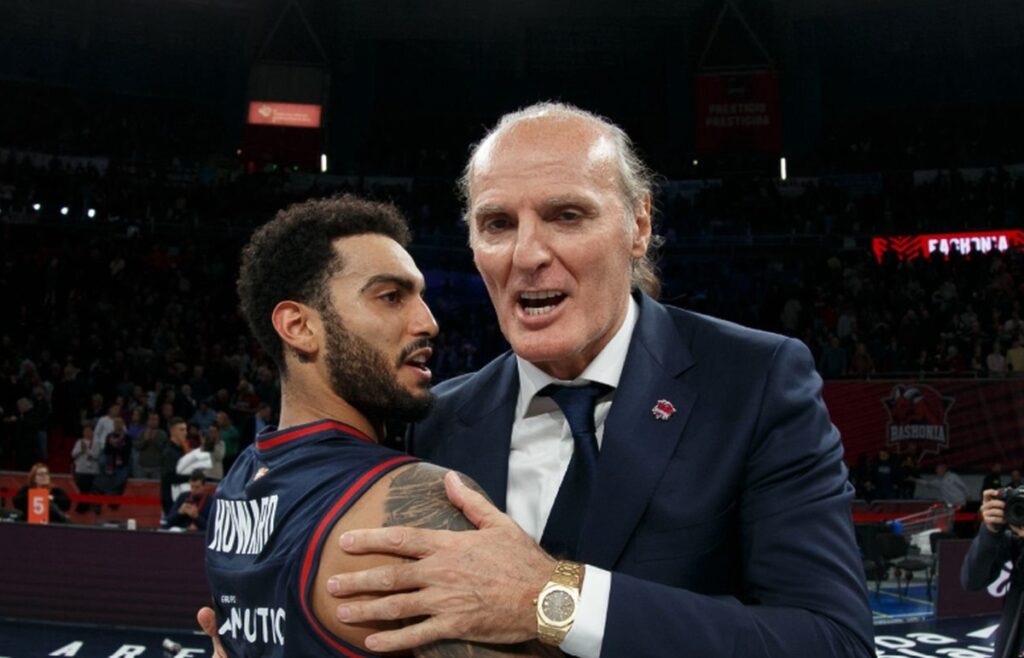
Ivanovic remains the coach under whom Howard produced the finest season of his European career. He understands the guard’s strengths, has already demonstrated that he can build a productive offensive role around him and appears willing to explore another partnership.
Following Zenit’s victory over Avtodor Saratov, Ivanovic acknowledged the interest without presenting the transfer as completed, describing Howard as a very good player.
The attraction for Howard is obvious. Instead of fighting for limited minutes in an overcrowded rotation, he could join a team whose coach has already extracted elite production from him. A fresh environment might also relieve the psychological pressure associated with his expensive contract and deteriorating status at Baskonia.
But the move would involve a significant sporting sacrifice. With Russian clubs excluded from European competitions, Zenit cannot currently offer EuroLeague basketball. Howard would primarily compete in the VTB League, away from the stage on which he established his reputation.
That creates a genuine dilemma. Remaining in the EuroLeague means little if he is barely playing, but recovering his scoring numbers in Russia would not automatically restore his position among the continent’s elite.
A successful spell with Zenit would need to demonstrate more than an improved points average. Howard must show that he can remain healthy, produce consistently, make better decisions under defensive pressure and contribute beyond difficult perimeter shooting.
If he achieves that, a future EuroLeague return remains entirely plausible. At 27, he has time to rebuild his career, and players with his shooting range and capacity for explosive scoring remain valuable.
However, the outcome is far from guaranteed. Ivanovic can provide a familiar system and renewed confidence, but he cannot eliminate the physical problems that have repeatedly disrupted Howard’s seasons. Nor can he completely disguise the defensive limitations that become more costly when Howard is not scoring efficiently.
What Baskonia gain — and what they lose
For Baskonia, the potential departure represents both financial relief and an acknowledgment that one of their most ambitious contractual decisions has not worked as intended.
Reports suggest Zenit would not necessarily pay a conventional transfer fee, but taking over a substantial part of Howard’s salary could release important resources. That flexibility matters because Baskonia’s roster has become unbalanced. The team has several guards competing for minutes while its interior rotation requires reinforcement. Redirecting money toward another center or a more physically balanced frontcourt would address a structural weakness that has affected Galbiati’s options.
The move would also clarify the perimeter hierarchy, allowing the coaching staff to distribute responsibilities without the constant complication of managing a former star whose salary exceeds his current role.
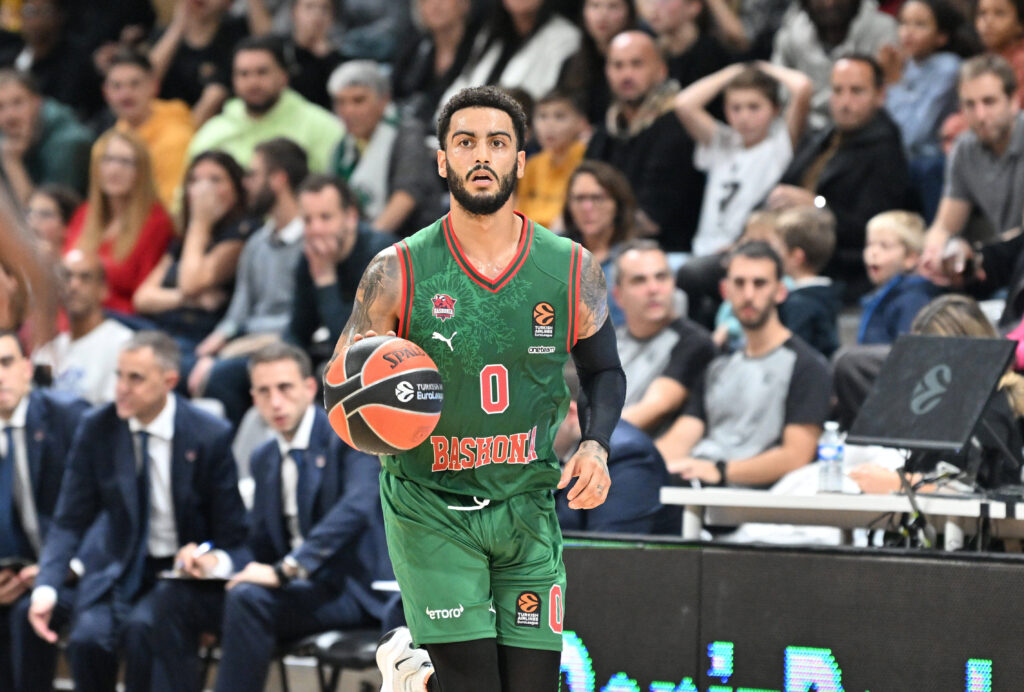
Nevertheless, Baskonia would lose something that cannot easily be replaced. Even during his decline, Howard retained the ability to change a game through extraordinary shooting. His departure would remove a proven offensive weapon and one of the club’s most recognizable personalities.
There is also a broader institutional lesson, although the decision to extend his contract was understandable when it was made. Baskonia committed long-term money to a specialist scorer whose value depended heavily on maintaining exceptional offensive production. Once injuries, tactical changes and roster restrictions reduced that production, the contract became much more difficult to justify.
For Howard, meanwhile, the next chapter will be defined by a different challenge.
He no longer needs to prove that he can score 30 points in a EuroLeague game or dominate a quarter with a succession of impossible three-pointers. He has already done both. What he must establish now is whether he can recover the physical continuity and offensive authority that once made those performances possible.
A reunion with Ivanovic could be the first step toward that recovery. It could also mark the moment when a former EuroLeague scoring king accepts that rebuilding his career requires temporarily leaving the competition he once dominated.
Either way, the possible separation carries a striking irony. Baskonia and Howard may now need to part ways precisely because they once believed so strongly in their future together.