




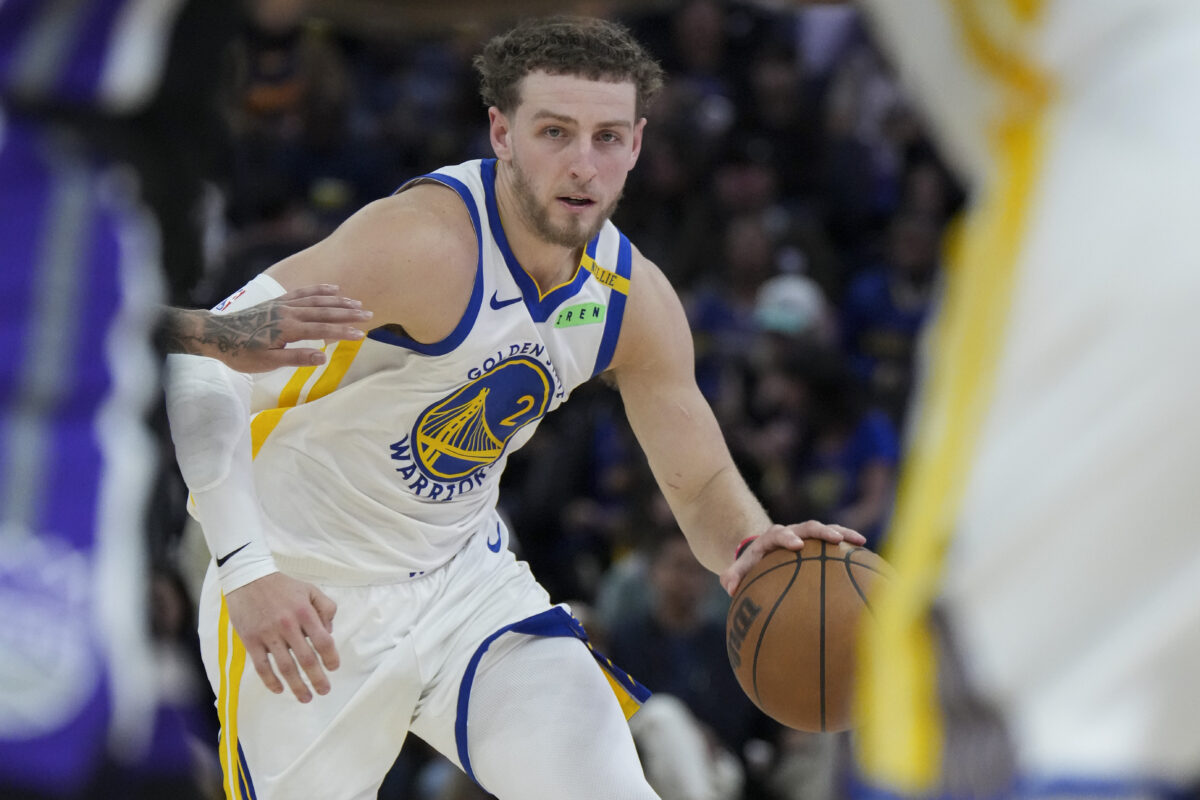








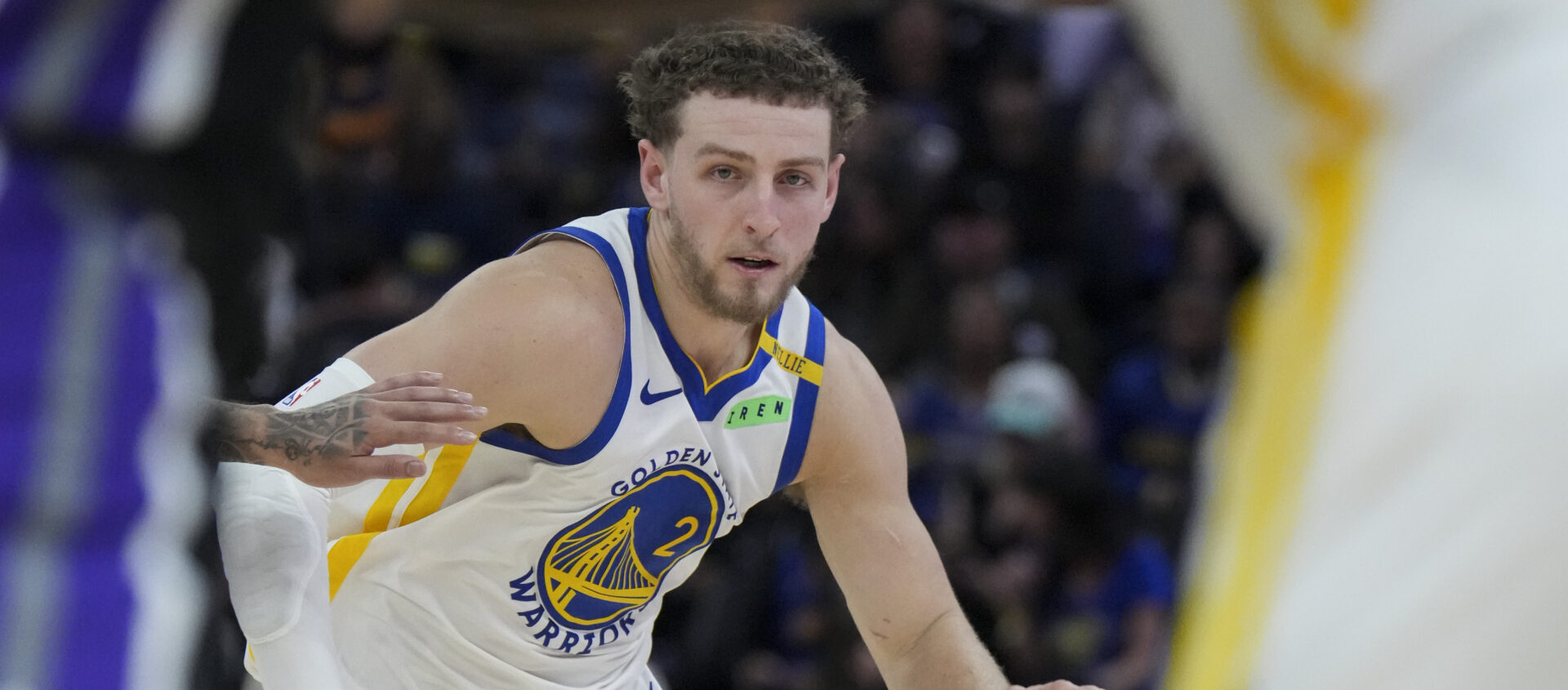

Golden State has decided to keep Brandin Podziemski for another five years, even as the franchise is already seriously considering changes to its roster. The five-year, $110 million extension came just weeks after Stephen Curry agreed to take less money to give the Warriors greater financial flexibility. Much of that planning centers on the summer of 2027, when two major contracts expire and Golden State could have room to make significant changes. By then, however, Curry will be 39, and the Warriors are coming off another disappointing season that ended without a playoff appearance.


The choice is whether to wait until the summer, when the team’s financial position will be more favorable, or pursue a significant move before the February trade deadline. After finishing last season 37-45, Golden State clearly needs more talent to return to the upper tier of the Western Conference. At the same time, the new deals for Curry and Podziemski suggest that general manager Mike Dunleavy Jr. and owner Joe Lacob are trying to preserve the team’s core while keeping money available for future additions.
Podziemski’s Deal Changes Less Than It Might Appear
Podziemski, whom the Warriors selected with the 19th pick in the 2023 NBA Draft, signed a five-year, $110 million extension that includes a mutual option for the final season in 2031-32. His salary will start at approximately $18.9 million and gradually increase to around $25 million.

The extension does not take effect until the 2027-28 season. Podziemski will earn $5,679,459 in 2026-27, the final year of his rookie contract. Without an extension, Golden State would have needed to account for a cap hold of slightly more than $17 million next summer, when Podziemski would have become a restricted free agent. Instead, his new salary will count for approximately $19 million against the cap.
NBA salary-cap analyst Keith Smith estimated that the extension reduced the Warriors’ projected cap space for the summer of 2027 from $50.8 million to $48.8 million.
Golden State Is Paying for Development, Not a Curry Replacement
Podziemski averaged 13.8 points, 5.1 rebounds and 3.7 assists last season. He appeared in all 82 games, starting 43, and made 153 three-pointers at a 37.1 percent clip. He was particularly productive late in the regular season, when Curry’s absence gave him greater offensive responsibility. Over the final 22 games, Podziemski averaged 18.1 points while shooting nearly 40 percent from three.
He rebounds well for his position, can serve as a secondary playmaker and is effective without the ball. There are still limitations to his ability to create his own offense and defend bigger, more physical guards. Still, at 23, he has room to develop, and the Warriors believe he is worth investing in.
How Much Financial Flexibility Does Golden State Really Have?
The NBA salary cap for the 2026-27 season is set at $164,961,000, with the luxury-tax threshold at $200,428,000. The first apron stands at $209,015,000, while the second apron is set at $221,686,000. According to one current projection, Golden State’s team salary is approximately $220.8 million, placing it just below the second apron. The final figure depends on how certain contracts are accounted for.
Three veterans account for most of that money. Curry will earn $62,587,158 this season, Jimmy Butler $56,832,773 and Draymond Green $27,678,571. Together, their salaries total approximately $147.1 million, nearly 90 percent of the league’s salary cap.
Golden State therefore has no cap space to sign a major free agent outright, and any significant in-season changes would have to come through trades. The NBA’s current collective bargaining agreement has also restricted the options available to the league’s highest-spending teams. The first- and second-apron rules limit how much salary teams can take back in trades, whether they can aggregate outgoing contracts and which exceptions they can use to acquire players.
Butler and Green Create the Real Opening in 2027
Butler and Green are both entering the final year of their contracts and will become unrestricted free agents in 2027 unless they sign extensions before then. Their combined salaries this season amount to approximately $84.5 million.
That does not mean the entire amount will automatically become available as cap space. Golden State will still have commitments to other players, along with cap holds for its own pending free agents. To maximize its available space, the Warriors would need to renounce some of those rights, giving up the ability to re-sign certain players using exceptions that allow teams to exceed the salary cap.
Beyond Butler and Green, Gary Payton II, Charles Bassey, Georges Niang and several other players on smaller contracts are also scheduled to become free agents after the season. Their potential departures, however, would not carry nearly the same financial significance.
Porzingis, Horford and Melton Add More Variables
Kristaps Porzingis, Al Horford and De’Anthony Melton are in different situations. They are not automatically headed for free agency next summer because they hold options for the 2027-28 season. Porzingis can exercise an option worth approximately $20 million, although only $3 million is guaranteed, with the remainder subject to a separate guarantee deadline. Horford has a $7,163,100 player option, while Melton’s is worth $6,367,200. Their decisions, along with Golden State’s ability to part ways with Porzingis while taking on a limited financial obligation, will help determine how much cap space the team ultimately has.
Curry, meanwhile, is no longer a potential free agent in 2027 after signing his extension. Podziemski has also taken himself off the market, while Moses Moody remains under contract for next season at approximately $13.4 million. Golden State also has commitments to Gui Santos, Yaxel Lendeborg and Will Richard.
According to one financial projection, the Warriors could have nearly $49 million in cap space next summer, potentially more under favorable circumstances. That scenario would require specific decisions regarding existing contracts, including the possibility of moving on from certain veterans. The figure should therefore be treated as a projection rather than a guaranteed budget for new signings.
Curry’s Discount Gives the Front Office More Room to Work
The greatest player in franchise history agreed to a two-year extension worth approximately $116 million, even though he could have received around $136 million. Curry’s salary for the 2027-28 season will be $55.7 million, and he holds a player option for 2028-29. The agreement gives the front office additional room to spend, particularly as Butler’s and Green’s contracts come off the books.
Warriors owner Joe Lacob recently discussed Curry’s decision and the franchise’s upcoming financial flexibility in an interview with the San Francisco Chronicle. He acknowledged how much the organization appreciated Curry’s willingness to take less money, but declined to reveal specific plans, noting that future decisions would depend on how the season unfolds.
Who Will Actually Be Available in 2027?
Golden State’s ability to use that projected cap space will depend on which players are actually available in 2027. There is an important distinction between players whose contracts are expiring and those who have the option to enter free agency but are not required to do so.
Under the current contract structures, Kawhi Leonard, Michael Porter Jr., Tyler Herro, RJ Barrett, Lu Dort and several other established players could become unrestricted free agents in the summer of 2027, provided they do not sign extensions with their current teams before then.
Nikola Jokić, Giannis Antetokounmpo, Karl-Anthony Towns, Kevin Durant, Kyrie Irving and Anthony Davis are also drawing attention as potential members of that free-agent class. However, all six hold player options for the 2027-28 season. They could reach the open market only by declining their guaranteed additional year or negotiating a different arrangement beforehand.
Jokić’s option is worth approximately $62.8 million, as is Antetokounmpo’s, while Towns can exercise an option worth around $61 million. It is difficult to imagine players of that caliber simply becoming available without extensive negotiations with their franchises. Some are already eligible to sign extensions well before next summer. Jokić has already expressed his desire to spend the rest of his career in Denver, provided the Nuggets still want him, while Karl-Anthony Towns’ contract extension remains one of the NBA’s major talking points, with the New York Knicks recently putting negotiations on hold after the two sides failed to reach an agreement.
For that reason, it would be premature to link Golden State to the biggest names solely because of its projected cap space. For the league’s biggest stars, a trade may still be a more realistic route than waiting for them to reach free agency.
February or the Summer of 2027?
The trade deadline falls on February 11, giving Golden State several months to evaluate its current roster. The health of Butler, Moses Moody and Porzingis will be an important factor, as injuries and inconsistent availability have significantly affected the team.
Butler is recovering from a torn ACL, Moody is also working his way back from a lengthy injury absence, while Porzingis’ health remains uncertain. During training camp, Steve Kerr expected Butler and Moody to return in February, further complicating the front office’s plans. If they come back only shortly before the trade deadline, management may not have enough games to properly assess the team at full strength.
Butler’s Contract Could Become a Major Trade Tool
Butler’s contract, worth nearly $57 million this season, could become an important piece in potential trade discussions. The Warriors could use his salary in a deal for an expensive player on a multiyear contract, provided they find a willing trade partner. Completing such a move would likely require additional assets, including young players or future draft picks.
Podziemski’s extension makes it more complicated to include him in such a package. Under a special rule that applies to players who sign rookie-scale extensions, his outgoing and incoming salary values would be different for the two teams involved. Golden State would count his current salary of approximately $5.7 million, while the team acquiring him would have to use a substantially higher figure for salary-matching purposes. That makes a potential trade more difficult, though not impossible.
Golden State could pursue free agents next summer using its available cap space without having to match salaries by sending out contracts in return. It could also acquire an expensive player through a trade, although doing so would still require a competitive offer in addition to the necessary financial flexibility.
Golden State’s Real Constraint Is Time
Draymond Green’s situation is particularly sensitive because his role throughout much of Curry’s career has extended well beyond his statistical production. His ability to organize the defense, guard different positions and participate in offensive playmaking has remained an important part of Golden State’s system. Losing him would require a significant adjustment in how the Warriors play, while re-signing him would reduce the money available for other additions.
Butler’s future will likely depend largely on his health and the level he reaches after returning. If he can still play at a high level, the Warriors will have reason to consider keeping him. The question is how much another investment in veteran players would limit their ability to refresh the roster with players who can contribute beyond Curry’s remaining years.
Golden State has until February to assess its roster before deciding whether to use its expiring contracts in a major trade. Waiting until the summer of 2027 appears more favorable financially, but Curry will be 39 by then. The Warriors have to weigh that flexibility against the time he has left at an elite level.