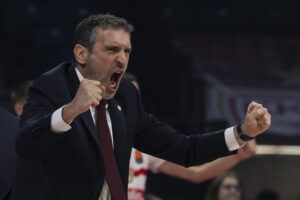
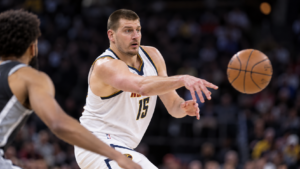



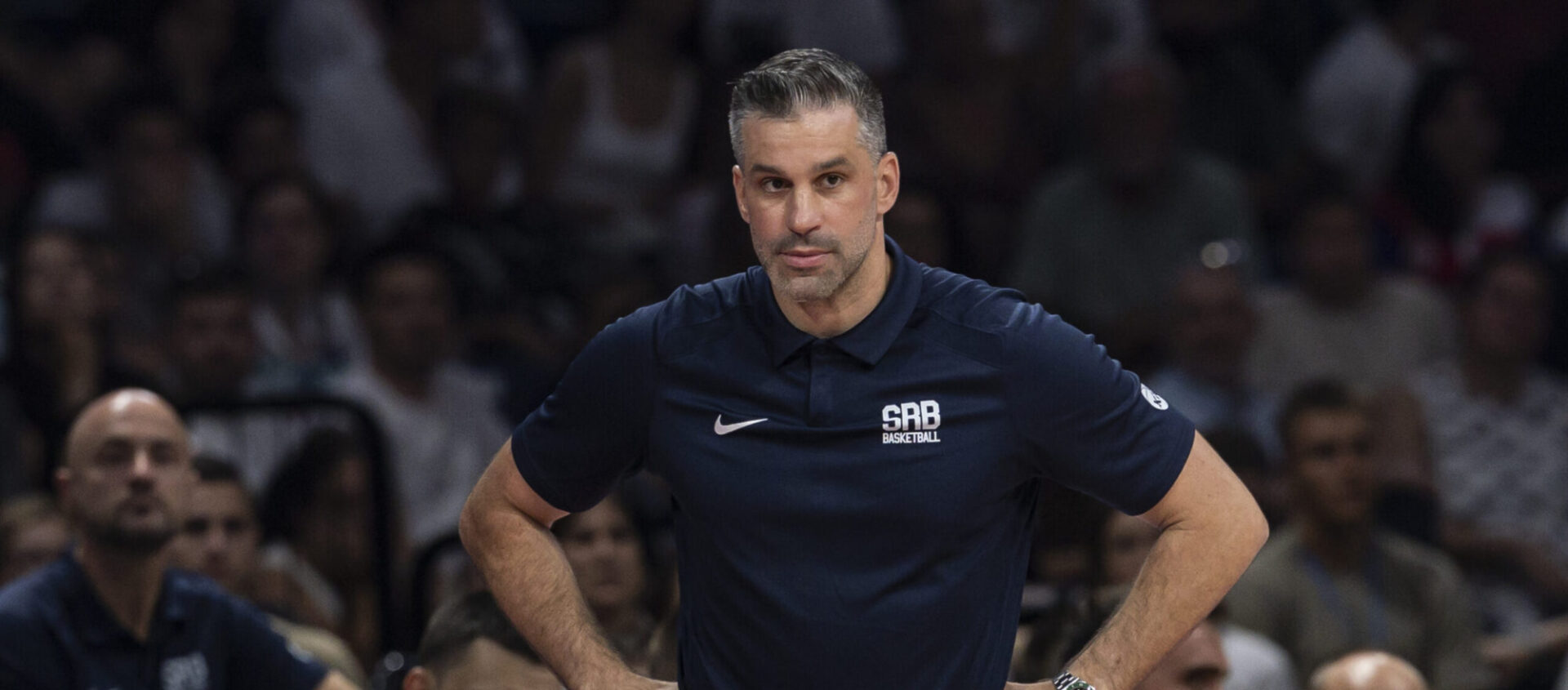

“Nikola Jokić is now the captain of this national team. That comes with additional responsibility,” Serbia head coach Dušan Alimpijević tells SK Week in an exclusive interview.


It has been almost a year since he succeeded the legendary Svetislav Pešić.
In some ways, he took over at the perfect time – with two years to get to know the team before, everyone hopes, his first major tournament. In others, the timing could hardly have been worse. FIBA windows have swallowed up plenty of major national teams over the years – and their coaches along with them.
So far, though, things have largely gone according to plan. As many Serbian players have stressed in interviews, there is no question of anyone turning down the call-up. Health is the only condition.
Alimpijević explains what has changed for Jokić and why Serbia’s new captain is now more open with the Serbian media. He talks about Bogdan Bogdanović’s leadership and why Nikola Topić could be an important piece for Serbia at the World Cup.
There is plenty of club basketball, too: how coaching during FIBA windows has prepared him for the EuroLeague, how much he leans on his assistants and what it will feel like to return to Crvena zvezda – this time with Beşiktaş.
Enjoy.
Nothing Above the National Team
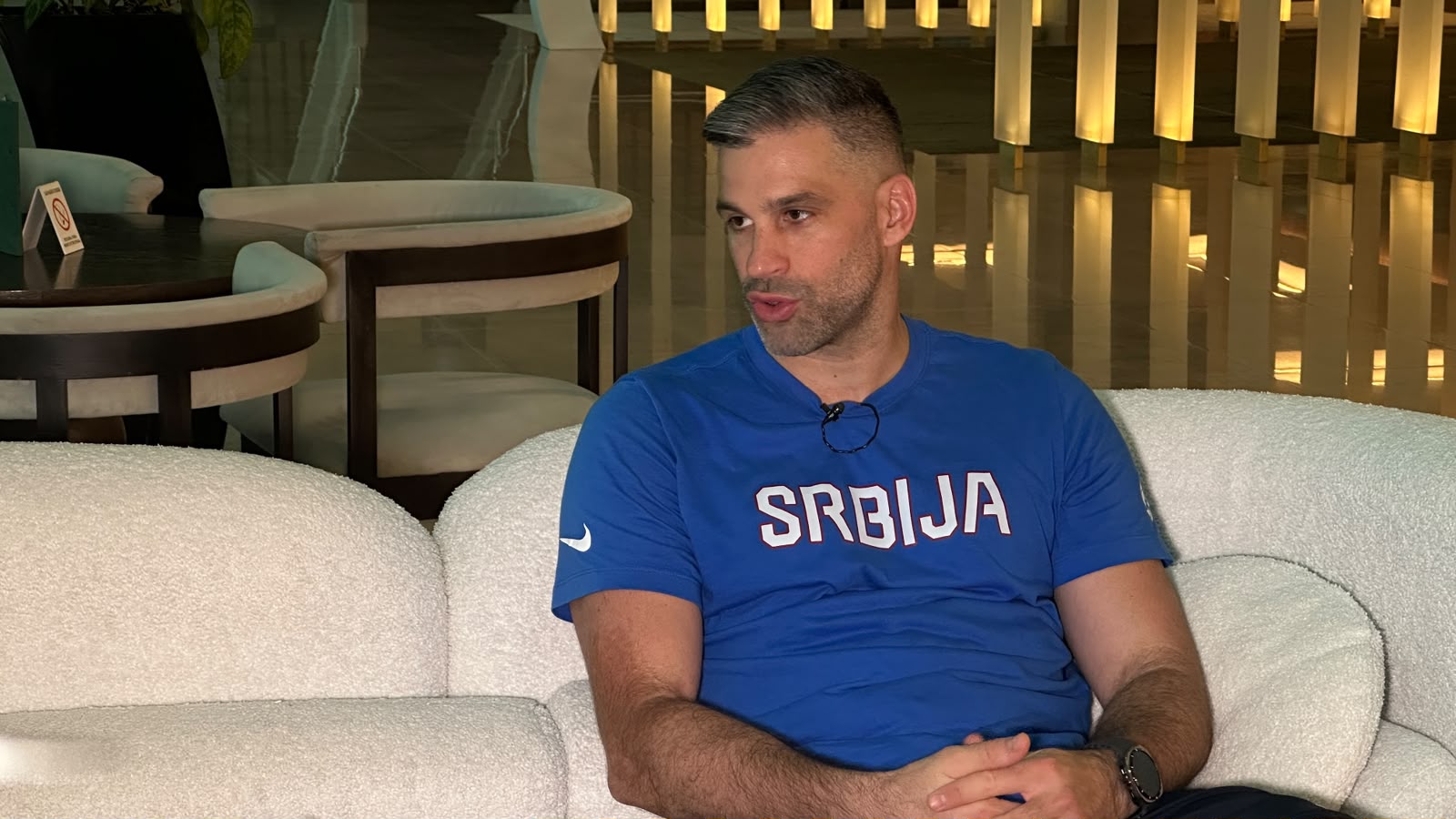
You’ve talked both at the start of this window and before about the culture of the national team and how it has been restored – although perhaps it was never really lost, but has now been taken to another level. How would you define that? What does the national-team culture mean to you?
“There are so many legends of the game in our country, so many all-time greats, so many examples for younger generations to follow. They passed that feeling down from one generation to the next, so it really isn’t that difficult to continue that beautiful culture surrounding the basketball national team.
“Basketball has always drawn crowds faster than any other sport in our country. Of course, any change – whether it’s a coaching change, roster turnover or simply what comes after a major tournament – naturally brings a certain sense of fatigue and the possibility of a drop-off.
“But we have managed to maintain it. It will soon be a year since I became head coach, and I think we’ve even improved things a little and brought back what the great coaches and great players before us had established.”
What does the national team represent to you personally?
“For me, there is no higher honor in this profession. I imagine every coach, when he first gets into this profession, dreams as a boy of one day coaching his country.
“Even before this, I felt a patriotic love for my country. I genuinely feel that I represent my country in the best possible way even when I’m abroad – speaking with a lot of emotion about both the country and the national team.
“So for me, this is the culmination of everything I’ve done so far.”
Jokić, the Captain
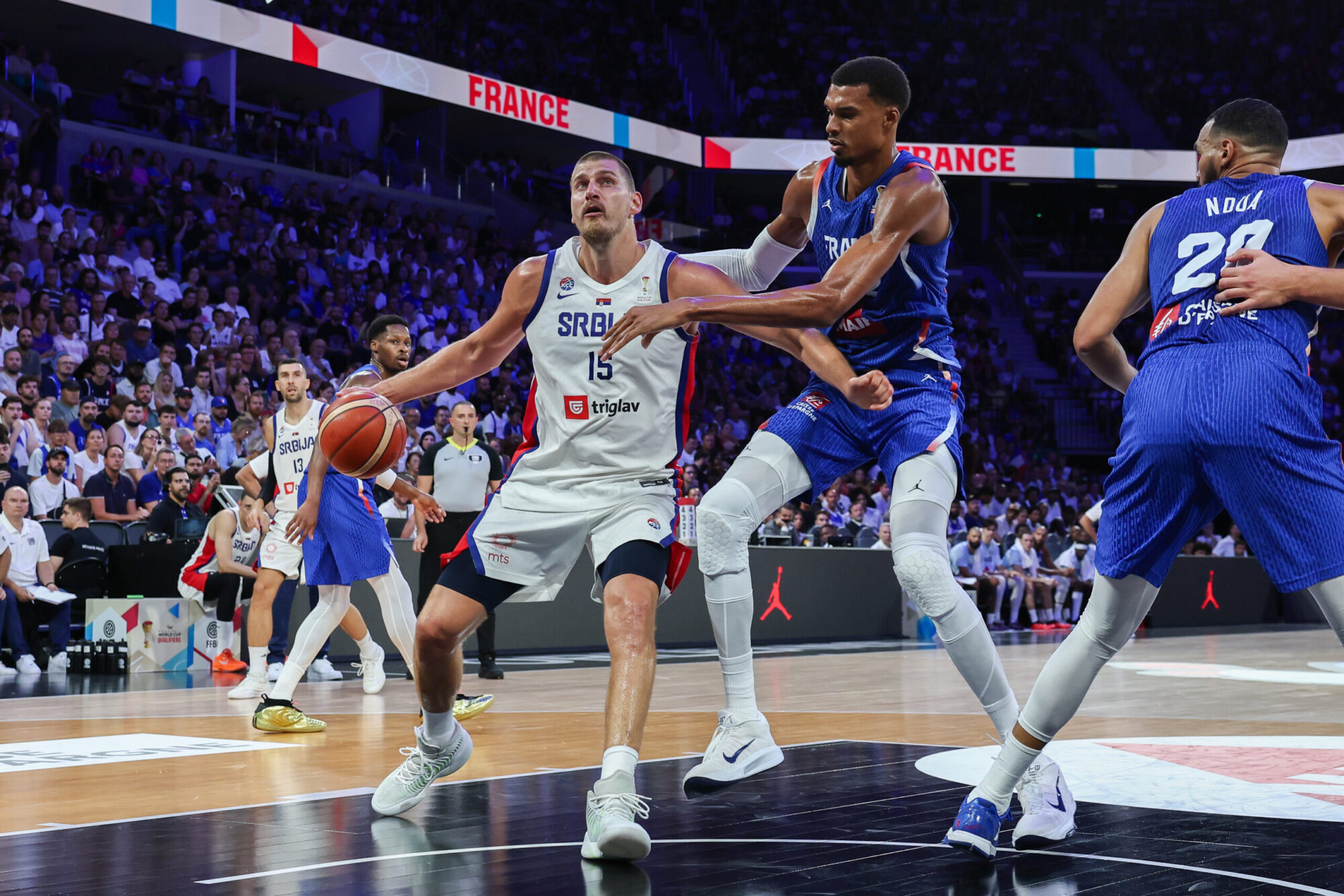
You talk about legends, and now you have Nikola Jokić, probably one of the best players in the world, if not the best. Since you’ve taken over, there has been one significant change: he’s started talking to the Serbian media and the public. In the past, we could barely get a comment from him even at major tournaments, but during this window and the previous ones he’s spoken to the media several times. What do you think is behind that change?
“Several things. First and foremost, we have to understand the man. He’s a global superstar, and that makes whatever private time he has extremely valuable.
“It’s difficult for him just to move around – through a city, an airport, in traffic… He is who he is, and he carries a huge burden with that, so he probably can’t fully relax almost anywhere. So that reluctance was completely understandable, because the man simply didn’t have – and still doesn’t have – much of a private life.
“The second thing is that he’s now at an age where he has fully matured emotionally, where everything has fallen into place for him – both personally and professionally.
“And the third thing, which may be the most important of all, is that he’s now the captain of this national team. That comes with additional responsibility. It wouldn’t be right for the captain, for one reason or another, not to speak publicly.
“I think the combination of all those circumstances led to this. Nobody told him he had to do it, and nobody forced him into anything. He’s simply someone who never asked for anything, but was given something he deserved. And he accepted the responsibility of being captain with complete commitment – just as he approaches everything else in life.”
Bogdan’s Aura
We also saw Bogdan Bogdanović at the start of camp even though he isn’t playing in these windows. In the context of this national-team culture, he’s one of the most important figures of this generation. How much credit does he deserve for helping take everything to another level? I’m not talking about his basketball ability – you can tell from his teammates’ comments that beyond being a great player, his aura means a lot to the group. Do you see it that way too?
“Absolutely. There are a lot of players, not only Bogdan, with whom we’ve maintained communication throughout, so that they can be here whenever the opportunity comes for them to join the national team. That family bond should never be broken.
“It’s very important to me that someone like Bogdan wants to stay involved with the national team in every way he can, even though for reasons we all know he can’t be directly involved with the team right now [Bogdanović was not cleared to play by the Houston Rockets.]
“He’s a man with tremendous leadership qualities, someone who has been a leader his entire life. His character and his aura as a player genuinely help others feel better, more dominant and more courageous.
“That’s why it’s important for us that he remains around the team.”
What did your conversation look like? What did you talk about?
“Things specifically related to his involvement with the national team, simply because he wanted to be with the team. We made plans for the future.
“Of course, as the captain until recently, he’s interested in everything happening within the group, although he already has all the information because he’s still in contact with all of them.
“What makes me particularly happy, and what matters to me, is that through the relationship he has with me, he wants to preserve everything that was already part of this national team before I arrived.”
Topić and Serbia’s Next Generation
After the game against France in Belgrade, you mentioned the generational change that is coming, probably after the Olympics or, at the latest, after the European Championship. At the same time, all these guys keep emphasizing how much they enjoy being here.
With that in mind, do you think Serbia could have a few players who keep playing for the national team well past the age when players usually step away, like Llull, the Gasol brothers, Rudy or Miloš Teodosić?
“A generational change is inevitable. Not because I want it to happen, but simply because that’s life. Age, of course, takes its toll, and that’s simply the natural progression of things.
“I actually don’t think it’s as far away as the Olympics or the European Championship. I think it will happen after the World Cup. It’s something we need to approach gradually, but in a very deliberate way.
“Whenever you go through a generational change with a national team, it’s extremely important to keep a few older, more experienced players around – so to speak – who can pass down to the younger generation what this national team has always stood for and what made it special before they came along.
“The national team was here before these new generations arrived, and it will still be here after they’re gone. In time, they will become basketball role models themselves, showing the next generation how to carry themselves and how to treat the national team.
“I’m absolutely optimistic that, through all the changes that will inevitably come, we’ll always have several players who can serve as pillars for the younger generations.”
Aleksa Avramović and Vasa Micić are both over 30. We could say Serbia is looking for its next point guard. What’s the situation with Nikola Topić? We know everything he’s been through – have you been in touch with him?
“He’s another player we’re obviously staying in contact with. Our plan together is for Nikola to be an important player for us at the World Cup. That’s what we’re working toward.
“Unfortunately, we won’t be able to count on him in either of the next two windows, in November and February, but we’re in constant contact. He’s going through his recovery process, and first and foremost, God willing, I just want him to stay healthy this season. After that, I want him to find minutes – whether directly with the Thunder or in the G League.
“It’s very important for us that, ahead of the World Cup – and I repeat – the first thing is for him to stay healthy and avoid injuries. Then he needs to get back into a real competitive rhythm so he can be there at the World Cup.”
Two Jobs, Two Coaching Staffs
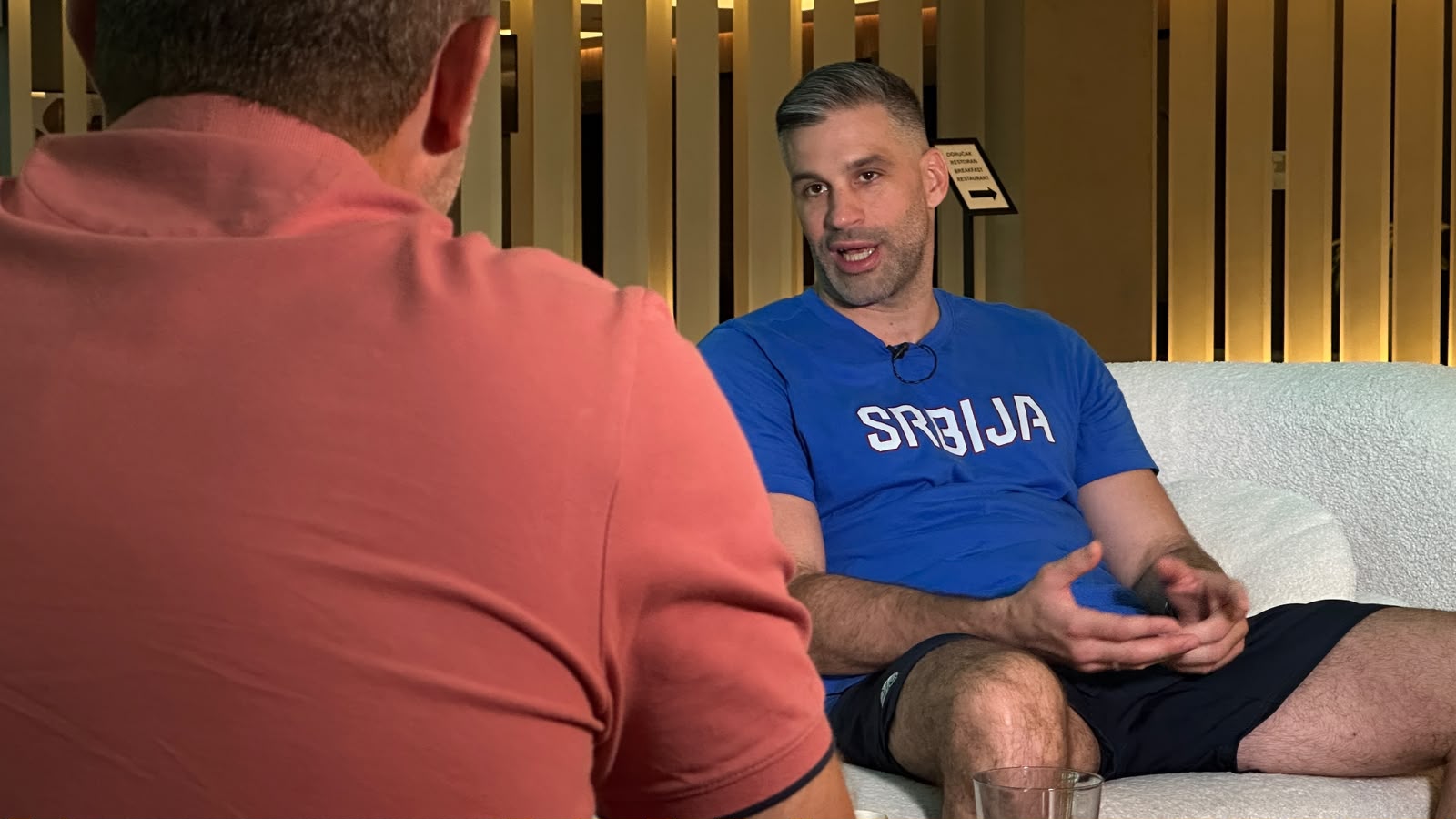
A year ago, when you took the job, you said – and I’m paraphrasing – that combining your club commitments, the national team and the emotional load that comes with all of it would be extremely demanding. A year later, have you ever found yourself thinking, “Man, I’m completely exhausted”? And when that happens, where do you find that extra motivation?
“I have. All of this really requires an enormous amount of discipline in everyday life if you want to do both jobs properly. I wouldn’t have taken this on if I hadn’t been confident that I could build strong coaching staffs both at Beşiktaş and with the national team.
“I’ve been very fortunate that throughout these windows with Serbia we’ve been able to put together an outstanding coaching staff. They all made themselves available, and they make my job much easier with their quality, expertise and professionalism. [In these windows, the staff includes Marko Barać, Nemanja Jovanović, Ognjen Stojaković and Stevan Mijović.]
“I also have to say that I have an outstanding coaching staff at Beşiktaş. If I didn’t have the staff I have there, and if we hadn’t been working together for almost eight years, I’m not sure I could have taken this on.
“That makes everything much easier for me. I’m not a full-time national-team coach – I’m working on two fronts – but it works very well. And the most important thing for me is that when I’m with the national team, I’m 100 percent committed to being here, and I can be completely at ease about everything happening at Beşiktaş.
“And vice versa: when I’m with Beşiktaş, there’s a very well-organized system in place within the Federation.
“I also have to say that, beyond the coaching staff that’s here, I have an excellent working relationship with the entire Federation – president Čović, vice president Krstić, the medical team… Just as importantly, our strength and conditioning staff has been expanded to four coaches this year, so we’ve really taken the level of organization within the Federation up a notch.”
You’ve given me a perfect segue into my next question: how exactly do you divide the workload among your assistants?
“It’s similar to what we do at Beşiktaş. Everyone has their own responsibilities, their own area of the court and a specific role based on what we’ve all agreed on in our meetings before practice.
“By the time practice starts, everything is already mapped out. Everyone knows exactly when to step in and what to do. That’s what modern basketball demands – getting multiple things done within a single practice. The more quality coaches you have involved in the process, the more you can get out of that practice.”
Do you see yourself as Serbia’s head coach for the long haul – five or even ten years from now?
“Time will tell. It wouldn’t be serious for me to talk about that now… Everything takes time, but unfortunately, one of the harsh realities of sports is that we often aren’t given enough of it. There isn’t enough patience to let a system develop and go through everything that comes with that process.
“For now, I’m satisfied. I’d like us to get through this upcoming window the way we’ve planned, and then we’ll take it from there.
“We’re not setting any long-term targets. We go window by window, competition by competition, and of course the Federation has the final say when it comes to my position.”
What the FIBA Windows Taught Him About the EuroLeague
You’re very animated on the sideline. Do you ever watch clips of yourself afterward? And when you do, what goes through your mind?
“Different coaches have different approaches and different ways of leading a team. I simply don’t believe in trying to copy anyone. It has to come naturally from who you are.
“Of course, you become a little less impulsive and a little calmer with age. But honestly, I wouldn’t want to lose that part of myself either. It’s always about changing the team’s energy for the better or getting the right reaction from the group – never anything else.”
You have a reputation as a coach who gives his players a lot of information, at least judging by what they say. Next season, you’re back in the EuroLeague. How much will you have to adjust your approach, considering the relentless EuroLeague schedule and games almost every other day?
“I have to admit that the FIBA windows have changed the way I look at preparing Beşiktaş for the EuroLeague. Why? Because until now, I genuinely couldn’t imagine having a preseason shorter than seven weeks – six and a half at the absolute minimum.
“But because of ELPA, the EuroLeague Players’ Association, our preparation time has now been cut to the bare minimum. We basically have 32 days before our first official game, the Presidential Cup final against Fenerbahçe on September 22.
“So that’s just over four weeks. I honestly thought that was impossible – until I started coaching in these FIBA windows.
“Former national-team coach Pešić once said that qualifying for the World Cup was one of the greatest achievements of his career. At the time, I didn’t fully understand just how true that was until I experienced it myself.
“This is genuinely something completely new for everyone: four different teams, four different adjustments in a very short period of time, without even knowing who you’ll have available in the next window.
“You simply have a very limited amount of time to condense everything you want to give the players into those few days, so to speak. My feeling is that success comes down to who adapts better.”
How do you adapt?
“With players of this quality, certain things are understood. You don’t have to give them every single piece of information. Their talent and the level they play at allow them to read certain situations themselves. That already allows you to strip away a lot of the information you would normally give them.
“The other thing is that you extend that one practice because you have more information to get through. But at the same time, things you would normally go into much greater detail on at club level – adding another layer of information – simply have to be left out here.
“You really have to get straight to the heart of it. There’s very little room for trial and error.
“And that’s how it’s going to be in the EuroLeague as well.”
Back at Crvena zvezda – as the Visitor
You’ll probably be back at this hotel in December, ahead of the road game against Crvena zvezda. Can you imagine what it will feel like to walk into that arena as the visiting coach?
“Actually, I’ll be back at the same hotel in September because we’re coming for Partizan’s tournament. We play two games on September 12 and 13, and then, yes, there will be the two EuroLeague trips as well…
“A lot of time has passed. It’s a club where I worked… It was an extremely difficult, exhausting year for me.
“But I still have a lot of good memories from my time there, and I think we parted ways on good terms. I can’t imagine feeling anything other than positive emotions.”
“When Everyone Thinks the Same, It’s Time to Break Up”
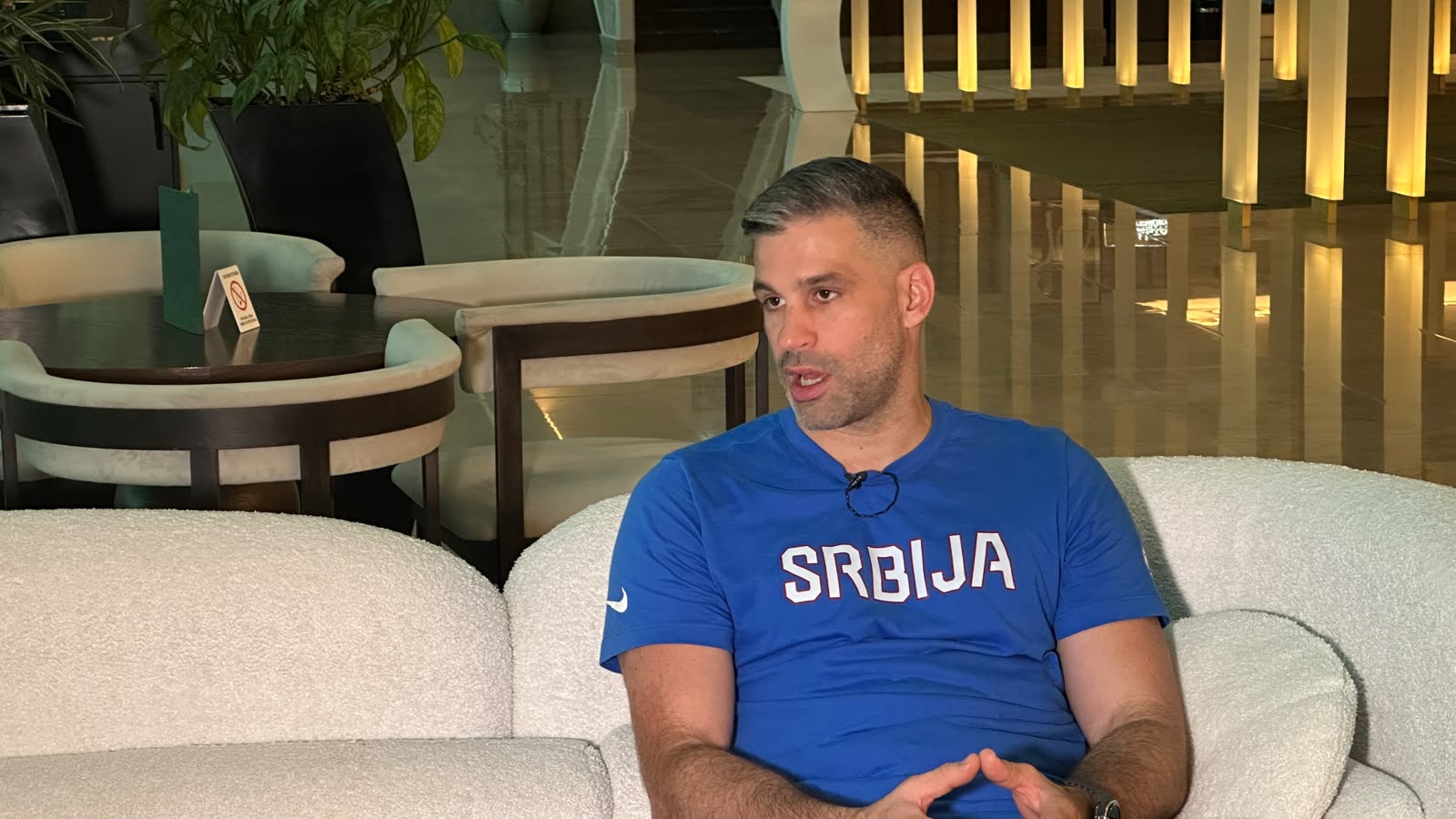
When you run into a problem, who is the first person you turn to for advice?
“I talk a lot with both of my coaching staffs. I think one of the most important things for any head coach is having a staff you can rely on, people you can exchange ideas with, so that you’re not all thinking in exactly the same way…”
You don’t have a problem with that – people challenging you?
“No, absolutely not. I’ve said this many times, and it’s not just something I believe – it’s one of the fundamental truths of coaching: the moment everyone on a coaching staff starts thinking the same way, that staff needs to break up.
“For two reasons. First, when a problem is developing, they won’t recognize it. They won’t even see it coming. And once it does arrive, they won’t have a solution because everyone sees things the same way.
“You need different ways of thinking, different perspectives, if you’re going to find solutions.
“And of course, the older coaches are always there to help – whether through conversations at coaching clinics or privately.”
Which of them means the most to you?
“All of our coaches… I genuinely take every opportunity I get, whenever I see one of our legendary coaches, to sit down and talk to them about everything. There’s no need for me to single anyone out.
“I really have an excellent relationship with all of them, good enough that whenever the opportunity comes, we can sit down and talk. Those are always incredibly valuable experiences for me.”