






For years, the NBA has tried to determine how much freedom an offensive player should have while still allowing a defender to hold a legally established position. Heading into the new season, the focus has shifted to one detail that has become an almost standard part of the game for elite creators: using the off arm on drives, changes of direction or before a shot to move a defender and create additional space.


This is not a new rule. Pushing off with the arm could already be called an offensive foul, but the NBA has made it one of its primary points of emphasis for the 2026/27 season. The league believes offensive players have increasingly used the off arm in recent years to gain an advantage.
“We started to see more and more push-offs with the off arm to create space”, explained NBA executive vice president and head of basketball operations James Jones. In the modern game, with shooters stretching the floor more than ever, defenders already have a difficult enough job without also being moved out of good position by an offensive player’s arm.
Officials Will Judge Four Elements of the Contact
The NBA has given officials four elements to consider when judging this kind of contact, described by Monty McCutchen, who oversees referee development and training, as “feeling, firming, force, full extension.” A player may use the off arm to feel where the defender is and establish his own position through contact. A foul occurs when he applies enough force to move the defender or fully extends the arm to push him away and create space.
The gray area is the amount of force involved. McCutchen acknowledged that what one official considers firm but legal contact, another may interpret as excessive force. The NBA does not want every use of the off arm to be called a foul. The focus is on plays in which the offensive player actually moves the defender to create space.
Scottie Barnes Offered an Early Example of the New Emphasis
Toronto’s first preseason game offered an early indication of how strictly the standard might be applied. Scottie Barnes was called for an offensive foul in the opening minutes against Miami after using his off arm to create separation from his defender. It did not look like an especially forceful or obvious push-off, which is exactly what made the play notable. Sports Illustrated suggested that the same contact probably would not have been called last season, while similar actions should be whistled more often as offensive fouls under the new emphasis.
The NBA also used examples involving Jaylen Brown, RJ Barrett and Paolo Banchero in its instructional material. In each case, the offensive player uses the off arm to move the defender before a drive or shot.
Brown is particularly interesting because of what happened to him a few months earlier. He was called for 10 offensive fouls during the first round of the 2026 playoffs, more than twice as many as any other player in that stage of the postseason. After Boston was eliminated by Philadelphia, he publicly criticized the officiating and argued that many other players use the same move, specifically mentioning Paul George. He was later fined $50,000 for his comments about the officials.
A few months later, Brown’s use of the off arm appeared among the examples the NBA wants officials to monitor more closely.
Shai Gilgeous-Alexander Will Naturally Draw Attention
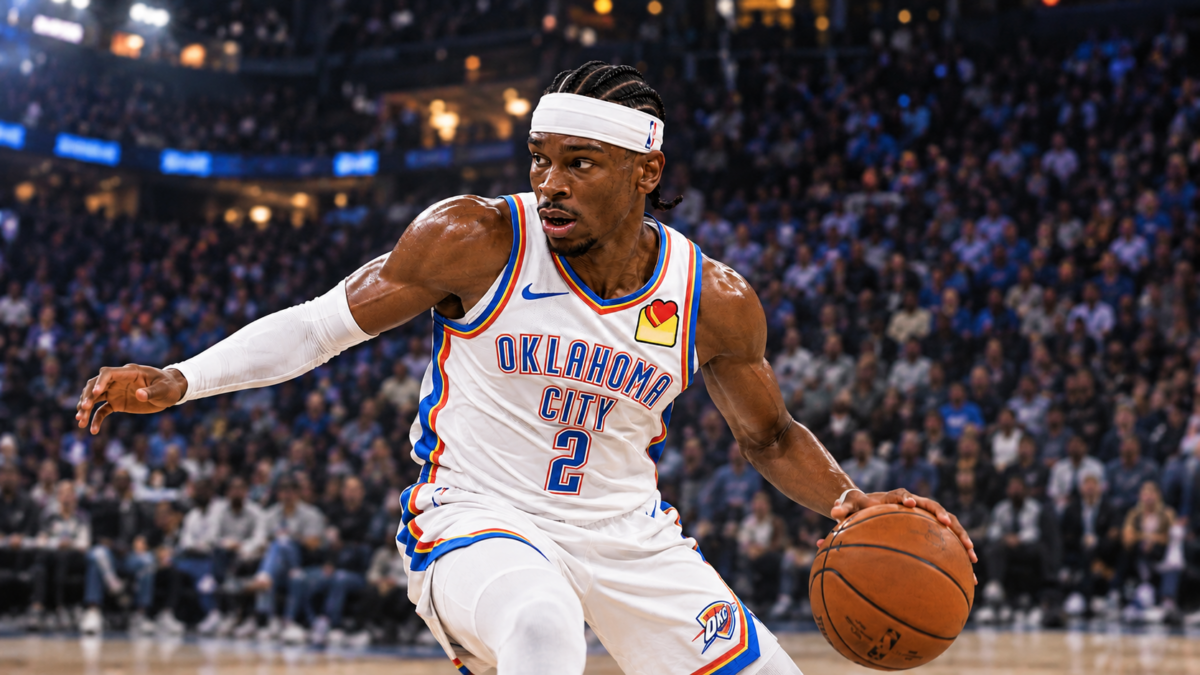
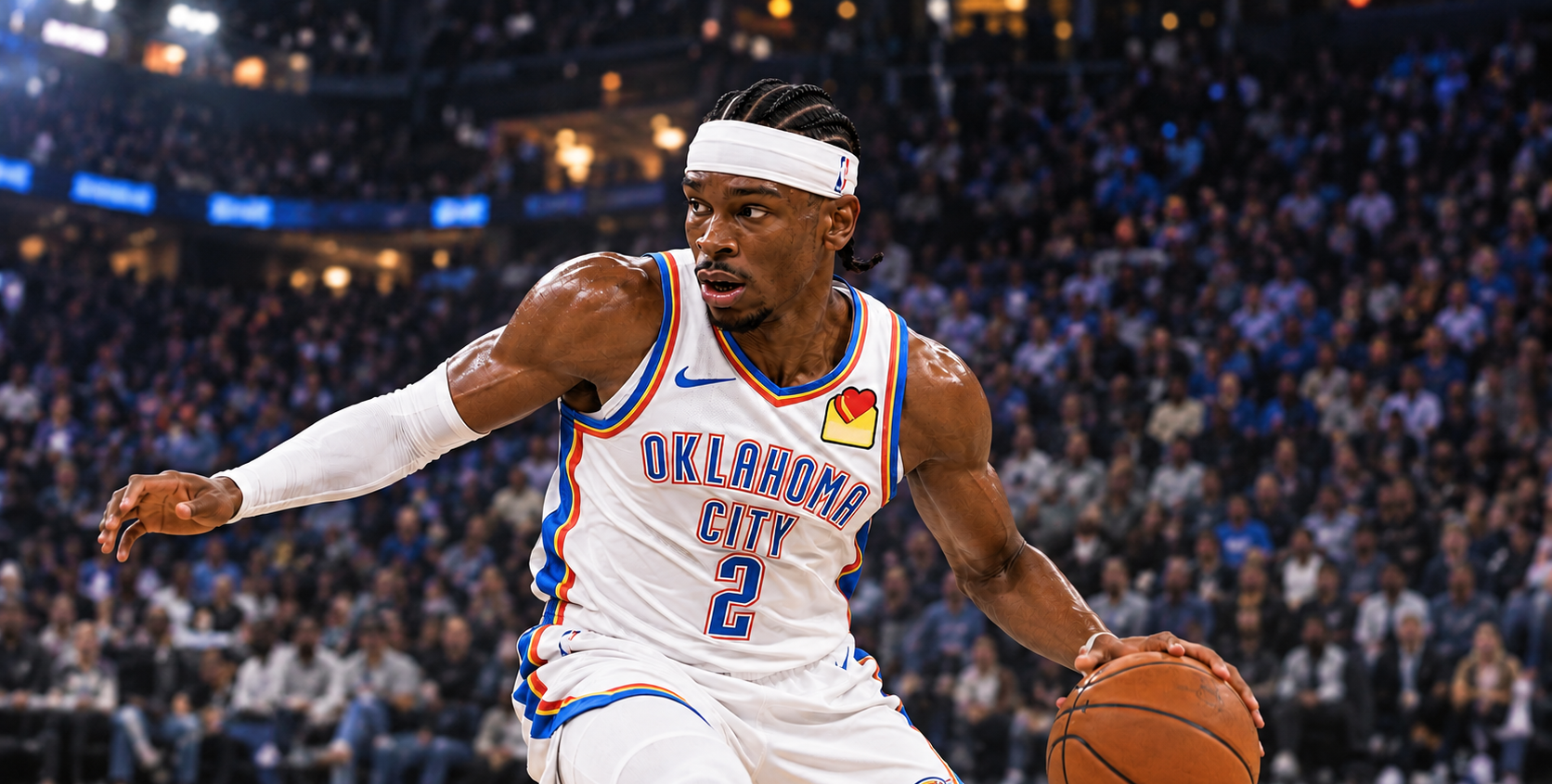
The name that comes up most often in this discussion is Shai Gilgeous-Alexander. The two-time MVP does not create space with his first step alone. Much of his game is built on changes of pace, body control, sudden stops and a precise feel for contact. His off arm often helps him keep a defender at the distance he wants before finishing at the rim or pulling up from midrange, which immediately raised questions in the American media about how much a stricter standard could affect his offensive game.
It would be an exaggeration, however, to suggest that the change is aimed at Gilgeous-Alexander or any individual player. The NBA did not use him as a central example in its official material, and his efficiency certainly does not depend on one move. His changes of pace, body control and ability to read a defender’s position remain the foundation of his game. If officials consistently start calling push-offs more tightly, he will have to adjust in certain situations, as will Brown, Banchero, Barrett and other players who use contact to create space.
Half a Step of Separation Can Decide a Possession
NBA defenses now have to cover much more of the floor because of the volume of 3-point shooting and the number of players capable of attacking off the dribble. When a defender manages to stay in front and is then moved half a step by the offensive player’s off arm just before a shot, that can be enough to change the outcome of the possession.
The NBA’s officiating guidelines also emphasize freedom of movement for offensive players. A defender cannot use his body to knock a ball-handler off a direct path to the basket, nor can he impede a player with or without the ball through holding or other illegal contact.
The Jordan-Russell Play Still Shows How Thin the Line Can Be
One of the most famous disputed plays in NBA history shows just how thin that line can be. Michael Jordan’s contact with Bryon Russell before the deciding basket in Game 6 of the 1998 Finals has been part of the push-off debate for decades. The fact that Jordan had his hand on the defender would not automatically make it a foul even under the current standard. The key question would again be whether he applied enough force to move Russell or fully extended the arm to create separation.
The biggest challenge will be enforcing the standard consistently. The NBA has emphasized certain types of contact before previous seasons, only for the level of tolerance to shift as the year went on. The real effect of this change will not be measured by the number of offensive fouls called in October preseason games, but by whether the same standard applies to a reserve in the second quarter and an MVP candidate late in a playoff game.