







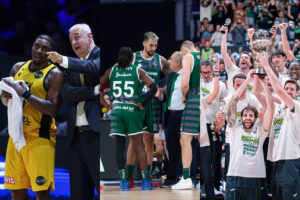

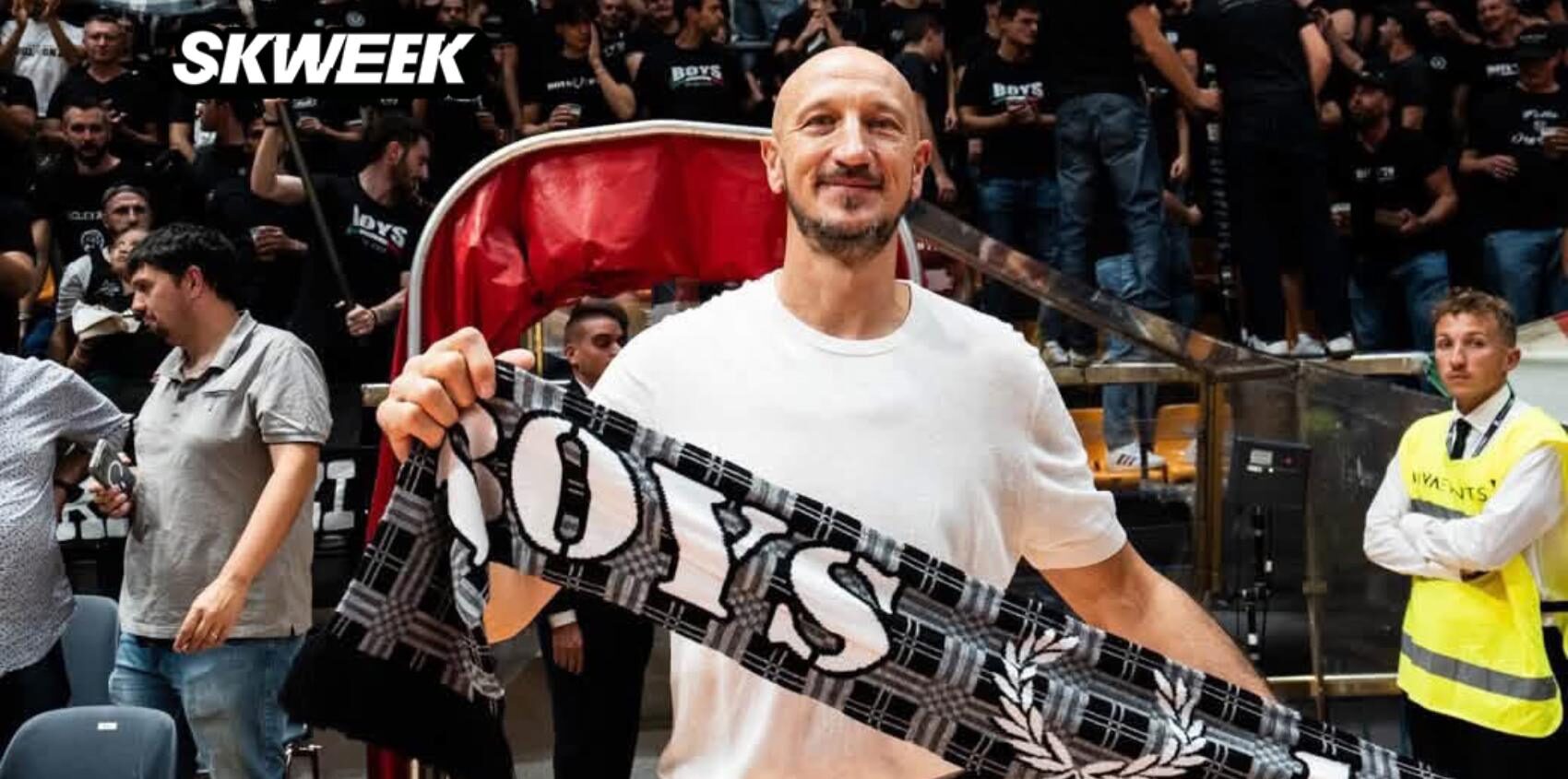

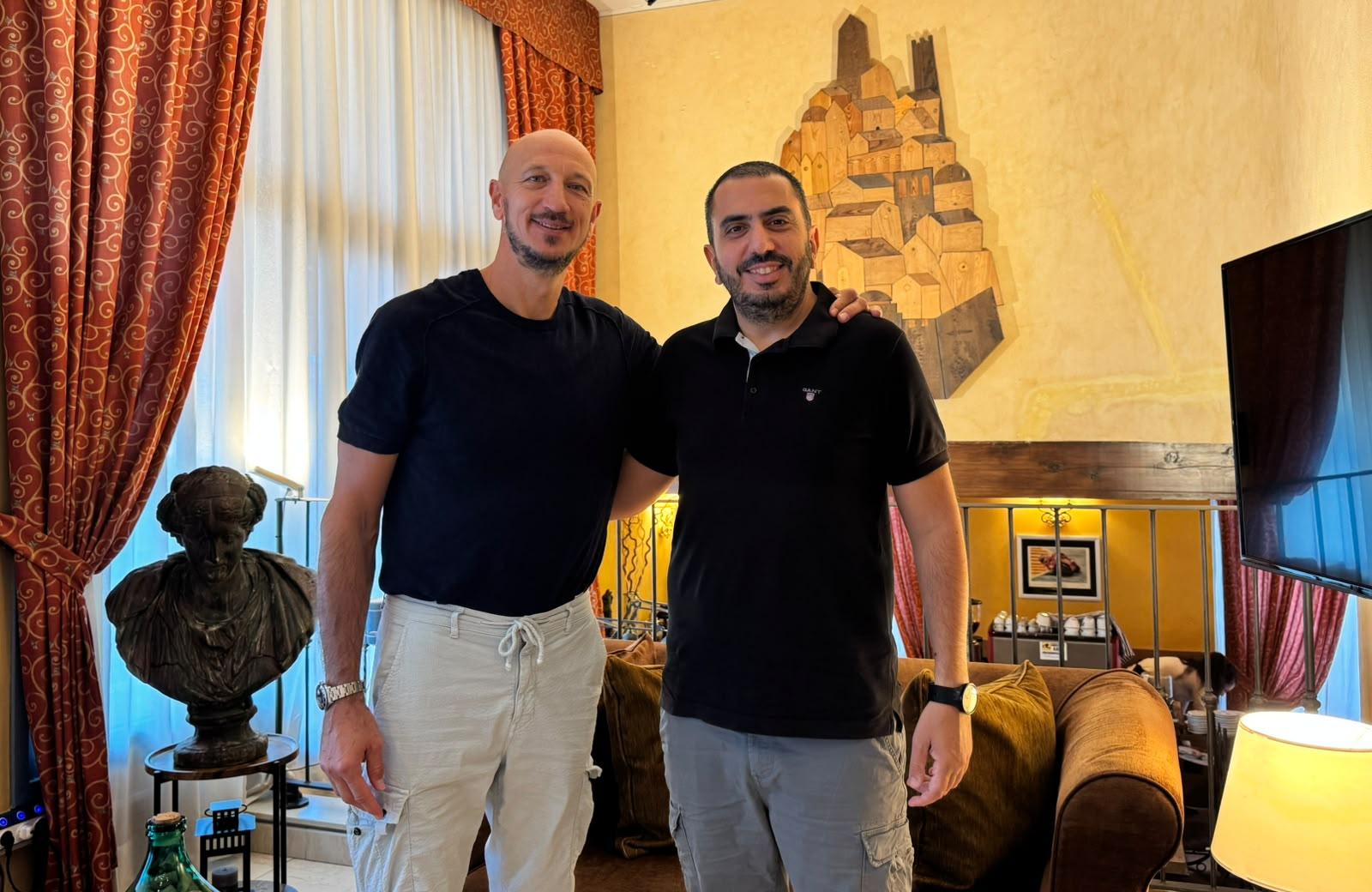
In an exclusive interview with SKWEEK, Virtus Hal of Famer Alessandro Abbio looks back on the unforgettable years of the Bologna derby, when clashes with Fortitudo divided families, friendships and an entire city. A key figure of Virtus’ golden era, Abbio recalls the rivalry, the atmosphere and the players who made Basket City iconic.


For a generation of basketball fans, the Bologna derby was much more than a game. Virtus and Fortitudo were two sides of the same city, separated by colours, loyalties and an intense rivalry that could turn friends into opponents and even divide families. In the 1990s, that rivalry reached its peak, with both teams competing for titles in Italy and Europe and some of the biggest names in European basketball facing each other again and again.
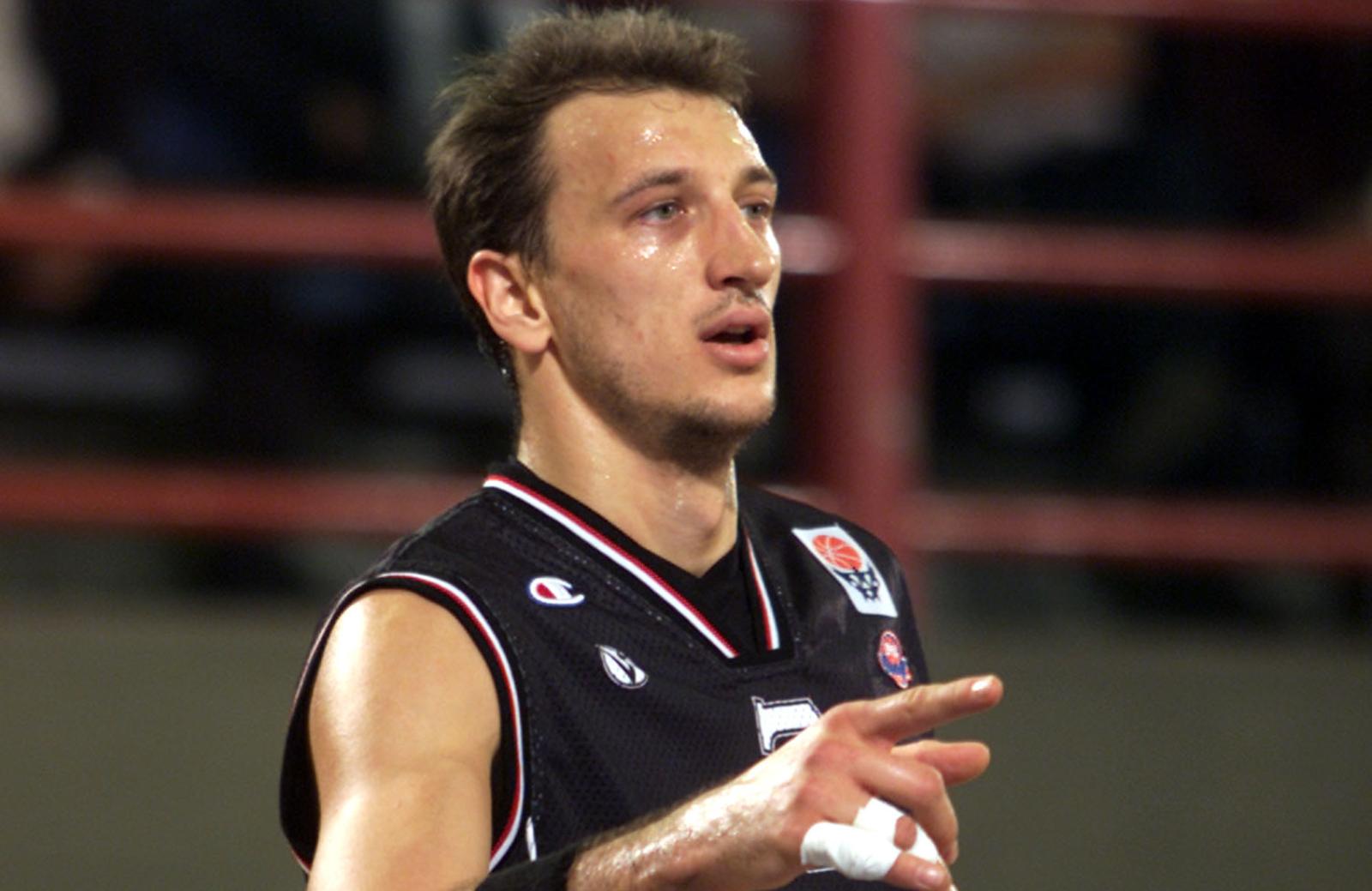
Few players experienced that era more intensely than Alessandro Abbio. A key figure in Virtus’ golden years, Abbio was there for the great battles, the unforgettable atmospheres and the moments that became part of Bologna’s basketball folklore. The 1998 season alone produced ten derbies, including a legendary championship final decided in overtime after Danilović’s famous four-point play.
But for Abbio, the story goes far beyond one shot or one game. It is about a city that lived basketball every day, a rivalry that became part of everyday life and a generation of players who helped make Bologna one of the most important basketball cities in Europe. Years later, the memories remain as vivid as ever.
If someone who never experienced Bologna in the 1990s asked you what Basket City really meant, how would you describe it?
It’s not difficult to explain, because in the 1990s basketball was everywhere in Bologna. Virtus and Fortitudo already had a long history and a strong rivalry, but during the ’90s it reached another level. Both teams were at the top of Italian basketball and competing at the highest level in Europe, with incredible rosters and some of the best players in the game.
And it wasn’t only basketball. Football was also a big part of life in the city, with players like Roberto Baggio playing here, and people in Bologna were passionate about sport in general. They followed football, they followed basketball and, of course, they lived for the derby. You could feel it everywhere. On every corner. Everyone was talking about basketball.
And the most incredible thing is that this passion was passed down from one generation to the next. Even today, if you ask a younger fan, they will tell you that their father or uncle used to talk to them about what happened back then.
In Bologna, people knew everything about basketball. They knew the starting fives, the players, the competitions, the results, the history of the teams. You had to know who was playing, what had happened in previous games and what had happened in the big wins and defeats. Basketball was such a big part of everyday life that people simply knew everything about it.
Virtus gets under your skin
So, the rivalry between Virtus and Fortitudo became part of everyday life, even within families and friendships?
Absolutely. There were families where the father supported Fortitudo and the son supported Virtus. Or, even worse, the husband supported one team and the wife the other! When derby week arrived, some people would say, “I’m not speaking to my wife this week,” because otherwise they knew they might end up arguing! (laughs)
But everything was part of the sporting rivalry. There was teasing, there was banter, there was tension, but it was never about having a real problem with someone. It was part of the game. I didn’t have those problems in my own family, but I had plenty of friends who supported Fortitudo, so there was always a lot of teasing. During derby week, everyone was waiting for the moment to arrive. It wasn’t just about the game. It was everything surrounding it — the atmosphere, the conversations, the fans.
And, of course, the choreographies in the stands were incredible. They became part of the derby itself. One side would try to make fun of the other, and sometimes the atmosphere in the stands was almost as important as what was happening on the court.
Was there one particular derby moment or atmosphere that has stayed with you all these years?
There are many. You never forget the images, the noise, the atmosphere inside the PalaDozza. The first time I walked into that arena was in 1994. I was 23 years old and it was the Filodoro Bologna-Virtus Bologna derby. As soon as I came out of the tunnel and stepped onto the court, I couldn’t hear anything! The noise was incredible. I experienced something similar in Glyfada, playing against Panathinaikos. The arena was small and there were so many people that the intensity was unbelievable. These are things you never forget. They stay with you. And that is probably what Bologna is missing today: the derby.
How important would it be for Bologna to have the Virtus-Fortitudo derby back?
It would certainly be very important for the city. It would be great to see Fortitudo return to the top division. But I understand that it isn’t easy. The second division in Italy is very complicated. There are many teams competing for very few promotion spots, and if you want to build something sustainable, you have to invest. You don’t want to go up and down every year. You need to create a solid foundation.
At the moment, that isn’t easy. Italian basketball has its own challenges, and there are also many questions surrounding the future of European basketball, including the NBA Europe project. We still don’t know exactly how things will develop.
There is also the question of the size of the market. Rome, for example, is the capital of Italy and has a much larger population than Bologna. If you compare a city of around 400,000 people with a metropolitan area of several million, there are obviously different possibilities when it comes to the potential audience, marketing and people coming to the arena.
But none of that changes the essence of Bologna. Bologna is still Basket City. And I think it always will be.
We look back on that era with a lot of nostalgia today. But for a player who experienced it from the inside, was it more of a privilege to be part of that atmosphere or a constant pressure?
No, definitely the first one. It was a privilege. That’s why, even at 55, I’m still a Virtus fan. I watch every game and I go to the arena to watch the team whenever I can. I spent eight years here as a player, including as captain, and I’m still among the players with the most appearances for the club in the Italian League and the Italian Cup. But Virtus gets under your skin. It becomes part of you. It’s something you cannot change, because those experiences stay with you.
I consider myself very fortunate to have come here in 1993. At that time, if you were a basketball player in Italy, Bologna was one of the places you wanted to be. I knew the history of Milan, Varese, Cantù and Bologna, but I didn’t really understand what Bologna was like until I came here.
Once I arrived, I started to learn. There were veterans like Roberto Brunamonti, Augusto Binelli and Claudio Coldebella, and they would tell you stories about what had happened before you arrived. You would hear them in the locker room, on the road, during trips. They would tell you about the history of Virtus and what the club had been through.
Every player contributes a small piece to that history. You put your brick here, someone else puts theirs there, and little by little you build something bigger.
So, in the end, every generation of players leaves its own mark on the history of the club?
Exactly. And when a club has a history of 100 years, as Virtus will in 2027, that has a very special meaning. It is something important, something much bigger than any individual. Everyone who has been part of the club has contributed in some way. Each person has put down their own little brick. One after another, those bricks become a building. And that is how the history of a club is created.
That’s what makes it special. You become one small part of something that started long before you arrived and will continue long after you are gone. And when you look back, you realise how fortunate you were to have been part of it.
When the fans rang the doorbells!
What was it like living in a city where the biggest game of the season was such a huge part of everyday life?
There was definitely some pressure, as you said. But when I look back now, I remember many of those moments with a lot of affection. There were fans who knew where certain players lived and would sometimes ring their doorbells late at night just to wake them up! You simply couldn’t escape the rivalry.
There were also plenty of funny moments between the two teams. I remember one time we were in the locker room, getting ready to go out for practice, while the other team was coming off the court. Some of the guys were always joking around. I remember Vincenzino and Sasha Đorđević… There were some firecrackers, and while we were quietly getting ready to switch with the other team, Sasha and Vincenzino — I don’t remember exactly who it was — threw some near the other locker room! It was one of those crazy moments that you never forget.
Looking back, you remember all these things with a smile. For me, we experienced something unique. It was a truly special period, and I hope it can happen again one day — for the fans, for the city and for a new generation of players.
You mentioned the new generation. Do you feel that something has been lost in Italian basketball compared with that era?
I think one of the things that was very strong back then was the Italian identity of the teams. There were many important Italian players who weren’t simply there to fill a roster spot. They were protagonists. They played, they took responsibility and they represented their clubs.
That created a very strong sense of belonging. The Italian players felt connected to their teams, to their cities and to what those clubs represented. In my opinion, that feeling is more difficult to maintain today, especially in the top division. It is probably easier in the second division, where there are more Italian players and fewer Americans. But in the top division, it is much more complicated.
When I think about Bologna in those years, this is one of the things that stands out. The best players in Europe were here. With Fortitudo, you had Gregor Fučka, Gianluca Basile and Carlton Myers. With Virtus, there were players like myself, Frosini and Bonora, as well as great international players such as Hugo Sconochini, Manu Ginóbili, Predrag Danilović and Zoran Savić.
It was an incredible mix of players. Many of them also played for their national teams. So, you would see these players facing each other in the Italian League, in the Italian Cup and in the EuroLeague, and then meeting again with their national teams at European Championships, the Olympics or the World Cup.
Everything was connected. The derby was part of that whole experience. It wasn’t just one game. It was part of the environment in which these players competed, developed and learned from each other. That is what made Bologna so special. You had so many great players, from different countries and different backgrounds, all in the same city, competing at the highest level. It was a unique environment.
Was there a point in the season when everyone would look at the schedule just to see when the derby against Fortitudo was coming? And how did the team’s routine change during that week?
The idea was to carry on as normal and not think about it too much. But that was impossible. You knew you had a game against Fortitudo coming, so there was no way you could get to that game without thinking about it. Once you stepped onto the court, everything changed. There was more intensity, more noise, more emotion. But, at the end of the day, it was still a basketball game.
And the interesting thing was that you often had national-team teammates on the other side. You would train together during the week with the national team, then suddenly you were facing each other in the biggest game in Bologna.
And I imagine it was impossible to walk around Bologna that week without being reminded of what was coming.
Absolutely. People would stop you in the street. “You have to win!” They wanted to know how you were feeling physically, whether you were 100 per cent, whether you had any problems. If you had a sprained ankle, everyone knew about it! But that also gave you a lot of energy. You understood what the game meant to the people. For many of them, it was probably the most important moment of the season.
And, especially for Fortitudo, winning the derby almost felt like winning the championship. For Virtus, maybe a little less, but there was still that feeling. If you won the derby, you could enjoy it for half a season — at least until the next one!
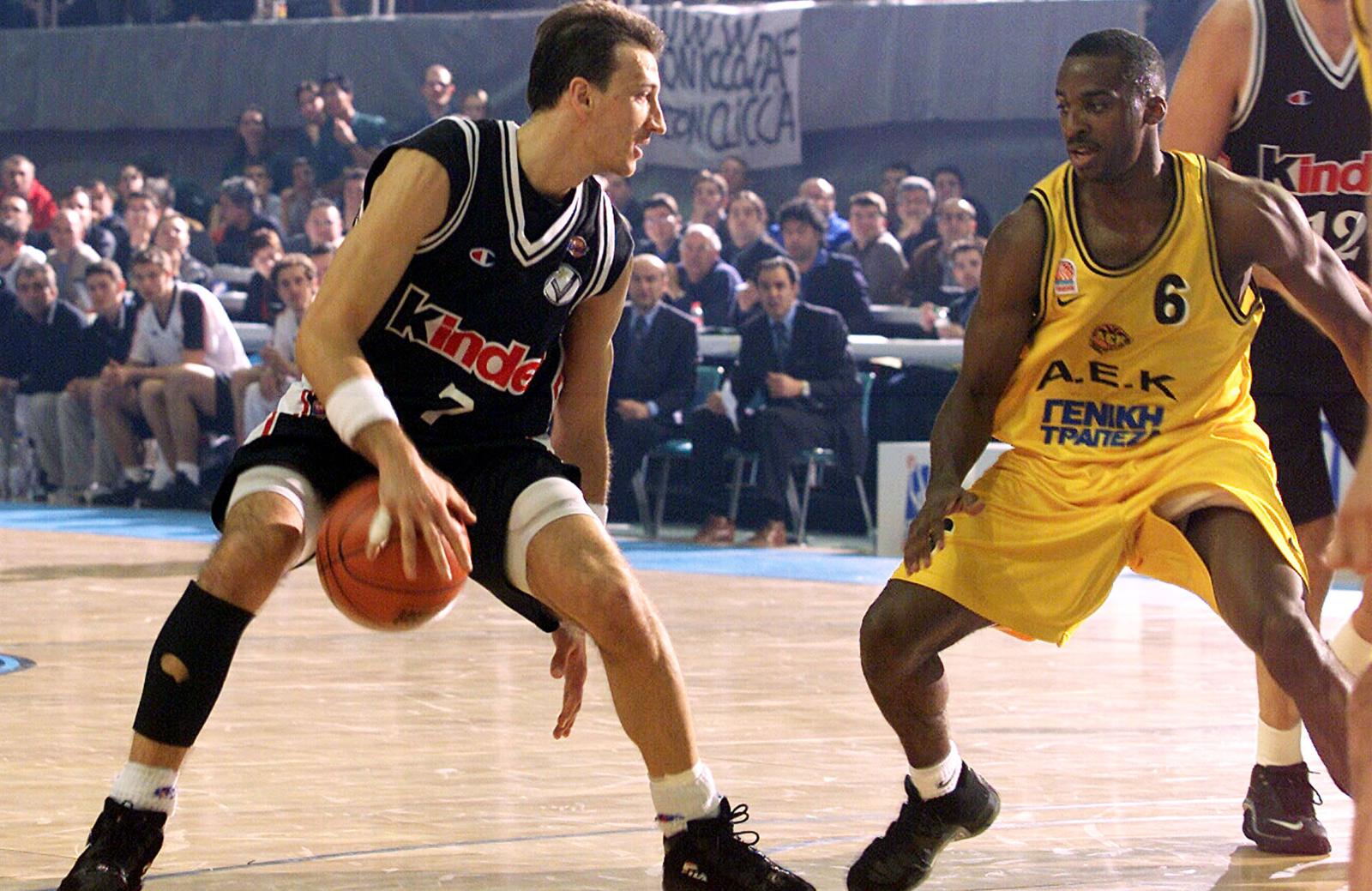
Two different worlds
But you were also playing against the best teams and players in Europe. Did the derby really feel different from those games?
Yes, because the derby had its own identity. When you played in the European Cup, you were facing the best teams and the best players in Europe. I remember playing against some incredible players, against teams that were full of talent and experience. Those were huge games. But the derby was different. It had its own identity.
You could play against the best team in Europe and know that you were playing a very important basketball game. But when you played Fortitudo, there was something more. It came from the city, from the people and from everything that surrounded the game. You knew the players on the other side. Some of them were your teammates with the national team. You respected them, you knew how good they were, but for those 40 minutes, there was only one thing that mattered.
It was Bologna against Bologna. And that is what made the derby so special.
A Virtus-Fortitudo derby was never simply Danilović against Carlton Myers. It was two different philosophies, two different ways of understanding basketball, almost two different worlds. How did you experience that from inside?
Definitely. As we said before, the Fortitudo fans were more… wild. They were more passionate, more emotional. The Virtus fans were different. Of course, we had some crazy supporters too, but overall, there was a different atmosphere.
So, you had two different philosophies, two different worlds, coming together on a basketball court. And basketball gives you only two possible outcomes: you win or you lose. There is no draw, like in football. And if you won the derby, you could enjoy it for half the season — until the next one came around.
In the 1990s, we played so many of them. In 1998 alone, we played ten derbies in different competitions. It was an incredible number!
With that much at stake, could you actually sleep normally the night before those games?
Yes, I could. I never had a particular problem sleeping before a derby. The one night I remember being different was before Game 5 of the 1998 championship final. That was something else. There were two main reasons. First, I knew what winning that title would mean to the city, the fans and the club. Virtus had been waiting for that championship for a long time, so everyone understood how important that moment was.
And then there was also the physical side. I had taken a knock to my knee in the semifinal against Partizan and had a big bruise. I wasn’t sure how I would feel. But once you stepped onto the court, you didn’t feel anything anymore. You just played.
If you had to choose one moment when the derby stopped feeling like just another basketball game, would it be that 1998 finals against Fortitudo?
Definitely. The whole five-game series was incredible. And, of course, the moment everyone remembers is Danilović’s shot. But there wasn’t just one moment. We had already played the EuroLeague derbies that season, with all the tension, the controversy and everything that happened around them. Then, in the EuroLeague quarterfinals, we beat Fortitudo to reach the Final Four in Barcelona, and eventually went on to win the European title. So there were many moments when you felt that this was much bigger than basketball.
Life with Danilović and the most famous shot
Let’s go back to Danilović’s famous shot. You were actually involved in the action that created the matchup, weren’t you?
Yes. We ran a handoff. I was involved in the action with Sasha, and they switched defensively. Dominique Wilkins was guarding me, while Attruia was on Sasha.
Normally, if Dominique switched onto Sasha, you would attack him one-on-one. He was an incredible athlete, but at that stage of his career, there were certain situations you wanted to take advantage of. So, when the switch happened, Sasha got the matchup we wanted. And when the ball was in his hands at the end of the possession, you had a feeling he was going to take the shot. And, of course, he did.
What do you remember about Bologna that night? What happened in the city after the shot?
I remember that some people had already left the arena because they thought the game was over. Some Fortitudo fans had left, and some Virtus fans had left too. They couldn’t believe what was happening. But what I remember most from that period — and it was similar in 2001 — was the feeling we had inside the team that, somehow, we were going to win.
It wasn’t something we had planned or talked about. It wasn’t a tactical thing. It was something that had been built over time, physically and mentally. You never knew exactly how you were going to feel. Maybe you were in great form, maybe you were struggling. Maybe you were coming into the game on a winning streak, maybe after a difficult period. But there was an inner belief that, one way or another, we would find a way to win. That was the mentality of that team.
Danilović has gone down in history as one of the toughest and most competitive players in European basketball. But what was Sasha like in the locker room, when the doors were closed and there were no cameras?
He was very serious. A true professional who left nothing to chance. He trained seriously and approached everything with the right mentality. Of course, he had his moments of joking around with the others, but he was always measured. Never excessive. He had a certain discipline about him, and that was something you noticed immediately.
And, in the end, his mentality was contagious. Just being around him influenced you. He already had a very clear idea of what he wanted to be as a player and how he wanted to approach the game. When I arrived in Bologna, I immediately felt that I was in the right environment. I had teammates like Sasha, Brunamonti, Binelli, Coldebella, Moretti and Morandotti — players who had the same mentality I wanted to develop.
I was younger, and I wanted to become that kind of player as quickly as possible. I was surrounded by players who already knew what it meant to take responsibility and lead a team.
Sasha was one of those leaders. Brunamonti was another. They were the players who set the standards. They were the ones you looked at and thought, “This is what I want to become.” And that was important for me. You learn from players like that simply by being around them. You see how they train, how they prepare, how they approach games and how seriously they take their job.
Sasha was like that every day. He set the standard, and you either followed it or you were left behind. For me, that was one of the most valuable things about playing alongside him.
Today, 25 years later, why do you think that duel between Sasha Danilović and Carlton Myers is still so present in the memory of basketball fans?
Because people identified with them. You wanted to be Sasha. You wanted to be Carlton. That’s what happens when you’re a kid. You look at great athletes and you choose your idol. You see yourself in them and you think, “I want to be like him.”
I remember it from football in Italy. When Italy won the 1982 World Cup, every kid wanted to be Paolo Rossi, “Pablito.” I was more of a Dino Zoff guy, but you had your idol, the player you wanted to become. It was the same with Sasha and Carlton. They became idols for an entire generation of basketball fans. For us, it could have been “Be Like Sasha” or “Be Like Carlton.” And maybe, for some younger kids, “Be Like Alessandro.”
You had the same thing before that with Magic Johnson and Larry Bird. You saw the Lakers in their yellow and purple, the Celtics in green and white, and you wanted to be one of those players. That’s why those players stay in people’s memories. They weren’t just great basketball players. They were role models. They were the players that kids watched, admired and dreamed of becoming.
The final against AEK and the doping test
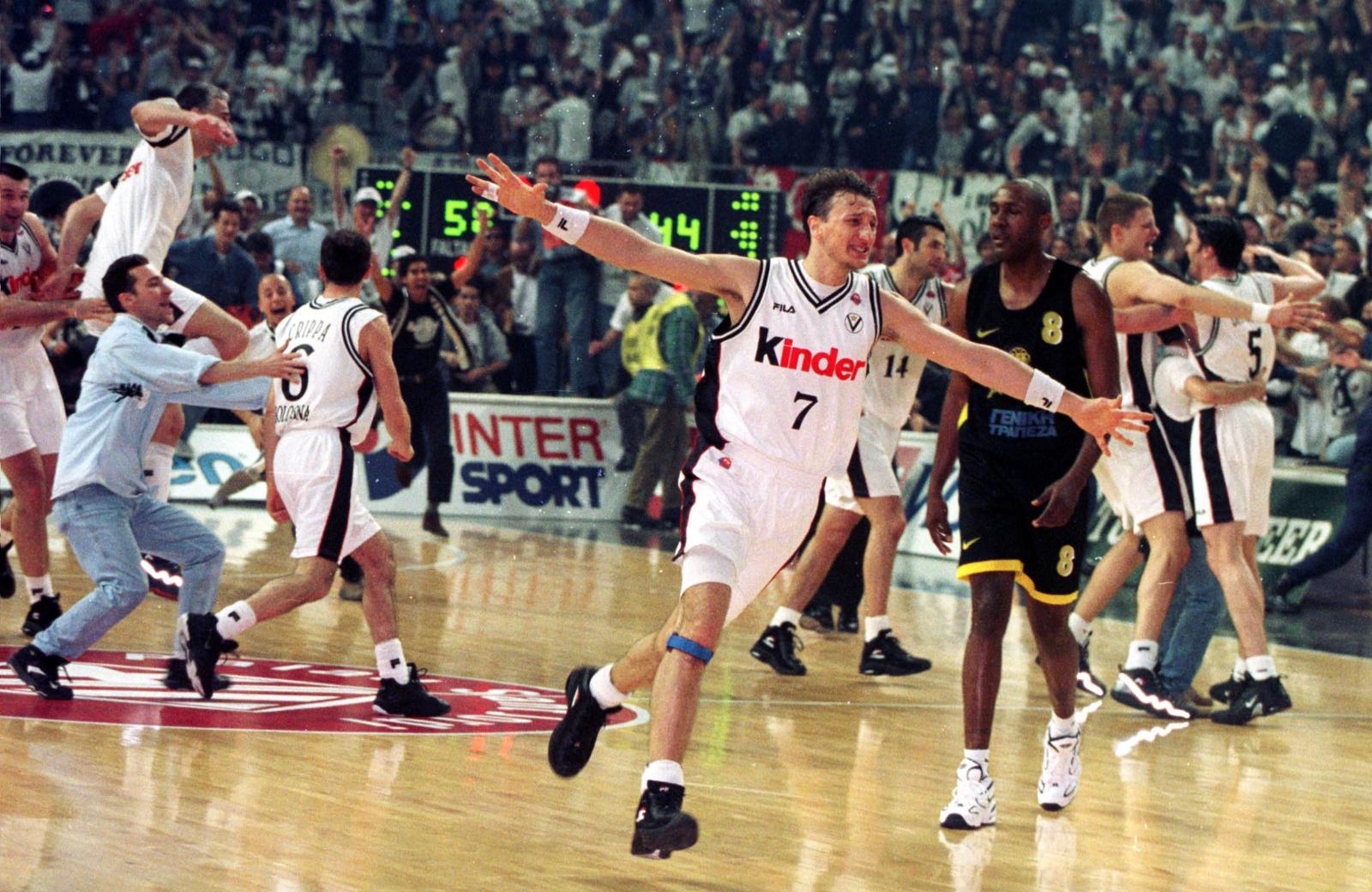
That final against AEK Athens was one of the most important moments of your career. What image comes back to you most strongly from that night in Barcelona? The final buzzer, the locker room, the return to Bologna — or perhaps something more personal?
Unfortunately, I don’t have one perfect memory of that night because I was selected for the doping test! It was terrible timing. Everyone was in the locker room celebrating, feeling all the emotion of the moment, and I had to leave to give a urine sample, sign the paperwork and go through the whole procedure. So I missed some of those first moments.
But I will never forget lifting the European Cup. It was incredibly heavy — I don’t know how many kilos it weighed, but you could really feel it when you lifted it. And I will never forget arriving in Barcelona and seeing the city, the Palau Sant Jordi and all those Virtus fans. There were thousands of them, and the arena felt almost black and white. It was like playing at home. You could walk through Barcelona and feel as if you were walking through Bologna.
Seeing all of that made you realise just how important the moment was. It didn’t necessarily put more pressure on you. It simply made you understand the significance of what you were about to play.
You had prepared well. You knew what you had to do. And then it was time to play.
And what happened when you finally returned to Bologna? What do you remember about that moment?
Actually, it started before we even left Barcelona. There were fans everywhere at the airport. There had been so many charter flights bringing supporters to Barcelona, and after the game everyone was heading back to Bologna. We arrived at the airport a little later, and there were already people there waiting for us.
We still had some time before the flight, so we started playing football inside the airport. There was this little rubber ball called a “Super Tele”. Every Italian kid had one at home. It was incredibly light, and we started passing it around without letting it touch the ground — with our heads, our knees, our feet, whatever we could use.
The whole team was around the ball, just playing and having fun. And the fans were standing around watching us. It was such a simple moment, but I remember it very clearly. We had just won the European Cup, thousands of people had followed us to Barcelona, and there we were in the airport, playing with a little rubber ball like kids!
Then we finally arrived in Bologna. When we came out of the airport, it was completely full. There were people who had travelled back from Barcelona, but also so many others who had simply come to the airport to welcome us. It was incredible. They were treating us like heroes. And those are the moments you remember. Not just the trophy or the game itself, but seeing what it meant to the people of Bologna.
That was something very special.
That team had players like Ginóbili, Fučka, Griffith and Bečirović. Was it perhaps the most talented Virtus team in the history of the club?
I think the 1998 team was the beginning of something very important. It was the start of a great cycle. But if we are talking purely about talent, I would say the 2000-01 team was probably the strongest.
And if you look at that roster, it’s incredible. At the beginning of the 2000-01 season, Sasha Danilović was still with us during preseason. He retired in October, so he didn’t actually play the season, but he was there at the beginning.
Then you had Manu, me, Hugo, Antoine, Jarić… and then Smodiš, David Andersen, Rashard Griffith. Just look at those names. It was an incredible group.
You had experience, young talent, size, athleticism, creativity and players who could make a difference in different ways. And the important thing was that the talent wasn’t concentrated in just one or two players. It was everywhere on the roster.
That’s what made that team so special. In the end, we won the Italian championship, the Italian Cup and the EuroLeague. But when you look back at the names and the quality we had, it really was an extraordinary team. For me, in terms of pure talent, that was probably the strongest Virtus team I ever played on.
The one-of-a-kind Ettore Messina
Many people remember Ettore Messina for his systems and his tactical preparation. But as a player who worked with him, what do you think was really his greatest strength?
His knowledge of basketball, first of all. But also, the way he managed the physical side of the game, the individual work and the preparation for every opponent. He prepared every game almost obsessively, but never in a way that became too heavy. He was extremely focused on what each player had to do, and on getting the best out of everyone — physically, technically and mentally.
He wanted the best Alessandro, the best Sasha, the best Manu. He wanted every player to give the team everything he had. But there was one thing he really insisted on: every possession mattered. The first play mattered. The last play mattered. There was no possession where you could switch off and say, “This one doesn’t matter.”
You couldn’t disconnect for one play, one minute or one moment. When you stepped onto the court, you had to be completely switched on. You had to know what you were doing and why you were doing it. For example, you couldn’t spend a whole week preparing for an opponent, studying their plays and their systems, and then give up an easy dunk on the first possession because you weren’t focused. That was unacceptable.
If that happened, you weren’t really in the game. You weren’t in the right mindset. You weren’t part of the game. That was something Ettore and his staff really put into our minds.
And then there was the individual work. Ettore understood that every player was different. The work you did in the gym had to give you something personally.
For me, for example, I liked to go back onto the court and make a certain number of shots, work on specific things and repeat them until I felt comfortable. It gave me confidence. So, it wasn’t simply about doing extra work because the coach told you to. It was about understanding what you personally needed in order to feel ready.
That was another great quality of Ettore. He didn’t just prepare the team. He prepared each player. And when you put all of that together, you had a team where everyone understood that every possession, every decision and every detail could make a difference.
Do you remember a personal moment with Ettore Messina that says something about your relationship with him? Maybe something he said to you, a particular game or simply a small moment that stayed with you?
I think the most important thing was that I understood he trusted me. He knew I was an important player for him. Not necessarily a star, but a player he could rely on to stay on the court and do a specific job.
Most of the time, that job was defensive. I was often asked to guard the point guard or the shooting guard, depending on the opponent and what the team needed. We had some roster problems over those years, with injuries and different situations, and I understood why he gave me that responsibility. He knew my strengths and my weaknesses, and he believed my characteristics allowed me to do that job.
But he also knew I could contribute offensively. Sometimes that side of my game was less visible, but if a player was injured or the opponent presented a particular matchup, he knew I could give the team something more. And there was one little thing I really appreciated. Whenever he called me into the game during a stoppage, he would come close and speak directly into my ear. He would give me one or two specific instructions — something he wanted me to do immediately.
Those moments were important to me. Because when a coach does that, you understand that he trusts you. You understand that he believes you can influence what is about to happen on the court. And I definitely changed as a player because of him. Alessandro in Torino was one player. Alessandro in Bologna with Alberto Bucci was another. And then, with Ettore in Bologna and with the national team, I developed a different identity. I became a more complete player. I learned that you could have a big influence on a game without having to be the star.
You had to think like a big player. You had to be influential against your opponent, influential for your teammates, and able to make a difference — without necessarily making a lot of noise. That was more my personality. I was never someone who needed to be on the front page of the newspapers or on television. I never considered myself a star. I wanted to be influential through the way I played, the way I worked and the way I helped the team.
And I think Ettore helped me understand that this could be my role.
There are arenas that intimidate opponents before the game even starts. Was the PalaMalaguti one of them? What did it feel like to walk out there for warm-ups?
I wouldn’t say the PalaMalaguti was intimidating because of the arena itself. It didn’t have that kind of atmosphere simply because of its structure. But when the building was full, it could be very intense.
There were other arenas where you felt that even more. The PalaDozza, obviously. And especially when you played a derby, because the fans were so close to the court. You could feel them right on top of you. Glyfada was like that. Thessaloniki was like that. And the old Scavolini arena in Pesaro could be a real bolgia. Those were places where the crowd was almost part of the game.
But the PalaMalaguti became special for a different reason. The PalaDozza had the history. It was built in the 1950s and had been an important place for both Virtus and Fortitudo. It was also important to me personally. My first game there was in 1988, when I came with Torino to play against Virtus. So, when I arrived in Bologna, I immediately understood what that arena represented — the history, the city, the whole idea of Basket City.
Then, in the mid-1990s, we moved to Casalecchio and started creating our own history at the PalaMalaguti. We won so many games there. At one point, we had 33 consecutive victories between the Italian League and the EuroLeague! That tells you something about what that building became for us. And I remember the music, too. We had the Kinder Band playing live during the games. It was part of the atmosphere. The music, the fans, the energy in the building — all of it became part of the experience.
So no, I wouldn’t say the PalaMalaguti intimidated you before you even stepped on the court. But when you have a building where you keep winning, where you experience big games and big moments, it starts to mean something.
It becomes home. And eventually, the PalaMalaguti became part of our story.
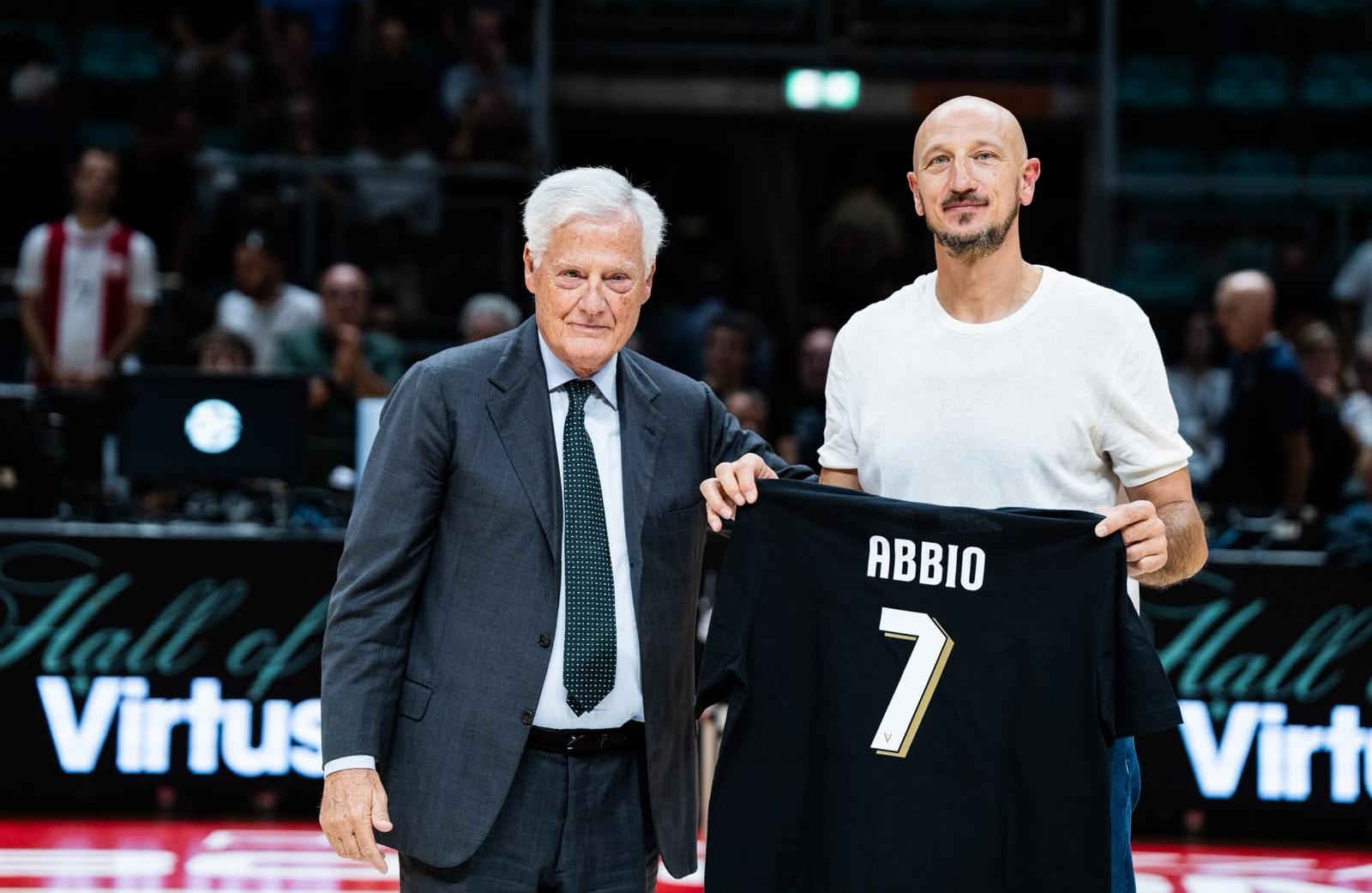
Where am I? Is this really happening?
If you put the titles and the trophy photos to one side, what is the Virtus memory you still carry with you today?
There are so many. But one of the first is simply arriving in Bologna. I had signed for Virtus in 1993, but I arrived in Bologna the following year, coming from Cagliari, where I had been with the national team. I remember arriving at the airport and someone from the club was there to pick me up.
From there, everything happened very quickly. The medical tests, the club offices, meeting the people at Virtus… The offices were in one of Alfredo Cazzola’s buildings, and I remember it being a very particular place, with a tower at the top and large windows.
I was looking around thinking, “Where am I? Is this really happening?” It felt like I was stepping into a dream. And then I went into the locker room for the first time. There was this wooden bench, and I was sitting there with Roberto Brunamonti on one side and Augusto Binelli on the other.
For me, that was incredible.
These were players I already knew and respected, and suddenly I was sitting between them in the Virtus locker room. I remember thinking, “Wow. This is real.” Those are the moments that stay with you. And there was something else I felt very strongly. I already had my own character and my own way of approaching things. But when you enter a place like Virtus, you understand that you are entering something bigger than yourself.
It was almost like walking into a sacred place — like the Acropolis, or a great church. You immediately feel that you have to raise your level. You have to be at your best physically. You have to be completely focused mentally. You have to understand that you are part of something that existed before you.
And that feeling stayed with me.
Looking back now, I think my whole journey has been like a piece of material being shaped. You know when an artist takes a piece of material and, with his hands, slowly turns it into something new? That’s how I see my life and my career.
My family put their hands on that material first — my father, my mother. Then came all the people I met along the way: coaches, teammates, friends, everyone who influenced me. Each person left something. And I also put something of myself into it. Little by little, all those people and all those experiences shaped who I became. Virtus was one of the most important parts of that process.