



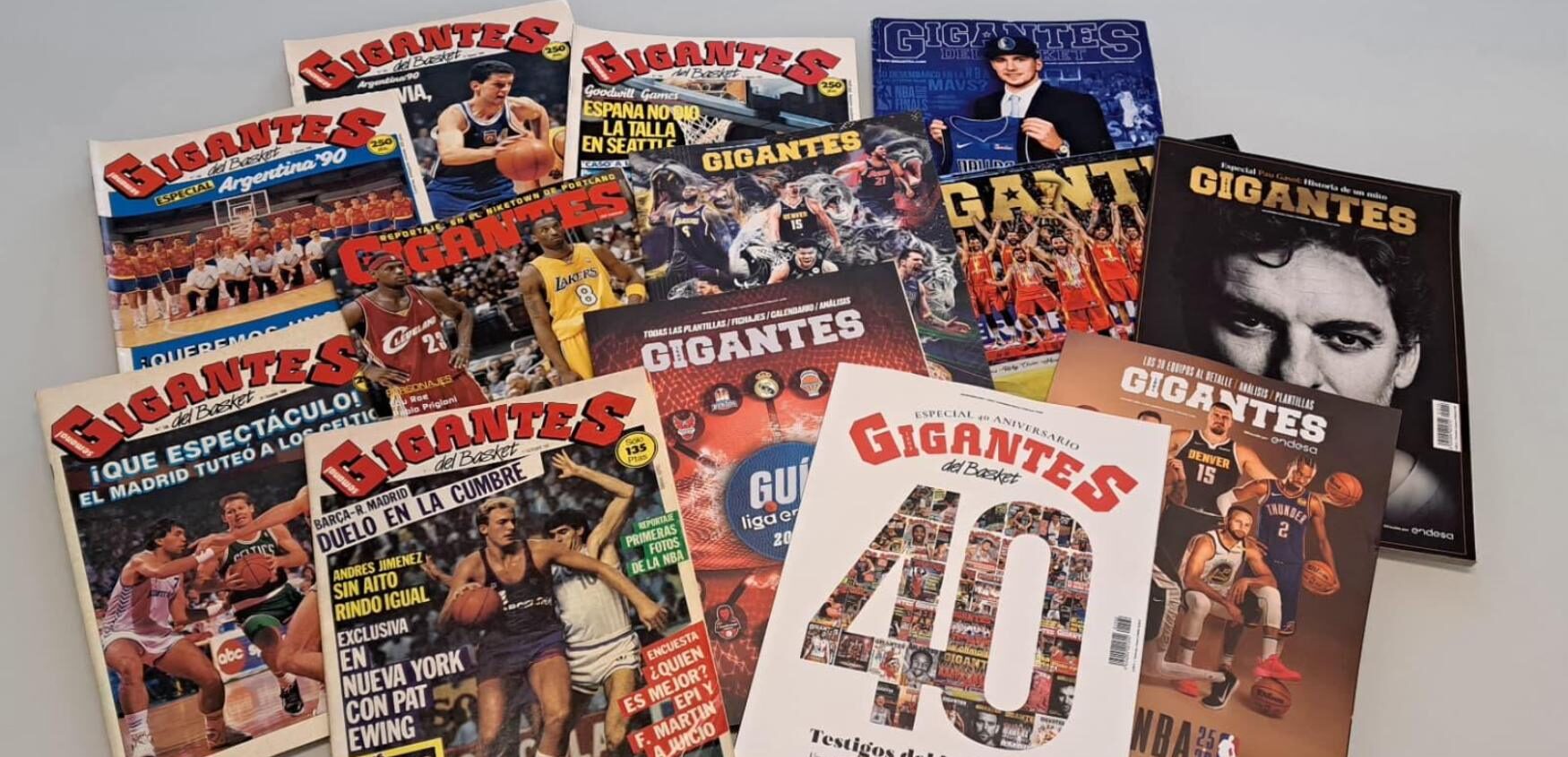

In European basketball media, few names carry the weight, history, and continuity of Gigantes del Basket. For more than four decades, the magazine has not only documented the game itself, but also the culture, identity, and emotion that surround it—becoming a reference point for generations of readers, players, and coaches across Spain and beyond.


In this SKWEEK interview, we speak with David Sardinero, who has been leading Gigantes as Editorial Director since February 2015, under a new editorial era, to explore how one of Europe’s most iconic basketball publications continues to evolve while staying true to its roots.
Today, Gigantes stands at an important crossroads: a historic brand with deep roots, navigating a rapidly evolving media landscape shaped by digital platforms, new storytelling formats, and an increasingly global basketball culture. The challenge is no longer only to report the game, but to reinterpret it—without losing the essence that made the magazine a cornerstone of European basketball journalism.
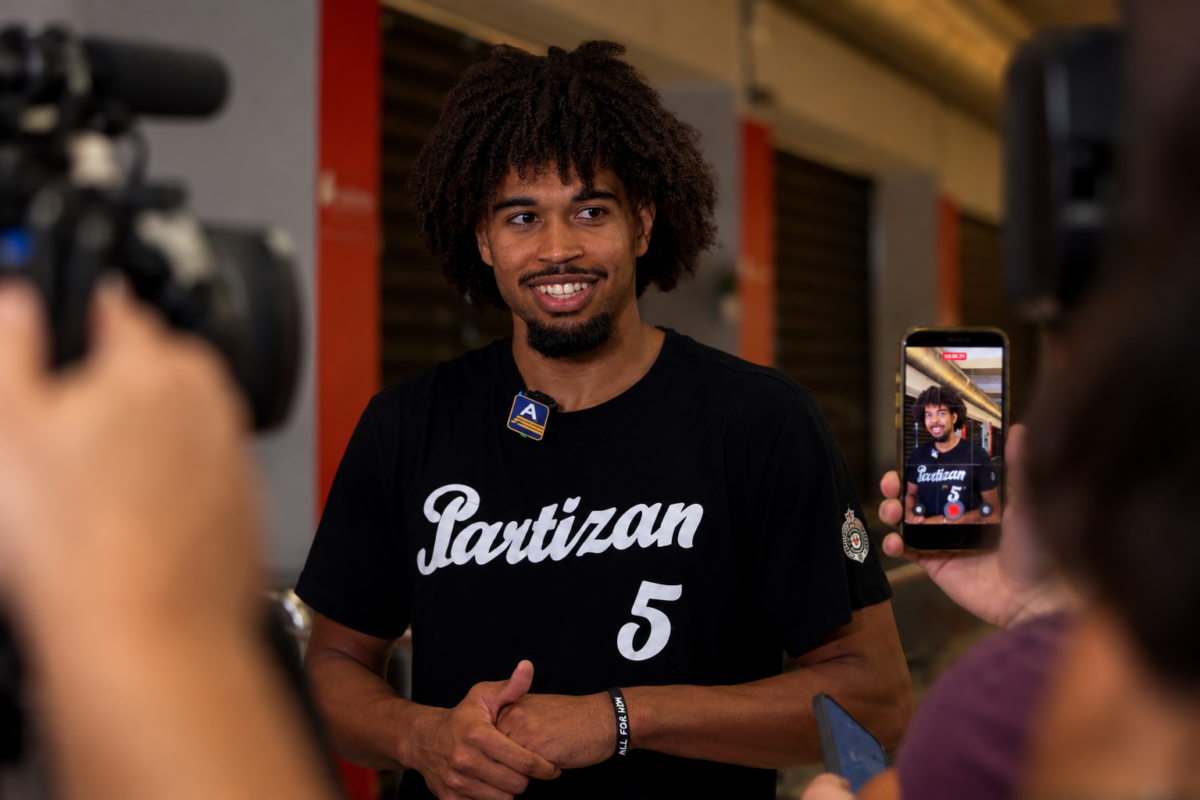

In this conversation, Sardinero reflects on what it means to inherit and evolve such a legacy, how editorial identity is built and protected in the modern era, and what truly defines a “Gigantes story” in 2026 and beyond.
Growing Up With Gigantes: The De Larrea Story
How would you introduce Gigantes del Basket to someone picking it up for the first time today?
For me, I would present Gigantes del Basket as the oldest and one of the most prestigious basketball publications in Europe, with more than 40 years of history. Over time, it has evolved and adapted to new forms of communication while maintaining its core principles of seriousness, rigor, and professionalism.
That evolution has turned it into much more than just a magazine. Today, it is the only fully professional basketball-focused media outlet in Spain, and it has built an entire ecosystem around the brand. This includes the Gigantes camps, our annual awards ceremony, and various events and activities connected to basketball across the country.
Is there any element from the classic era of Gigantes that you consider “sacred” and that should never change?
What I personally consider essential is the idea that, for many years, Gigantes was the only real source of basketball coverage — the only photographs, reports, and accounts of certain eras came from Gigantes itself. Preserving that legacy is something we deeply value, which is why we decided to digitize the entire archive of 40 years of publications.
What stands out to me is the idea that it is something truly unique — something you cannot find in any other country. It combines longevity and history, yet at the same time continues to operate today as a leading reference in sports media within its own country.
But for me, the most important and almost sacred aspect is that those photographs, archives, and written chronicles are truly one of a kind.
How do you balance respect for the magazine’s history with the need for renewal and modern content?
It’s a difficult balance, because when you think about it, being a publication or a brand with such a long history means that our readership spans a very wide range of ages. We have very young readers who are passionate about the NBA, and older readers who are more connected to traditional European basketball.
What’s also interesting is how players themselves have related to the brand over time. Some players first discovered us in an era when we were, as I mentioned before, the only outlet covering their games and stories. Today, however, many fans get to know us through social media, often through how we report their first milestones — like a U16 or U17 MVP award, for example.
So yes, maintaining that balance is challenging. On one hand, you have to stay fully aware of all the technological and communication innovations shaping the basketball media landscape. On the other, you cannot lose sight of the long-time readers, subscribers, and followers who have built their perception of Gigantes over many years.
For me, it comes down to identity — Gigantes has an identity that cannot be lost. That identity is built on seriousness, respect for the players and the sport, and a level of professionalism that ensures the people working at Gigantes are experts who truly know what they are talking about.
What does it mean to you that Gigantes has shaped generations of basketball readers in Spain and beyond?
That’s exactly how it is. I can give you a few examples. I recently spoke with Sergio De Larrea, who told me that his father used to bring the magazine home and that Gigantes was always present in his house growing up!
Or take a Spanish player like Marta Suárez, now in the WNBA, who recently sent us a photo of her room filled with Gigantes posters.
The challenge today is making sure Gigantes remains present in the lives of new generations of fans. Before, there was almost no competition. Now you’re sharing the space with YouTubers, content creators, and multiple digital platforms. So, the key is to maintain your identity while finding your own place in this new ecosystem, continuing to do things the right way.
And it’s still very much alive in another sense too — many players who once took part in our Gigantes camps are now professionals. Their relationship with the brand has evolved over time, but it has never disappeared.
Voices Never Heard Before: The Andrés Feliz Story
How do you approach the responsibility of continuing a story that began before you?
For me, it’s a very big responsibility, and one of the most challenging parts of my role. You have to understand that many of the decisions you make have real consequences — whether it’s launching a new podcast, updating the website, or even something as simple as choosing a cover.
At the same time, you’re constantly aware that you’re carrying a 40-year legacy behind you. But that weight cannot paralyze you or hold you back. So, for me, the best way to honor that responsibility is through respect — respecting and taking care of everything that has been built over the years.
Right now, I may be speaking as the director, but for me Gigantes is not just what it is today. Gigantes is everything it has been since 1986. And I truly hope there will be more directors, more editors-in-chief, more writers in the future — because that would mean the project has managed to adapt, evolve, and stay alive.
What makes a basketball story a “Gigantes story”?
For me, there are two different paths. The first is closely tied to current events. In that case, a story has to have lasting relevance — something you can read two or three weeks later and still gain a new perspective or a different point of view from it. That’s what defines content connected to the present.
The second path is about telling stories that perhaps haven’t received the attention they deserve, or that you’re able to approach from a different angle that adds something new for the reader — something they didn’t already know.
At the end of the day, we’re all constantly consuming videos, stories, and short-form content. So, the challenge is to offer something deeper. For example, in this month’s issue there is a feature on Andrés Feliz that includes the testimony of the person who hosted him when he first arrived in Spain — voices that had never been heard before.
That, for me, brings a completely different dimension to a player like Andrés Feliz, who has already been in Spain for several years. And I think that combination — balancing current relevance with untold perspectives — is what defines a “Gigantes story”, especially in a world that moves so fast and is driven by constant news flow.
y por supuesto, a todas las personas que han colaborado en este número tan especial para mí con tanto cariño. Espero que todos los amantes al baloncesto podamos seguir disfrutando de Gigantes del Basket por mucho tiempo. Mi más sincero reconocimiento, ¡ Gracias ! pic.twitter.com/maAN25yHkw
— Sergio Rodriguez (@SergioRodriguez) August 17, 2024
What was the first major “wow moment” you remember from your experience at Gigantes?
For me, one moment I always remember is walking into the office for the first time and seeing the entire magazine collection available to browse. I’m talking about every single issue — almost 1,600 magazines that you can pick up and read. And what that does to you is simple: you start looking through them and you never really finish, because you keep discovering new things all the time.
It’s something that really impresses you, but at the same time it also makes you feel a certain responsibility — almost a bit of pressure — knowing that you are now the person representing all of that history.
Another thing that has stayed with me is how often people tell you: “I had the first issue of Gigantes,” or “I collected the first thousand issues,” or “I still have them at my parents’ house,” or “I lost part of my collection after a divorce.” You hear so many personal stories connected to the magazine.
And there was even a very emotional case last year, during the severe floods in Valencia, where some people lost their entire Gigantes collection because their homes were flooded. Even though they had lost much more — cars, furniture, everything — they still called us, because what affected them the most was losing those magazines.
The Covers That Defined an Era — and Michael Jordan
Is there a cover that you believe defined an entire era for the magazine?
For me, there are three.
The first is the special issue we did for the 40th anniversary. It was built around a “40” design composed of some of the most important covers in our history, and for me it was very symbolic — it represented how far the magazine had come and the significance of reaching that milestone.
Then I would choose the Kobe Bryant tribute issue. That was a very difficult moment, and one of the hardest editions to put together because of everything it represented, also on a personal level and for my generation — how we had grown up with Kobe as a figure, and of course the tragic circumstances of his passing.
And third, I would pick the 2019 World Cup champions’ cover. I wasn’t the director in 2006 when Spain won its first World Cup, and I always used to say that I never thought I would one day edit a magazine celebrating a world championship. I genuinely believed we might never win another one. But we did, and that’s why that issue is so special to me.
If I had to add a fourth, it would be the magazine we produced during the COVID pandemic. It was an incredibly difficult time for everyone, especially for a publication like ours, but it also allowed us to be there for people — offering a small form of entertainment during lockdowns, in hospitals, and in very tough moments.
Which interview or exclusive do you feel changed the way the audience perceived Gigantes?
Ιt’s not from my era, but the interview with Michael Jordan in issue number 3 of the magazine, back in 1986, was a real statement of intent. It made many people realize that this was a serious project from the very beginning.
At that time, there were several basketball magazines in Spain competing to survive, so the arrival of a new one with that kind of impact and ambition really stood out and helped define its identity. Of course, over the years there have been many others.
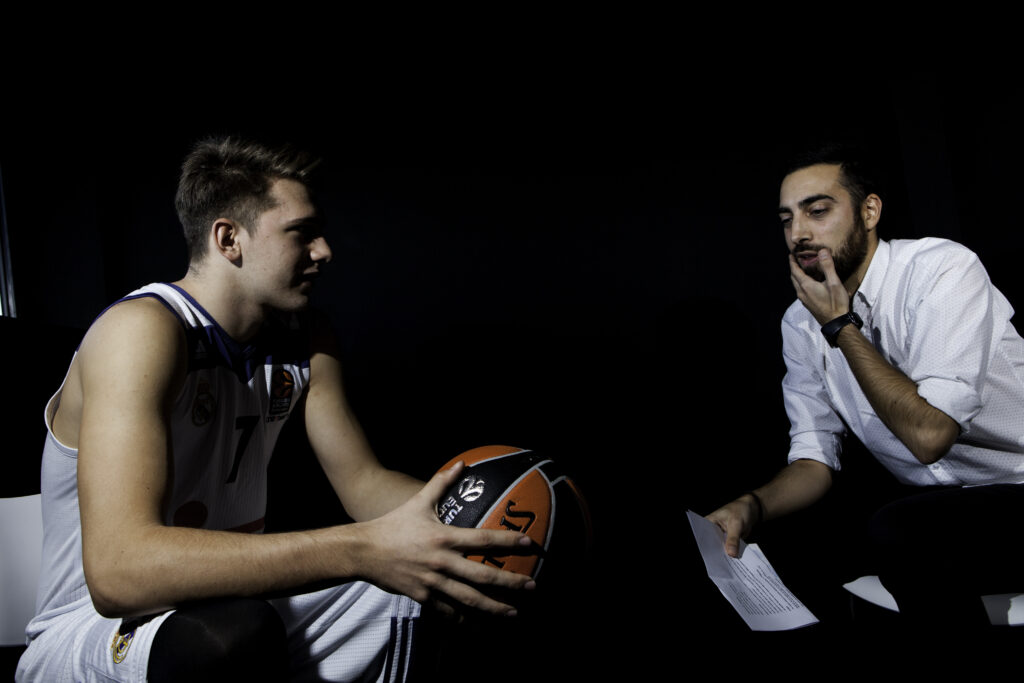
If I had to choose one from my own time, I would say the first interview we did with Luka Dončić as a professional player at Real Madrid in 2016. This week I actually had the chance to interview him again, and I even gave him that original magazine where I had interviewed him myself 10 years earlier. We talked about everything that has changed since then.
That interview with a very young Luka Dončić was, for me, one of the most symbolic moments of my career. But honestly, if I’m being completely objective, the interviews that truly define the legacy of Gigantes are those from its earliest years, because they carry a very powerful historical weight — Patrick Ewing, Magic Johnson, Kareem Abdul-Jabbar, and of course Fernando Martín and Dražen Petrović.
All of those are what truly shape the history of Gigantes.
Is there any issue or special feature that you consider the most complete work in the magazine’s history?
If I had to choose the most complete issue for me, I would say the special dedicated to Michael Jordan. It was a major challenge to produce, especially during the pandemic period and coinciding with the release of The Last Dance documentary. It was a very ambitious project, with more pages, more content, a mix of new material and archival pieces, and for me it stands as one of the best issues we’ve ever done.
If I had to mention others, I would highlight two more. The first is the Pau Gasol special, which I believe is also a very complete edition. The second is the Sergio Rodríguez issue, which was particularly meaningful for me because I know him well — we are the same age and I have followed different stages of his career closely. That allowed me to approach his story with a deeper understanding.
That issue also featured contributions from figures like Ettore Messina, Sergio Scariolo, and many other important voices, which made it one of the most complete editions of the recent era.
I often refer to the more recent years because they are the ones I know best, having been directly involved in leading them, but of course there are many outstanding issues from earlier periods as well.
Was there a moment when you felt the magazine truly influenced the broader basketball conversation?
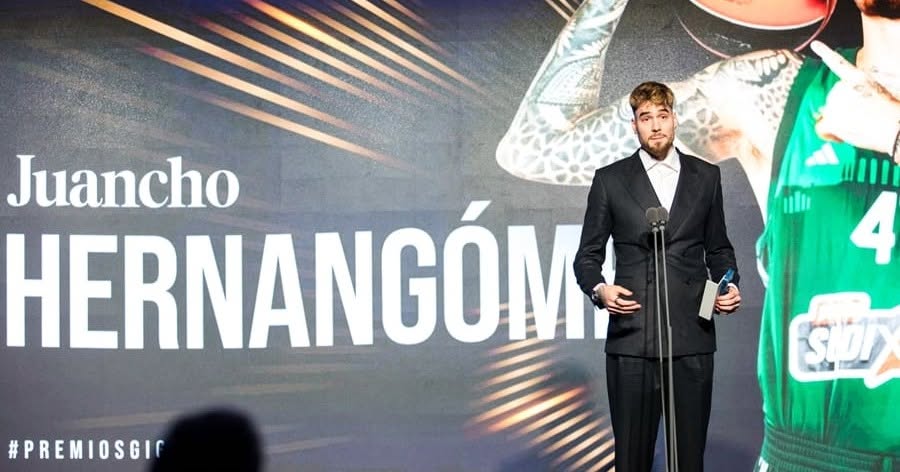
I think the moments when you truly feel Gigantes’ relevance most clearly are those connected to the awards. First, because of the people who want to receive them — who value the recognition and the honor that comes with it. Second, because of who attends — you see personalities from across all institutions coming together.
And third, because there have been years where some people felt they should have won and didn’t, and it didn’t sit well with them. That, in itself, is a sign that the awards still matter and still carry real weight.
You also notice it in broader moments, when something significant happens and people start sharing Gigantes content on social media — retweeting, reposting, reacting to our coverage. In those moments, you realize it goes beyond any one club or fanbase.
For me, those are the clearest signs that Gigantes has a real impact on the wider basketball conversation.
When Luka Dončić Received His Copy
Do you remember any feedback from a player, coach, or team that made you realize the impact of Gigantes?
I notice that presence of Gigantes, as I mentioned before, with players like Sergio De Larrea and Marta Suárez. What surprises me is that they are very young players, and you might assume they don’t have such a strong connection with the magazine. But they do. I also noticed it when Luka Dončić received a copy of the magazine — you could see how happy it made him.
When a young player like Hugo González tells you that Gigantes has always been present in his home, it really stands out. But especially with players like Pau Gasol, Juan Carlos Navarro, and Jorge Garbajosa — players who lived through a very different era — there has been a long and continuous relationship with the magazine.
Even if there were moments when they were criticized or didn’t agree with certain things, there has always been a sense of affection and respect, because Gigantes has accompanied them throughout almost their entire careers. I also remember speaking with Ricky Rubio’s father, who would sometimes ask us for specific issues, photographs, or images.
That’s when you truly realize the importance of a brand like Gigantes. There are still players for whom it is genuinely special to see themselves in a magazine or on paper, beyond an Instagram story or a social media post.
Is there any moment that never made it to a cover or publication but still remains memorable to you?
For me — and I say this a bit as a joke — there’s the opening tip of the All-Star Game with the Gasol brothers. That month, it didn’t end up being the cover of the magazine because it happened early in the month, then the Copa del Rey followed, everything got pushed back, and in the end that issue never featured it as the main cover.
But we’ve kind of “corrected” that later on, because when we’ve done decade specials or retrospective issues — especially an annual we did for the 2014–2015 season — it eventually appeared where it should have. So, it found its place later on, but it’s funny that it wasn’t there at the time.
And there are also covers that were fully designed but never actually published because something changed at the last minute that month. I remember, for example, a Dirk Nowitzki retirement cover we had prepared, which never made it out for reasons I don’t even fully remember anymore. There was also one featuring Jokic that didn’t end up being published.
In the end, things can change during the month — plans shift, circumstances change, and you adapt your idea. But those versions still exist. In fact, I often joke with our designer because even the covers that do get published usually have many different versions behind them. I’m rarely fully satisfied with the first design, so there are always multiple alternatives — most of which never see the light of day and now just live on our phones or archives.
If someone were to write the next chapter of Gigantes in the future, what would you want it to say about your era?
I hope there will be new chapters, new people, and new leaders of Gigantes in the future, long after my time. And I would like this period to be seen as one in which we were able to preserve the legacy, respect the tradition, and at the same time adapt to a rapidly changing media landscape — which is becoming increasingly complex, with new tools and new ways of consuming information.
I would like to be remembered as someone who tried to do things the right way: to be fair with people, to respect the sport, the players, and the coaches, and above all, to respect the readers. And at the same time, to ensure that Gigantes remained a living, relevant presence in the lives of basketball fans — both the long-time followers and the new generations.