








When Andrew Wisniewski arrived in Belgrade in 2004, he had no idea that his first stop in Europe would become one of the defining experiences of his career.


From Crvena zvezda, Maccabi Tel Aviv and Anadolu Efes to Cibona, Bonn and beyond, the New Yorker experienced almost every side of European basketball.
He played under legendary coaches, witnessed some of the continent’s fiercest rivalries and learned early that talent alone was never enough.

Now an assistant coach at Manhattan University, Wisniewski looks back on the experiences that shaped his career – from culture shock in Belgrade and life under Zmago Sagadin to unforgettable EuroLeague nights against Partizan and why Europe changed the way he viewed basketball – and life.
“Losing a Preseason Game Cost Us Part of Our Salary”
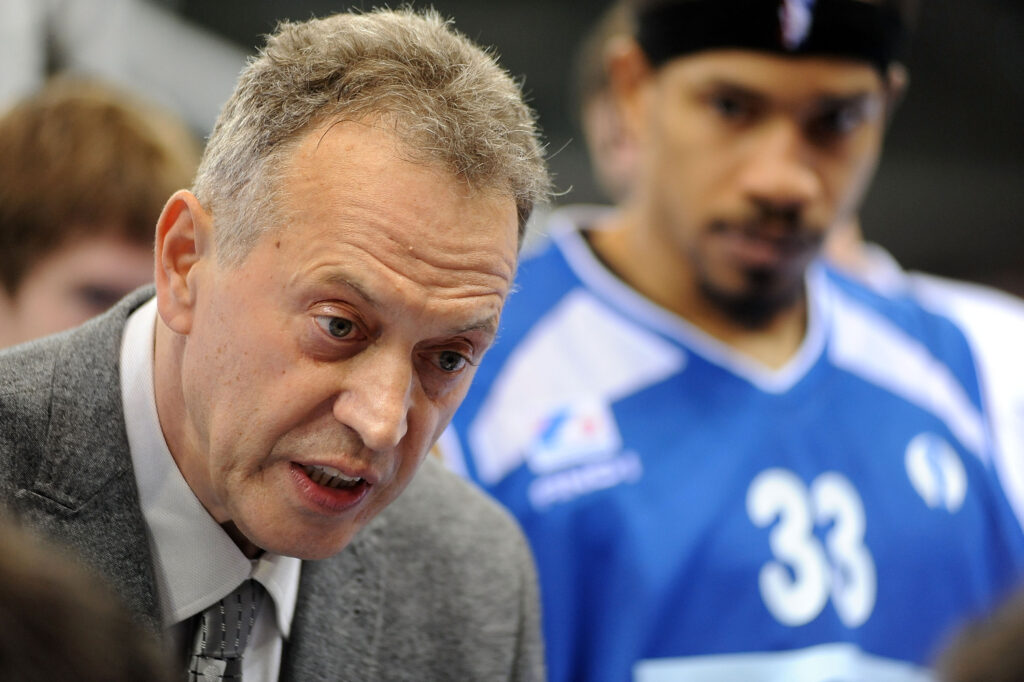
After a successful college career at Saint Peter’s and Centenary, Wisniewski failed to make the Toronto Raptors’ roster and decided to begin his professional career in Europe.
What do you remember about arriving in Serbia and joining Crvena zvezda?
“It was my first time leaving the United States, and I really didn’t know much about Europe. I always tell people that Crvena zvezda was the best experience of my career. It was definitely a culture shock, but at the same time I felt like I was right in the heart of Europe.
Right away I found myself playing for a huge club with incredibly passionate fans and a demanding coach whom I still respect to this day.
That was Zmago Sagadin. He coached so many outstanding guards throughout his career. He believed in me, pushed me every day and introduced me to the physical style of European basketball. We practiced twice a day, I quickly learned what the rivalry between Crvena zvezda and Partizan meant, and I still carry many wonderful memories from Belgrade.”
Sagadin was famous for his demanding methods. Not every player enjoyed playing for him, yet you still speak highly of him.
“We had a great relationship, but yes, he was extremely demanding. I remember going to the mountains in Slovenia for training camp. Instead of practicing twice a day, we practiced three times a day.
Morning sessions with Zmago meant playing full-court two-on-two or three-on-three at maximum intensity. Even our days off weren’t really days off – they were shooting workouts. There were no soft drinks allowed, only water.
European coaches have evolved a lot since then, adapting much more to individual players’ needs. Zmago also had a good sense of humor. Sometimes my teammates would translate his jokes for me, and I’d laugh along.
But here’s one story I’ll never forget. We lost our very first preseason game against OKK Beograd. Zmago punished us so hard after that game… I even think part of our salaries was withheld. It was only the first preseason game. Incredible.”
Despite the demanding environment, Wisniewski believes Sagadin laid the foundation for everything that followed in his European career.
“Zmago was a teacher. He understood basketball better than almost anyone, and we stayed in touch throughout my career. He played a huge role in my success.
Having him as my first coach in Europe shaped my mindset. I always told myself: ‘If I can play for Zmago, I can play for anyone.'”
Learning Basketball in Serbian
One of Wisniewski’s first surprises came before he had even settled into life in Belgrade.
Was the language barrier difficult?
“Very. I remember being surprised the first time I saw Zmago smoking cigarettes during practice. I quickly realized there would always be smoke inside the gym.
Then he came over to me and said: ‘Višna, I’m not going to speak English during practice. We’ll talk after practice.’
At that point I was the only American on the team, and many of my teammates didn’t speak English. Today everyone speaks English, but back then that wasn’t the case.
So I spent four hours a day practicing in Serbian. That’s actually why I picked up so many words. I still remember things like ‘dobro jutro,’ ‘hajde brzo,’ the numbers, ‘gore,’ ‘dole’… I even had to call our offensive sets in Serbian. I still remember one of them – ’dva dole’.”
Wisniewski says adjusting to life off the court would have been far more difficult without the people around him.
“Vujadin Subotić helped me tremendously. They gave me a manual transmission car when I arrived, and I had absolutely no idea how to drive it. So I let Vujo use my car, and he’d pick me up every day for practice, lunch or dinner.
And then there was Minja Ilić. We had played together in college, and he was like a brother to me. He’s an agent now, but back then he basically saved my life in Belgrade.
Vuk Radivojević was another great guy. We kept running into each other all over Europe during our careers. I still remember his tattoo of Belgrade across his chest.
One of my funniest memories from those first days was walking into the locker room without knowing anyone. Nikola Lepojević came over, looked at me and said: ‘They call me Lepi because I’m handsome.’ I just smiled and said, ‘Okay.’ Then I met Goran Jeretin and the rest of the guys. They really made me feel welcome. I’m still close with Igor Rakočević today, even though he wasn’t on that team.”
Basketball Was the Easy Part
Despite playing good basketball, Wisniewski’s first European season also exposed him to a very different side of the sport.
How difficult was that season away from the court?
“Actually, we played really well. We won a lot of games and competed well in the ULEB Cup, but there were simply too many financial problems. We went three or four months without getting paid.
It was my first year in Europe, so I didn’t fully understand how things worked. It didn’t bother me as much back then because I was still figuring everything out, but I remember thinking, ‘How is this even possible?'”
Financial instability eventually led to major changes within the club, including the departure of head coach Zmago Sagadin.
“It was obviously a period of transition for Crvena zvezda. Looking back now, I’m really happy to see where the club is today. They’re back in the EuroLeague, they’re stable, players get paid on time and everything seems to be moving in the right direction.”
Adjusting to everyday life in Belgrade also required patience.
“There was plenty to do in Belgrade even back then, but from what I hear, the city has grown tremendously since.
For me, the biggest challenge was staying connected with home. There wasn’t really internet like we have today, I didn’t have American TV channels, and I had already become a father. I didn’t even have a mobile phone. I’d buy phone cards, go to a payphone and call my family. Once the minutes ran out, that was it until I bought another card.
After that, I’d usually stop for a huge pljeskavica (Serbian burger). That became part of my routine.”
‘I Told My Teammates to Expect Starting Down 10 Points’
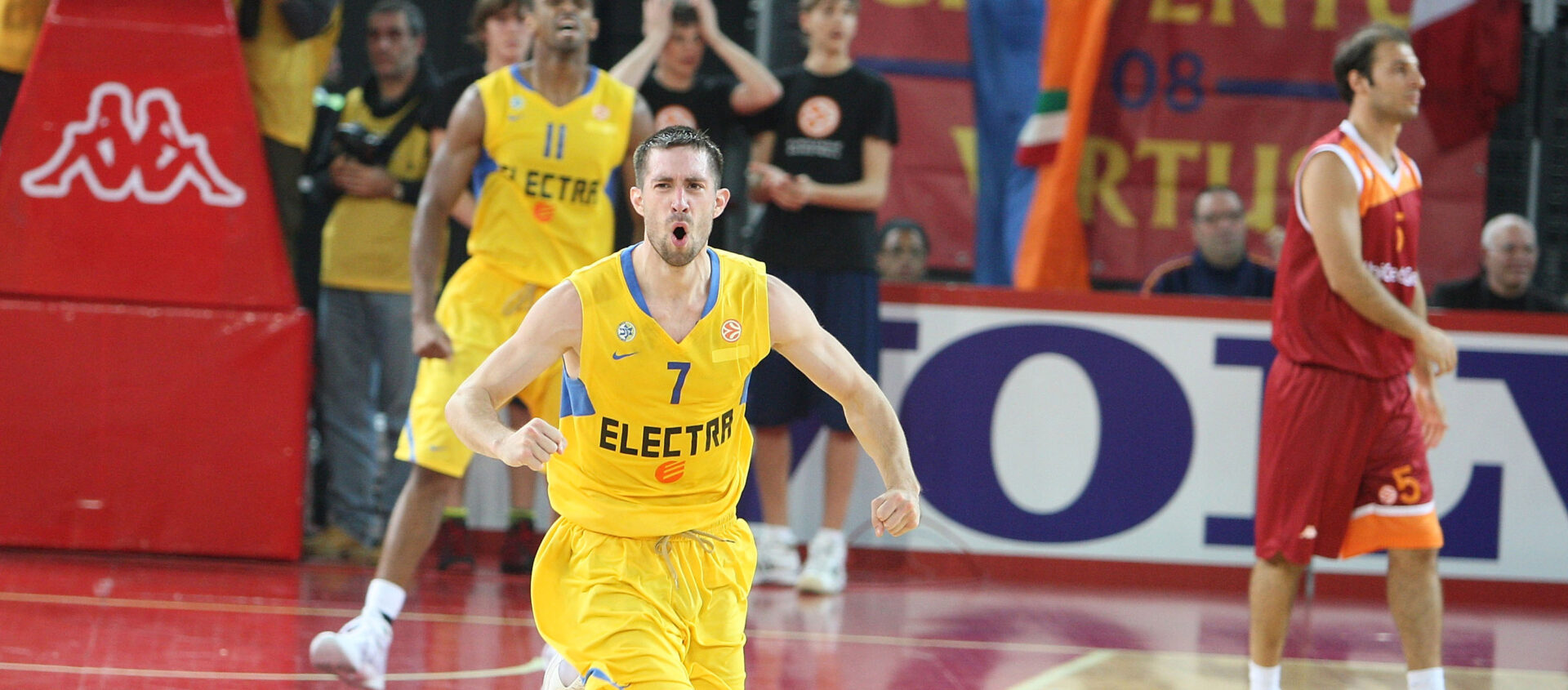
Five years later, Wisniewski returned to Belgrade wearing a Maccabi Tel Aviv jersey for one of the most memorable EuroLeague playoff series of the modern era.
You came back to Belgrade with Maccabi in the 2010 EuroLeague quarterfinals against Partizan. What do you remember most about that series?
“I’ve always had tremendous respect for Partizan and for coach Duško Vujošević. Personally, I thought I played well in that series, but it remains one of the toughest losses of my career because I genuinely believed we had a team capable of winning the EuroLeague.
In the end, I think the first game in Tel Aviv decided everything. We had a huge lead and simply let it slip away.”
Then Dušan Kecman caught fire – 29 points, seven threes.
“(Laughs) Damn Kecman… he couldn’t miss. I have to give him credit. He was unbelievable.
Partizan was also a difficult matchup for us. We liked to play fast, but they were incredibly physical inside with Aleks Marić, Lawrence Roberts and Jan Veselý. They punished us in the paint, and once Kecman started making shots, everything became even harder.”
The series then moved to Belgrade, where more than 20,000 fans packed the Belgrade Arena for both games.
“Many of my teammates had never experienced anything like Belgrade before. I had.
I kept telling them, ‘This is going to be incredibly difficult. We should expect to start the game already down 10 points.’
That’s what the atmosphere felt like. The crowd gives the home team extra energy while making life miserable for the visitors.
We actually played well, but Partizan played even better. McCalebb was outstanding, Roberts played a great series, and Marić was simply dominant. That was probably the best basketball of his career.
And then there was Slavko Vraneš. Huge. Duško Vujošević always knew how to develop big men, and that team was another example of it.
Looking back, it was one of the best experiences of my career – and one of the most painful.”
‘Why Do We Need to Arrive Three Hours Early?’
“People believe you when you tell them about Belgrade, but they don’t truly understand until they experience it themselves.
Before my first derby, my teammates told me I wouldn’t even be able to hear the ball bouncing.
I remember saying, ‘Come on, I grew up in a tough neighborhood in New York. I’ll be fine.’
Then they told me we had to arrive at the arena three hours before tip-off.
I said, ‘Three hours? Why the hell would we do that?’
Then I got there… and I understood. The fans were already there. The atmosphere had started hours before the game.
Stephane Lasme understood because he’d played for Partizan, but guys like D’Or Fischer had never experienced anything like it.
Don’t get me wrong – Tel Aviv has one of the best basketball atmospheres in Europe. But Belgrade is on another level.
Those fans demand another five percent from their players. And once they sense the opponent is struggling, they don’t let go.
Most players simply aren’t prepared for how loud it really is.”
From Sagadin to Gershon
The man leading Maccabi during that unforgettable series against Partizan was Pini Gershon – one of the most charismatic coaches European basketball has ever seen.
For Wisniewski, it was a complete change of pace after his years under Zmago Sagadin.
“I loved Pini. He was such a unique personality.
It couldn’t have been a bigger contrast. Zmago was constantly on top of you, demanding perfection every single day. Pini was more of a showman. He understood the crowd, he understood personalities.
His philosophy was simple: don’t overcomplicate basketball. He’d tell us, ‘Just go out there and play,’ or, ‘Make your shots.’ If we lost, he’d simply say, ‘You missed open shots.’
He was relaxed, a genuinely good person who enjoyed the biggest games.
I started for him and have nothing but great memories from that season. After spending years with demanding coaches from the former Yugoslavia, practicing once a day and even getting one day off every week almost felt like a vacation.
I was so used to working constantly that sometimes I actually wanted more practice.”
Although Gershon stood out for his personality, Wisniewski says another coach left an equally lasting impression.
“Dražen Anzulović deserves special mention. He’s my basketball father. His advice meant so much to me and had a huge impact on my career.”
One Basketball, Many Different Worlds
You eventually became teammates with Igor Rakočević. What was that experience like?
“I had known Igor for years because we’d played against each other so many times. We also shared that connection through Crvena zvezda.
He’s a huge Zvezda fan, but European basketball is a small world. Everybody knows everybody.
Igor loves basketball. He worked incredibly hard and was one of the best scorers I’ve ever played with. I probably had to play a little more defense than he did. (Laughs.)
He has a good heart, he’s a great person, and we connected immediately, both on and off the court.
As for Perasović, he was another old-school coach. Tough, demanding and completely committed to basketball.”
Looking back, however, Wisniewski believes the people he met mattered far more than any statistics or trophies.
“When your career is over, what stays with you are the people.
Basketball made me a citizen of the world. I lived in different countries, experienced different cultures and saw history from completely different perspectives.
I often try to explain to people here what it was like to play first in Serbia, then in Germany, where I became league MVP, then in Croatia with Cibona. Different perspectives…
Or leaving Tel Aviv – a Jewish city – and moving to Istanbul, a Muslim city in Turkey.
For most Americans, it’s difficult to truly understand what those experiences mean. The history, the culture, the relationships between countries… Europe opened my mind in so many ways. It changed the way I see the world, and that’s probably what I’m most grateful for.”
One aspect of European basketball, he says, has always stayed with him.
“What I love is that once you’re part of a club, you’re always part of that family.
If I returned to Belgrade tomorrow, I’m sure everyone at Crvena zvezda would welcome me with open arms. They’d bring me into the gym and I’d immediately feel at home.
It’s the same with Maccabi and with other clubs I played for.
That’s something special about European basketball.”
The Toughest Opponent I Ever Guarded
Wisniewski faced some of the greatest guards of his era, but one name immediately stands out.
“Dimitris Diamantidis.
He couldn’t beat me with his quickness because I was faster, but what made him special was his ability to find passing angles that simply didn’t seem to exist.
You’d think you had taken everything away from him, that there was nowhere left to go, and somehow he’d still find the right pass.
He was never the type to score 30 points every night, but if there was one minute left in a close game, you wanted the ball in his hands.
He’d call for a pick-and-roll, and as a defender I’d be thinking, ‘He’s not going to shoot a floater.’ Then he’d shoot the floater.
He was unpredictable. More than that, he understood the game on a completely different level.
I’d also mention J.R. Holden. He’s one of my closest friends. We had so many battles over the years, and he was another player who always delivered when it mattered most.”
Knowing When to Walk Away
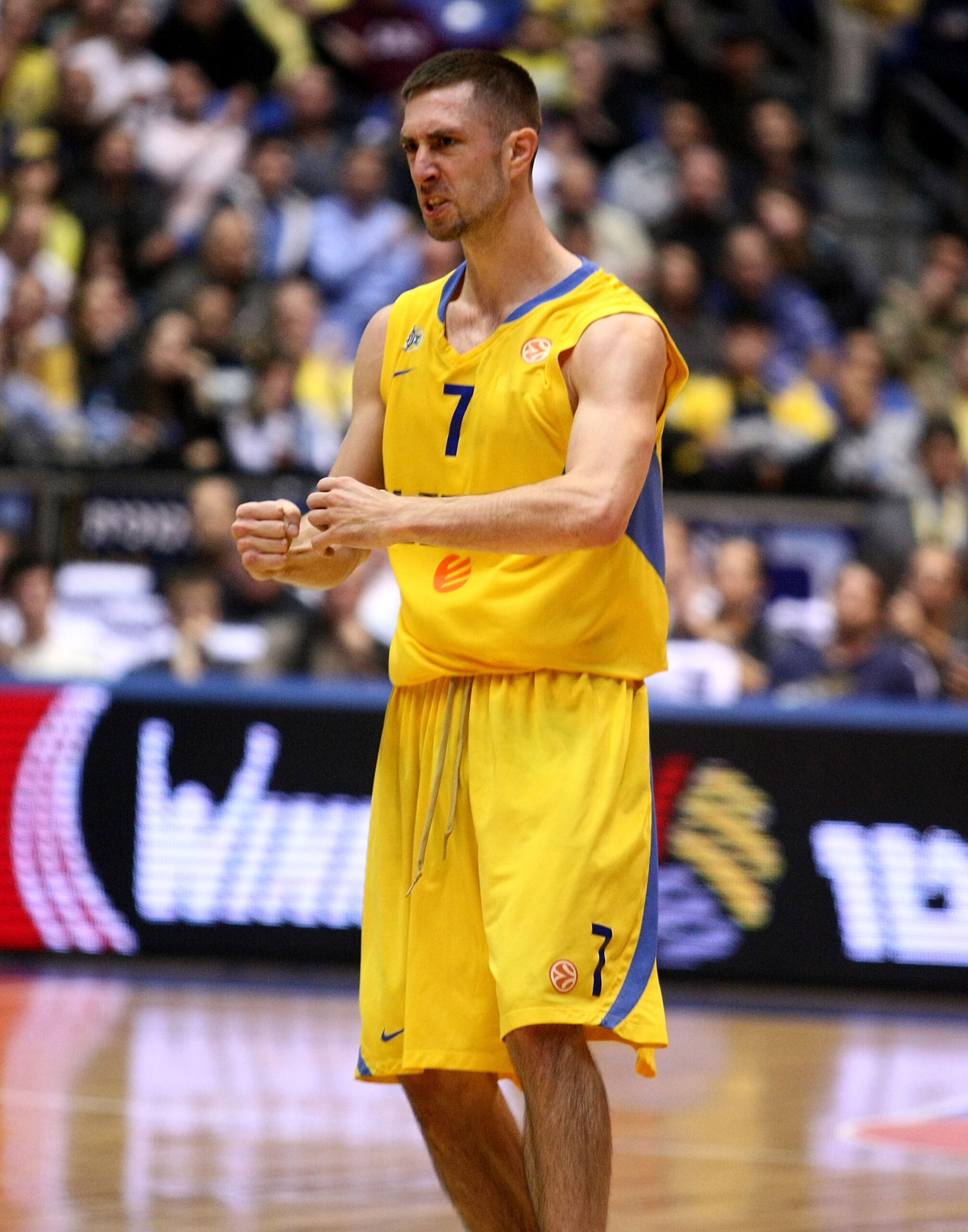
Wisniewski retired in 2012, at just 32 years old.
Why did you decide to retire so early?
“I suffered a serious injury. I tore muscles from my groin all the way into my abdominal area.
I was turning 32 that summer, and my original plan had been to play another year or two.
I went through rehabilitation and had several offers, but I have four children. My oldest daughter was about to start high school, and I just couldn’t bring myself to return to Europe at that point.
After ten years, I felt it was the right time.
I had earned a good living. Of course I miss basketball. I miss it every single day.
But I also spent my entire career playing for clubs where winning was the only thing that mattered, under coaches who demanded everything from you.
I didn’t want to keep playing just for the sake of playing or join smaller clubs simply to earn another couple hundred thousand dollars.
I was fortunate enough to compete at the highest level, and I wanted to leave it that way.”
Teaching the Next Generation
View this post on Instagram
Two decades after arriving in Belgrade as an American rookie searching for an opportunity, Wisniewski is now passing those same lessons on to the next generation. Today, he serves as an assistant coach at Manhattan University.
What has been the biggest challenge in coaching young players?
“The biggest challenge, especially in the United States, is that times have changed.
Social media – Instagram, TikTok, Facebook – competes for kids’ attention every single day.
As coaches, we have to help them understand that success doesn’t happen overnight. Basketball takes time. It takes work. It takes failure before success.
I also have to understand how different this generation is from mine.
If you dropped me into today’s Crvena zvezda, I’d probably be saying, ‘Wait… no running? No punishments? Great.’
Or if you lost two games in a row at Maccabi when I was there, it was a major crisis. The fans would let you know immediately.
The game keeps changing, just like everything else.
That’s why, as a coach, I focus on three things above all: discipline, structure and hard work.
If I ask my players for 90 minutes a day, then I expect them to be fully locked in for those 90 minutes.”