




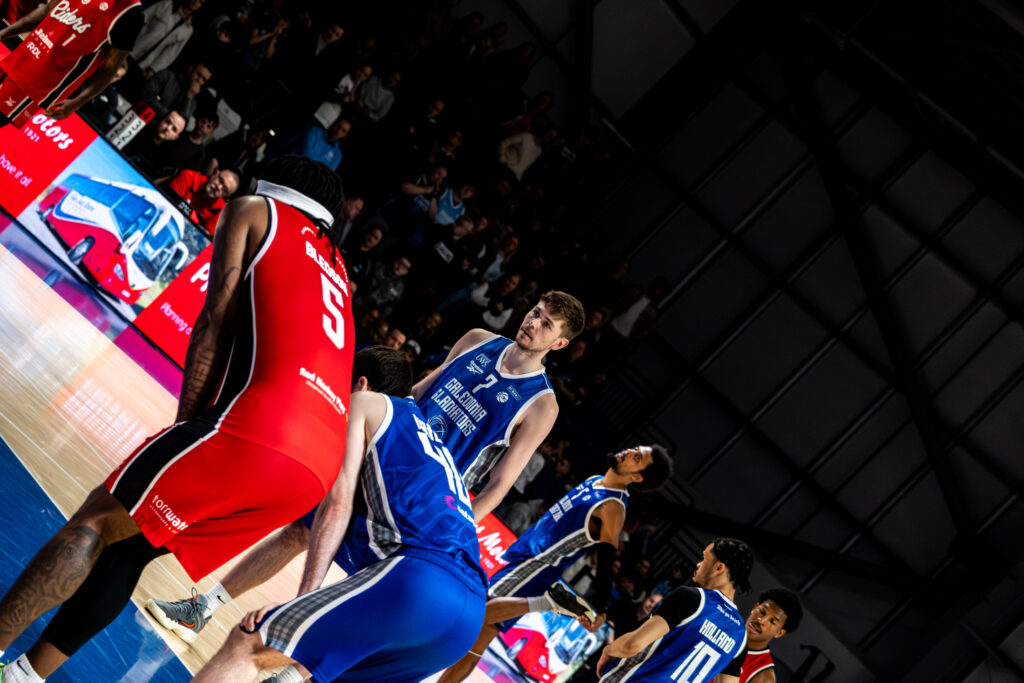
Basketball in Scotland exists somewhere between the legacy of William Wallace and the shadow of the Old Firm, with Steve Timoney, owner of the Caledonia Gladiators, speaking to SKWEEK about a sport finding its place in a football-dominated landscape.


From the Highlands and Lowlands to the Isle of Skye, and from Edinburgh and Glasgow to Inverness and Aberdeen, Scotland unfolds like a living fairytale — a landscape shaped by history, legend, and natural grandeur. Castles rise above misty lochs, mountains remain untouched, and deep valleys frame a country where basketball is now beginning to carve out its own place in the story.
At the centre of this evolution is Steve Timoney, a Scottish entrepreneur best known for co-founding Smart Metering Systems (SMS) in 1995 and growing it into a leading UK energy infrastructure company, sold in a multi-billion-pound deal in 2023.


Born in Glasgow, Timoney later expanded his footprint beyond business into sport as owner of the Caledonia Gladiators, Scotland’s professional basketball team competing at the top level. His investment reflects a wider ambition: to grow the game in Scotland and elevate its competitive standing, as he discusses with SKWEEK the unique challenge of building basketball in a country defined by tradition and football.
The Flag in the Stands as a Symbol of Unity
Scotland’s global image is steeped in heritage. Do you see basketball as something that challenges that image or something that can coexist with it and modernise it?
It modernises it. I love our Scottish heritage. We literally restored a Scottish icon, the 15th-century Crossbasket Castle. Modern Scotland is a dynamic, diverse, and outward-looking nation. I don’t think that basketball challenges our heritage; it provides a new, fast-paced, highly modern vehicle for Scotland to express its passion on a global scale.
Is there resistance, subtle or explicit, to basketball because it is perceived as an imported sport rather than a traditional Scottish one?
I don’t see resistance; I see a historical lack of exposure. People forget that basketball is the second-most-played team sport among kids. The issue is that no one had ever built the professional, multi-million-pound infrastructure required to put it on a national stage. We’re changing that.
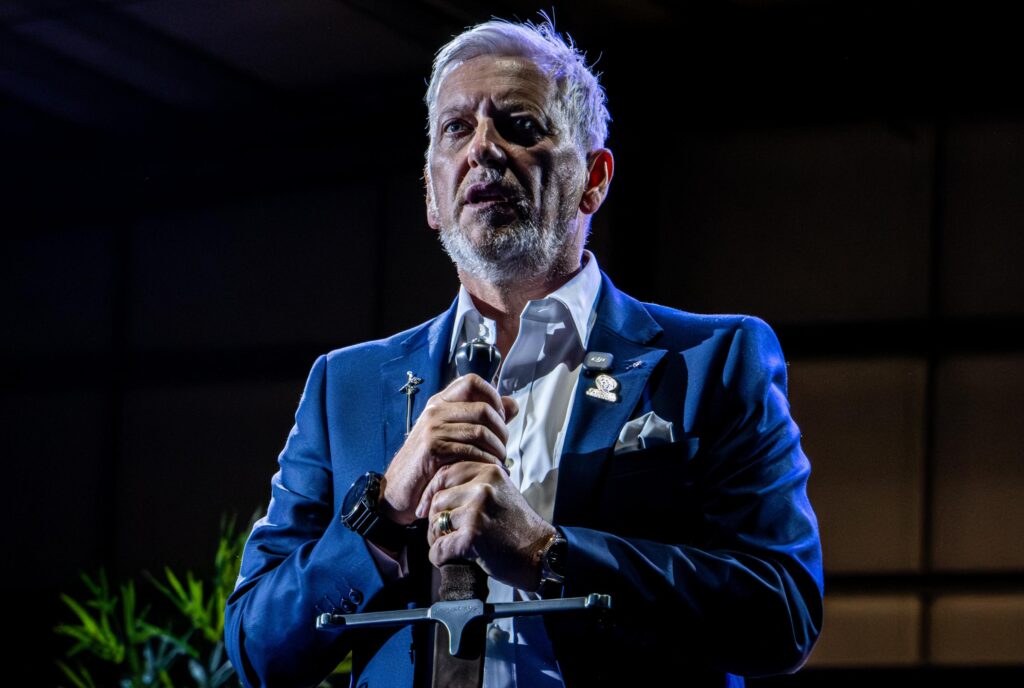
How do you emotionally adapt basketball into a culture whose sporting heartbeat has historically been football and rugby?
I think we should lean into what Scottish sports fans already love: graft, grit, and a relentless work ethic. We Scots love a battle. When fans come to a Gladiators game and see the speed, the physicality, and the end-to-end intensity, the translation happens instantly. They realise it’s the exact same gladiatorial spirit, on a court rather than a pitch.
When fans walk into your arena and see the Scottish flag in the stands, what narrative are you trying to tell?
We are trying to capture the spirit of modern Scottish pride. We want an arena where anyone, whether they are from Glasgow, Brooklyn, or elsewhere in Europe, can stand together under our national flag and feel the brotherhood of the Caledonia family.
Do you think basketball gives young Scots a different kind of identity expression compared to traditional sports?
Yes, I do. Basketball intersects with urban culture, music, and fashion. It allows a kid in East Kilbride or Easterhouse to feel connected to a global, cosmopolitan culture. It’s fresh, it’s vibrant, and, crucially, it’s a blank canvas for them to express themselves rather than simply adopting the tribalism of previous generations.
In a country that values history deeply, how do you build tradition for a sport that lacks long generational roots here?
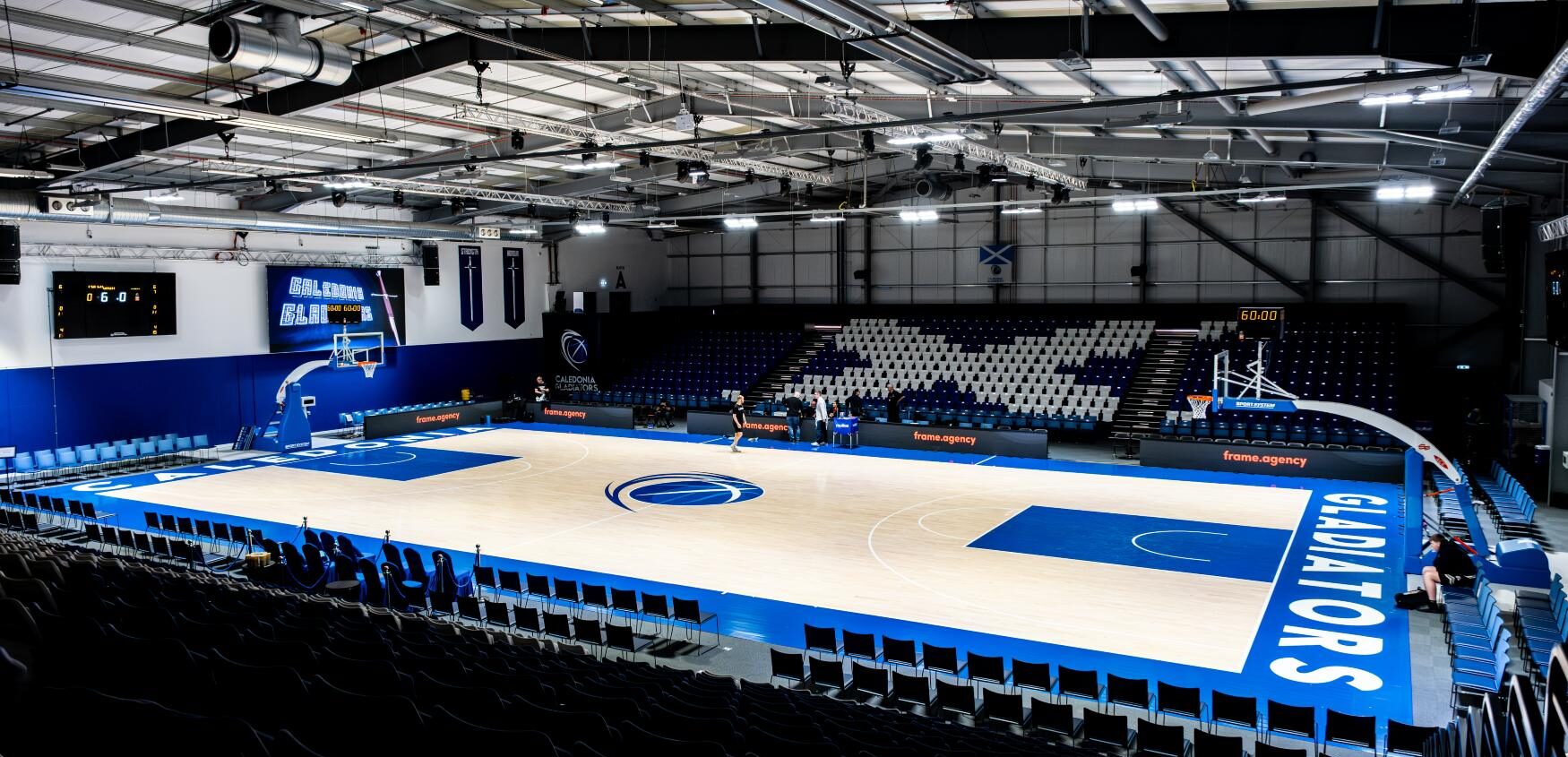
You build tradition by building a permanent home. A nomadic club has no history. That’s why Alison and I invested in our home at PlaySport. When you give fans a permanent fortress, they start creating memories there. Give it ten years, and a kid who comes to our arena today will be bringing their own kids. That’s how tradition is born.
The Wallace Sword and Club Identity
Is the name “Caledonia” a deliberate attempt to root the club in something ancient and symbolic rather than purely geographic?
Yes. We aren’t just a Glasgow team or a Lanarkshire team; we are a national franchise. We like to say we own Scotland. “Caledonia” speaks to the ancient, unconquerable spirit of the whole country. It gives the club a soul and a sense of scale before the players even step onto the court.
Does the club consciously incorporate Scottish cultural references into branding, storytelling, or the matchday experience?
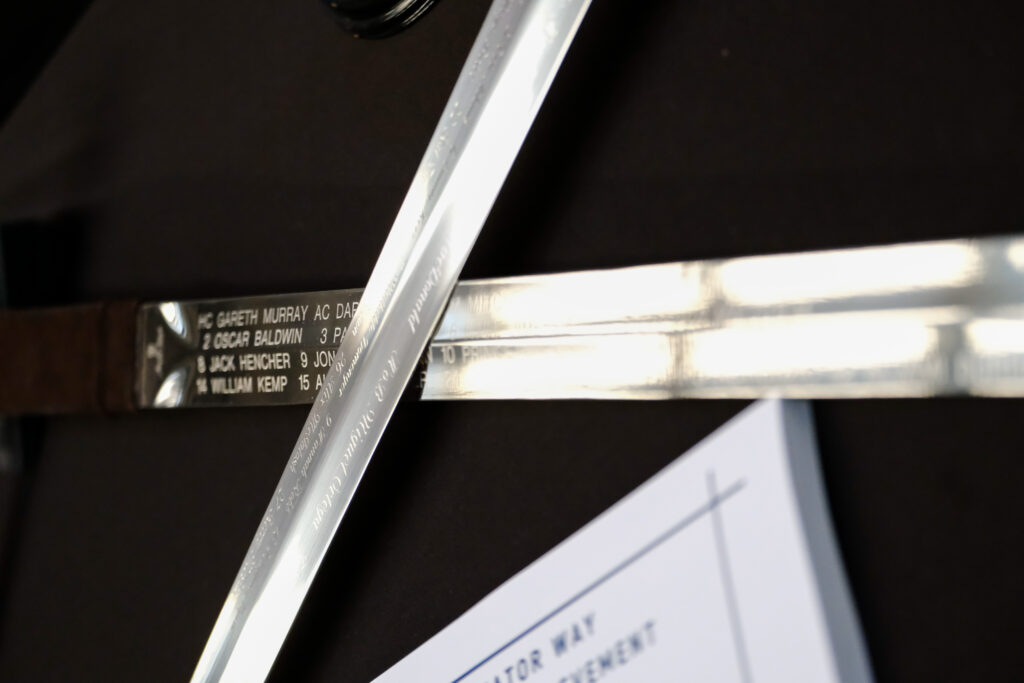
Yes, it drives our tone of voice. The centrepiece of our locker room is a replica of the Wallace Sword. When a new player signs with us, I use that sword to explain that they aren’t just playing for a franchise logo; they are defending our fortress and representing a nation with a warrior history.
Our Wallace Sword symbolises that unique alignment not only with our history but also with the deep-rooted sacrifices made in many ancient battles. It creates massive emotional buy-in.
Could basketball in Scotland become a bridge between tradition and a multicultural modern Scotland?
I think it already is a bridge, perhaps one that is still under construction. Look at our rosters, look at our women’s team, and look at the crowd. It is the most diverse and multicultural sporting environment in the country, all cheering beneath one Scottish banner.
Being the only Scottish club in Super League Basketball, does that amplify your responsibility to develop domestic talent?
Yes, and it makes it our primary focus. If we don’t build the pathway, no one else will. We are the apex of the Scottish basketball pyramid, and we have an absolute duty to ensure that the ladder beneath us is strong.
Do you feel a duty to act as a gateway for Scottish players who aspire to compete at a higher European level?
Our ultimate goal is to be that higher European level. For decades, a talented Scottish kid had to move to America or mainland Europe to build a professional career. We are providing a professional, world-class pathway so they can build that career right here in the country they love.
In a city where allegiance to Celtic or Rangers can be generational and deeply emotional, how do you build loyalty that is not inherited but chosen?
We are offering an entirely different emotional product. Football loyalty here is usually inherited at birth. The Gladiators offer a chosen community. We build loyalty through the sheer quality of the entertainment, the absolute safety of the environment, and the way we treat our fans.
Is basketball in Glasgow marketed as neutral ground, a space free from historic divides?
100 percent. Like the fans who support our national football team, you can be a die-hard Celtic fan, a die-hard Rangers fan, or someone who couldn’t care less about club football, and you can safely sit shoulder-to-shoulder in our arena as brothers and sisters of Scotland, willing to stand and fight together. You leave the historic baggage at the door. It is pure, neutral, high-octane entertainment.
Do you actively target families and younger demographics who may be less entrenched in football tribalism?
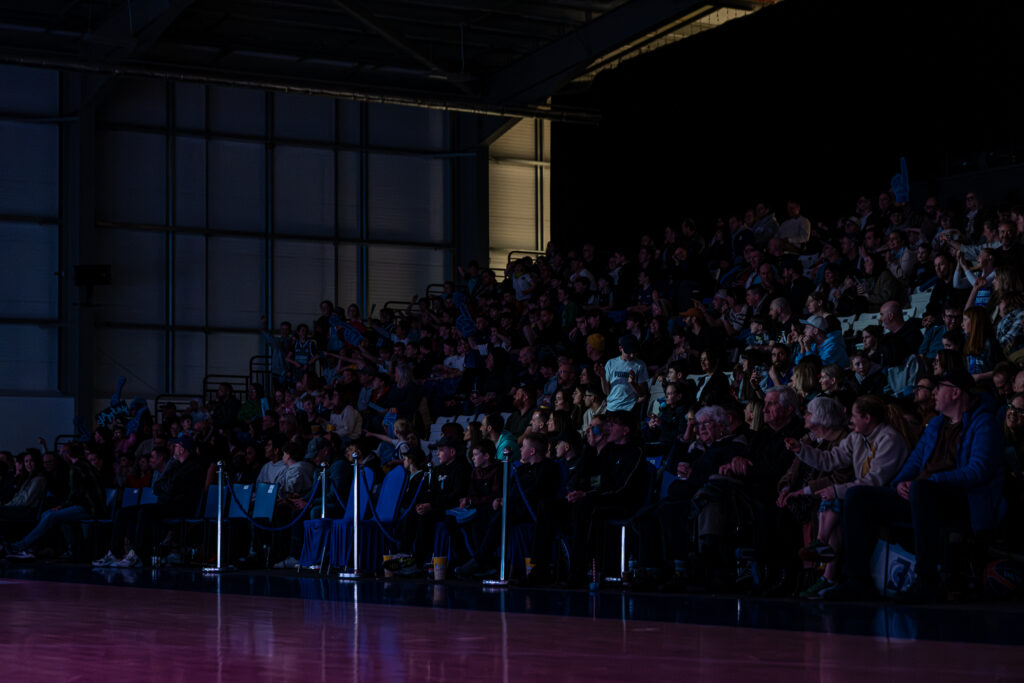
Not particularly, but that just seems to be what happens, and the data backs it up. We have a genuine 50/50 male-to-female split in our audience, which is incredibly rare in British sport. Because it’s indoors, warm, safe, and heavily focused on entertainment, it is the ultimate family ticket.
Have you encountered institutional barriers (media coverage, sponsorship competition, venue access) because of football’s dominance?
Yes. Media coverage is the steepest hill for us to climb. Football gets 95% of the sporting oxygen in the Scottish press. But my background is in engineering: if the current system doesn’t serve you, you build a bypass. We are building our own media narratives, our own high-end broadcast product, and making our success undeniable.
How important is it that attending a Gladiators game feels fundamentally different from attending a football match in Glasgow?
It’s critical. There is no fan segregation in our arena. Away fans and home fans sit together. There’s no aggression. There’s music playing during the game, light shows, and fan interaction. It’s an American-style entertainment experience delivered with a Scottish accent.
We Represent the Future
Does basketball offer a more international, cosmopolitan atmosphere that appeals to Glasgow’s student and expatriate population?
Yes, I think so, and that’s what gives it legs. Basketball is a truly global language. For the thousands of international students and expats in Glasgow, football tribalism might feel alien or intimidating. Basketball is familiar territory. It makes them feel instantly at home in Scotland.
If Celtic and Rangers represent tradition, what do the Gladiators represent?
I truly think we represent the future as an inclusive, ambitious, globally minded modern Scotland.
What is the single biggest structural weakness of Scottish basketball today?
Historically, it was homelessness. Clubs were tenants in municipal sports halls, getting bumped for dog shows (I love dogs, by the way!). You can’t build a sustainable business or a high-performance culture on rented ground. That’s the weakness we solved by building our own arena at PlaySport.
How dependent is the club on private investment versus sustainable revenue streams?
Right now, it requires the heavy lifting of private investment from Alison and me to build the engine, the infrastructure, and the arena. But we don’t build bottomless pits. The initial investment primes the pump, but the business plan is focused entirely on commercial sustainability through ticketing, broadcasting, and sponsorship, and critically, using the scale and diversity of our 100-acre multi-sport venue and its 600,000 annual visitors.
What does the commercial conversation sound like when you pitch basketball to a sponsor who is used to football’s scale?
I don’t try to out-scale football; I out-pitch them on demographics and values. I tell sponsors: “Football gives you volume, but we give you values.” If you want your brand associated with absolute gender equality—because we back our men and women equally—a pristine family audience, and community uplift, this is the most powerful vehicle in Scotland.
Does Scotland’s population size limit your commercial ceiling, or does it allow for a more focused national strategy?
We have the largest audience of any British basketball club; we have an entire battle-hardened nation ready to back us. Five and a half million people is more than enough to build a fiercely loyal, economically powerful national franchise. Being the sole national pro team gives us intense, focused commercial value without sharing the market with regional rivals. That provides us with the greatest potential for growth, not just within Scotland but across the world, we have an estimated 28 to 40 million people worldwide claiming Scottish ancestry; the Scottish diaspora is one of the largest in the world. We intend to expand into that community.
Are you exploring European competition as a lever for growth and credibility?
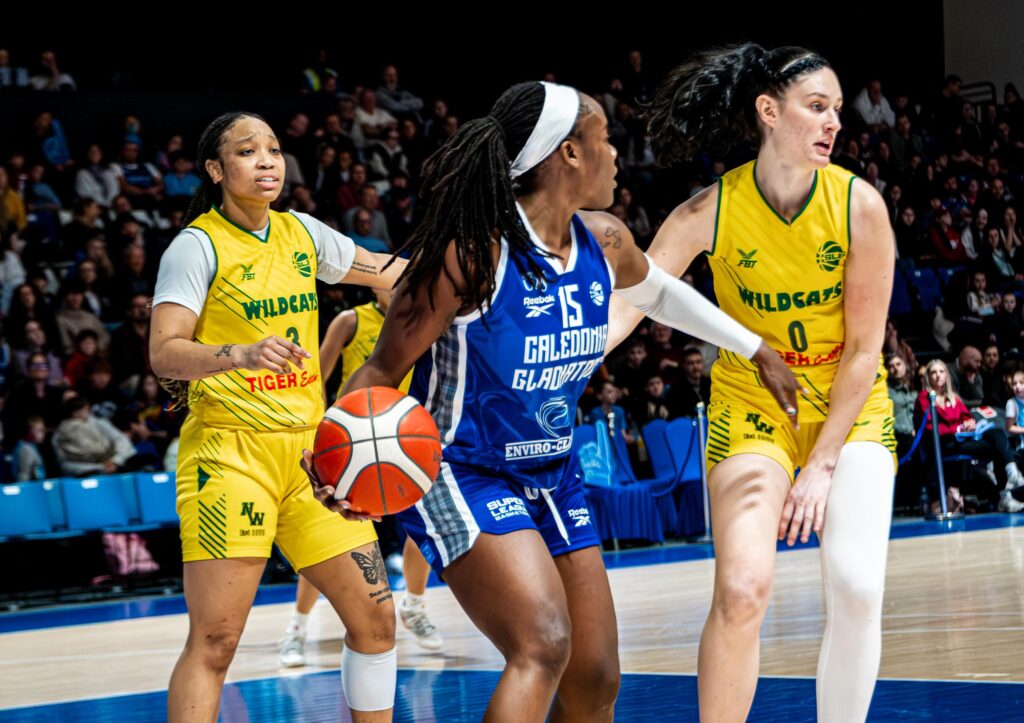
Europe is the ultimate benchmark. Competing in FIBA competitions elevates our commercial value, attracts higher-calibre international players, and demonstrates to elite players that Scotland is a serious basketball destination.
Do you prioritise winning now or building a sustainable Scottish core for the future?
You have to try to do both. Winning now puts eyes on us, fills the arena, and creates revenue. But if you win trophies using only imported talent and haven’t built a Scottish core, you haven’t built a legacy; you’ve just bought a trophy. The infrastructure and the pathway will always be the priority.
Beyond Trophies
How do you measure impact beyond trophies?
Trophies gather dust in a cabinet. True impact is measured when I drive through East Kilbride and see kids walking down the street carrying a basketball instead of a football and wearing a basketball top. Participation numbers and our academy’s growth are our true KPIs.
Can the club become a social mobility engine in certain communities?
Yes. Coming from Easterhouse myself, I know what sport can do. It gives kids a safe space, it demands discipline, and it provides a global network. Basketball requires very little equipment, just a ball and a hoop. It is accessible and absolutely provides a ladder for social mobility.
What is your benchmark? Are you looking at similar markets in Europe for inspiration?
Not really. We are setting our own standard with no ceiling and massive self-belief.
In ten years, would you rather be known as Scotland’s most successful basketball club or as the organisation that fundamentally changed how Scotland views basketball?
The latter, without hesitation. Anyone can buy a winning season. Only a visionary organisation can permanently rewire a nation’s sporting infrastructure.
Does basketball in Scotland reflect a more diverse, modern demographic reality compared to traditional sports?
Yes, effortlessly so. It holds a mirror up to what 21st-century Scotland actually looks like today—multicultural, equal, and energetic. It appeals to people of all genders, ethnicities, and socioeconomic backgrounds in a way that very few other sports here do.
Can basketball help reposition Glasgow internationally as more than just a football city?
Glasgow is already a world-class events city. A successful European-level basketball franchise is the missing piece of the puzzle that would prove Glasgow can host elite indoor European arena sports week in and week out. It makes the city highly attractive to international talent and investors.
How does politics, including Scottish national identity debates, indirectly shape sporting development?
We stay strictly out of politics, but we lean heavily into identity. Whatever your politics, everyone agrees on Scottish pride. People are hungry for positive, unifying expressions of what it means to be Scottish. The Gladiators represent a Scotland that is highly confident, outward-looking, and not trapped by its past.
Do you believe Scotland has the potential to become a genuine basketball development hub, or will it always remain a challenger market?
We are moving from a challenger to a hub. The physical genetics and the passion have always been here. What was missing was the infrastructure. Now that we are providing the engineering, the talent will follow.
What would need to change structurally (funding, education, facilities) for basketball to reach a tipping point?
Facilities. It always comes back to indoor facilities. Our climate dictates it. We need schools, local councils, and the government to understand that investing in accessible, high-quality indoor courts is a direct investment in the health, mental well-being, and crime prevention prospects of the next generation.
If you had one policy lever at the national level, what would you change tomorrow?
I would implement a massive, ring-fenced government fund specifically for building and upgrading multi-use indoor community sports arenas across Scotland. Relying on freezing, waterlogged grass pitches for eight months of the year is failing our youth’s health and potential.
Finally: is the “curious case” of basketball in Scotland really about sport or about identity, modernisation and space within tradition?
I think it’s about modernisation and making space. Sport is just the vehicle. What we are doing with the Gladiators proves that Scotland doesn’t have to be defined solely by its past or by historic sporting rivalries. We are proving that you can hold a Wallace Sword in one hand and a basketball in the other, and build a society that is fiercely proud, yet totally inclusive and forward-looking.
Photo credits: Caledonia Gladiators