
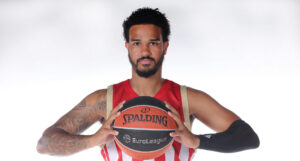
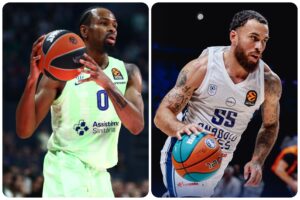

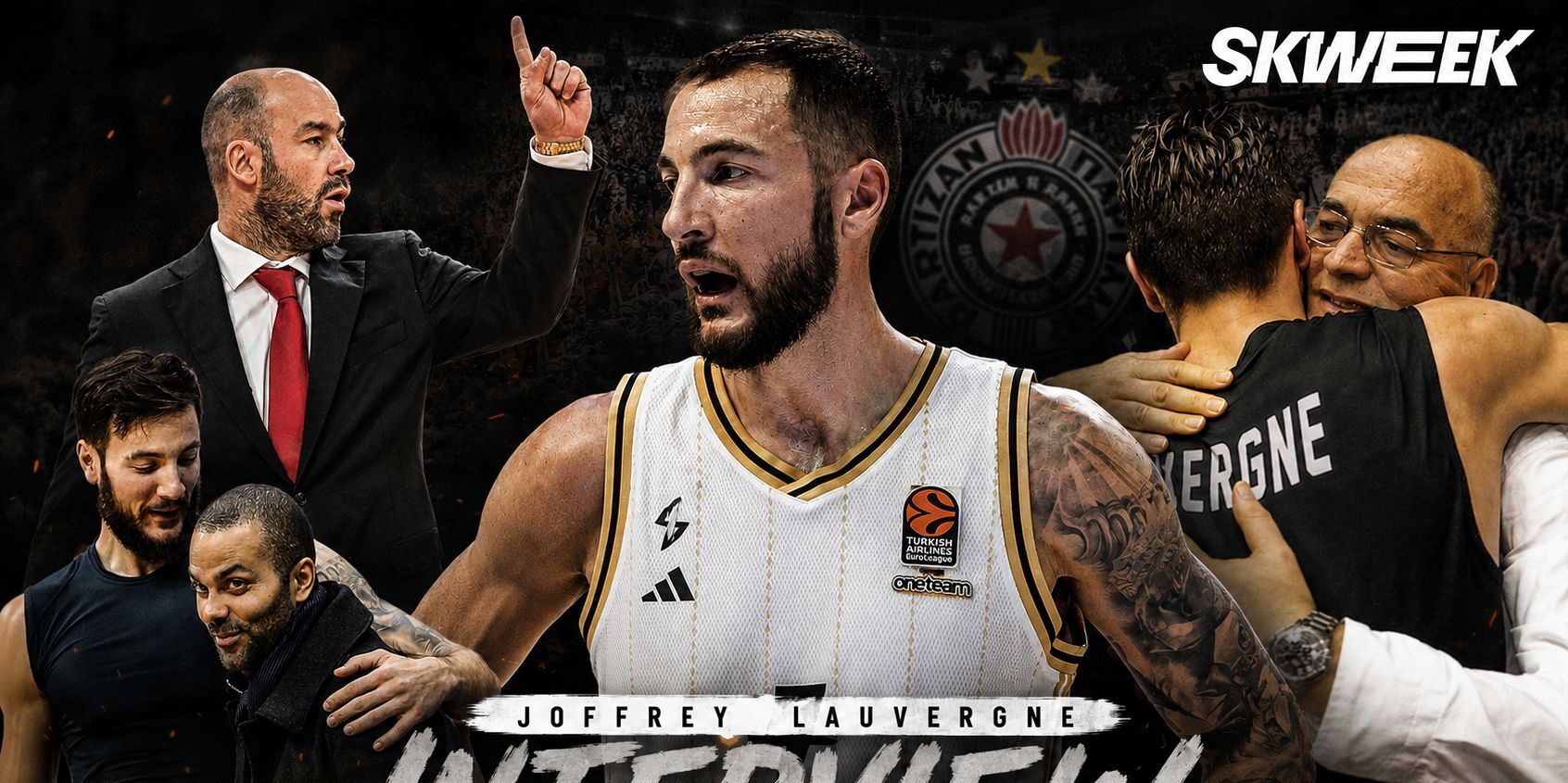
For Joffrey Lauvergne, returning to Partizan was never supposed to be merely another move. More than a decade after leaving Belgrade, the 34-year-old French big man came back last April with a very specific ambition: not simply to wear the black-and-white jersey again, but, if circumstances allow, to finish his career where one of its defining chapters began.


The French big man’s career has rarely followed a straight line, but Partizan has remained the constant reference point throughout it.
Lauvergne arrived in Belgrade as a young player still searching for his place in European basketball and left as a EuroLeague rebounding leader, Partizan captain and NBA-bound prospect. From there came Khimki, four NBA franchises, Fenerbahce under Zeljko Obradovic, Zalgiris, ASVEL and, most recently, Kuwait — a route that took him through virtually every level and style of professional basketball before eventually bringing him back to the club he had spent years promising to rejoin.
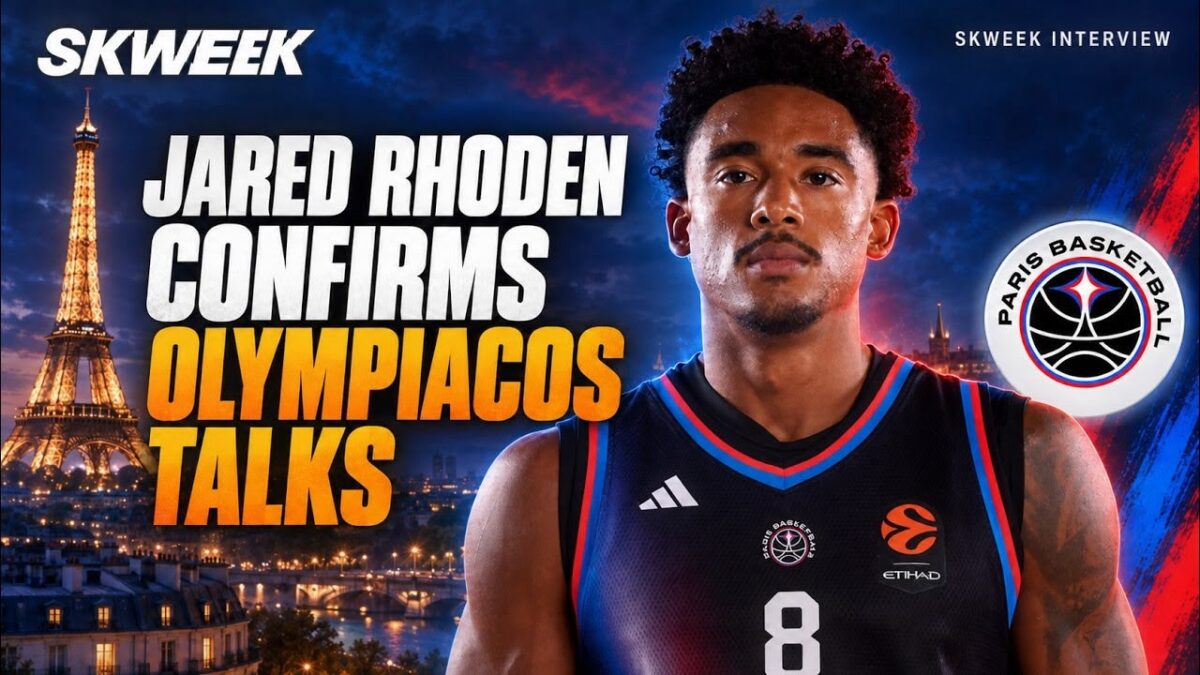
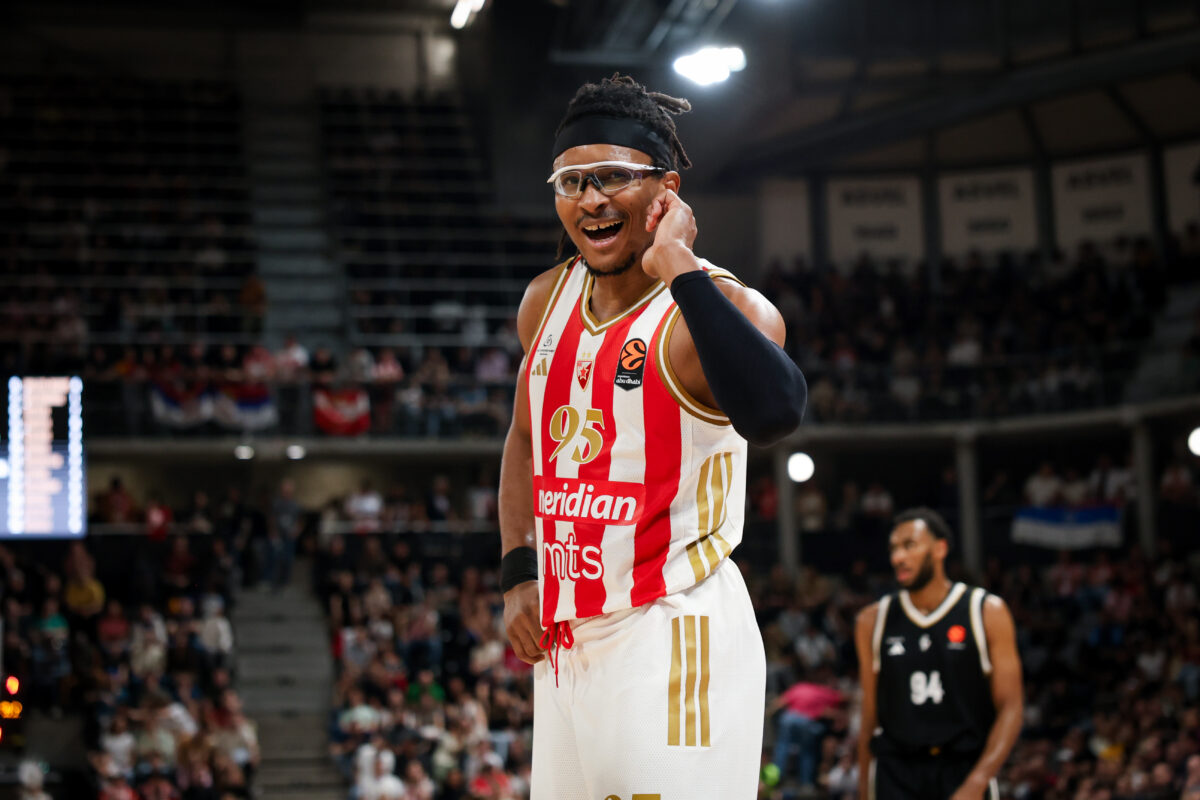
That long-awaited return inevitably frames the first part of his conversation with SKWEEK. Lauvergne speaks about wanting Partizan to be the final stop of his career, but the discussion quickly expands into the people and decisions that shaped everything that came before it.
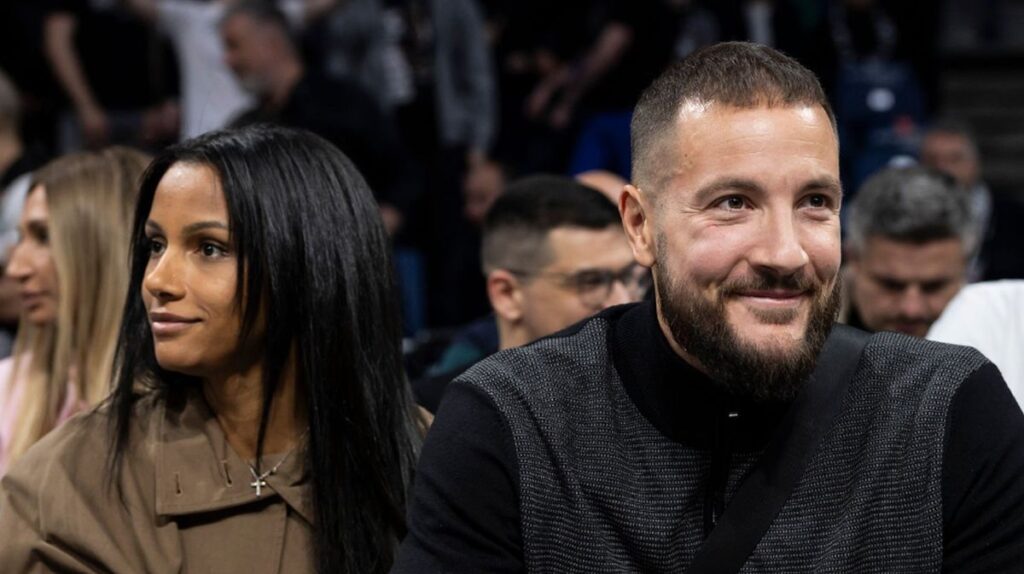
No figure is more important in that story than Dusko Vujosevic. Lauvergne describes his former coach as the most influential person he has met outside his own family, while recalling the final message he sent him before completing his return to Belgrade. Now, years after leaving Partizan as a young man, he finds himself working with Vujosevic’s son — a detail that gives his comeback an even deeper sense of continuity.
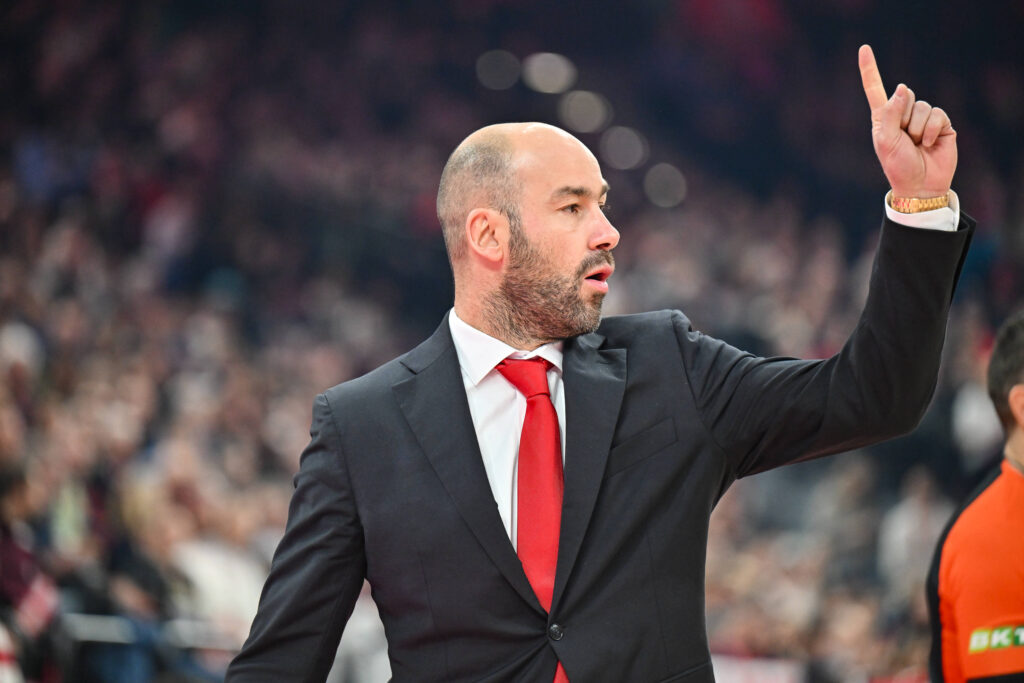
His more recent career also provides several revealing detours. Lauvergne explains how close he came to joining Vassilis Spanoulis at Monaco, why that possibility collapsed, and how an unexpected move to Kuwait ultimately became one of the most pleasant surprises of his career.
The most complicated chapter, however, appears to be ASVEL. Lauvergne looks back on a project that was supposed to be built around him and Nando De Colo, only to become increasingly unstable. He discusses the shifting budget, the repeated coaching changes, Tony Parker’s role and the lack of a clear long-term direction, while also making it clear that there are parts of the story he cannot yet discuss.
He also assesses Partizan’s new roster, the pressure created by rising expectations and why continuity may matter more than simply throwing money at the problem.
This is only the first part of the interview. Part Two will move into even broader territory — and thanks to Lauvergne’s willingness to speak openly, there is plenty more to come.
The homecoming: Partizan and Vujosevic
Q: When you finally signed with Partizan last April, what was the first thing that went through your mind? Did it feel exactly as you had imagined all those years ago?
Α: Yes. Honestly, it was really important for me to play here again and to finish here. So, this is exactly how I imagined it. I’m really happy to be here, but I also would like to help the team to achieve something.
It’s just not here to be here. I want to play. I want to play well. I want to help the team. I’m definitely super happy about it.
Q: You have often said that Dusko Vujosevic helped shape you not only as a player, but as a person as well. Looking back now, what are the lessons that still influence you every day?
A: Oh, the work ethic about how to act with people. And it was more than just basketball. It was also about life.
I definitely expected to spend more time with him since I was getting back to Serbia, but life decides differently. He definitely was the most important person I’ve met outside of my family.
Δείτε αυτή τη δημοσίευση στο Instagram.
Q: You said that the last message that you sent him was that you were returning to Partizan. Do you ever think about that moment and wish you had one more conversation with him after the deal became official?
A: Yes, that was the last text I sent him. It was about to become official. I was expecting to have much more than one conversation after the deal. But he had been ill for a long time, and it was really difficult for him and for his family.
And now I’m practicing with his son, which is when life goes full circle in 15 years. I left Partizan when he was a really young teenager and I got back and now he trained me during the summer. So it’s crazy, but that’s how it is.
Q: Now, do you see Partizan as the final stop of your playing career, or can you still imagine yourself wearing another jersey?
A: My goal is to finish here. Then there is the goal and there is the reality. I want to play at least for two or three more years.
If for any reason it’s not possible, then I will think about other options. I know that the door of the Kuwait Sports Club is still open for me. I had a great time there. I didn’t know what to expect when I signed, and it ended up being such an amazing experience.
If I didn’t have the offer from Partizan, I would have stayed there. Let’s see what the future brings, but I want to finish in Partizan.
The Spanoulis call and the move that never happened
Q: How were things in Kuwait?
A: To make a long story short, I told Misko [Raznatovic, his agent] before the summer, ‘Listen, there are three options.’
Either some winning team wants to sign me as a big guy and I would like to play for one of those teams, but there are few of them. Either Monaco, because obviously I’m French and [Vasilis] Spanoulis wanted to sign me. So, we waited on Monaco for quite a bit. But there was a disagreement between Spanοulis and people from the club, so it didn’t end up the way I was expecting.
I also told Misko that I wanted to go back to Partizan. So, we waited quite a lot on Partizan as well. But that didn’t happen either.
And then I didn’t want to wait for anybody to get injured and stuff like that, because I have a family and I don’t want them to move a few times during the season. So, when Misko explained about the quality of life in Kuwait, which is a region I didn’t know about, and I talked to the president of the club and he showed me a little bit the gym and the practice facility, I was really surprised about how everything looked like.
Honestly, besides the NBA and maybe Zalgiris, who have an amazing gym and practice facility, that was probably the best environment I’ve been in. It was really surprising.
The level of the league is obviously not as good as Europe, but they are increasing the number of foreigners every year. So, the league is getting stronger and stronger. But overall, it was interesting. We had a lot of time to practice, and I had a lot of time to work on my body.
And right now, I’m feeling much better now and much younger now than I was feeling last summer.
Q: When did you talk with Spanoulis?
A: Really early in the summer, he told me that he wanted me on the team. I was obviously really happy about it because I had a strong wish to play for him because of the player that he was and how much I liked him as a player. And also because he was coaching Monaco that was a team that was playing to win something.
I was really ‘hot’ about Monaco. But basically, the owner and GM didn’t want to spend as much money as I was asking. And they ended up with a really bad offer, and I didn’t want to take it.
Q: Now, since the conversation has led us there, looking at what’s been going on in French basketball, did you expect Monaco to collapse so quickly after being a solid EuroLeague Final Four contender for years?
A: I think nobody was expecting it. Even if we kept getting info that it was getting harder and harder, which is for me, honestly, something I don’t understand. We have a guy who wants to spend money on a basketball team and we don’t let him bring back the money, which is something hard to understand.
And why? Because he’s from Russia – and we don’t want anybody from Russia. But for me, Russia is not a villain. It’s not someone that I don’t want to talk to and accept if you want to live in my country, especially if you want to invest.
So, to me, this looks really stupid. But it led the situation to the point where it is now, where the team is going to disappear after being one of the best teams in EuroLeague in the last 3-4 years.
It’s a bit sad for French basketball and for the EuroLeague, I believe. It’s also a city where everybody wants to go, everybody wants to live there.
ASVEL, Tony Parker and a project that never took off
Q: You spent three seasons with ASVEL (2022-25). You publicly said there was little chance of staying because the club never showed much interest in extending you. Why do you think that happened?
A: The club didn’t want to extend anybody. They didn’t want to extend Nando [De Colo] either because they didn’t believe that they will have the money, which turned out to be the case this season.
Q: There have been various discussions in France about ASVEL’s finances, spending, and changing ambitions over the last few years. From your perspective, why did the project seem to inflate so quickly and lose momentum up to this point?
A: You have to know something. Trust me, I have a lot to say about ASVEL.
But the thing is, my lawyer suggested that I shouldn’t talk about it yet. So I don’t know what I can say.
For me, the same discussion has been going on for the last five years. There is no straight line and nobody knows where the club is going. They went this year from signing [Sylvain] Francisco to releasing him after three weeks, from the budget being 60 million to being maybe three times less.
It’s hard to comment on it because I don’t know. I only know what I read. As a player, I’m not in the office. So, I just can see the difference between what people say and what’s actually happening.
Q: When you and Nando joined ASVEL back in 2022, the message was clear because the club wanted to become a permanent EuroLeague playoff contender.
A: Yes. And the project was to sign me and Nando, to build around us and to be a playoff contender in three years. That was what I was told when we signed – the same talk as with all those players who signed a few weeks ago.
But we ended up starting the preseason having difficulties about everything.
Q: Did you talk with Tony Parker directly?
A: Yes. And with his brother [TJ Parker], who was still coaching the team. He’s someone I’ve known for many years because I played with Tony in the French national team.
So I knew his brother for a long time. And he became a really close friend, by the way. But basically, I almost never played for him because the first year I was injured and the second year he got fired.
Q: Do you feel like Tony Parker fell back on his promises? What was the main issue?
A: I think he’s trying to do something. I just don’t know if it’s possible. I wish him to be successful. But so far, the project hasn’t been successful, I guess.
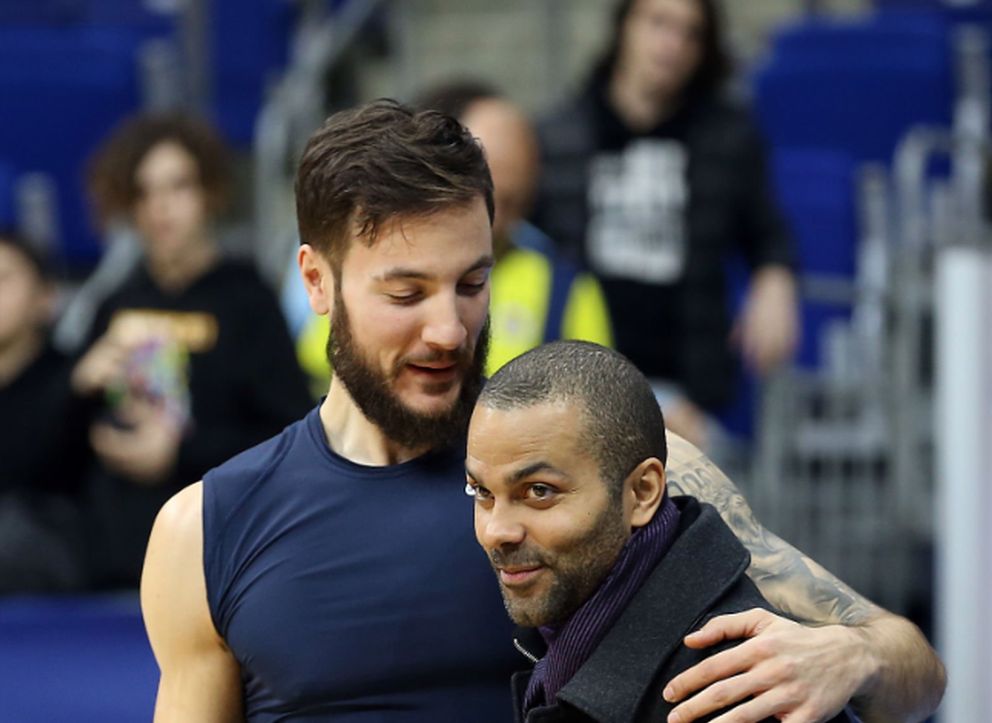
Q: Do you believe that he will be successful as a head coach?
A: Who knows? That might change also, like everything else. Well, I wish him to be more successful as a head coach than he was as a president.
Q: What were the biggest obstacles preventing the club from taking that final step?
A: The absence of a clear picture about the future. They signed me and Nando to build around us. That didn’t happen because they didn’t have the money for it.
We changed coach three times in 10 weeks. They fired TJ Parker to bring [Gianmarco] Pozzecco. And then, in less than 10 weeks, he also got fired.
Even today, I don’t know exactly what happened.
And then, we had a young coach [Pierric Poupet] who had never coached before. He was the third assistant to TJ for two years and he became the head coach. It’s not like Spanoulis, who had coached before taking over a EuroLeague team. Plus, he had played in EuroLeague for 20 years, and he was one of the best players in the world.
Nando also left before the end of the season because he had the opportunity. I also had that chance, but they didn’t let me go.
Now, what’s driving me during those difficult seasons has been the fact that I wanted to finish in Partizan and I needed to stay in shape. That was my biggest motivation.
But sometimes it’s hard. You have to really fight against yourself and to push yourself because when you basically know before the start of the season that you will win 5-10 games in the EuroLeague, the season is very long. Really, really long.
A new Partizan and the weight of expectations
Q: Let’s get back to Partizan because the club has added several players in the offseason. What do you like the most about the way this team has been constructed, and which of the newcomers do you think fans are going to appreciate the most?
Α: Τhe one thing I like the most is the fact that all those players have played in Europe before. So they know how European basketball is, how the European schedule is. Will this team be better than the previous year? It’s hard to say.
But also we have everything to build on. I really like my Italian [Alessandro Pajola] and my Argentinian [Luca Vildoza] brother. We’re missing one more player at the ‘3’ position, and one more at the ‘4’ position. Let’s see who is on the market, who is available.
Everybody says, “Partizan have a lot of money.” Yes, definitely. We have a lot of money now compared to previous years. But still, I believe we are the 13th or 14th budget in Europe. It’s not even top 10.
Everybody is expecting so much from the fact that we are spending a lot of money and we have to play well, but things are a bit more complicated than this. The only thing I expect and want is to have the time to work and to improve as a team. I think what people are waiting for is to watch a team who fights and plays the right way. If we are doing those two things, we’ll buy some more time.