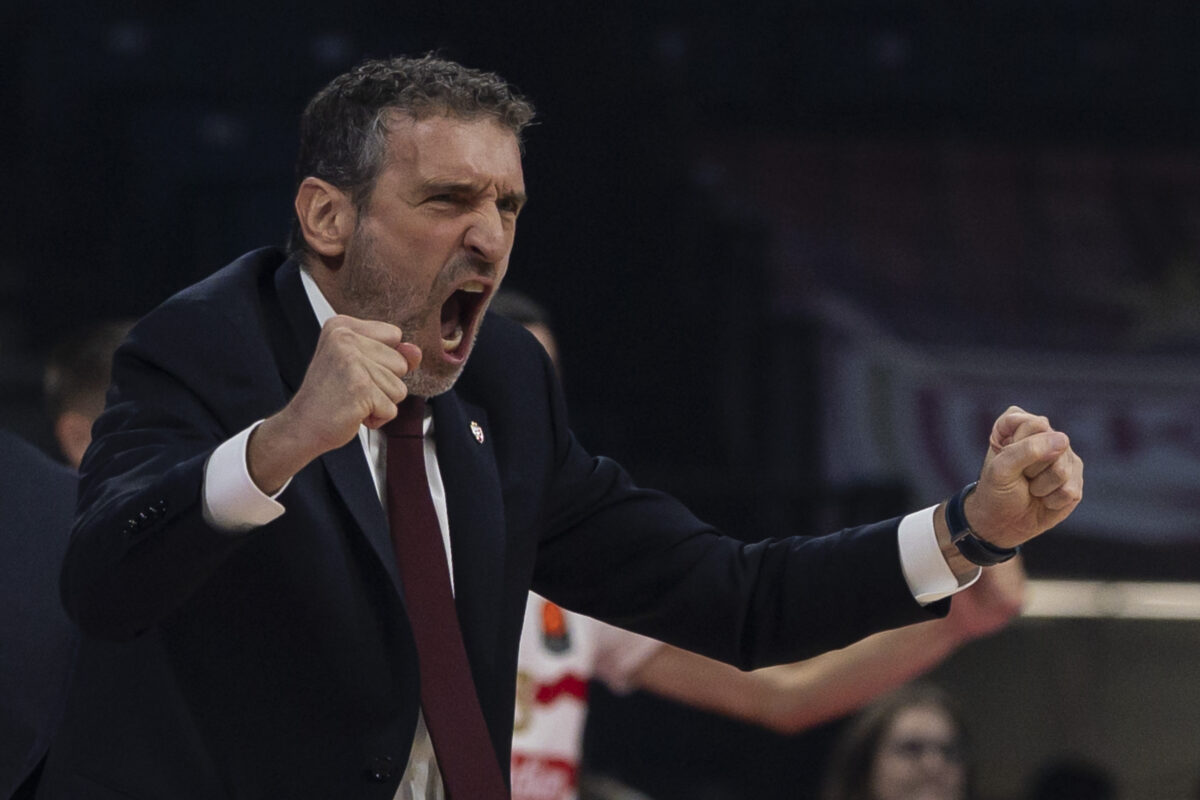




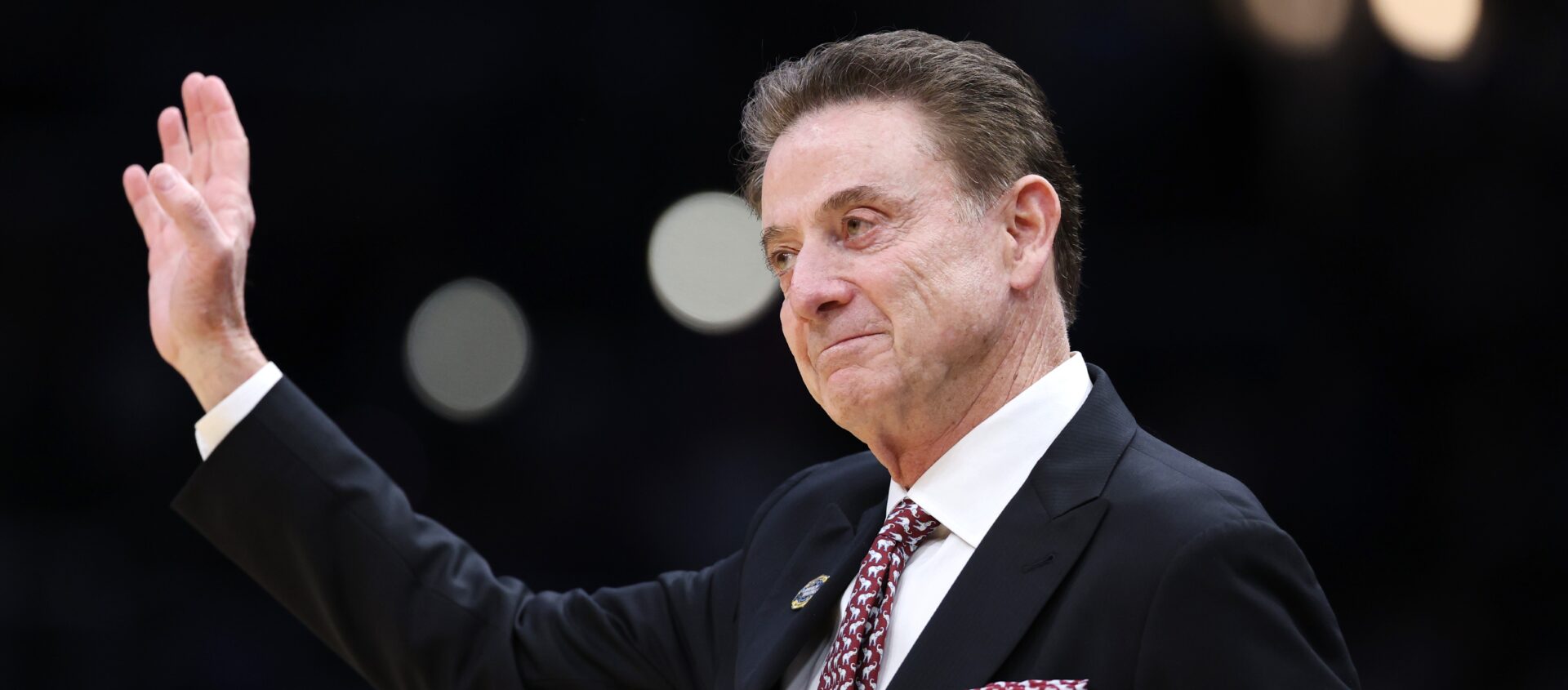

Rick Pitino opened up to SKWEEK in an exclusive interview, describing his time with Panathinaikos and the Greek national team as one of the finest periods of his six-decade coaching career. He spoke warmly about Greece, Panathinaikos and its fans, while praising Željko Obradović and Dimitris Giannakopoulos.


The Hall of Famer also explained why, at 73, he remains devoted to coaching: not for money or personal glory, but for the joy of helping players improve and fulfil their dreams. He also discussed the evolution of basketball, the NCAA’s growing financial power, EuroLeague budgets, NBA Europe and the challenges facing the European game.
Chapter I: Obradović, Giannakopoulos, Panathinaikos, Bouzoukia and Greece
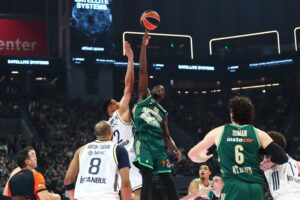
“I’m very excited for Panathinaikos. Getting Coach Obradović back brings great history, and I’m really happy for him. He has given so much to European basketball and Panathinaikos. To finish his career with a big budget and a great franchise, where he won five championships, is wonderful for him and the fans.”
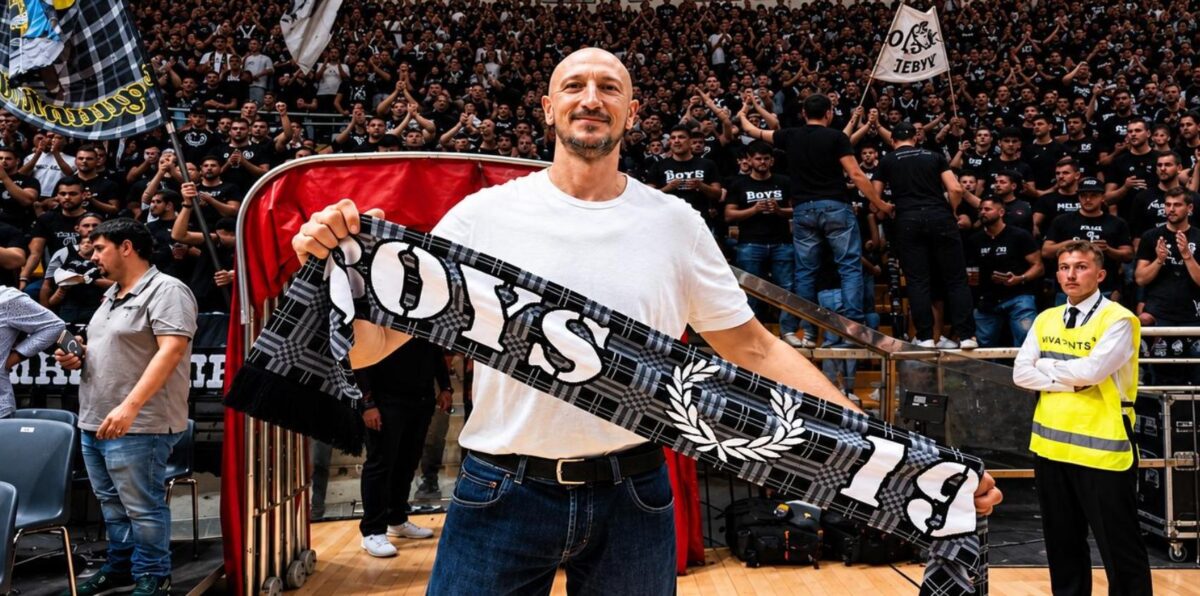
Pitino then explained what defines a coach’s greatness and the legacy he builds at a club.
“First, it’s championships. That’s the ultimate measure. Then, it’s the respect of the players. Coach Obradović is tough, but he treats everybody equally and with great respect. He has earned the respect of the players, the fans and the media. It’s a wonderful way to end a very storied career.”
Asked whether coaches are underrated in modern, player-centred basketball, Pitino compared their role in college basketball, the NBA and Europe.
“In college basketball, coaches get too much credit and the players don’t get enough. In the NBA, it’s the opposite because it’s a players’ league. Unless you’re someone like Steve Kerr, coaches are really a sidebar. In Europe, however, coaches are very important because the players aren’t as well known as NBA players.”

Pitino went on to discuss his relationship with Dimitris Giannakopoulos and his memories from his two years at Panathinaikos.
“Panathinaikos’ owner is very colourful and passionate, and I had a great relationship with him.He treated me very well and with great respect. We had a low budget, around $12 million, but I thoroughly enjoyed those two years. The fans feed off his passion. When I watch Panathinaikos on television, it brings back so many memories. You don’t see owners or fans act that way in the United States.”
Talking about the strong bond he still shares with Panathinaikos fans, Pitino explained why moving to Greece at the age of 65 proved to be one of the best decisions of his life.
“I had coached professional and college basketball for a long time, but I had never been to Greece or followed the EuroLeague. I thought, ‘Why not act young and explore new horizons?’ It was the best decision of my life. My experience with Panathinaikos and Greece was as good as any period of my 54 years in coaching. The Greek people were sensational to me. I love them, and they showed me great love in return.”
Pitino also highlighted the important roles played by his agent and close friend, Aggelos Kotaridis, and Elina Rogkakou, who helped him adapt to life in Greece.
“Aggelos and Elina helped me immensely adjust to things I wasn’t used to. Without them, I don’t think I would have enjoyed Greece as much. They took me to the theatre and the Greek islands, while Aggelos also introduced me to bouzoukia. I remember asking him why people were throwing flowers at the singer, and he replied, “Those flowers are very expensive, Coach!”.
Speaking about his enduring love for Panathinaikos, Pitino revealed that he still adjusts his coaching schedule to watch the team’s games.
“I speak highly of the Greek people all the time. I watch Panathinaikos whenever I can because the games usually start around two in the afternoon. Sometimes I move practice from 2:30 to 4:00 just so I can watch them.”

Chapter II: The evolution of Basketball throughout his 6 decade career
Asked how basketball has evolved throughout his six decades in coaching, Pitino described the transition from post-oriented offences to the modern perimeter game.
“I’ve seen so many changes. The low post used to be the centre of everything, with teams throwing the ball to players like Kareem, Shaq or Hakeem Olajuwon. Today, centres play on the perimeter in five-out offences and rarely post up.”
Pitino then compared the different offensive approaches used in Europe, college basketball and the NBA.
“The pick-and-roll is very important in Europe and the NBA. College basketball is closer to the European game, with more player and ball movement. In the NBA, there’s less action because the great players keep the ball in their hands and try to attack weaker defenders.”
Discussing the growing prominence of guards in modern basketball, Pitino explained why he prefers bigger players in the backcourt.
“I like big guards. This year, my backcourt will include Quinn Ellis, a 6-foot-5 point guard, and Ian Jackson at 6-foot-4. Big guards allow you to switch defensively and front the post. Small guards can create problems because switching becomes more difficult.”
Pitino also outlined the physical profile he seeks when constructing his roster.
“I prefer guards and wings between 6-foot-4 and 6-foot-6. Up front, size isn’t my main priority. I’d rather have great athletes who are 6-foot-8 or 6-foot-9.”

Chapter III: The NCAA Phenomenon – A threat for the European Basketball
Asked whether the NCAA’s financial rise and the arrival of NBA Europe represent threats to European basketball, Pitino pointed to the differences in facilities and available resources.
“European basketball faces two threats. The first is NBA Europe, but the NBA has to understand that the facilities are different. With the exception of Panathinaikos and OAKA, and perhaps Red Star’s arena, Europe doesn’t have NBA-style venues with 90 luxury boxes and 21,000 seats. OAKA has become the jewel of the EuroLeague.”
Pitino identified the NCAA’s ability to offer larger contracts as the second major challenge for European clubs.
“We’re offering European players more money than EuroLeague teams. There’s no doubt about it. Quinn Ellis is making more with us than he would with a European club.”
Explaining the financial gap between the NCAA and the EuroLeague, Pitino underlined the importance of television revenue in American sports.
“It comes down to television. When I was at Panathinaikos, the club earned around one to 1.2 million dollars from the EuroLeague’s television rights. We make millions because of college football. Television revenues in both the NBA and college sports are much greater than in the EuroLeague.”
Pitino then compared the popularity and financial strength of basketball in Europe and the United States.
“Football is obviously the biggest sport in Europe, although basketball is very popular in places like Athens and Serbia. The difference is that television rights in Europe aren’t as valuable. That’s where the money is made. Our budget this year is between 15 and 20 million dollars, which is comparable to the budgets of many European teams.”
Asked whether the sharp increase in Panathinaikos’ budget could become a trap, Pitino explained why spending alone does not guarantee success.
“It’s not always about the budget. The New York Mets have the second-highest payroll in baseball and a terrible record. With Coach Obradović and Panathinaikos’ marketing, however, I believe the money will be well spent.”
Pitino also praised Dimitris Giannakopoulos for investing in both the roster and the overall product offered to Panathinaikos fans.
“You have to give Dimitris a lot of credit because he has invested back into the fans. OAKA is now a beautiful venue with great lounges, and he has invested in the product. When you put money back into the product, you reap the rewards. With great management and Coach Obradović, everything is in place for more Final Fours and championships.”
Discussing the ideal league for a talented 25-year-old player, Pitino stressed that the decision depends on the level and circumstances of each athlete.
“Everybody wants to play in the NBA because that’s where the most money is. But for players who had a short stint there, like Kendrick Nunn, the EuroLeague is an outstanding option. It all depends on your talent level and the stage of your career.”
Chapter IV: The Coach’s view
Pitino went on to praise the standard of the EuroLeague and the quality of its coaches.
“The EuroLeague is a great competition with outstanding coaches. Obradović, Ataman and many others are great strategists and wonderful people who put their heart and soul into the game.”
He also expressed his excitement about the progress of Greek basketball and referred to Vassilis Spanoulis’ new challenge with Aris.
“I’m excited about the Greek league. It has new ownership and new blood, while Greece is also doing much better financially, which really warms my heart. Spanoulis, who was my captain but never played for me because he was injured, can now take Aris to great heights.”

Chapter V: The reason
Explaining what continues to motivate him at the age of 73, Pitino stressed that developing players and helping them fulfil their dreams now provides his greatest reward.
“I no longer coach for money or individual glory. I coach because I love every minute of every practice. Each morning, I work personally with small groups of players and focus on improving their offensive skills.”
Pitino used Zuby Ejiofor’s development into a first-round NBA Draft pick as an example of what makes coaching so fulfilling for him.
“Zuby came from Kansas averaging two points in four minutes per game. We worked together every morning, and he went on to win the Kareem Abdul-Jabbar Award, become the Big East Player of the Year and a first-round pick of the Atlanta Hawks. That brings me great satisfaction.”
He also referred to the progress of Daniss Jenkins and Donovan Mitchell, explaining that he now experiences success through the achievements of his former players.
“Daniss Jenkins didn’t have a college scholarship and now he’s playing for the Detroit Pistons. Donovan Mitchell went on to sign a $283 million contract. I live through the dreams of my players. Improving them and watching them succeed is the greatest reward of coaching at 73.”