




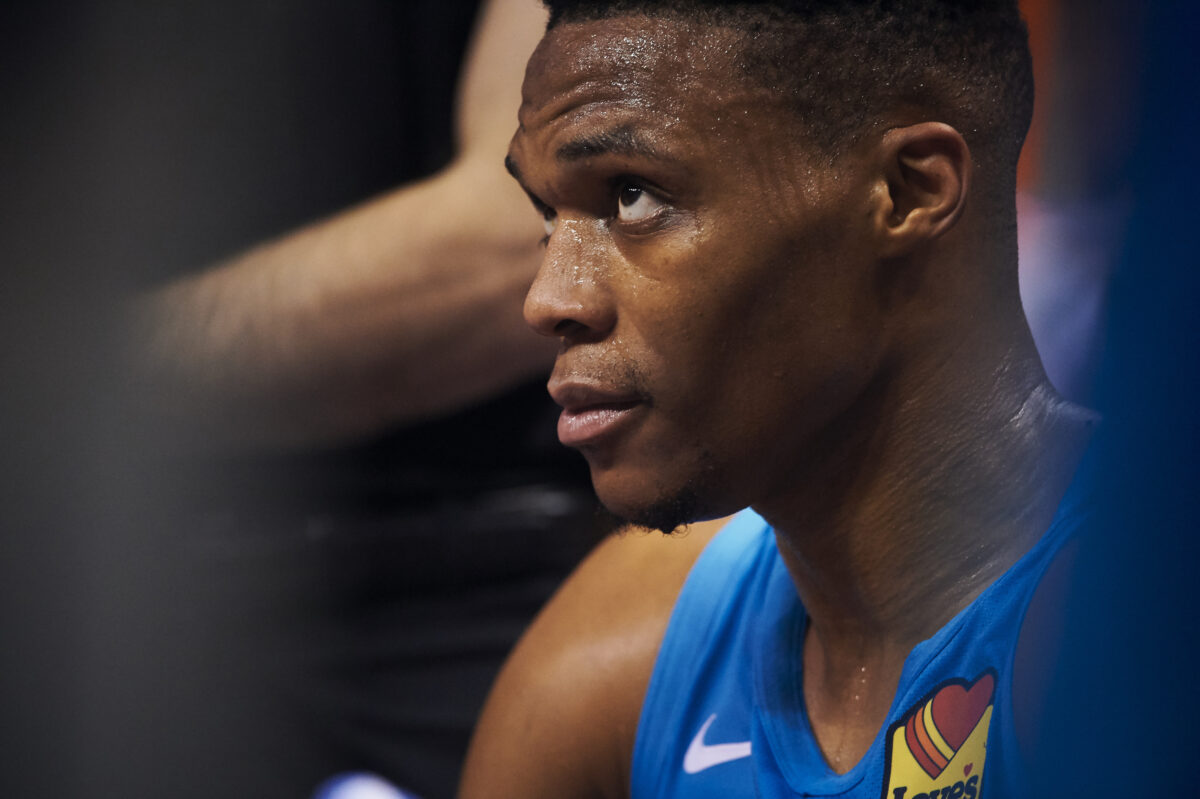



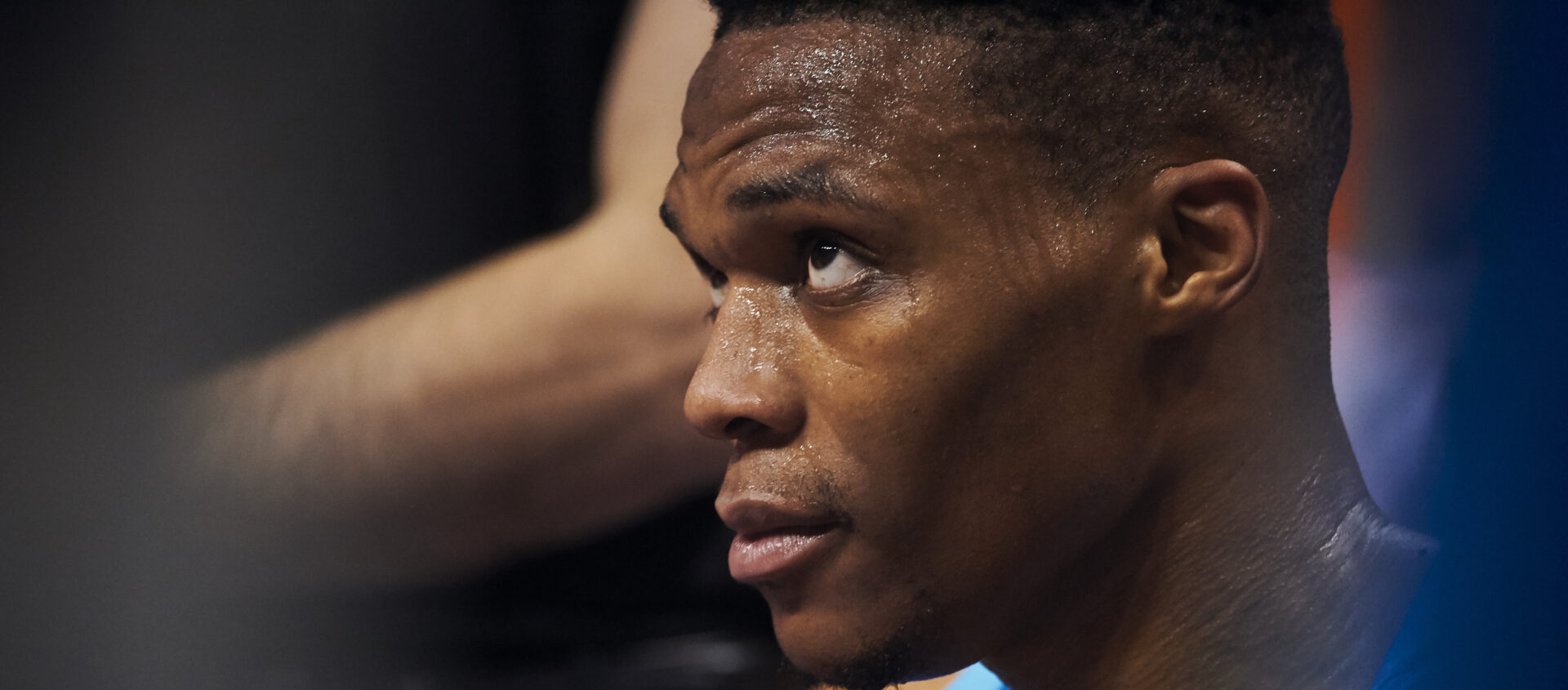

Russell Westbrook left the NBA with surprisingly few words of his own. In the video announcing his retirement, he walks through an imagined “Museum of Unspoken Answers,” with Michael B. Jordan narrating the story. There are trophies, photographs, records, criticism and all the questions that followed him for nearly two decades. The concept fits a player who never seemed especially interested in explaining himself. He played, he worked, he got irritated when he thought a question was stupid, and he mostly left everyone else to decide who Russell Westbrook really was.


He did not have to leave now, either. After 18 seasons, there were still opportunities to keep playing, but at 37 he decided he had done enough. And so ended one of the more unusual great NBA careers of this century, the career of a player whose numbers we knew almost by heart, while never quite agreeing on what he actually meant as a basketball player.
The Game That Explained Almost Everything
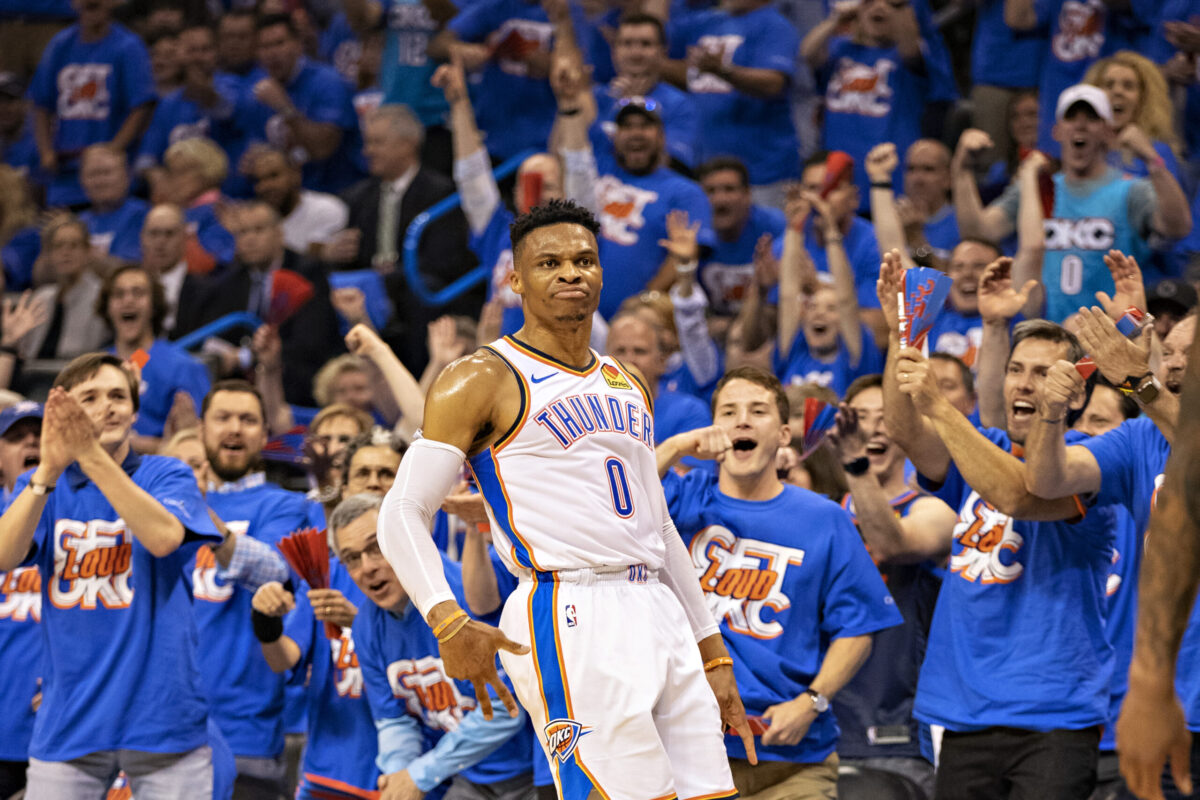
Maybe it is enough to go back to April 9, 2017, in Denver. Westbrook had 50 points, 16 rebounds and 10 assists that night. It was his 42nd triple double of the season, breaking Oscar Robertson’s record, one that had stood for decades among those achievements people assumed belonged to a different kind of basketball. Then, as if all of that had not been enough, he hit a deep three at the buzzer to give Oklahoma City a 106:105 win.
If you had to show someone just one game to explain Westbrook, it would be hard to find a better one, because everything about it was excessive. The points, the rebounds from a point guard, the speed at which he attacked the floor, the confidence to take that final shot. Some of those decisions would have looked reckless coming from another player. With Westbrook, that line between reasonable and ridiculous was part of the experience. Sometimes he threw the ball into the third row, sometimes he crashed into three defenders under the basket, and sometimes he did something that simply did not look possible on a basketball court.
That same instinct was behind a lot of what made him great and a lot of what drove people crazy. Westbrook never had much use for conserving himself, or for spending a few possessions waiting for the game to come back to him. He wanted to push it somewhere. If there was a chance to run, he was already running. If he saw daylight between two defenders, he usually went through it. When a shot came off the rim, he chased the rebound as if the other four players on his team had disappeared.
It was not tidy basketball. Sometimes that was exactly why it worked. Sometimes it was exactly why Oklahoma City, Houston, Washington or Los Angeles wound up in trouble.
He Bent the Point Guard Position Toward Himself
As a high school player, Westbrook did not look like a future NBA superstar. He was not one of those prospects whose name enters the league’s vocabulary years before draft night. At UCLA, he spent most of his freshman season coming off the bench, then made a rapid physical and basketball leap and was the fourth pick in 2008. Even then, there were legitimate questions about what he would be in the NBA, especially whether he could actually run a team from the point.
In the end, he bent the position toward himself instead of becoming somebody’s idea of a conventional point guard. Chris Paul controlled a game by organizing it, and Westbrook often controlled one by making the defense panic. One hard first step could drag a big man out of the paint, pull help in from the corner and open a passing lane that had not been there a second earlier. Sometimes he saw it and made the pass. Sometimes he kept going anyway. That second choice was part of the deal.
“Why Not?” Was More Than a Slogan
“Why Not?” eventually became his signature, but with Westbrook it never felt entirely like branding. He had worn the phrase long before he became MVP, and alongside it carried the initials of Khelcey Barrs, his childhood friend who died as a teenager. There is no need to turn that loss into a neat explanation for the way he played. It does, though, add something to the picture of a player who rarely behaved as if there would always be another possession, another game or another chance.
The Triple-Double Became Both Achievement and Argument
When Kevin Durant left Oklahoma City in 2016, the structure around Westbrook changed overnight. There was no longer any question about whose team it was. He had spent years sharing the biggest possessions with Durant. Now the burden was his, and he responded with the most extreme season of his career.
Westbrook averaged a triple double in 2016/17 and won MVP. Oscar Robertson’s 1962 season had long felt like one of those records protected by time, pace and a completely different version of the sport. Westbrook reached it, then kept going. He would average a triple double three more times and finish his career with 209 of them.
What happened next was almost as interesting as the record itself. At first, people were stunned that a point guard could rebound like that every night. Eventually, the conversation shifted from whether he could get 10 rebounds to whether he should be getting them at all.
The “stat padding” accusations became part of his reputation. Okay, there were clips of teammates clearing out so he could take the defensive rebound, and there were possessions where he wandered away from his man looking for the ball. He had nights when his appetite for being involved in everything clearly went too far. Obviously, that criticism was not invented out of thin air. It also never fully settled the argument.
Westbrook’s teams won nearly three quarters of the games in which he recorded a triple double. The numbers were not meaningless, but neither were they a clean explanation of his value. They told you how involved he had been, but they did not tell you whether every possession needed that much of him.
The League Changed as His Athletic Margin Shrunk
Age exposed the part of his game that had never really caught up with the rest. Westbrook never became a dependable enough shooter to make the transition from superstar to veteran painless. Meanwhile, the league moved further toward spacing, efficiency and five-man offenses in which one non-shooter could distort everything. Defenses grew increasingly comfortable backing away from him. At 27, he could punish that disrespect with speed and force. At 33, those same gaps started to look different.
His Lakers years were the ugliest version of that problem. Next to LeBron James and Anthony Davis, he could not dominate the ball the way he once had, but playing away from it did not solve much either. Defenses could cheat off him, and the floor got crowded. That’s why his mistakes became more visible because nearly everything that happens in a Lakers uniform becomes more visible.
There were also plenty of moments when Westbrook made things harder on himself. He would keep attacking after the lane had closed, take an early jumper a possession did not need or speed up a late-game situation that called for patience. Playoff defenses remembered those habits and came back to them again and again.
The Empty Championship Column Belongs in the Story
He retired without a championship, and that belongs in any serious accounting of his career. So does the context around it. At 23, he scored 43 points against Miami in an NBA Finals game. Oklahoma City traded James Harden months later. Westbrook tore his meniscus in 2013. Durant later dealt with major foot problems. Then came 2016 and the 3:1 lead over Golden State that disappeared in three games. Westbrook was part of why those Thunder teams got so close and part of why some of their chances slipped away. Both things can be true without turning him into either the hero or the culprit of every ending.
Teammates Often Saw a Different Westbrook
The distance between Westbrook’s public image and the way teammates talked about him was always worth noticing. In front of reporters, he could be cold, impatient and openly annoyed. He did not seem to care much about softening the impression. Inside locker rooms, people often described somebody else.
Bradley Beal called him one of the best teammates he had ever had. In Washington, Westbrook spent time working with Rui Hachimura and pushing him toward the preparation habits he believed were necessary. When Westbrook retired, Durant spoke about the influence of his work ethic and how much it had shaped him.
There were smaller stories around Oklahoma City, too. Westbrook showed up at youth games and school events involving the children of team employees. They were the kind of things that rarely traveled very far outside the building, which is probably why they mattered to the people inside it. That helps explain why Oklahoma City never viewed him as just another former star.
Durant left as the better player and ultimately built the more decorated career. Westbrook stayed when the franchise and the city were still processing his departure. He signed an extension, took ownership of the team and then produced an MVP season that felt inseparable from that moment. The Thunder never found another championship roster around him, but the connection survived anyway.
Learning to Matter Without Being the Center of Everything
Much later, Westbrook faced a different kind of challenge. He had to figure out what remained when being Russell Westbrook no longer meant having the ball, the minutes and the whole offense.
With the Clippers, he accepted a smaller role and supported a move to the bench when the starting lineup was not working. It would be easy to overstate that adjustment and pretend the transition had been smooth. It was not. There had been frustration before that, especially in Los Angeles. Still, the fact that he eventually found a way to contribute without being the center of everything matters when looking at the last stretch of his career.
The legs were no longer the same, the first step no longer erased every bad possession, but the urge to get involved in every play never completely went away.
There Is No Need for a Clean Verdict
There is no reason to clean up the rough edges now that he is retired. Yes, Westbrook made bad decisions. His jumper never became reliable enough, he was not always easy to fit around other stars, and his game did not age gracefully. He played long enough, and with enough elite talent, for the absence of a championship to remain part of the conversation.
None of that makes the rest of the career less strange or less significant. A guard once questioned as an NBA playmaker finished among the league’s all-time assist leaders. A lightly recruited teenager became one of the most explosive players the position has seen. A record that had stood for more than half a century did not merely fall. Westbrook pushed it so far that triple doubles briefly started feeling normal.
He finished with 209. There is the MVP, too. Two scoring titles. Years when Oklahoma City lived near the top of the Western Conference. And, yes, the empty championship column.
Those things do not need to be reconciled into one clean verdict. Westbrook’s best basketball and his worst often came from the same impulse. He believed there was another drive to make, another rebound to grab, another pass to throw, another possession he could somehow bend in his direction. When he was right, the rest of the court struggled to keep up. When he was wrong, his own team sometimes had trouble keeping up with him too.
That is why the farewell “museum” feels like the right final image. The balls, jerseys, records and awards can all go behind glass. The way Russell Westbrook played basketball is harder to put in a display case.