











Barcelona entered the summer of 2026 determined to change almost everything about its basketball operation. After three consecutive trophyless seasons, the Catalan club embarked on a sweeping reconstruction, replacing key figures in management, appointing a new head coach and rebuilding much of its roster.


Yet amid all that uncertainty, one player remained central to the club’s plans: Kevin Punter.
His future was not entirely free of speculation. The departures of important players, including Tornike Shengelia, and the unexpected developments surrounding Moses Wright contributed to a turbulent transfer window. By late July, reports had also raised questions about whether Punter might follow other high-profile names out of Barcelona.
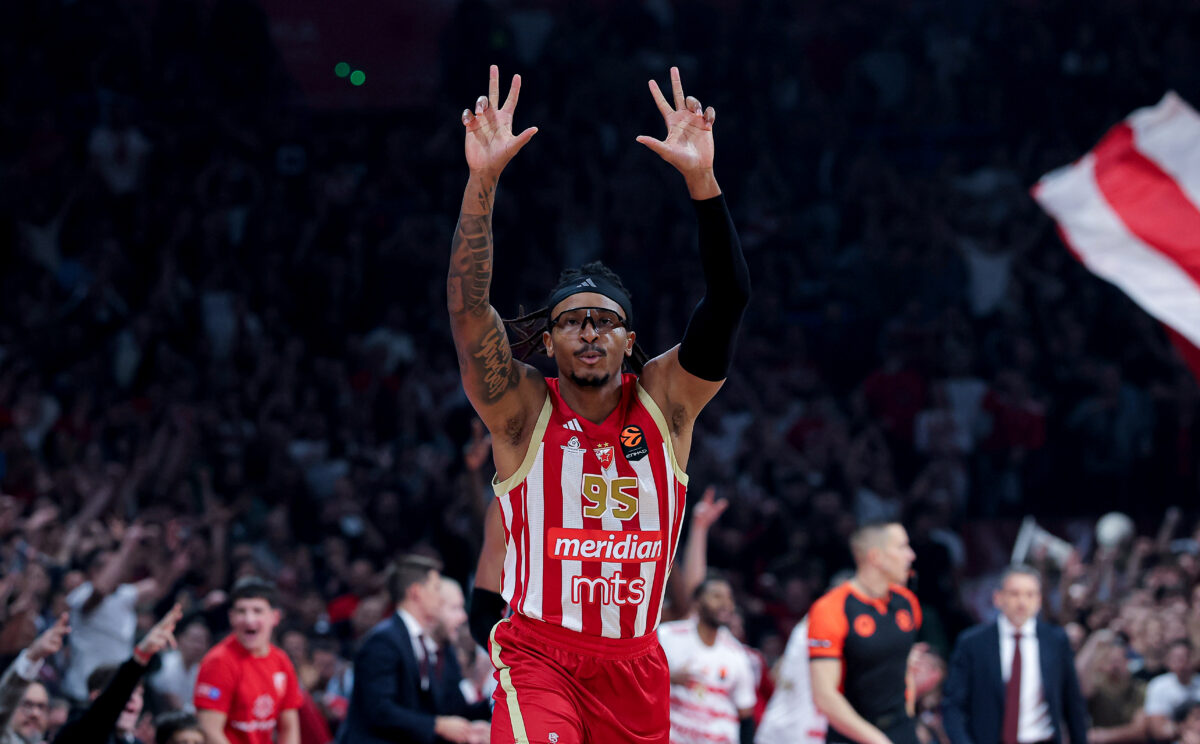
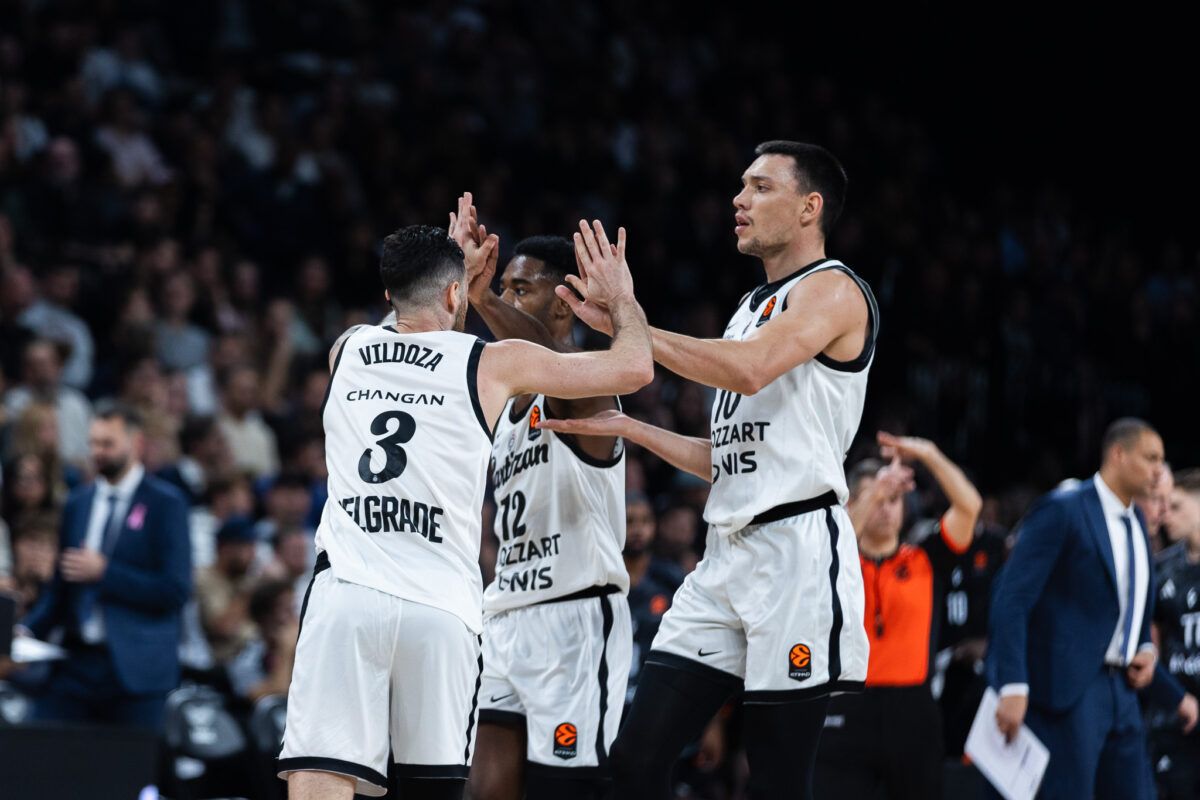
The club moved quickly to dismiss those suggestions. Barcelona maintained that the American guard was happy and remained a fundamental part of new head coach Aleksander Sekulic’s plans.
Punter had already extended his contract through 2028 before completing his first season with the Blaugrana. Although his deal included a release clause, Barcelona insisted it had no indication that he intended to activate it.
Three months later, that decision looks increasingly important.
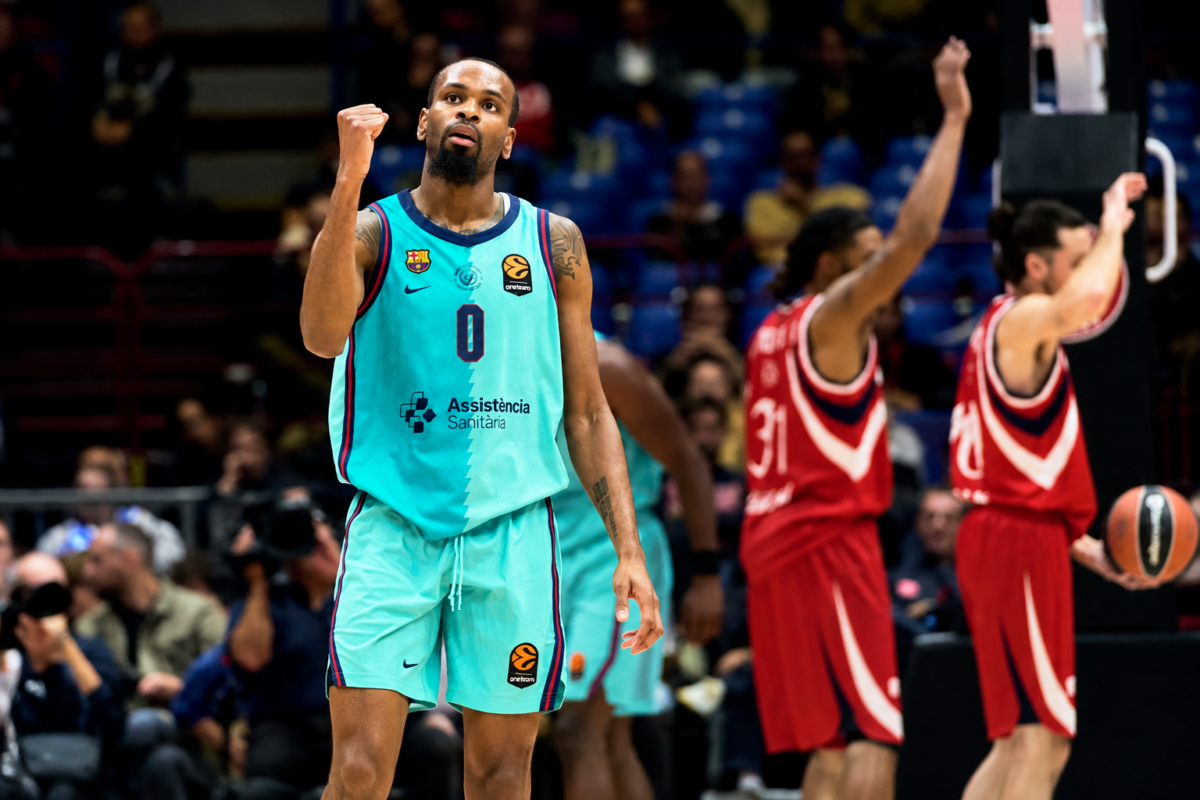
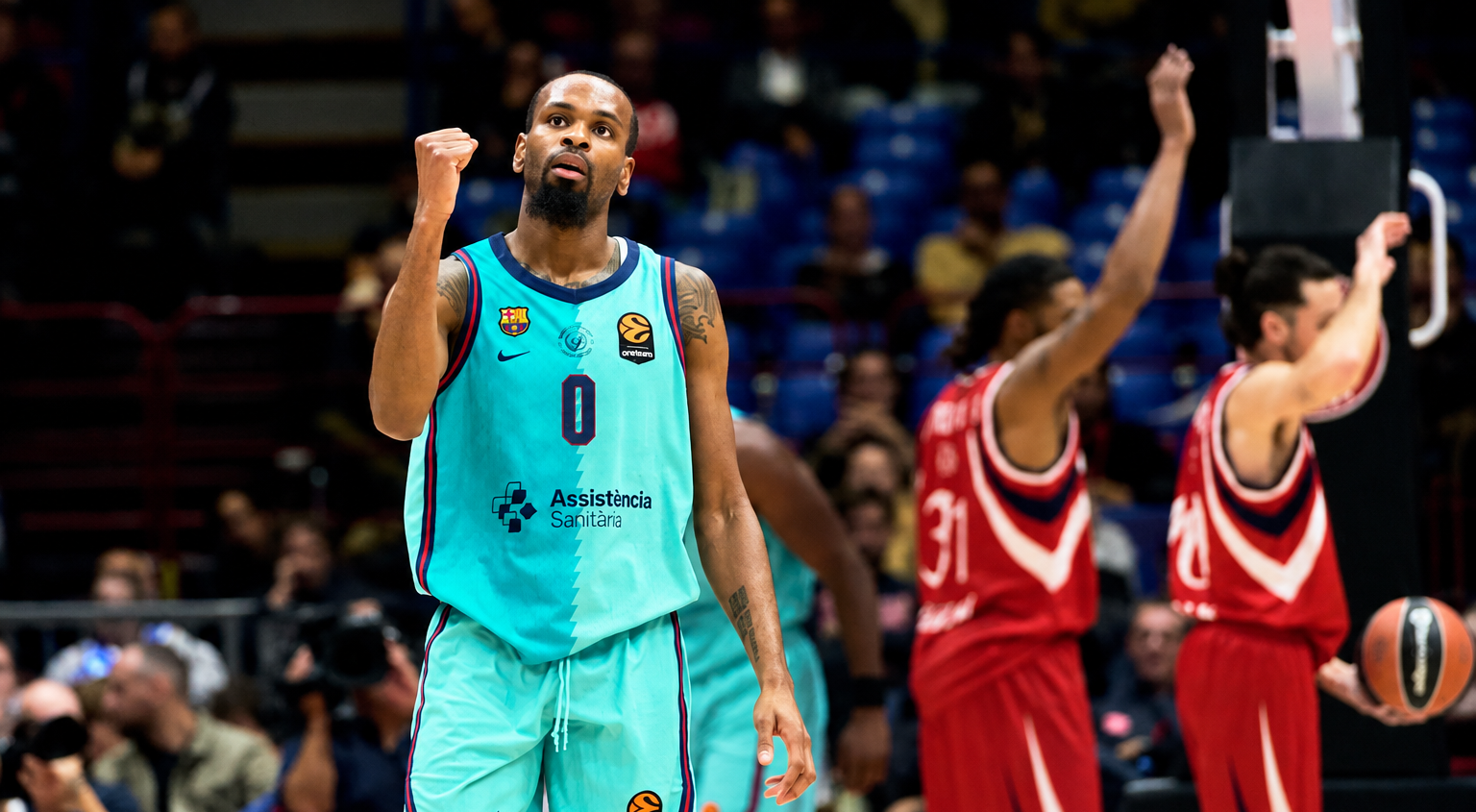
In a team still searching for a collective identity, Punter has become much more than its leading scorer. He is the player trusted to manufacture offense when possessions break down, the man who assumes responsibility late in games and one of the captains entrusted with guiding a substantially reconstructed roster.
From summer uncertainty to a leadership role
Barcelona’s rebuilding process involved major changes in both personnel and philosophy. Xavi Pascual made way for Aleksander Sekulic, while 11 new players arrived with different backgrounds and expectations.
Tyrese Martin, Tosan Evbuomwan and Justin Robinson were among the additions expected to contribute significantly, while Josh Nebo offered another dimension inside.
For Punter, the summer brought a different kind of responsibility. Alongside Joel Parra and Dario Brizuela, he was appointed one of Barcelona’s captains. His understanding of leadership, however, is not based on constantly instructing teammates.
“It’s an honor to be captain of Barca. I’m really looking forward to being an example. I don’t like telling my teammates what to do; that’s not me. I prefer to lead by example,” he explained.
That philosophy is reflected in his basketball.
Punter does not need to direct every possession to influence the offense. His ability to score from different areas forces defenders to adjust their positioning, opening opportunities for teammates even when he is not directly involved in the final action.
In a newly assembled team, that gravity is particularly valuable.
The numbers behind his scoring production
Through eight EuroLeague games, the 33-year-old guard is averaging 16.5 points, 2.1 assists, 2 rebounds and 1 steal in approximately 24 minutes per appearance.
Punter is not playing exceptionally long stretches, yet he remains responsible for a substantial proportion of Barcelona’s offensive possessions.
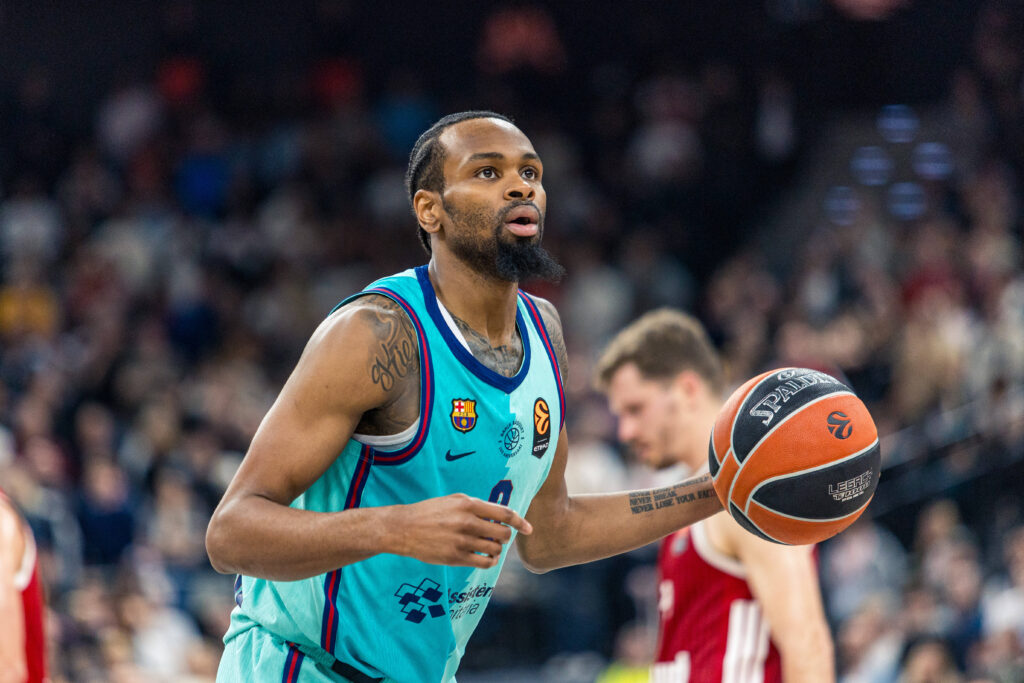
According to 3StepsBasket, his 29.8% usage rate ranks above 96% of EuroLeague players, meaning that almost three out of every ten team possessions involving him end with one of his own scoring attempts or turnovers.
That level of responsibility can compromise efficiency, especially within an offense that is still developing its chemistry.
Punter, however, has managed to maintain solid overall shooting numbers.
His 60% true shooting percentage accounts for his efficiency across two-pointers, three-pointers and free throws, while his effective field goal percentage stands at 55.7%.
His most impressive figure is arguably his 58.9% accuracy on two-point attempts, a reflection of his ability to generate productive shots inside the arc.
That area has become especially important because his perimeter shooting has not yet reached its highest level.
Punter is converting 34.2% of his three-point attempts, making 1.8 of 5.1 per game. It is a respectable figure, but hardly exceptional for a player whose reputation has long been built around his shooting.
The fact that he remains among the competition’s leading scorers despite that percentage demonstrates the versatility of his offensive repertoire.
He is also shooting 92.3% from the free-throw line, turning contact and defensive mistakes into reliable scoring opportunities.
Eight points in the final minute: The Bayern example
Barcelona’s 88-84 victory over Bayern Munich offered the clearest recent illustration of Punter’s importance.
The result improved the Catalan club’s EuroLeague record to 5-3 and gave it a third road victory of the season.
Punter finished with 23 points, shooting 3/7 from beyond the arc and a perfect 8/8 from the free-throw line.
Un altre, Kevin! Canells calents 🔥 https://t.co/IrEEQnetsb
— Barça Basket (@FCBbasket) October 27, 2026
The distribution of those points was especially revealing.
He scored just six in the first half, struggling to establish his rhythm. After halftime, however, he added another 17, including eight points in the final minute as Barcelona navigated a tense finish.
It was exactly the kind of performance the club expects from its primary offensive reference.
Punter had already scored 25 points against Dubai earlier in the campaign, alongside productive outings against Anadolu Efes and Maccabi. But the Bayern performance combined individual scoring with the ability to decide a close contest.
Why Kevin Durant became his basketball blueprint
The comparison between Punter and Kevin Durant has followed the Barcelona guard for years.
It is not simply a matter of their relatively slender builds or their ability to score from different areas of the floor.
Punter himself has acknowledged that Durant profoundly influenced his understanding of offensive basketball.
“A lot, especially early in my career,” he told Serbian outlet Mozzart Sport when asked about Durant’s impact. “What impressed me was how efficient he was, that he didn’t need 50,000 dribbles to get a good shot.”
Punter was also quick to acknowledge the obvious physical differences.
“For me, it’s different because I don’t have Durant’s height, so maybe I need a few more dribbles.”
That distinction is essential to understanding the comparison.
Durant can release shots over defenders because of his extraordinary combination of height, balance and shooting mechanics. Punter, listed at 1.93 meters, must create his advantages differently.
Yet the underlying principles are similar: efficient movement, quick releases, balance and the ability to produce good shots without excessive dribbling.
“I’ve studied him since he was at Texas. His movements, how he gets his midrange shot and his three-pointer. I know his game well,” Punter explained.
The admiration also had a personal dimension.
Growing up, Punter frequently heard that he was too thin and needed to become stronger. Watching Durant dominate opponents despite a similarly slender frame challenged that perception.
“He was the first player I saw who was extremely skinny but was destroying everybody,” Punter recalled.
There is also an unusual connection between the two players.
Both played college basketball under Rick Barnes, and Punter has revealed that he contacted Durant after suffering a broken foot because they had been treated by the same doctor.
The comparison, therefore, is more than a convenient nickname. It reflects a genuine source of inspiration and a technical philosophy that Punter has spent years developing.
Rick Barnes and the transformation of his shooting mechanics
One of the most important moments in Punter’s development came during the summer of 2015 at Tennessee.
Rick Barnes told the young guard that if he wanted to build a professional career, he needed to change his shooting mechanics. Punter accepted the challenge and devoted extensive time to rebuilding his technique, with particular emphasis on midrange shooting.
The objective was not simply to make his release look different. Barnes wanted him to shoot faster and more consistently, particularly against taller defenders.
Punter has since pointed to Durant as an example of how quickly elite scorers must release the ball when facing opponents with greater size.
The work became a foundation of his professional identity. His ability to stop, elevate and shoot with relatively little preparation remains one of the reasons he can score against defenses specifically designed to contain him.
It also explains why his efficiency on two-point attempts is such an important part of his current season.
Beyond scoring: What the advanced metrics reveal
Punter’s value cannot be measured solely through points.
According to 3StepsBasket, Barcelona has posted a +4.0 net rating during his minutes, combining a 122.8 offensive rating with a 118.8 defensive rating.
His average plus-minus stands at approximately +3.1 per game, while Barcelona’s on/off differential is +4.3.
He has also recorded a positive plus-minus in 62.5% of his appearances, equivalent to five of his first eight EuroLeague games.
These figures do not establish that Punter is individually responsible for every positive team possession. Lineup combinations, opponents and game situations all influence such measurements. They do, however, show that his substantial individual scoring output has generally coincided with positive team performance.
There are limitations to his overall profile.
His 2.1 assists and 1.5 turnovers per game reinforce the idea that he is primarily a scorer rather than a conventional playmaker. Defensively, 3StepsBasket places him in the 36th percentile, while his rebounding ranks in the 23rd percentile.
Those numbers provide an important counterbalance to the narrative surrounding his offensive brilliance.
Punter is not an elite all-around contributor in every statistical category, nor does Barcelona require him to be. His principal value lies in creating scoring opportunities, converting difficult shots and providing a reliable offensive option when the team’s collective execution falters.
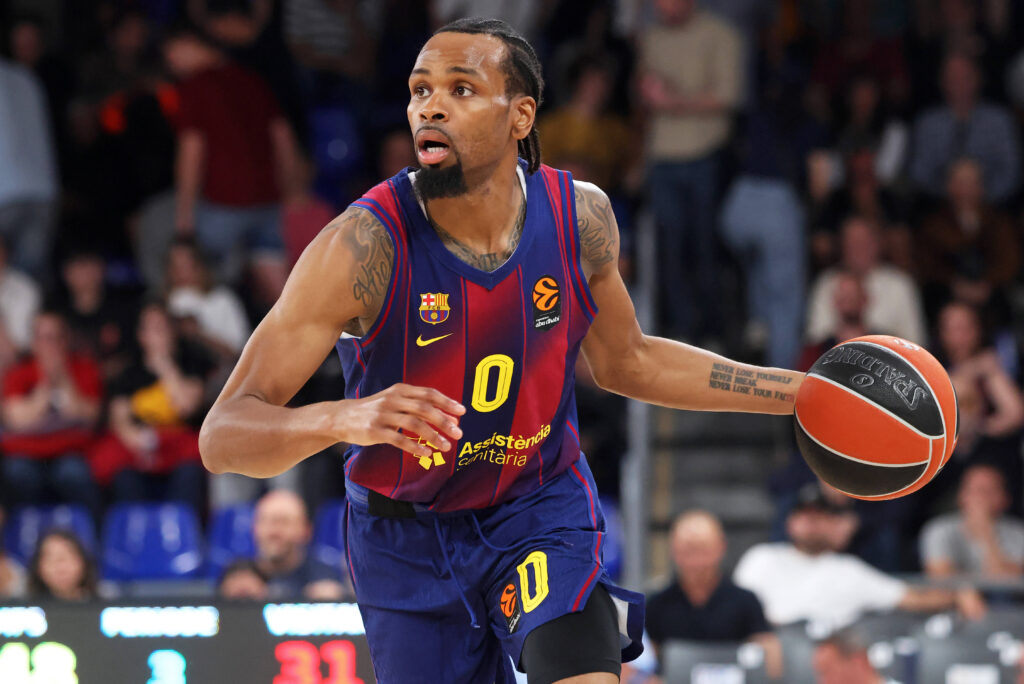
Barcelona’s progress and the danger of depending too heavily on one player
Sekulic’s Barcelona has embraced a faster, more dynamic approach than the previous version of the team. There is a greater emphasis on transition opportunities and attacking before opposing defenses are fully organized.
However, speed has not always translated into control. The Catalans have experienced defensive difficulties, rushed offensive decisions and considerable fluctuations within games.
Their loss to Olympiacos illustrated the risks of relying too heavily on Punter’s individual production. The American sniper scored only four points, shooting 2/10 from the field and 0/4 from three-point range, while committing three turnovers.
Barcelona struggled to compensate for his inefficient performance, even though Justin Robinson’s late three-pointer forced overtime. It was a reminder that Punter’s central role can become a weakness when the team lacks enough alternative solutions.
The arrival of players such as Martin, Evbuomwan and Robinson was intended to distribute responsibilities more effectively, but building that balance requires time.
Sekulic acknowledged as much after the victory in Munich.
“It’s easy to be smart when you win the game, but we seek consistency,” he said. “We need to be consistent both game-to-game but also inside the game. We have ups and downs, so we have to limit those, but that’s part of growing.”
Barcelona’s early 5-3 EuroLeague record represents a reasonable foundation, but it does not erase the defensive shortcomings or the need for more reliable contributions throughout the roster.
A scorer, a captain and the foundation of a new Barcelona
Calling Punter the “Kevin Durant of the EuroLeague” should not imply that the two possess identical physical attributes or exert the same influence on their respective competitions.
The comparison is most meaningful when applied to their scoring philosophy.
Both value efficient movement, quick shooting mechanics and the ability to create offense without unnecessary actions.
For Punter, those principles were not accidental discoveries. They emerged from years of studying Durant and from the technical changes he made under Rick Barnes. Now, at 33, he is being asked to apply that offensive identity within a broader responsibility.
He must remain Barcelona’s primary scorer while helping a newly assembled team develop confidence, chemistry and consistency. His early-season numbers suggest he is capable of carrying the first part of that burden.
Whether Barcelona can turn individual excellence into sustained collective success will depend on the development of the players around him.
The Catalans changed almost everything during the summer of 2026, but they chose to keep Punter as the centerpiece of their reconstruction. Eight EuroLeague games into the season, it is becoming increasingly clear why.