












The NBA has provided teams with an updated financial projection for the 2027-28 season: the salary cap is expected to reach $176 million, while the luxury tax line is projected at $213 million. The cap is now $2 million higher than the league’s previous estimate.


Two million dollars does not look like a major change in a system where the largest contracts have long exceeded $50 million per year, and for most NBA teams it will not be enough on its own to alter their strategy. That amount becomes more significant once the luxury tax, the first and second aprons, maximum contracts and the restrictions imposed on the league’s most expensive teams under the new collective bargaining agreement are factored in.
The Cap Is Rising by More Than $11 Million in One Year
For the current 2026-27 season, the salary cap is $164.961 million, the luxury tax line is $200.428 million, the first apron is $209.015 million and the second apron is $221.686 million. The new projection therefore represents an increase of more than $11 million in the basic cap figure in just one year.

That matters because the NBA salary cap has long since stopped functioning as a simple spending limit that teams cannot exceed. Thanks to Bird rights and other exceptions, teams can operate well above the cap. For championship contenders, the more important question is how close they get to the aprons, the thresholds that trigger serious roster-building restrictions.
The second apron is particularly restrictive. A team that exceeds it can still extend its own players and use Bird rights to retain them, but it loses many of the mechanisms it would otherwise have to add talent. Those teams cannot use the mid-level exception in the normal way, face restrictions on aggregating salaries in trades and cannot simply combine multiple contracts to acquire a more expensive player. Remaining above the second apron over an extended period can also affect future first-round picks.
That is why those additional $2 million can be far more valuable to a team sitting just below an apron than to one with tens of millions in cap space. If a team is already $15 million or $20 million above the second apron, higher projected thresholds will not solve its problem. If it sits only $1 million or $2 million above the line, however, the change can determine whether it has to move a rotation player, restructure a trade or lose access to a particular exception.
Jokic and Giannis Put the 2027-28 Projection Into Context
There is also an important reason why a higher salary cap is not simply free money for teams. Contracts whose value is tied to a percentage of the cap rise with it. With a $176 million cap, the starting salary for a player eligible for a 25 percent max would be $44 million. A 30 percent max would start at $52.8 million, while a 35 percent supermax would begin at $61.6 million.
Under the previous $174 million projection, those figures would have been $43.5 million, $52.2 million and $60.9 million. Teams gain additional room, but at the same time pay more for star players whose contracts are tied to the final cap figure.
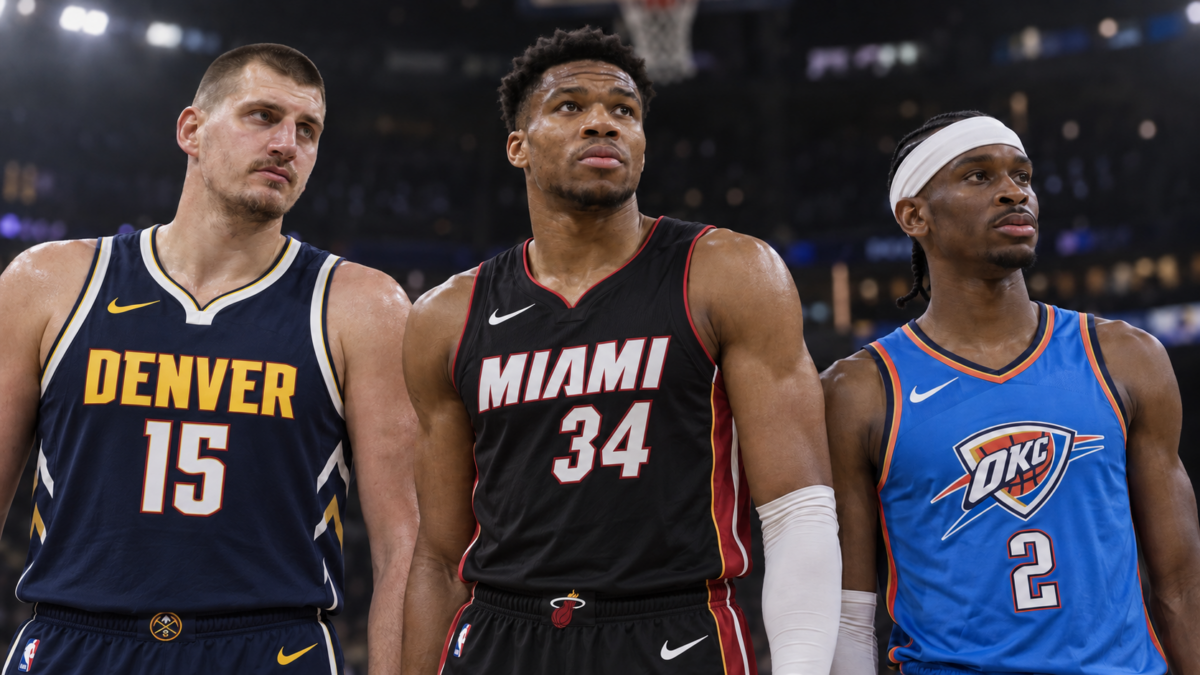
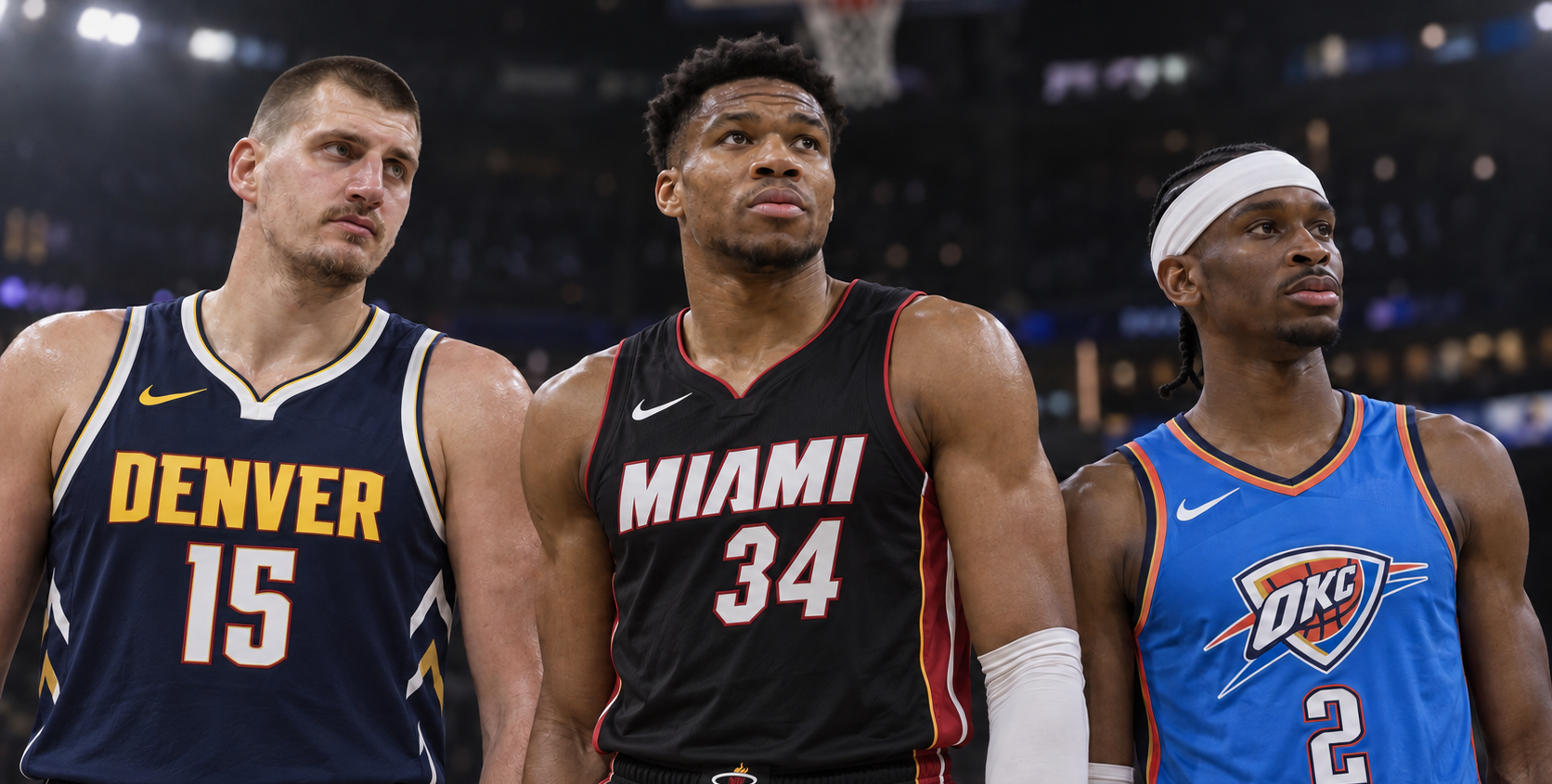
This becomes particularly relevant in the cases of Nikola Jokic and Giannis Antetokounmpo, two of the biggest names whose future decisions intersect directly with the 2027-28 season.
Jokic has a player option worth approximately $62.8 million for that season under his current contract. He chose not to sign another extension this summer, primarily because waiting until next year allows him to sign a significantly more lucrative deal. Under current projections, he could sign a new five-year supermax worth roughly $350 million next summer. Jokic has also reiterated that he wants to remain in Denver for the rest of his career, so the discussion is currently less about whether he might reach the open market and more about how much it will cost the Nuggets to continue building around him.
Giannis Antetokounmpo, now with Miami, faces a similar decision. He is set to earn approximately $58.5 million this season and holds a player option worth around $62.8 million for 2027-28. Beginning January 6, he will be eligible to choose between several extension structures. One projection has a three-year deal worth roughly $214 million while keeping his existing option in place, while a four-year extension would be worth approximately $275 million. In either scenario, Miami will have to fit his new salary alongside the other major commitments already on the roster.
Oklahoma City Shows Both Sides of a Rising Cap
If they do not sign new deals and decide to decline their options, Jokic and Antetokounmpo could reach the market as early as the summer of 2027. The same applies to Karl-Anthony Towns, Kevin Durant and Rudy Gobert, who also hold player options for the 2027-28 season. That is why the NBA is already looking at the summer of 2027 as a potentially significant free-agent period, even though it is realistic to expect some of those players to resolve their situations well before then.
Without new extensions, Stephen Curry, Kawhi Leonard and Jimmy Butler could also become free agents that summer, along with several other notable veterans. Trae Young no longer belongs to that group after signing a new four-year contract with the Wizards worth approximately $212 million this summer, following his departure from Atlanta and a brief stint in Washington.
Oklahoma City offers a different, but equally useful example. Shai Gilgeous-Alexander’s supermax extension begins in the 2027-28 season, and his first-year salary will equal 35 percent of that season’s salary cap. The final value of the extension therefore cannot be known until the league sets the cap for that year.
Under the previous $174 million projection, his starting salary would have been $60.9 million. The new estimate raises it to $61.6 million. Oklahoma City gets the benefit of higher system thresholds, but immediately gives part of that additional room back through Gilgeous-Alexander’s contract. And that becomes even more important because of the Thunder’s roster structure…
Three Stars Could Consume 85 Percent of the Cap
Chet Holmgren and Jalen Williams begin their extensions one year earlier, and when Gilgeous-Alexander’s new deal joins them in 2027, ESPN has projected that the three will combine to occupy approximately 85 percent of the salary cap. Oklahoma City has spent years preparing for that point through contracts with options, declining salary structures and a large stockpile of draft picks that can allow the team to replace more expensive secondary players with cheaper players on rookie deals.
It is already clear why that preparation will be necessary. Oklahoma City is projected to operate deep above the second apron in 2026-27, making financial flexibility one of the central considerations in its roster decisions. A team built around Gilgeous-Alexander, Williams and Holmgren will not have difficulty keeping its core stars. The challenge will be maintaining enough quality around them once those major contracts begin overlapping.
In that situation, an additional $2 million can have real value. Similar calculations await other expensive teams. New York, for example, already has long-term commitments to Jalen Brunson, OG Anunoby and Mikal Bridges, while Karl-Anthony Towns holds a player option for 2027-28. Teams like that will not suddenly create meaningful cap space simply because the projection increased, but any rise in the tax and apron thresholds gives them a little more room to preserve roster depth.
The Luxury-Tax Effect Can Be Much Larger Than the Cap Increase
There is also a direct financial effect through the luxury tax. The projected $213 million line represents a substantial increase from the current $200.428 million threshold. For teams that are going to pay the tax regardless, a higher line reduces the amount of payroll subject to penalties. For franchises that regularly pay the tax and move into more expensive tax brackets, a difference of several million dollars in payroll can create a significantly larger difference on the final bill for ownership.
That is why general managers are using the 2027-28 projections well before the summer of 2027 arrives. They influence extensions being negotiated now, the length of new contracts, trades involving long-term salary and decisions over which mid-tier players can be retained.
The $176 million figure is still only a projection. The NBA will determine the final number shortly before the start of the 2027-28 financial year, once it has a more precise picture of league revenue. Under the collective bargaining agreement, the cap is calculated using projected Basketball Related Income, while annual growth in the system’s thresholds cannot exceed 10 percent.
The $2 million increase therefore carries a broader implication: the league currently expects slightly more financial room than it did when it produced the previous projection. The reason for the adjustment has not been made public, so it would be premature to draw conclusions about any specific revenue source.
The Change Matters Most to Teams Living Near the Thresholds
For teams, the practical effect is more straightforward. Franchises with significant cap space will gain a little more purchasing power, but maximum contracts will become more expensive as well. Teams sitting far above the second apron will not suddenly escape their problems. The change matters most to those operating within a few million dollars of the key thresholds.
In the current NBA system, that margin can determine whether a team keeps its eighth rotation player, retains access to a particular exception or completes a trade without having to cut further into the roster. The additional $2 million in the projection is not a major story by itself. Its value depends on how much a team has already committed and how close it is to the line beyond which the new CBA begins to take away flexibility.