










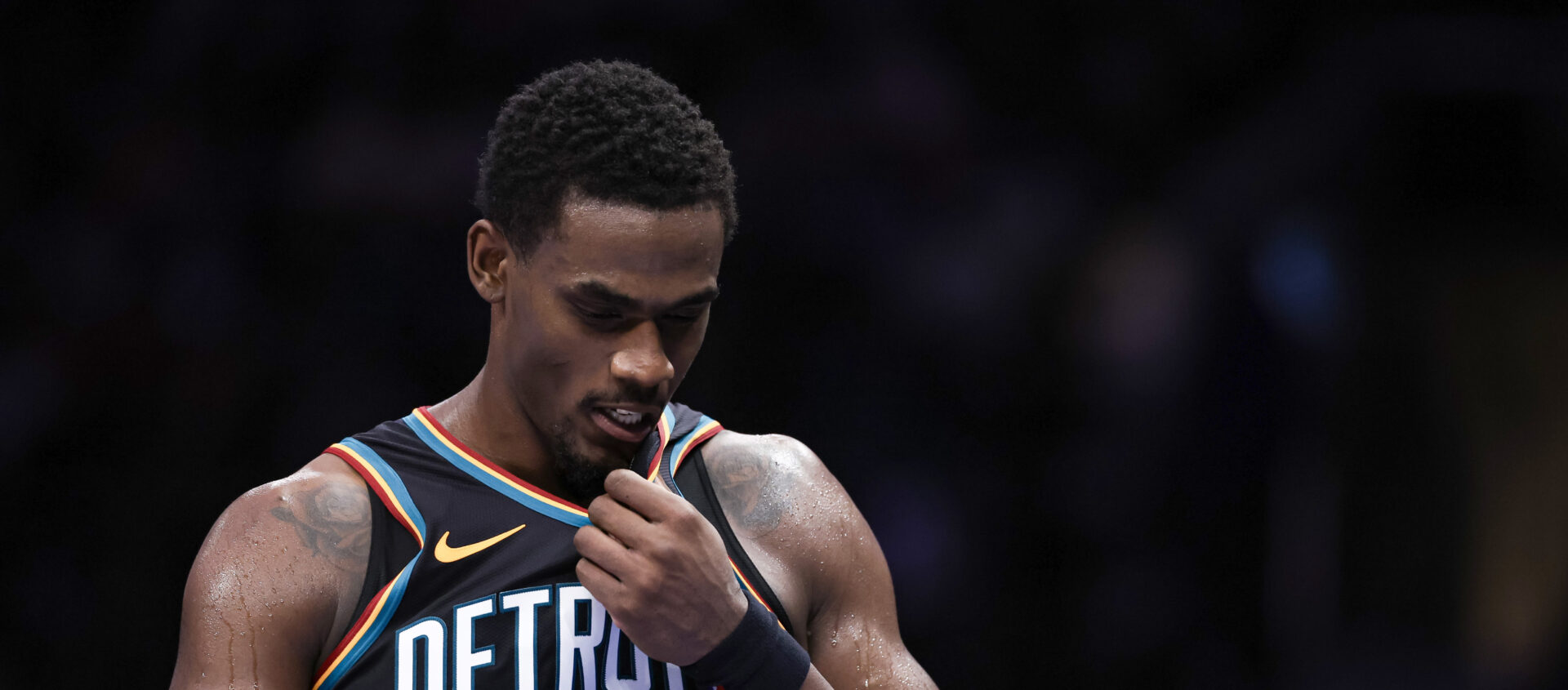

The news that Jalen Duren is increasingly prepared to play next season on a $9.6 million qualifying offer has reopened a question Detroit has been unable to resolve all summer. The young center and the Pistons remain far apart on a new contract, and the possibility that he could turn down long-term security and enter the market as an unrestricted free agent in the summer of 2027 is now being discussed as a serious option rather than simply a source of negotiating leverage.


Such a move would carry considerable risk for a player Detroit is already offering approximately $175 million over five years. At the same time, it says enough about how far apart the two sides are in their valuation of him. Duren is seeking more than $40 million per season, the Pistons do not want to go that high, and last season provided arguments for both sides.
Detroit Asked Duren to Prove He Was Worth More
Duren entered the final year of his rookie contract last summer without signing an extension with Detroit. The Pistons were not prepared to pay what he was asking and effectively left him with one option: prove on the court that he was worth more.


He did most of that work. At 22, he had the best season of his career, averaging 19.5 points and 10.5 rebounds while shooting 65 percent from the field, making his first All-Star team and earning third-team All-NBA honors. Detroit won 60 games and finished first in the Eastern Conference, while the partnership between Duren and Cade Cunningham became one of the foundations of J.B. Bickerstaff’s offense.
The Playoffs Changed the Conversation
Had a decision on his new contract been made in early April, the young center would have been in an almost ideal position. His All-NBA selection opened the door to a deal from Detroit far beyond what the club had been willing to offer a year earlier. The problem came a few weeks later, when the playoffs brought back some of the questions the Pistons had previously had about his game.
After averaging 19.5 points during the regular season, Duren fell to 10.2 over 14 playoff games, along with 8.5 rebounds while shooting 51.4 percent from the field. His impact declined once opponents closed off the space around the rim, and Bickerstaff trusted Paul Reed more in some important stretches.
There is no question about whether the Pistons want Duren. The issue is how much they are prepared to pay him and whether his regular season was enough evidence that he can provide the same value when the game slows down, the floor shrinks and an opponent spends seven games attacking the same weaknesses.
Over 70 regular-season games, Duren was one of the NBA’s most efficient finishers, a serious pick-and-roll threat and a player whose physical strength created space for Cunningham. He also improved at the other end, particularly with his positioning, communication and discipline. Detroit got a much more complete center than it had a year earlier.
His Playoff Limitations Are Just as Clear
The playoffs, however, also exposed the limitations of his profile. Almost all of his shots come from close to the basket, he does not space the floor, and he lacks the individual creation to punish defenses when his path to the rim is taken away. Those limitations can be acceptable for a center who has a dominant defensive impact, but Duren has not yet reached that level as a rim protector or overall defender.
That is why the gap between the roughly $35 million per year Detroit is offering and the more than $40 million Duren’s camp is seeking is more than a matter of bargaining. It is a judgment about what tier of player he belongs in. If the Pistons give him more than $40 million per season, they are paying him as one of the main pillars of their future and accepting that the weaknesses exposed in the playoffs will become less significant over time.
Duren Has a Strong Argument of His Own
Duren, on the other hand, has a perfectly legitimate argument. He is coming off an All-Star season, an All-NBA selection and a 60-win year for Detroit. When he looks at the contracts signed by other young players from his generation, it is difficult to expect him to accept a significantly lower number without pushing back.
Detroit also has to think several moves ahead. Cunningham is already on a major long-term contract, while Ausar Thompson will soon become eligible for an extension of his own. If the Pistons commit a large portion of their future payroll to those three players, they have to be confident that the construction can work in the playoffs, especially because neither Duren nor Thompson provides a serious perimeter shooting threat.
Restricted Free Agency Has Left Duren With Little Leverage
Another difficulty for Duren this summer has been the lack of real market pressure on Detroit. As a restricted free agent, he can negotiate with other teams, but the Pistons have the right to match any offer. As cap space around the league disappeared, so did the possibility of a rival putting a large enough offer on the table to force Detroit into a decision.
If he accepts the $9.6 million qualifying offer for next season, Duren would become an unrestricted free agent the following summer. The Pistons would no longer have the right to match another team’s offer, and for the first time he would have complete control over where he plays. Stein has reported that Duren is increasingly prepared to take that route if no agreement is reached by the end of September.
The Qualifying Offer Is Both His Best Weapon and His Biggest Risk
The cost of that decision would be enormous. Instead of at least roughly $175 million guaranteed under Detroit’s current offer, he would play one season for less than $10 million and assume the full risk of injury, a decline in form or a change in the market. NBC Sports has pointed out that the qualifying offer is effectively Duren’s only serious source of leverage at this stage, but it would also mean putting generational money at risk.
Detroit faces a different kind of risk. The Pistons could spend another year developing a center who has already earned All-NBA honors at 22, only to lose him the following summer without receiving anything in return.
Duren Already Bet on Himself Once
Duren already bet on himself once last season. Detroit did not pay him a year earlier, asked for more evidence and got the best season of his career. The playoffs, however, left the Pistons with enough questions to keep them from simply accepting his price.
This time, the bet is considerably more expensive. Duren is no longer deciding only how much he believes he is worth. He is also deciding whether he is willing to turn down more than $100 million in guaranteed security for the chance to set his own market value a year from now.