




Few figures in modern European basketball can speak about success, pressure, stability and long-term team building with the authority of Pablo Laso.


The legendary Spanish coach, who transformed Real Madrid into a dominant force and won virtually every major title available, is entering a fascinating new chapter of his career with Anadolu Efes.
Yet while the first part of his extensive conversation with SKWEEK focused primarily on the present and future of the Turkish powerhouse, this second installment expands far beyond Istanbul and touches some of the biggest topics currently shaping European basketball.
In the first part of the interview, Laso reflected on Efes’ injury-plagued campaign, explaining how constant roster absences prevented the team from practicing and developing throughout the season. He discussed the departure of Shane Larkin, the arrivals of Dario Saric and Matthew Strazel, the recovery process of Giorgos Papagiannis, the increasingly chaotic transfer market, and the challenges coaches face in an era dominated by rumors, social media and relentless schedules.
He also addressed speculation regarding his own future, insisting that coaches must remain faithful to their principles regardless of external pressure.
Now, the conversation shifts toward broader questions that affect the entire European basketball ecosystem.
Laso analyzes why Real Madrid has struggled to recreate the stability that defined his era, explains why he believes sustainable success is built through continuity rather than short-term reactions, and offers his thoughts on Pedro Martinez taking over one of the most demanding coaching jobs in Europe.
He also discusses the changing balance of power across the continent, Luka Doncic’s surprising involvement in the ambitious Basketball Club Roma SPQR project, the growing influence of investors, and the economic realities forcing clubs such as Valencia and Paris to constantly reinvent themselves.
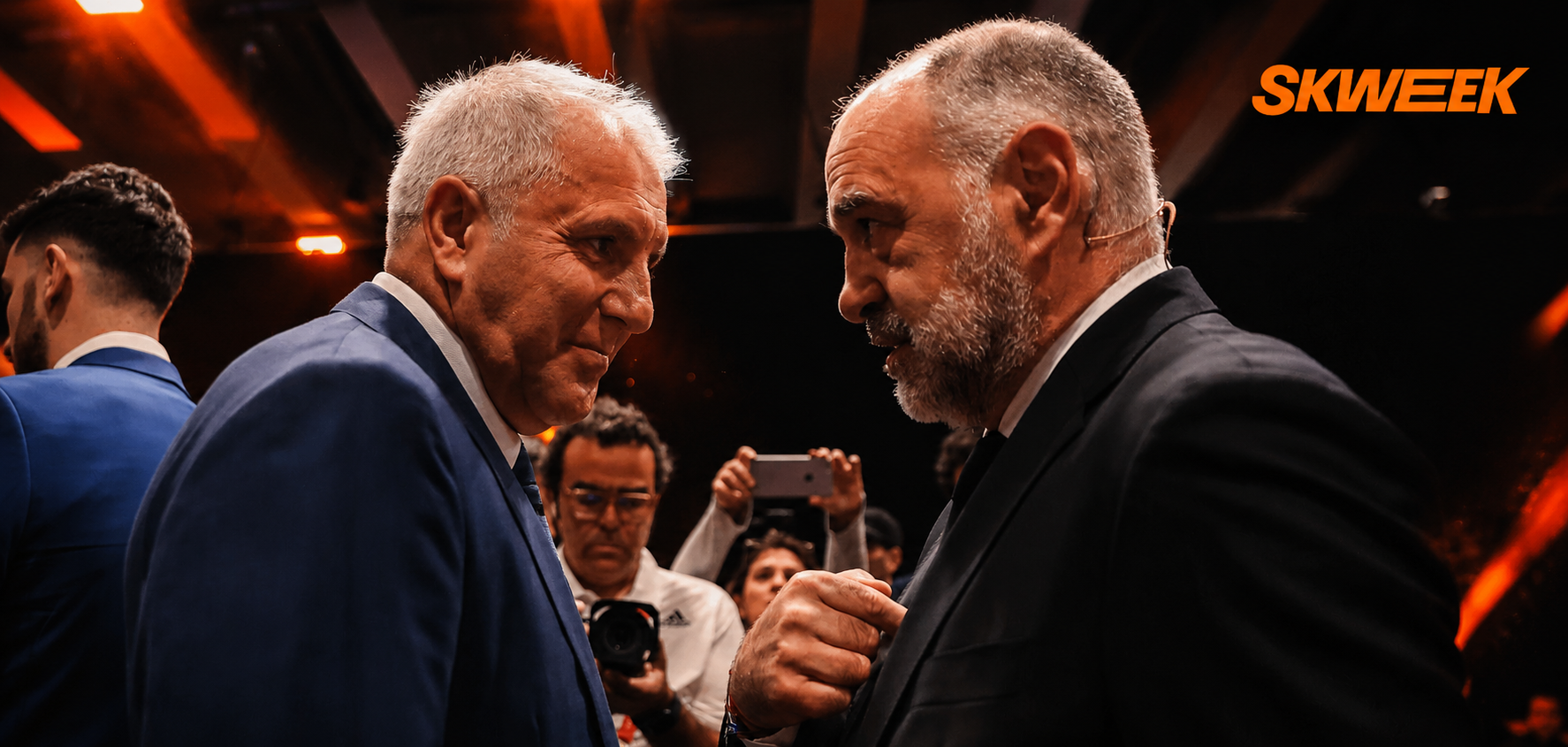
Perhaps most notably for Greek basketball fans, Laso speaks extensively about the return of Zeljko Obradovic to Panathinaikos, explaining why he considers it positive news for European basketball while also warning against unrealistic expectations. He praises the work previously done by Ergin Ataman, highlights the enduring importance of the Olympiacos-Panathinaikos rivalry, and explains why he believes European basketball cannot be imagined without either club.
The result is a wide-ranging and thought-provoking discussion from one of the sport’s most respected minds, covering everything from coaching philosophy to the future direction of the European game.
Disclaimer: This interview was conducted before Panathinaikos finalized the signing of Guerschon Yabusele and before Cedi Osman’s subsequent move to PAOK.
Since you left Real Madrid, the club has gone through several coaching changes and still seems to be searching for the stability it had during your era. Why is it so difficult to build a lasting project at a club like Real Madrid?
You actually answered the question yourself. People are searching for stability. And where do they look for it? In victory.
Because when you win, nobody questions anything. You won.
My way of thinking has never been like that. Of course I want to win. Winning is important for the club and for me. But I can’t think only about winning.
Let’s take Olympiacos. People say they’re the best team in Europe because they won. Fine. But I would ask: why did they win? For me, the answer is stability.
Look at Olympiacos over the last 15 years. How many Final Fours have they played? Nine. They’ve won some. They’ve lost some. Different coaches, different players. Yet the structure remained. That’s the real lesson.
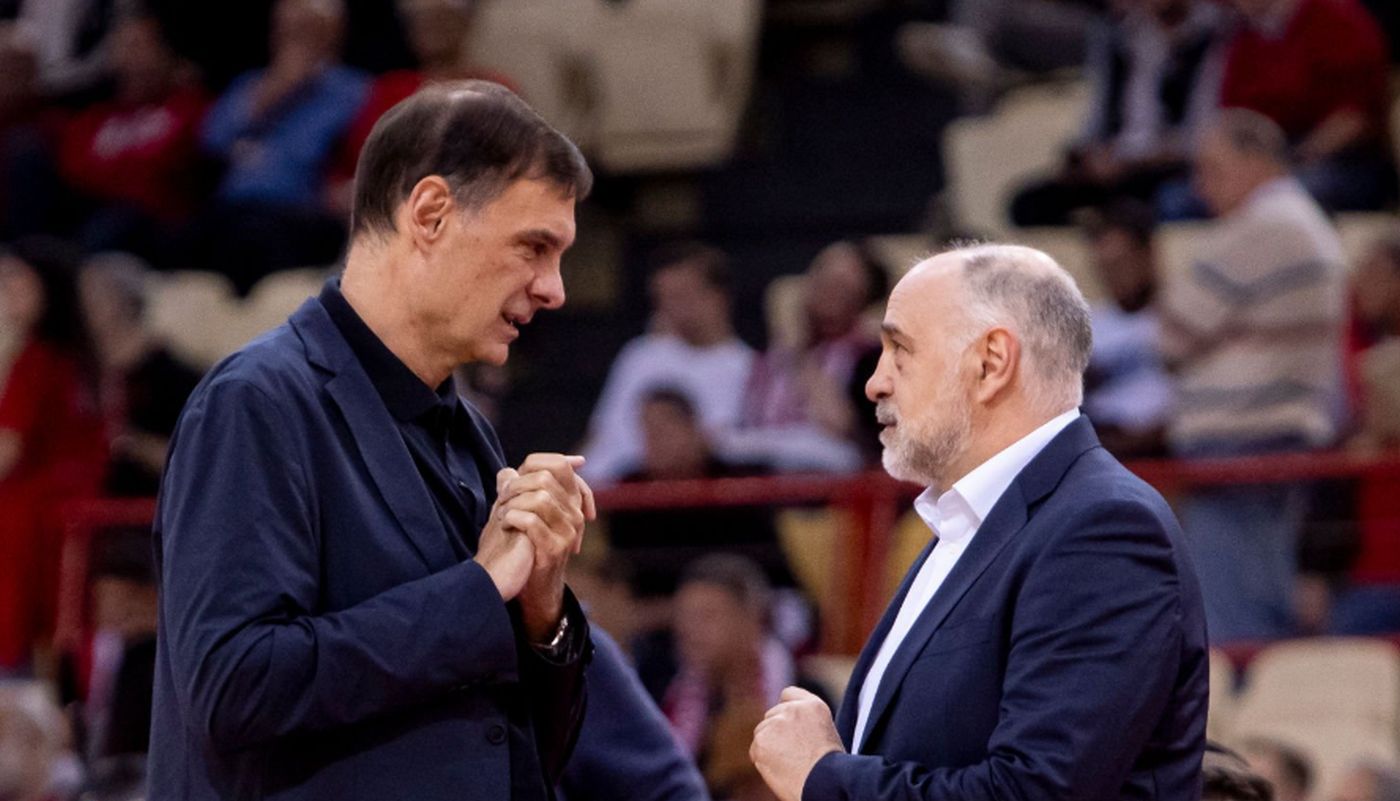
Success often comes through stability. Not through judging everything based on one victory or one defeat.
After Sergio Scariolo’s departure, Real Madrid chose Pedro Martinez as its new head coach. You know better than anyone what that bench represents. What do you think of the appointment and what can Pedro bring to Madrid?
I have enormous respect for Pedro. I think the basketball his team played this season was extremely attractive. He also had magnificent players for that style of basketball.
At the same time, I’m sure the first person who knows he cannot simply copy and paste that same style into Real Madrid is Pedro himself.
His point guard is now Facundo Campazzo, not Jean Montero. You may prefer Montero. I may prefer Campazzo. That’s not the point.
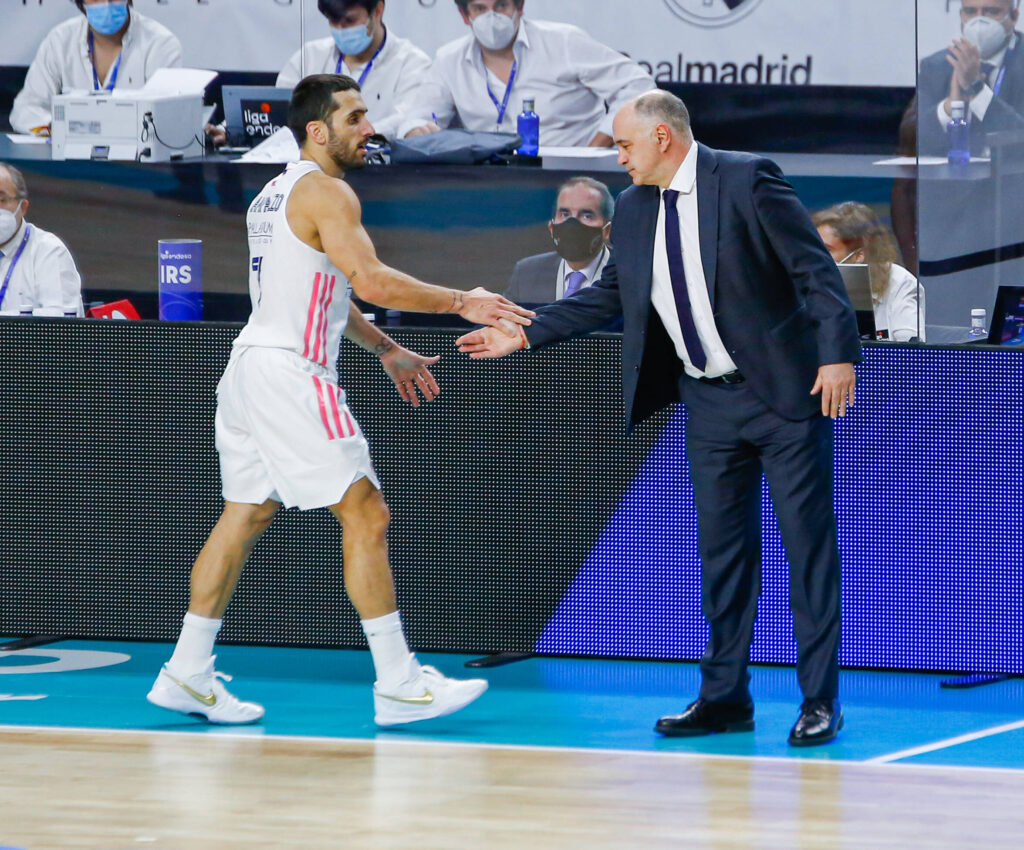
If tomorrow Madrid sign Montero, then he will coach Montero. But this is exactly why Pedro will have the chance to show he’s a great coach. Because he’ll have to adapt to the players he has.
Many times coaches are judged only by victories and defeats. For me, a coach’s value is often measured by his ability to get the maximum from the players available to him.
And I think Pedro did a magnificent job in Valencia. Now he has a very difficult challenge ahead of him at Real Madrid.
Is there a specific factor that makes the difference between winning and losing at Real Madrid that doesn’t exist elsewhere?
I think it’s part of the DNA of a champion club. To the point that if you don’t win, it feels like everything is wrong. That’s simply the way the club is.
I’ve often told the story of the first Copa del Rey I won as coach. The first thing Florentino Pérez told me was: “Congratulations. I’m very happy. We’ve won the Cup. Very good. Now you have to win the league.”
That’s Real Madrid. It’s a mentality that has been passed down through generations, both in football and basketball.
You have to understand that Real Madrid is built to win. It’s very difficult to say: “We had a great season and finished second.”
That mentality gets transmitted over time. It’s part of what makes Real Madrid what it is.
Do you think Real Madrid has more in common with clubs such as Olympiacos, Panathinaikos, Red Star or Partizan than with most Spanish clubs?
There are clubs whose identity comes from being great clubs. I can name a few: Real Madrid, Barcelona, Red Star, Partizan, Panathinaikos, Olympiacos, Galatasaray, Fenerbahce.
These are clubs with multiple sections—football, basketball, women’s teams and many others. They’re recognized everywhere and they are always competitive.
Then there are other types of clubs, like Efes and Milano.
Does that mean they’re worse? Of course not. They’re excellent teams.
Maccabi Tel Aviv is another interesting example. If we looked it up now, we’d see they also have a football team. But when people hear “Maccabi,” they think of basketball.
So I don’t believe great brands automatically create great teams. Great teams also create great brands. It’s 50-50.
Bayern Munich is a huge football brand. Now it’s also becoming a serious basketball brand. The strength of the institution helps. But the basketball team must still earn its own identity.
I think European basketball has many clubs with enormous value. Some of them have the feeling of a great club behind them. Others don’t have that same feeling because the broader institution isn’t as large.
That doesn’t make them better or worse. Just different.
This summer we are seeing movements that a few years ago seemed impossible: the NBA continues to get closer to Europe, new investors are entering basketball, and now even Luka Doncic has decided to invest in the Basketball Club Roma SPQR project. Have you spoken with him recently?
No. The last time I spoke with Luka was when I was with him last year, in June I think, when they were playing the playoffs in Madrid. We spent some time together in Madrid.
Well, Luka is a different person now, obviously. When I met him, he was a 13-year-old kid. Now he is a player who, if not the best, is one of the best players in the NBA.
His life has changed a lot. But I think he still maintains a great love for basketball in general.
I have always said about Luka that people talk about his abilities, his shooting. For me, the most important thing about Luka is his overall IQ. His intelligence in managing situations. For me, that is what has made him a great player, of course together with his abilities.
And I think his investment, for example in Roma, is a very strategic move for his future.
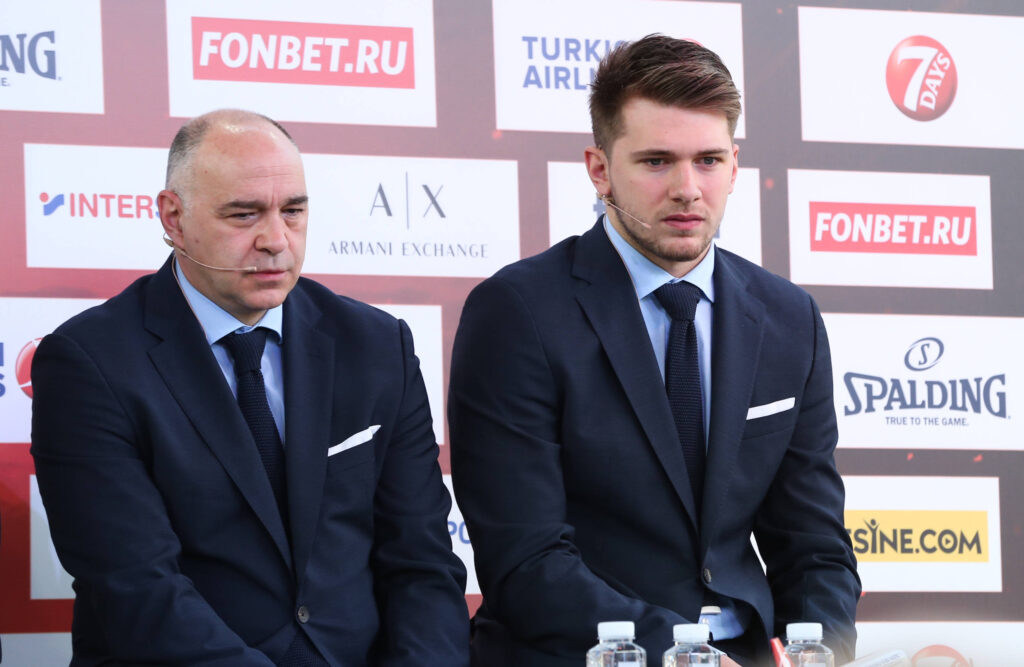
Was Luka Doncic getting involved in this kind of project something you expected to happen?
No, I didn’t expect it, but it didn’t surprise me. I think they value the quality of European basketball and they know that it can even be a good investment.
At the Congress, you spoke about the change from Ergin Ataman to Zeljko Obradovic at Panathinaikos. You said it was great news for Greek basketball. You also mentioned that you missed Panathinaikos at the Final Four. Do you believe that the rivalry between Olympiacos and Panathinaikos can become the great driving force of European basketball again from now on?
I don’t know if it is the main driving force, but I cannot understand a great European basketball without Olympiacos and Panathinaikos.
I think European basketball is lucky because it has great teams, great coaches like Ergin, like Zeljko, great players, and that is what makes it so attractive. That is why I am a great defender of basketball, because this sport has given me everything in my life.
Because I believe that this passion for basketball is not only something you have, but something you transmit. If you don’t have that passion, you stay at home.
I don’t have any passion for ice hockey. I like watching it, but I don’t have passion for it. It is not my life.
For me, basketball, I admit it, is my life. It has been since I was very young. So I believe that passion is something you have, and here we are seeing it at the Congress: that passion is transmitted.
And I am very happy about the attendance, about the people who are capable of, let’s say, during a vacation period, coming only because of their passion, because they want to learn about the sport they love.
Was there ever a moment when you doubted that passion?
Look, when I stopped playing, I think it was a difficult moment. Because you stop doing what you love. I had the passion, and I was very clear that somehow I had to give it back to basketball. I didn’t know if it would be as a coach, I didn’t know how, but I ended up coaching.
I think that passion is very difficult to lose.
During the Congress you said, half joking and half seriously, that if a young player asked for your advice, you would recommend him to sign for Valencia Basket or Paris. Why so?
I don’t know if I said it exactly like that, but young players nowadays often value playing at a pace where their numbers can be good.
And the style of play of Valencia and Paris is very good for young players. A lot of energy, a lot of possessions, it is very good. Because there are other teams that are capable of playing a different type of basketball.
Δείτε αυτή τη δημοσίευση στο Instagram.
For example, Txus Vidorreta, one of the best Spanish coaches, signed Patty Mills this year. If you are young, I don’t know if Gran Canaria or Tenerife would be the place where you would go.
So yes, I believe that for a young player Paris and Valencia can be two very attractive destinations.
It also depends. The player might tell you: “No, go with this coach because I think his style will help you improve.”
At the same time, both teams were practically dismantled after their great seasons. What does that say about the economic and competitive reality of European basketball?
The economic rivalry will always exist.
Valencia has Juan Roig, a very strong businessman behind it. Juan has always transmitted the values that Valencia represents for him. For me, that is something to be proud of. He knows that he can lose players along the way, but he makes an effort to keep them.
But what he cannot do is throw everything out of the window simply because you have had a good year. You have to maintain the idea of what you want to represent.
Paris has been like a breath of fresh air since its arrival at the elite level. They brought the coach and half a dozen players from a previous team, from Bonn. So I would tell you that Paris was dismantled — and they dismantled Bonn.
So I think it would be very stupid from our side not to understand that these economic differences can be decisive when it comes to consolidating a project. That is why I believe more in the project than simply having the best players because I can afford to pay for them.
How do you view Zeljko Obradovic’s return to Panathinaikos?
Well, I see it very positively, and I will explain why.
I have great respect for Zeljko. I think he is a great coach. I see how much people love him in Athens, probably because of the great work he did previously. I believe the president trusts him, and I think this should be a story with a good ending.
Is there a downside to this project?
There are always traps. From the point of view that everyone expects Zeljko Obradovic to repeat what he did years ago. That can be the trap. Because Diamantidis is not going to play. These are different teams, different players.
People make a starting point, but we don’t know. Something will change. This is not mathematics. If it was like that, then everything would simply remain the same. Even the EuroLeague format has changed. The opposing teams have changed.
So I see it positively, but I also see a lot of difficulty in the fact that people think Zeljko will arrive and they will win everything. I don’t know that. Because today I tell you this: even with an even bigger budget, it does not matter.
If Panathinaikos plays the final against Efes, I will not look at the budget, I will not look at Zeljko, I will not look at his players. I will try to win. Nothing else matters. I want Zeljko to do very well, but I will try to beat him. In the same way, if Zeljko says: “I would love Pablo to do very well,” he will still want to beat me.
But honestly, I think it is a good combination to start with, and then the future will decide.
I also think Ergin’s work over these years has been very good. We are talking about a coach who took over a team that was near the bottom, in 17th place, and made them EuroLeague champions. The fact that they did not play in the Final Four was considered a surprise. That shows you the level of that team.
Do you believe European basketball is demanding too much from players and coaches, or is there still room to increase the number of games?
There is obviously room to increase the number of games. Instead of playing every three days, we can play every two days or every day.
I am a big defender of the spectacle. And I believe that to provide the best spectacle, you need the actors, the artists, to be at their best moment.
Right now the Football World Cup is being played. Who could imagine a team playing the World Cup semi-final on Sunday and the final on Monday? Nobody. It is unthinkable.
But maybe the business side means that you have to play more games. In Spain, the hydration break is called “the dollar break” because commercials and advertisements have been introduced. For the spectacle to exist, of course there have to be advertisements.
But if the spectacle is at this level and the business is at another level, something is not going to work. If the business goes up and the spectacle goes down, that also will not work.
In basketball, if the business means that we are going to play five games per week… Where does it stop? This is what we need to think about.
The fan himself does not even know when games are played. I think this is bad for the spectacle.
So I think it is essential that different voices come together and think about the good of the spectacle, obviously without losing the business.