







Not so long ago, the NBA seemed ready to shrink the center out of its own future. Teams got smaller, faster and more obsessed with spacing. The wrong kind of big man became a playoff target, dragged into space until his size looked less like a weapon than a problem.


For a while, every center had to answer the same uncomfortable questions… Can he move his feet? Can he survive a switch? Can he pass quickly enough? Can he stay on the floor when the speed and pressure rise?
The Center Never Died
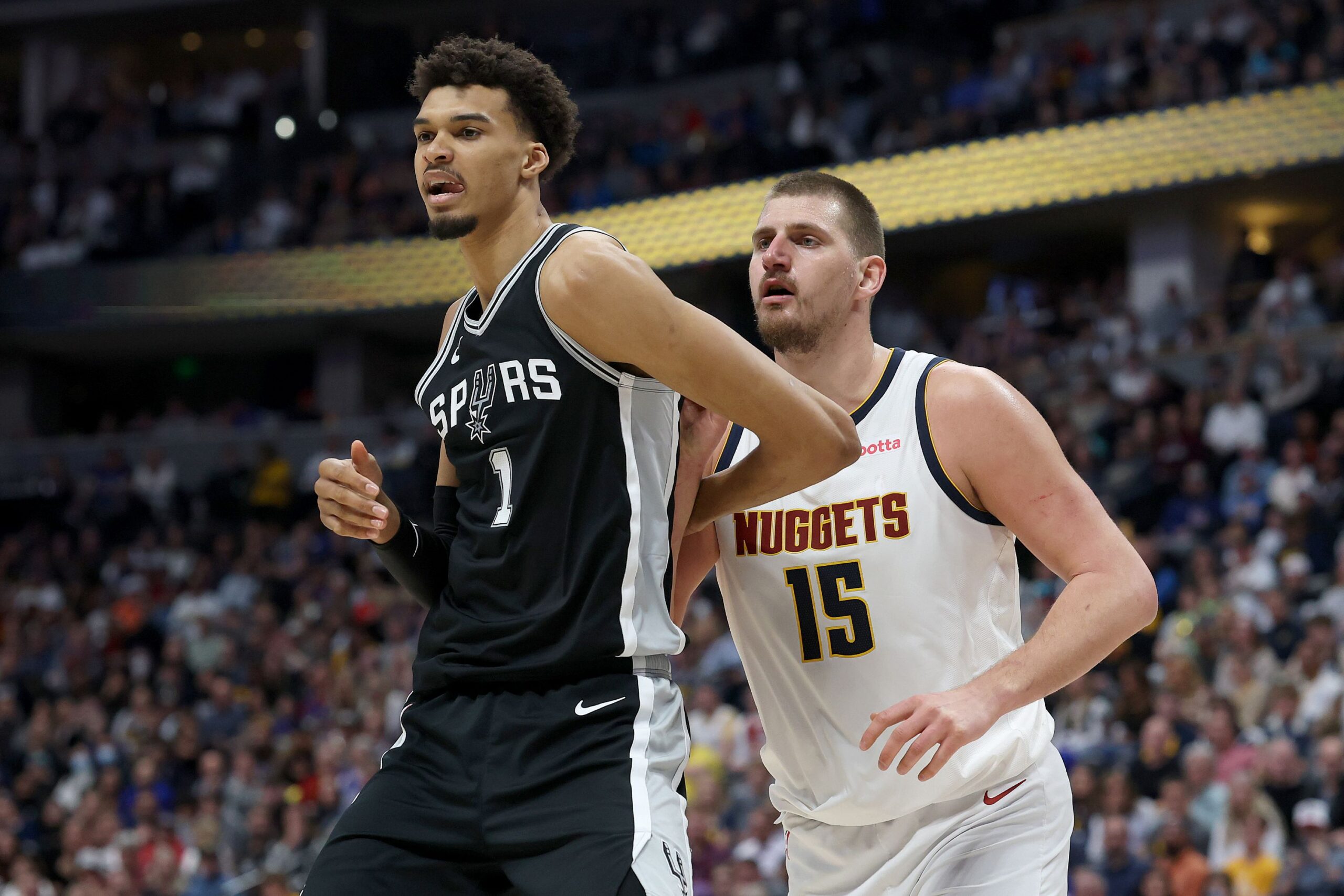
Now the position is back near the heart of the league. But, with one big difference… The center never really died. The slow, one-dimensional version did. Nikola Jokić, Victor Wembanyama, Joel Embiid, Alperen Şengün, Domantas Sabonis, Karl-Anthony Towns, Bam Adebayo, Rudy Gobert and others are all offering different answers. And that is the point. The modern center or, more accurately, the modern big man, is no longer one type. They give different solutions to the same problem, first of all being how does size dominate a league built to make size uncomfortable?

This is not a clean return to the days of Hakeem Olajuwon, David Robinson, Patrick Ewing or Shaquille O’Neal. That era had its own power and rhythm. And it was great. The ball went inside, the floor looked different, and size gave a different kind of advantage. Today’s center has a messier job. He has to protect the rim, but also defend space. Even more, he has to set screens, but also make decisions, finish possessions, and more often start them too.
Jokić and the Point Center Revolution
That is why this story begins with Jokić. Jokić did not redefine the position by doing traditional center things harder than everyone else. He did it until a new type of player emerged: the “point center”. The possession begins because of him. A cutter takes one step at the right time, and the pass is already there. A defender leans the wrong way, and the possession is finished before it looks finished.
Denver did not win by hiding Jokić’s weaknesses, but by making every defensive choice against him feel wrong. Single coverage lets him score, and help opens a shooter because a double-team opens a passing window. Switching can work for a possession or two, until he walks a smaller defender under the rim and makes the whole idea look unserious. That was the story of Denver’s 2023 title run. Opponents tried different things, but most of them created a different problem. Jokić made center play feel less like a position and more like a system.
The strange thing is how calm it all looks. You rarely see him force things on the court, instead he tries to stay in complete control. Opponents often realize too late that the possession has already turned against them. By the time the crowd reacts, Jokić has usually moved on to the next read.
Wembanyama and the New Basketball Body
If Jokić changed what we expect from a center’s mind, Wembanyama is changing what we think a body can do on a basketball court. What matters is the way that height changes everyone else’s choices. Guards who normally attack the rim suddenly hesitate, shooters rush, drives end earlier than they should. Players choose awkward floaters because the normal angles are gone.
You could see it almost immediately in San Antonio. Possessions that looked open on the first step became uncomfortable by the second. A guard would beat his man, look up, and suddenly the finish that existed a moment earlier was no longer there. Wembanyama can affect a possession without blocking the shot. Sometimes he does it without touching the ball at all. His mere presence on the court forces opponents to change their offense.
When he is near the rim, the floor feels smaller. When he steps toward the perimeter, it is almost strange how much ground disappears under one stride. Offensively, he is still becoming whatever he is eventually going to be, which is part of the fascination. He can shoot, handle, pass, improvise and make mistakes that feel less like failures than experiments.
He is still listed as a center, mostly because basketball has no better word for him yet. Behind those two, the shift becomes broader.
The Creative Big Man Is Here to Stay
Alperen Şengün is one of the clearest signs that the creative center is not just a Denver miracle. Houston can run offense through him because he understands angles, timing, body position and deception. He is not Jokić, and that distinction matters. His game is rougher and more restless, but that is part of the appeal. He can keep the possession alive with a fake, a pivot or a pass that arrives just before the defense expects it.
Domantas Sabonis belongs somewhere in that same family, though his game feels very different. He does not have Jokić’s quiet genius or Wembanyama’s impossible defensive range. His value is more repetitive, more physical, more stubborn. Screen, handoff, rebound, seal, pass. Then again and again. Sacramento’s offense often finds its rhythm through that repetition. Sabonis is a useful correction to the highlight culture around the position. Not every elite big man has to look like a revolution.
Embiid and the Power of the Old Question
And then there is Joel Embiid. The conversation around him is never simple. When he is healthy, there are very few players in the league who create the same sense of physical and offensive superiority. With his back to the basket or facing up, he can draw fouls, punish switches and score over double-teams. At his best, the game looks brutally simple, because he’s too big for one defender and too skilled for the second answer.
But with Embiid, health is part of the story. This era asks centers to do more than reach a frightening peak. The regular season can show you how dominant he is. We have seen Embiid dominate in the playoffs before, but Philadelphia has never been able to turn that into anything meaningful.
Towns, Bam and the Stretch of the Position
Towns is a slightly different case, and that distinction matters. At this stage, especially when paired with another true rim-protecting big, he often looks more like a power forward than a classic center. But his place in this conversation comes from what he has shown when used as a five, the rare ability to stretch the floor from the center spot and force defenses into choices they do not want to make.
That version of Towns changes where a defense is allowed to stand. When a big man with his shooting range has to be guarded seriously above the break, the opposing rim protector cannot simply live in the paint. Stay back, and Towns can shoot. Step out, and the lane opens behind you.
He is not a perfect player. He can frustrate coaches and fans. But the shooting is real, he has shot above 40% from three in two of the last three seasons. That’s why there have been nights and stretches where his value as a stretch five is obvious. In some ways, that is exactly why he belongs in the discussion. His value was on full display in this year’s NBA Finals, on the both ends of the floor.
Bam Adebayo is the kind of player whose importance is easier to feel, than to explain with one stat line. He gives Miami options, he can switch onto guards, recover into the paint, defend high, pass from the short roll and hit enough midrange shots to keep a defense honest. Bam’s value is that he removes some of those problems before they appear. In the end we also saw Adebayo’s 83-point game, which sparked mixed reactions but also underlined the full range of his skill set.
Gobert and the Skills That Still Matter
Rudy Gobert is the awkward counterargument to anyone who thinks the old center skills stopped mattering. Rim protection still matters, as well as rebounding the ball. Positioning, communication and taking away easy points still matter. Gobert has spent years as one of the league’s most debated players because the playoffs expose limitations without mercy. Put him in space, make him make decisions, force him to guard two problems at once, and the conversation gets complicated quickly. The way he slowed down Jokić in the playoffs is still the subject of plenty of discussion.
The basic truth has not changed. If a team cannot protect the rim, it usually cannot survive for long. His career shows both sides of the traditional center in the modern NBA. The things he doesn’t do are harder to hide than they used to be. You can win the argument against Gobert in theory and still miss what he gives you in practice.
One of the more interesting parts of this revival is how international it is. Jokić is from Serbia. Wembanyama and Gobert are from France. Şengün is from Turkey. Embiid is from Cameroon. Sabonis is Lithuanian, and he grew up around European basketball through one of the great basketball families. Towns has his Dominican connection. That is not a coincidence. Many of these players were shaped in environments where big men were expected to pass, read and feel the game, not just stand near the rim and wait for rebounds. Now the league is rewarding big men who learned early how to play the whole sport.
Small Ball Forced the Evolution
Small ball won the argument, in a way. Stephen Curry changed the game of basketball forever. It forced every big man to answer for his feet, his hands and his decision-making. It pushed the slowest and stiffest centers out of the picture. But it also forced the best ones to become more complete. That is the part people sometimes miss.
The return of the center is not a rejection of modern basketball. It is one of modern basketball’s results. What makes the position feel alive again is that none of these players is offering the same solution. Jokić has turned passing into control. Wembanyama makes unnatural things look normal. Embiid can still overwhelm the game with force. Towns, whether at the four or as a stretch five, pulls defenses away from where they want to be. Adebayo survives matchups other centers simply can’t. And Gobert, for all the arguments around him, still reminds us how important it is to have a strong presence in the paint.
The center position was supposed to fade. Instead, it changed shape. Today’s centers are not asking the game to return to them, because they learned the new rules well enough to bend them back.