




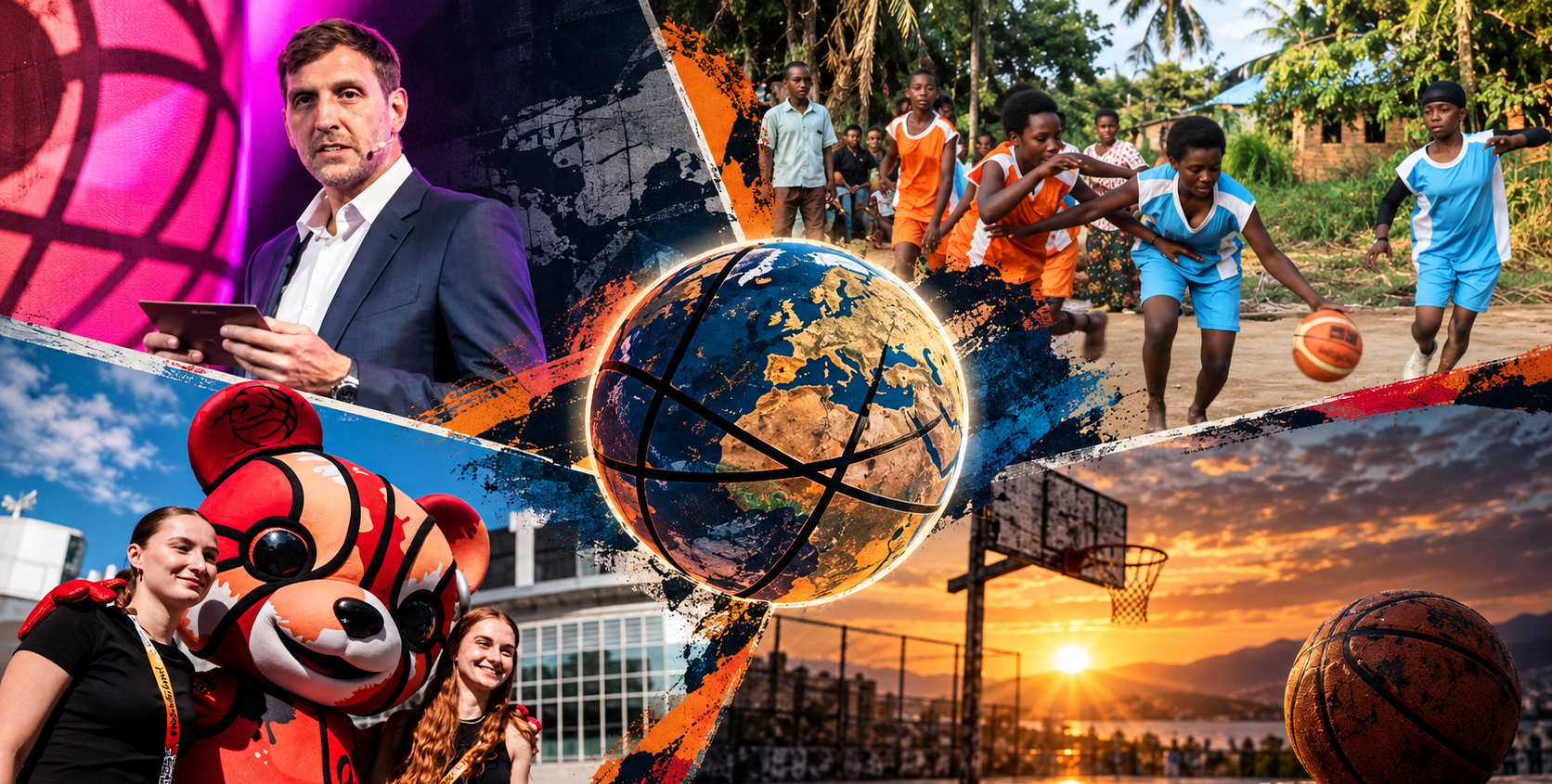

Basketball’s global expansion is usually measured in familiar ways: television audiences, sponsorships, salaries, sold-out arenas, new leagues and the increasingly aggressive battle for players and markets.


TJ Bullock is interested in a different set of numbers.
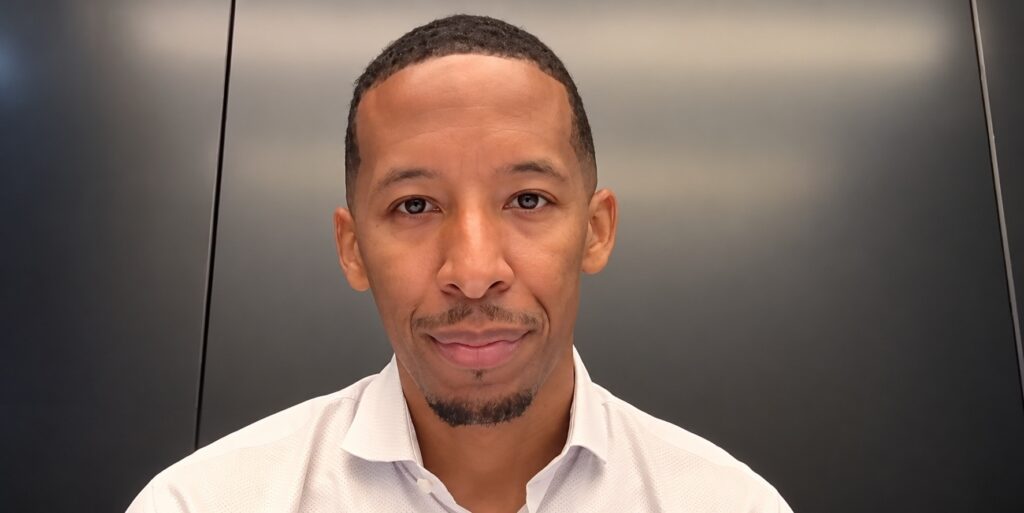
At 34, after ten years within the FIBA ecosystem and now as Head of the FIBA Foundation, Bullock oversees the part of basketball’s world governing body that asks what happens when the ball is used for something other than winning games.

The Foundation is FIBA’s social and legacy arm, built around two pillars that initially appear almost opposite: Basketball For Good, which attempts to use the sport to address contemporary social challenges, and Cultural Heritage, which preserves and communicates basketball’s history. Basketball For Good itself operates through Mini Basketball, Youth Leadership and Community Impact.
The scale has become significant. FIBA’s 2025 Impact Report records more than 376,000 people positively impacted across 127 countries, 830-plus changemakers empowered and 608 community initiatives supported.
But Bullock knows that “people impacted” is precisely the kind of phrase that deserves interrogation.
“What does impact actually mean?” was one of the first questions SKWEEK put to him.
His answer goes to the heart of what the Foundation is trying to become.
“We try to take a conscious effort in utilizing the power of basketball to create positive change and positive impact,” Bullock explains. Basketball naturally teaches things such as “time management, learning how to be in a team,” but the Foundation wants to move beyond those incidental benefits.
The starting point, he says, is identifying what a particular community actually needs.
“How can basketball address that specifically, and how can it improve the lives of the people in that given setting, whether it is childhood obesity and non-communicable diseases within our health and well-being chapter, whether it is gender equality, whether it is climate action, people with disabilities, people with refugees?”
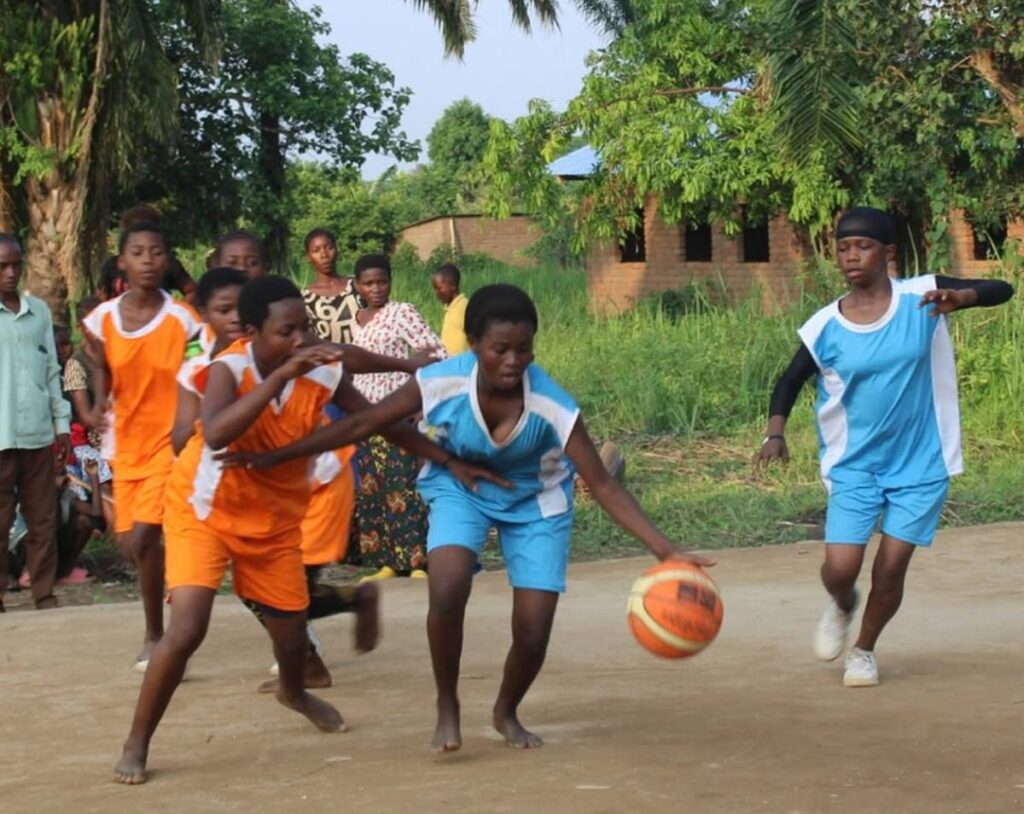
That distinction is fundamental. The idea is not to arrive somewhere, distribute basketballs, take photographs and call the exercise social impact.
Bullock says projects use baseline questionnaires and subsequent monitoring to determine whether measurable change has actually occurred. That becomes particularly important when the Foundation attempts to convince governments that basketball can be more than entertainment.
The Seychelles example: when basketball enters the school curriculum
One example Bullock gives is unusually concrete.
In the Seychelles, he says, authorities were confronting a childhood obesity rate of 42%. The Foundation worked alongside the Ministries of Health, Education and Sport to use its Hoops for Health and Wellbeing methodology—not merely as a temporary basketball activation, but as something integrated into the school program.
The principle is simple: when children play basketball, health education becomes part of what they are doing. That is the kind of model Bullock wants governments to understand.
Basketball exists in an unusually large geographical ecosystem. FIBA has 212 member national federations, and Bullock argues that the next frontier is not simply getting more countries to compete internationally, but embedding basketball deeper into schools and communities.
For the Foundation, that means asking a question before prescribing an answer: what problem is this country actually trying to solve?
That can be childhood obesity in one place and something entirely different elsewhere.
The Foundation currently concentrates Basketball For Good around five social areas:
- health and wellbeing
- gender equality
- climate action
- people with disabilities
- and refugees or displaced people and social integration.
The scope sounds enormous—and inevitably raises another question. Can basketball genuinely address problems of that magnitude?
Bullock does not claim the sport can solve them by itself. Instead, the Foundation sees basketball as the hook: the activity capable of bringing people into the same space before education, support and community work begin.
In the Pacific, for example, he describes programs developed with Australian aid and the New Zealand government around non-communicable diseases and childhood obesity.
“Once we have them there, what can we educate them that is relevant to the community that they’re living in?”
The harder part, he admits, remains proving the effect.
“In many cases, I believe that sport is still viewed solely as entertainment—and it is. I think it’s one of the greatest entertainments in the world. With that comes an influence… And I think we all need to be aware of that popularity, aware of that influence, and understand that with that influence, there’s lots of potential.”
The goal is eventually not to be needed
Perhaps the most revealing part of Bullock’s vision is that success does not mean FIBA employees travelling indefinitely around the world delivering programs themselves.
“Absolutely,” he answers when asked whether the Foundation’s greatest achievement could eventually be communities no longer needing FIBA to run projects for them. “That is the shift that we had to do.”
Roughly 10 years ago, the Foundation directly implemented most of its programming. That model could produce good individual projects, but it could never achieve genuine global scale.
So the strategy changed towards “train-the-trainer”.
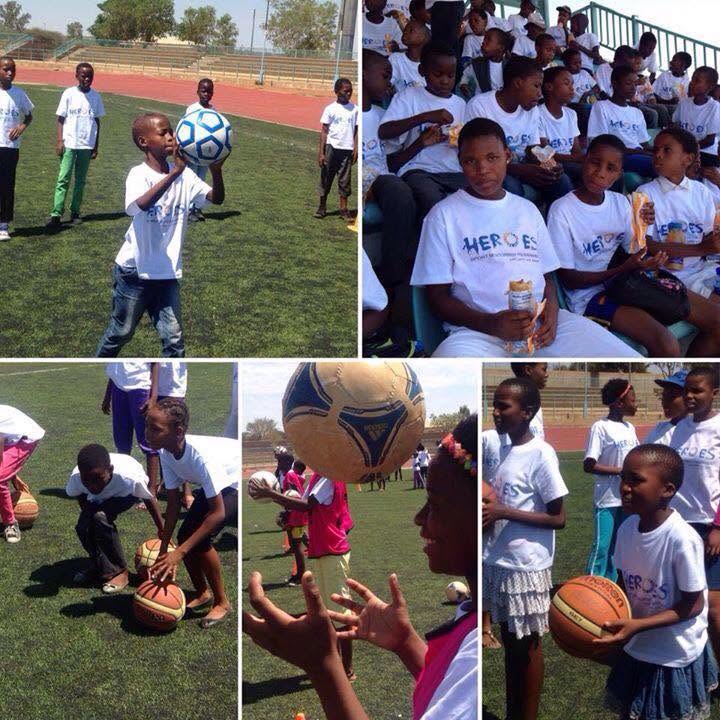
Youth Leaders, Mini Basketball educators and Basketball For Good facilitators receive methodology and support, then adapt and implement programs themselves through federations, NGOs, charities and local communities.
“We don’t try to put them in a box,” Bullock says. “We try to help them understand and identify what are the social issues that is being faced in their country… and how can basketball be used as a tool to address those.”
The numbers show how central that approach has become: FIBA says 150 Mini Basketball educators, 22 Youth Leaders and 10 Basketball For Good facilitators were trained around its 2025 activities, with the Foundation now seeking to expand the facilitator network across all five FIBA regions.
Bullock’s definition of success is strikingly decentralized.
“Success for us is if a program is happening and we are coordinating the program rather than being the true implementers on the ground.”
That also helps answer an obvious problem facing any global institution headquartered in Switzerland: how do you avoid designing solutions in Mies for people whose reality you do not understand?
Bullock readily acknowledges the limitation of understanding the realities of a given country or of a given context.
National federations are therefore the Foundation’s first partners, but rarely its only ones. Bullock cites “Gigi,” a Youth Leader working to reduce juvenile delinquency through basketball in Gaborone, Botswana, as the kind of person who can provide knowledge that FIBA headquarters simply cannot.
“Only Gigi can give us that context… or Meilin can give us the context of Costa Rica.”
The Foundation establishes two fundamental boundaries: basketball must be central and the project must relate to its defined social areas. Beyond that, Bullock argues for dialogue rather than prescription.
“It’s not us saying you need to do this.”
That philosophy also changes how the Foundation defines participation.
FIBA doesn’t want only basketball players
Getting a child to pick up a basketball is relatively straightforward. Keeping that person connected to the sport through adolescence and adulthood—as a player, coach, referee, administrator or simply a fan—is much harder.
Bullock calls Mini Basketball the beginning of the journey. The objective is to make a child’s first interaction with the sport sufficiently positive that basketball remains somewhere in their life.
“If the person becomes the president of the republic in the future, we want that they invest in basketball because they remember that their first touch with the sport was positive. We don’t say we want to increase basketball players. We want to increase basketball citizens.”
That “citizen” may never become remotely good enough to play professionally. That is not the point.
What should a World Cup leave behind?
The same logic applies to FIBA’s biggest tournaments.
A World Cup or continental championship can generate tourism, ticket revenue and international visibility. But Bullock wants another calculation added to the equation: social return on investment.
The Foundation is working on ways of measuring what remains after the arena empties—not just economically, but socially.
Sometimes the legacy is impossible to quantify immediately. Bullock recalls girls escorting players during the national anthem at the Women’s World Cup in Berlin and one child creating a handshake with Paige Bueckers.
“Those are the little interactions that that little girl will remember for the rest of her life, potentially.”
But lasting legacy also means Youth Leadership workshops, clinics, local programs and structures capable of surviving after FIBA leaves.
The tournament, in that sense, becomes the catalyst rather than the product.
Basketball is getting richer. What responsibility comes with it?
That question becomes more uncomfortable as basketball’s economics accelerate.
Professional clubs are spending increasingly large sums on salaries and infrastructure, while relatively small amounts can transform grassroots projects. Asked whether the professional ecosystem therefore has an obligation to redistribute more of its wealth toward social-impact basketball, Bullock stops short of demanding compulsory redistribution.
“We are not in the space to oblige anyone to do anything.”
His argument instead starts with basketball’s origins.
“The game was created as a social game by Dr. Naismith.”
As basketball “continues to grow, evolve, amplify,” Bullock argues, the industry cannot ignore the cultural influence accompanying that growth.
“It will always go beyond what is happening on the basketball court.”
And Basketball For Good, importantly, is not supposed to be an exclusive FIBA label.
“It is an inclusive community, an inclusive family, that anyone that is utilizing the power of basketball to create positive change is automatically and naturally a part of that community as well.”
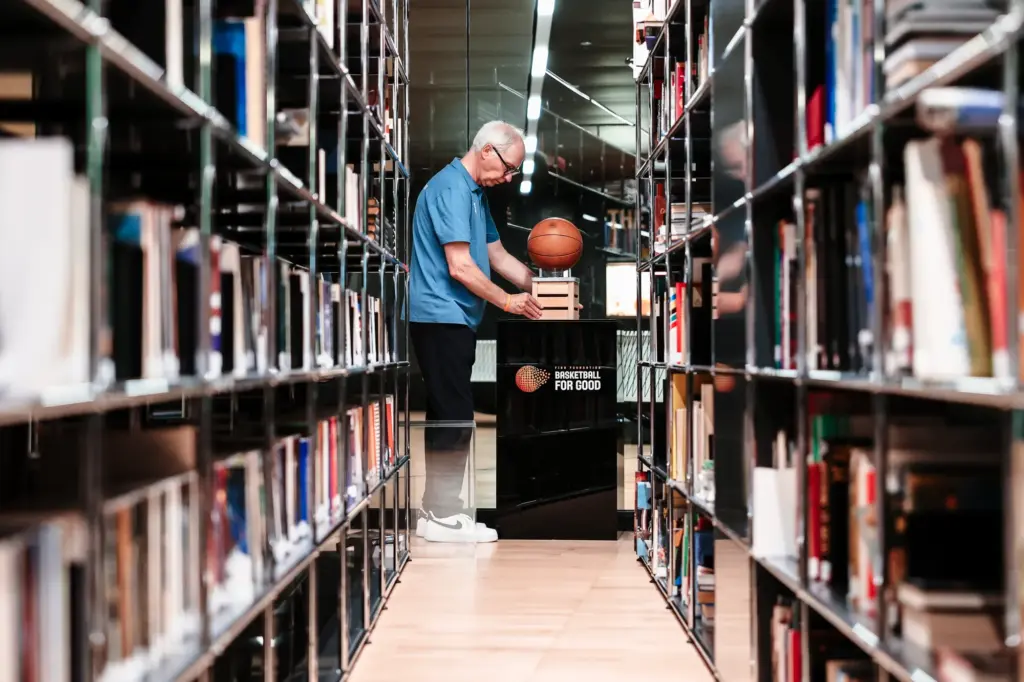
Preserving the past while trying to change the future
This is where the Foundation’s second identity becomes more interesting.
The same organization attempting to address childhood obesity, inclusion and climate education is also responsible for safeguarding basketball history.
Its Cultural Heritage work includes the FIBA Hall of Fame, museum, historical collections and Pedro Ferrandiz Library, with the Foundation holding more than 9,000 books and 40,000 pieces of memorabilia.
The challenge is making any of that matter to a 12-year-old whose first encounter with basketball history may come through TikTok.
Bullock says the museum tries to discuss “life and values through basketball,” rather than simply displaying objects. The Pedro Ferrandiz Library is now digitally accessible, while other projects deliberately move away from conventional historical storytelling.
One example is a comic about the Swiss team that travelled to Chile for the inaugural Women’s World Cup in 1953.
“The comic speaks very little about basketball. It talks about a group of women traveling from Switzerland to Chile, so it talks about life, it talks about culture.”
Then there is the Hall of Fame. For Bullock, legends should not become museum pieces themselves.
After FIBA Hall of Famer Ticha Penicheiro participated in activities around the Special Olympics Unified 3×3 World Cup in Puerto Rico, SKWEEK asked whether former stars could become a more systematic part of Basketball For Good.
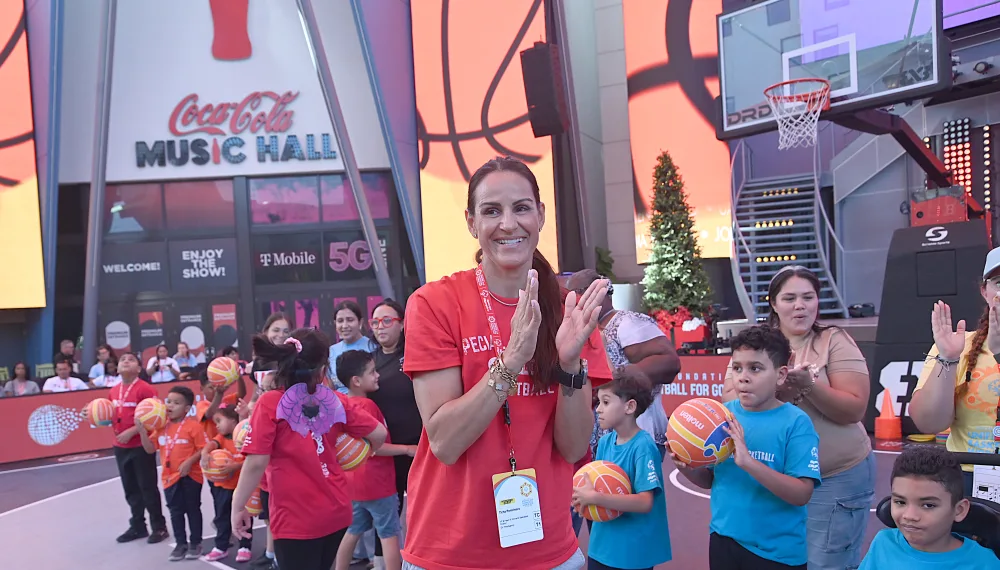
“It is not just inviting them to our events,” Bullock says. “It’s making sure that they remain involved in our activities.”
Former players possess “an immense amount of expertise from the blood, sweat, and tears that they have given to our sport,” he adds, and many are simply “looking for the opportunity” to give something back.
What would success actually look like?
What would make Bullock look back five years from now and say the Foundation had genuinely succeeded?
His answer is a bigger network that no longer depends on FIBA doing everything itself.
Bullock wants governments to understand basketball’s value beyond their national teams and use it in schools, after-school programs and communities. More concretely, his ambition is to see 100 countries with active national Basketball For Good communities, locally driven but connected globally.
“We cannot do it alone. We’re happy to be the coach, but the best coaches are the ones that are allowing their players to do what is necessary on the court.”
That may be the simplest explanation of the organization that the FIBA Foundation is trying to become: instead of holding the ball, it’s trying to put it in enough hands that eventually, the game keeps moving without it.