




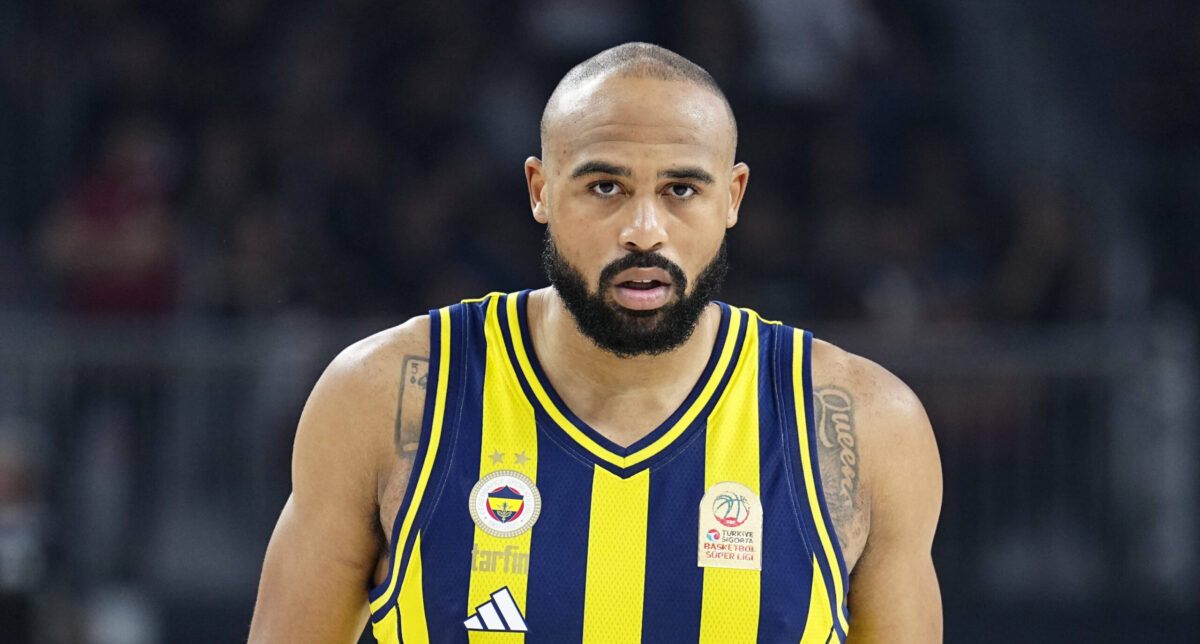







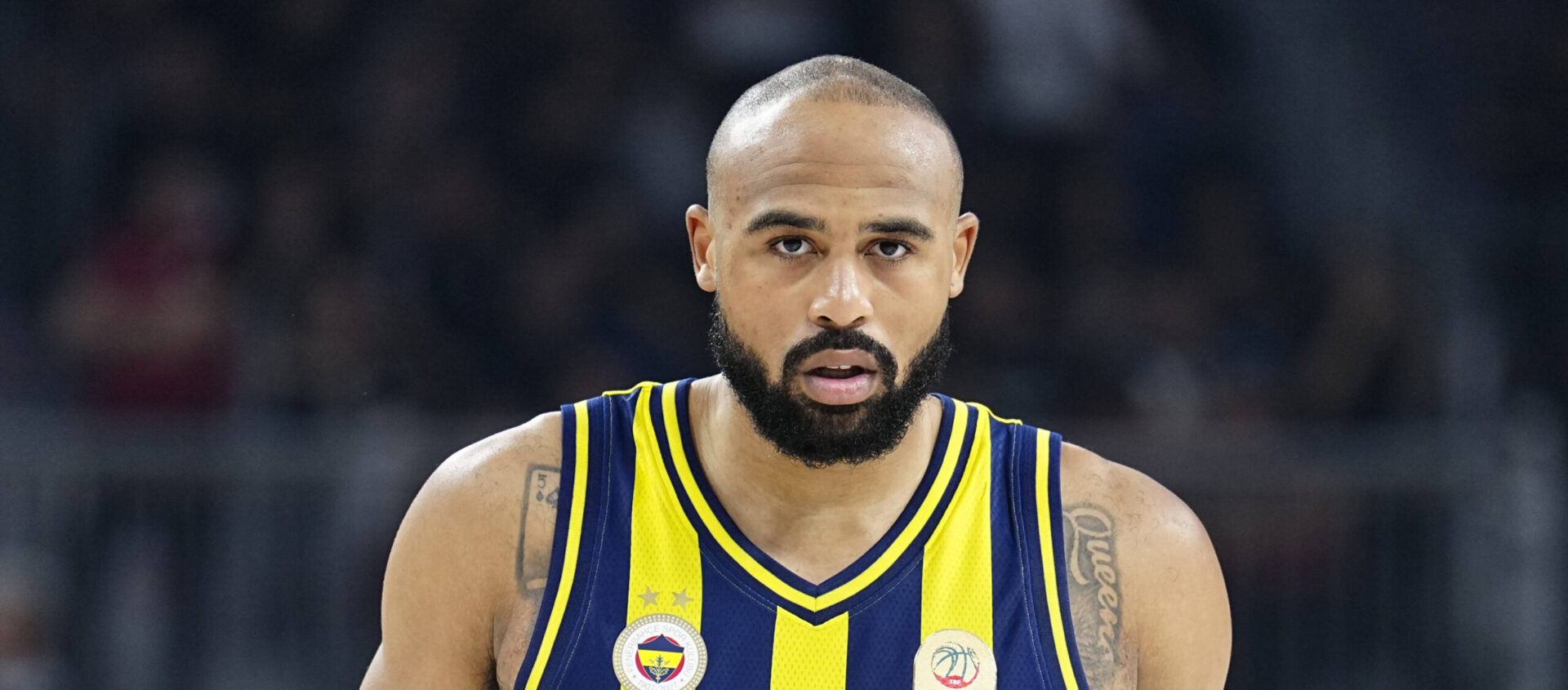

Talen Horton-Tucker’s return to Athens with Fenerbahce did not unfold as he would have hoped. Following his team’s defeat to Panathinaikos, the former Los Angeles Lakers guard found himself reflecting on a disappointing performance, the demands of European basketball, and the expectations that come with representing one of the continent’s most prominent clubs.


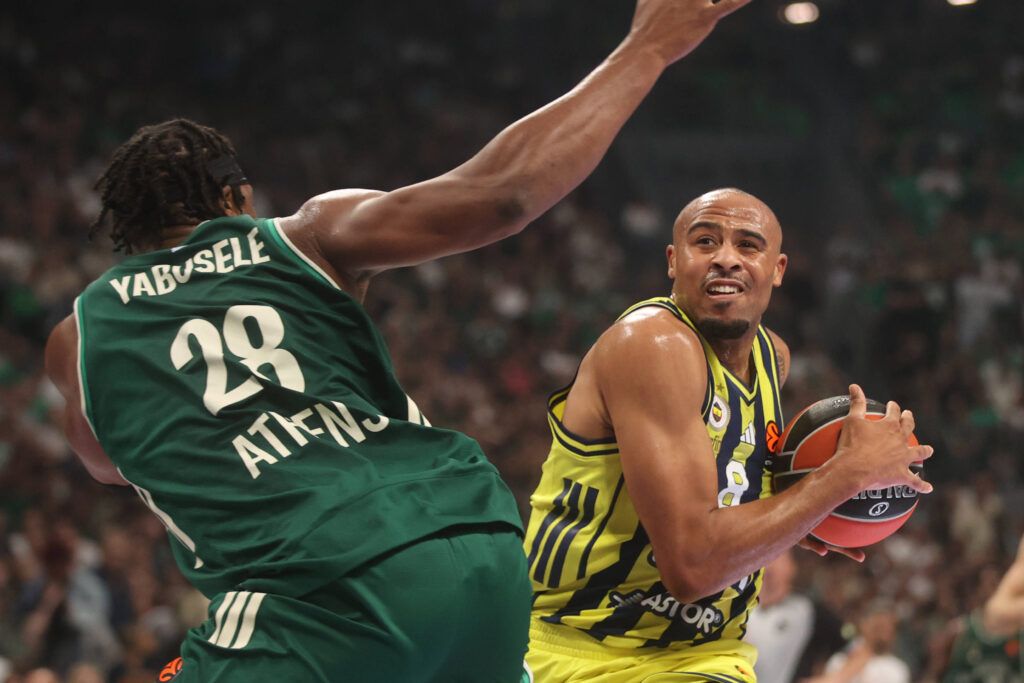
His performance against Panathinaikos provided an immediate backdrop to the discussion. Horton-Tucker finished with 9 points in 20 minutes and 57 seconds, shooting 4-of-6 from two-point range, 0/4 from beyond the arc, and 1-of-1 from the free-throw line. He also recorded three rebounds, two assists, one steal, and four turnovers, finishing with a performance index rating of eight.
Speaking to SKWEEK after the game, Horton-Tucker addressed Fenerbahce’s shortcomings, defended his own ability to compete against Europe’s best defenders, and explained why he remains confident in the team’s potential despite its difficult evening.
The conversation also extended beyond the result. The 25-year-old discussed his decision to remain with Fenerbahce, the differences between the Turkish club and the Lakers, his longstanding relationship with Kendrick Nunn, the misconceptions NBA players have about European basketball, and the circumstances that might persuade him to spend a significant part of his career overseas.
Why staying at Fenerbahce was an easy decision
Horton-Tucker’s decision to remain with Fenerbahce last summer came after a period of uncertainty over his next career move, with the American guard weighing the possibility of continuing his European journey against the prospect of returning to the NBA. Having completed his first season in Istanbul without winning the EuroLeague title, despite Fenerbahce reaching the Final Four, he had already acknowledged that he felt there was unfinished business to take care of.
Speaking on Off The RECourt following the conclusion of the previous campaign, Horton-Tucker explained that his original ambition had been to leave a lasting mark on Fenerbahce, something he did not believe he had fully accomplished.
“When I came to Fenerbahce, I definitely wanted to leave my mark here. I want to win wherever I go. I didn’t get the chance to win the EuroLeague in Istanbul, so I feel like I have unfinished business here. I had the opportunity to reach the top, but I couldn’t get it done,” he said.
That sense of unfinished business, however, was only one part of a more complicated decision. Horton-Tucker also recognized that a successful first season in European basketball could open up new opportunities, whether in the NBA or elsewhere, and that choosing his next destination would require careful consideration.
“I’m a competitor. I want to prove myself wherever I go. If I had a season like that here and we had won the EuroLeague, I would have proved myself. So I feel like I’ve only done half of what I’m capable of doing,” he explained.
Despite all that, his decision to remain with Fenerbahce during the summer was not, by his own account, particularly complicated.
Although his NBA background and growing reputation in Europe could have made his future an intriguing subject, he described his return to Istanbul as a straightforward choice once the opportunity presented itself.
“It was pretty easy. I wouldn’t say it was hard,” he told SKWEEK.
“Just the situation presented itself for me to come back. I just wanted to be in the best situation for myself, and that’s where it is right now.”
When asked which factors had influenced his decision, he referred to the structure of his original agreement with Fenerbahce and the opportunity to build on what the team had already achieved.
“Just knowing that I was here with a 1+1 and knowing that I had the opportunity to come back after my first year. Obviously, having some type of success was good. So just being able to come back and try to add to that success is something that is a goal of mine. Hopefully, we’ll get there.”
“No individual player has really challenged me”
Perhaps the most revealing part of the interview came when Horton-Tucker was asked whether any particular opponent had genuinely challenged him during his time in Europe.
His answer was immediate in substance, even if he initially paused to consider it. Rather than naming an individual defender, he argued that the real challenge comes from organized team defenses.
“An individual player, I wouldn’t say that. Basketball is a team sport. So it’s different schemes and team defenses that have challenged me the most.”
Pressed to provide an example, and specifically asked whether Panathinaikos had made life difficult for him that evening, Horton-Tucker rejected the premise.
“Tonight? It wasn’t difficult. I just really didn’t take too many shots. I just didn’t make any of the easy shots that I make. Basketball, you’re not going to make every shot that you shoot. So I don’t think tonight really was that hard.”
That response stood out given his nine-point performance and four missed three-pointers, but it also illustrated the confidence that has characterized his career.
The 25-year-old forward has consistently maintained that his physical strength, ability to attack the basket, and versatility create difficult matchups for opposing defenses. In his view, a quiet scoring night does not necessarily mean that an individual opponent has succeeded in neutralizing him.
The conversation then turned toward the areas he believes he must improve before he can confidently claim to be the best player in Europe.
“It’s going to be hard. A lot of the other guys that are the best players in Europe have played. I’m not saying I’m going to get lazy. I don’t want to say that. It’s just different. I probably have to continue to get better at my decision-making and hitting open threes and taking the right ones. So, if anything, that’s it.”
His acknowledgment of those weaknesses was particularly relevant to the opening weeks of the season. Through four games, Horton-Tucker has converted just four of his 16 three-point attempts, while averaging two turnovers per appearance.
His ability to get into the paint remains one of his most valuable offensive weapons, but improved perimeter shooting and more efficient decision-making could prove essential if he wants to establish himself among the EuroLeague’s most complete players.
Lakers and Fenerbahce: Two different kinds of pressure
Few players in European basketball can compare the experience of representing Fenerbahce with that of playing for the Los Angeles Lakers from firsthand knowledge.
Horton-Tucker entered the NBA as a teenager and quickly became part of one of the league’s most recognizable franchises, sharing a locker room with LeBron James and experiencing the enormous media attention that accompanies basketball in Los Angeles.
Fenerbahce, meanwhile, operates within a very different sporting culture, where supporters often develop lifelong attachments to their club and where basketball is closely connected to a wider sense of community and identity.
Asked whether he agreed with comparisons between the two organizations, Horton-Tucker identified an important distinction between the visibility of American sports and the emotional attachment he has experienced in Turkey.
“It’s a little bit higher. I feel like social media back in the States is a little bit more — people care about it a little bit more. So that’s where you see the fan appreciation and things like that. But here it’s more like real meaning to it. More real-life, lifetime bonds and things like that. So that’s the difference. It’s not too big, but obviously, it’s level-stepping.”
“NBA guys think the EuroLeague is easy”
Horton-Tucker’s move to Europe required more than adjusting to a new club or a different lifestyle. It also meant learning how to operate in a basketball environment where space is limited, tactical discipline is essential, and defenses can be structured very differently from those in the NBA.
Asked to identify the biggest misconception NBA players have about the EuroLeague before experiencing it themselves, he offered a particularly direct answer.
“That it’s easy. I feel like a lot of NBA guys may think that the EuroLeague is an easy league or something like that. You can’t say that until you experience it.”
He then explained why the transition can prove more demanding than many American players anticipate.
“There’s no space. I’m not saying it’s not spacious, but there’s no space compared to the NBA. The NBA has a lot of space and three seconds in the lane. It’s a lot more tactical things that go on in a European game. It’s more team play. The NBA is a more individual type of sport, even though it’s a team sport.”
Horton-Tucker also acknowledged that even within a more collective tactical framework, the influence of elite individual players remains significant.
“Sometimes, obviously, in matchups like this, sometimes the best players play.”
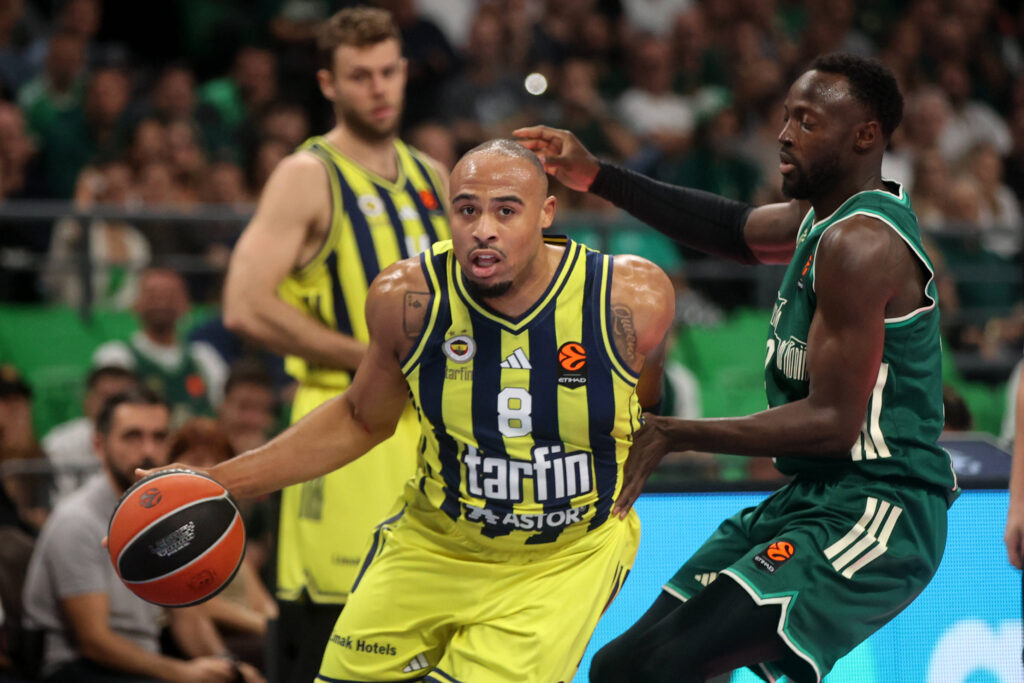
The contrast he described goes to the heart of his own development. His offensive strengths were shaped in a league that provides more room for individual creation, but European basketball has demanded that he become more precise in his shot selection, decision-making, and understanding of defensive schemes.
The possibility of a long-term future in Europe
The interview concluded with a question about Horton-Tucker’s future and whether he could eventually follow Kendrick Nunn’s example by committing to a long-term contract with a European club.
Rather than expressing a firm preference for either Europe or the NBA, Horton-Tucker suggested that such a decision would depend on the opportunities presented to him.
“You’ve got to get presented with that.”
Asked whether that was essentially the deciding factor, he added: “Probably, yeah.”
His final answer was equally concise, but it offered a clear indication of how he currently approaches his career.
“I’m here. I’m where my feet are. Wherever I am in the moment, that’s where I’m going to be.”