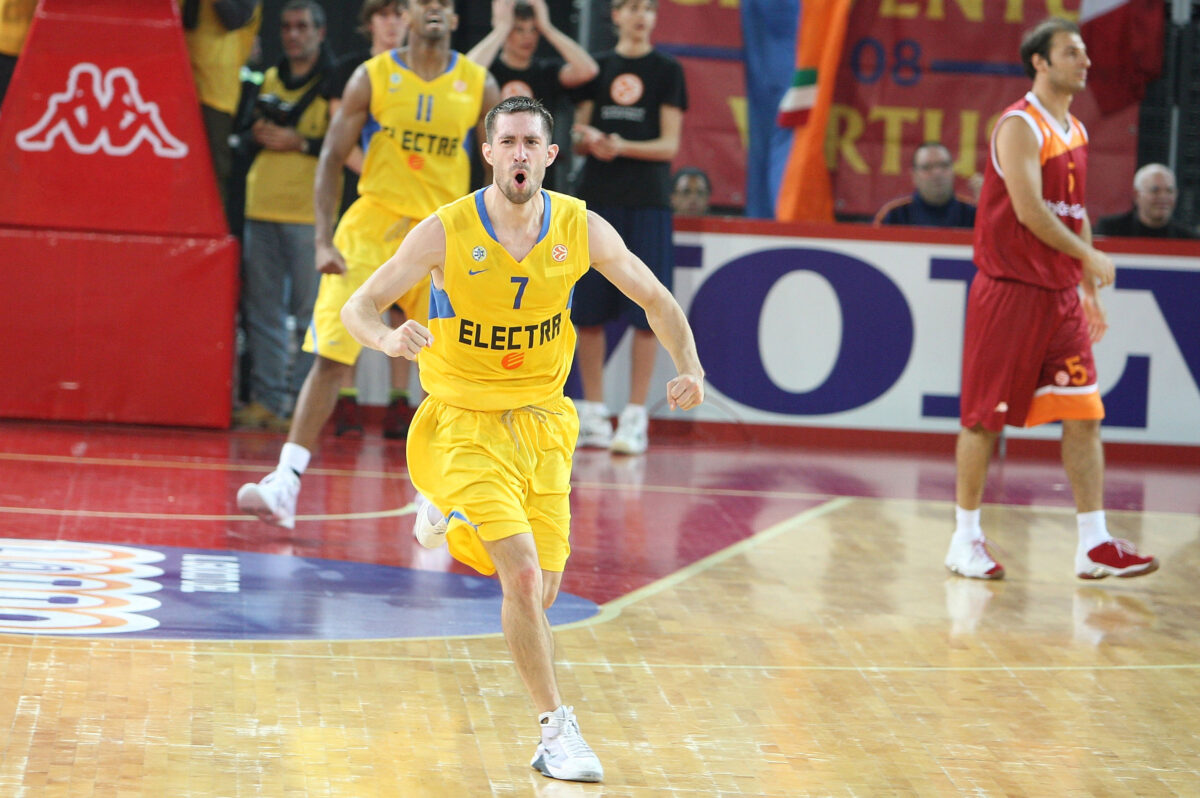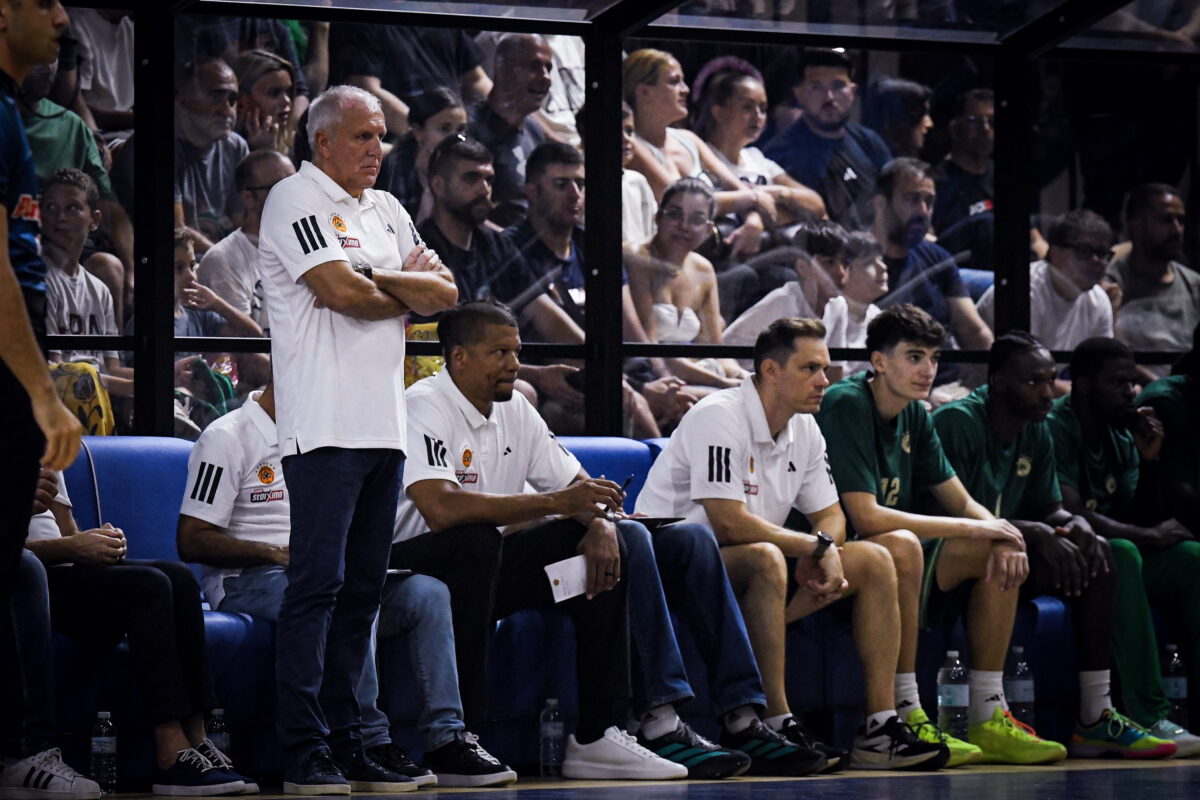










When Partizan announced on July 26 that it had signed Luca Vildoza to a two-year deal, the basketball side of the move was pushed aside almost immediately. The Argentine became the first player whose career will include both of Belgrade’s major clubs and both Athens giants. After Crvena zvezda, Panathinaikos and Olympiacos, Partizan was the only one missing.


The Word That Came Back to Follow Him
To supporters, he has crossed another line that is not supposed to be crossed. The Belgrade part of the story carries particular weight, because Vildoza was one of Crvena zvezda’s best and most popular players during the 2022/23 season. He connected with the crowd quickly and played the kind of basketball supporters could easily embrace. He and Facundo Campazzo became fan favorites, Argentine flags appeared in the arena and Argentine songs came down from the stands.
His connection with Zvezda did not end when he left and he often talked how he continued to follow the team, that the club would always have a place in his heart and that he remembered how warmly Belgrade had welcomed him. When he was later asked whether he could ever play for Partizan, his answer was clear: “No chance. Never.”

That quote is following him now, and supporters remember those things. Vildoza did not need to say “never”, especially as a professional who had no way of knowing where his career would take him a few years later. He could have said that his relationship with Zvezda made such a move hard to imagine, but instead, he chose a much bigger word.
The Rules of Modern European Basketball
Even so, signing for Partizan does not put him outside the accepted rules of modern European basketball. Crvena zvezda supporters have every reason to be disappointed, but the decision cannot be separated from the way the market operates. Players move for better offers, larger roles or the chance to remain at the highest level. Clubs act no differently. They terminate contracts, replace coaches, move on from players and search for cheaper or better options whenever they believe a change is necessary.
Vildoza is an Argentine who has spent nearly a decade in European basketball. He can genuinely care about a club, a city and the people with whom he shared a season without being expected to reject their rivals for the rest of his career. He did not grow up in Crvena zvezda’s north stand, just as he did not grow up in the green half of Athens. His relationship with those clubs cannot be the same as the one supporters have carried since childhood. That does not make his emotions false, but they simply belong to a different kind of relationship.
Athens Had Already Tested That Loyalty
His move from Panathinaikos to Olympiacos already made that clear. He arrived in Athens as a major signing, won the Euroleague and the Greek championship, then moved directly to Panathinaikos’ biggest rival. Transfers like that carry enormous weight in Greek sports, but Vildoza did not treat his decision as a personal crisis. He had not found the role he expected at Panathinaikos, Olympiacos wanted him and gave him another chance to compete for trophies.
Supporters saw a player changing sides, but for Vildoza, it was closer to changing employers. He never fully settled into the distribution of roles Ergin Ataman established at Panathinaikos. Most of the ballhandling responsibility belonged to Kostas Sloukas, Kendrick Nunn and Jerian Grant, leaving Vildoza with a much smaller role than the one he had at Crvena zvezda. He averaged fewer than 15 minutes in the Euroleague, with 5.7 points and 1.5 assists per game. A knee injury further disrupted his season, and he later admitted that the team’s style of play had not suited him particularly well.
Moving to Olympiacos did not restore him as a lead guard. Georgios Bartzokas used him as part of a deeper rotation and within an offense that required him to move the ball, follow its structure and contribute without measuring every performance by shot attempts. Vildoza averaged 4.8 points and 2.7 assists in a little under 18 minutes. He did not regain the freedom he had at Zvezda, but his game continued to change.
Virtus Revealed a Different Vildoza
With Virtus last season, he averaged 7.6 points, 4.4 assists, 2.2 rebounds and 1.4 steals. Vildoza has become a more dependable organizer, even though he is not a traditional point guard. At Crvena zvezda, his first instinct was often to attack, but over the past two seasons, he has spent more time creating for others. That change helps explain Partizan’s interest.
Vildoza can initiate the offense, operate in the pick-and-roll and find a big rolling to the rim. He can also give the ball up to another creator, work off a screen or wait for an open shot. He no longer needs to use a large number of possessions every night to influence a game.
Another Creator Beside Carlik Jones
That should matter alongside Carlik Jones. Partizan depended too heavily on Jones’ individual creation last season. By adding Vildoza, it now has another guard who can bring the ball up, get the team into its offense and handle the playmaking duties for stretches. Jones will not have to be the only player attacking the defense and making decisions out of the pick-and-roll. Alessandro Pajola will also take on part of that workload.
Vildoza is not a pure point guard, and his game will still rely heavily on instinct and changes of pace. His shot has not been consistent enough in recent seasons for Partizan to count on strong percentages. But the club probably did not sign him expecting the same player Crvena zvezda had in 2022. Partizan is getting a player who has represented both major Greek clubs, won the Euroleague and experienced what it is like both to carry a team and to accept a smaller place in the rotation.
Back in 2022, he needed the ball and considerable freedom for his best basketball to come out. He arrives at Partizan as a more experienced guard who has played in two tightly structured systems, accepted fewer shots and learned to affect games through playmaking, ball pressure and pick-and-roll reads. Kevarrius Hayes should also give him a center whose game fits naturally with his own.
A Supporter’s Memory Outlasts a Player’s Career
His arrival to Partizan has to be viewed with less romance than fandom usually allows. Vildoza was close to Crvena zvezda and its supporters for a period of his career, and that part is real. So is the fact that many of those supporters will see his move to Partizan as a betrayal, especially after the things he said.
A professional basketball career simply does not last as long as a supporter’s attachment to a club. A player has ten or fifteen seasons to earn money, find the right role and remain at the level where he wants to compete. When an offer arrives, the choice is usually based on what he needs at that moment, not on the emotions left behind during an earlier season.
The clubs themselves follow the same logic. Partizan did not sign Vildoza to provoke its rival, but because it believes his skill set can improve the backcourt. Vildoza accepted because Partizan is offering him the role he wants at this stage of his career.
The Whistles Are Part of the Deal
The whistles will come when he faces Crvena zvezda again. They are a natural consequence of his decision, and he can hardly expect anything else. He will put on the black-and-white jersey to justify his contract, accept the role Joan Peñarroya gives him and help Partizan win games.
There is not much romance in that. It is simply how professional basketball works.