




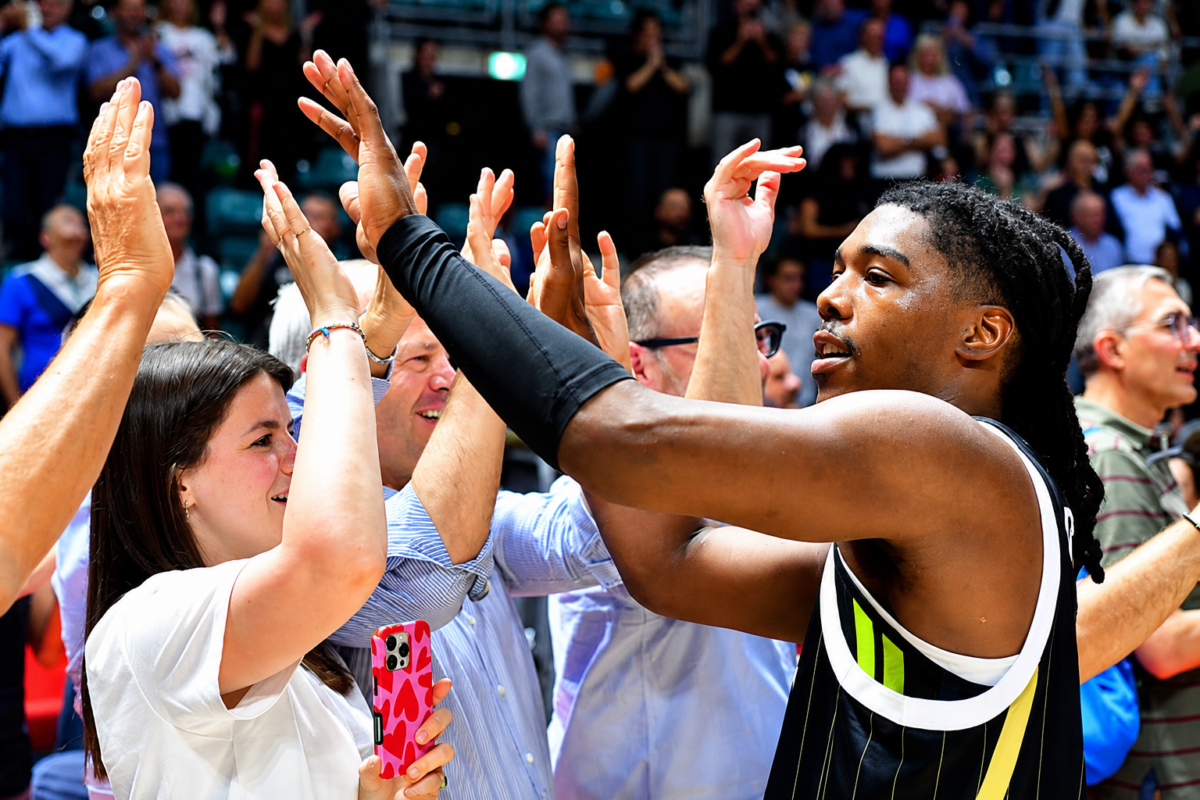












Marcus Carr’s buzzer-beating three-pointer to give Virtus Bologna a 96-94 victory over Olympiacos was inevitably the play that attracted the most attention. But the Canadian guard’s overall performance against the reigning European champions was far more significant than one difficult shot at the end of the game.


Carr finished with 22 points, 10 assists and a PIR of 30 while shooting 7/11 from the field and 5/8 from three, and with his assists producing another 21 points for Virtus, he was directly responsible for 43 of Bologna’s 96 points.
For those who recall Carr’s short and largely unsuccessful period with Aris three years ago, the performance was particularly interesting. The difference between the guard who left Thessaloniki in December 2023 and the player now handling significant responsibility in Virtus’ backcourt is considerable, especially because his development has come in the areas that caused him the greatest problems during his first European season: playmaking, decision-making, perimeter shooting and the ability to control an offense as its primary ball-handler.

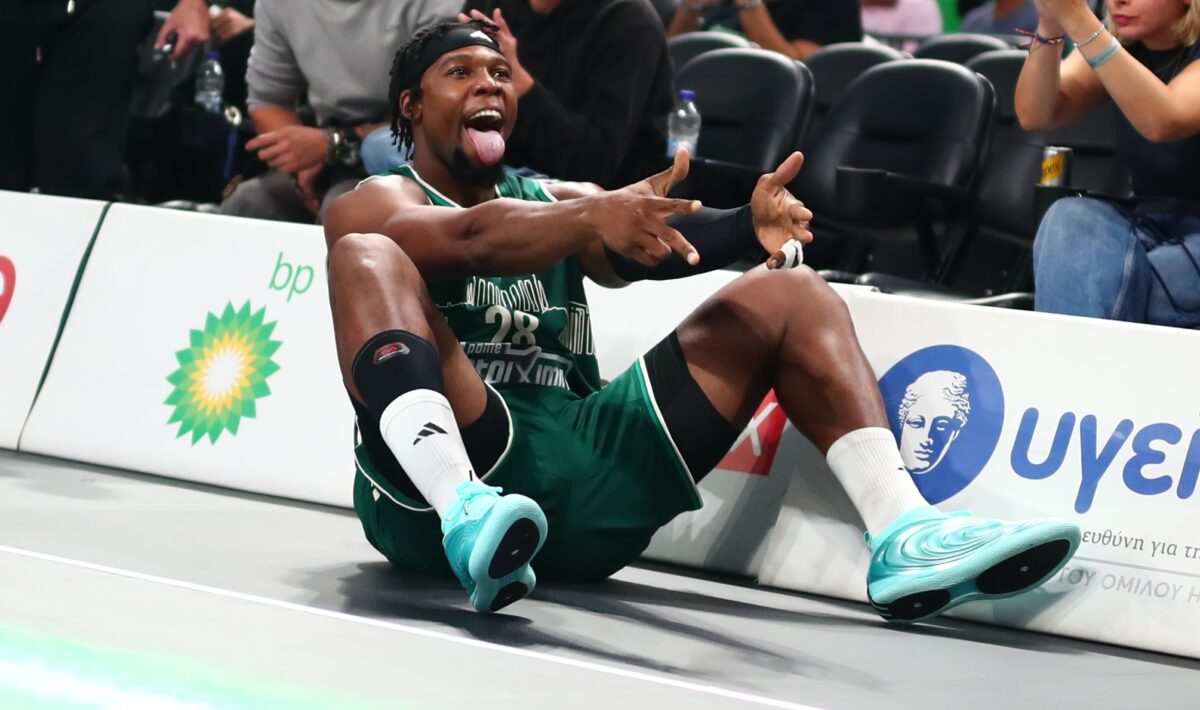
Chip on their shoulders.
Marcus Carr led Bologna past the reigning champs for their first win of the season 🫨 pic.twitter.com/Ua0z32x6xg
— EuroLeague (@EuroLeague) October 2, 2026
A long college career before Europe
Born in Toronto on June 6, 1999, Carr played at Montverde Academy before beginning a college career that eventually took him through three different programs, starting at Pittsburgh before moving to Minnesota and finishing at Texas.
Carr averaged 10 points and four assists during his freshman season at Pittsburgh, but Minnesota was where he developed into one of the Big Ten’s most productive guards. In 2019-20, he averaged 15.4 points and 6.7 assists while recording 207 assists, setting a Minnesota single-season record, before increasing his scoring average to 19.4 points the following year while adding 4.9 assists and producing, among other performances, a 41-point game against Nebraska.
His move to Texas followed in 2021 and, after a quieter first season with the Longhorns, Carr completed his college career in 2022-23 by averaging 15.9 points, 4.1 assists and 1.6 steals while shooting 36.8% from three-point range. Across his six years in college basketball, he accumulated 2,350 points, 751 assists and 549 rebounds in 164 games, leaving the NCAA with extensive experience and enough production to pursue an opportunity at the professional level.
Carr nevertheless went undrafted in 2023 and joined the Phoenix Suns for Summer League, where he appeared in four games without earning the NBA opportunity he had been looking for. Europe consequently became his next option, although the Canadian remained interested in waiting for a possible NBA or two-way contract before eventually deciding to move overseas.
Aris and a difficult introduction to European basketball
Giannis Kastritis had identified Carr as one of his preferred options for Aris ahead of the 2023-24 season, believing that the qualities he had displayed in college could translate to the European game. The negotiations lasted for more than two weeks because Carr was still considering his NBA possibilities, but he eventually agreed to begin his professional career in Thessaloniki.
His preseason performances initially created considerable optimism, with Carr displaying his speed, ball-handling ability and natural scoring instincts. Once the official games began, however, the transition proved significantly more complicated, as the then 24-year-old was simultaneously adjusting to professional basketball, European tactical demands and the responsibility of operating as the primary guard for a team with immediate competitive objectives.
Carr averaged 7.7 points, 1.9 rebounds and 1.3 assists in approximately 22 minutes across 11 EuroCup appearances, shooting 39% on two-pointers and only 17% from three, where he converted six of his 35 attempts. His numbers were similar in the Greek league, where he produced 7.4 points, 1.5 rebounds and 1.8 assists in 10 appearances.
The problem went beyond inefficient shooting because Aris needed Carr to organize a significant part of its offense, and that was the area in which he experienced the greatest difficulty. He recorded only 14 assists against 15 turnovers during 249 EuroCup minutes, and although he had productive scoring performances against Ulm, Slask Wroclaw and Turk Telekom, he was unable to provide comparable consistency as a playmaker.
Carr already possessed speed and a good handle, but his decision-making was frequently too slow to preserve the advantage he had initially created, while the uncertainty also affected his shot selection and overall offensive rhythm. His defensive effort was more consistent and he attempted to execute Kastritis’ tactical requirements, but Aris had primarily signed him to have a major influence on the offensive end and his production did not reach the level the team required.
The arrival of the more experienced Jonathan Stark effectively signaled the end of Carr’s time in Thessaloniki, and on December 14, 2023, Aris officially announced that the two sides had parted ways only four months after the Canadian’s arrival.
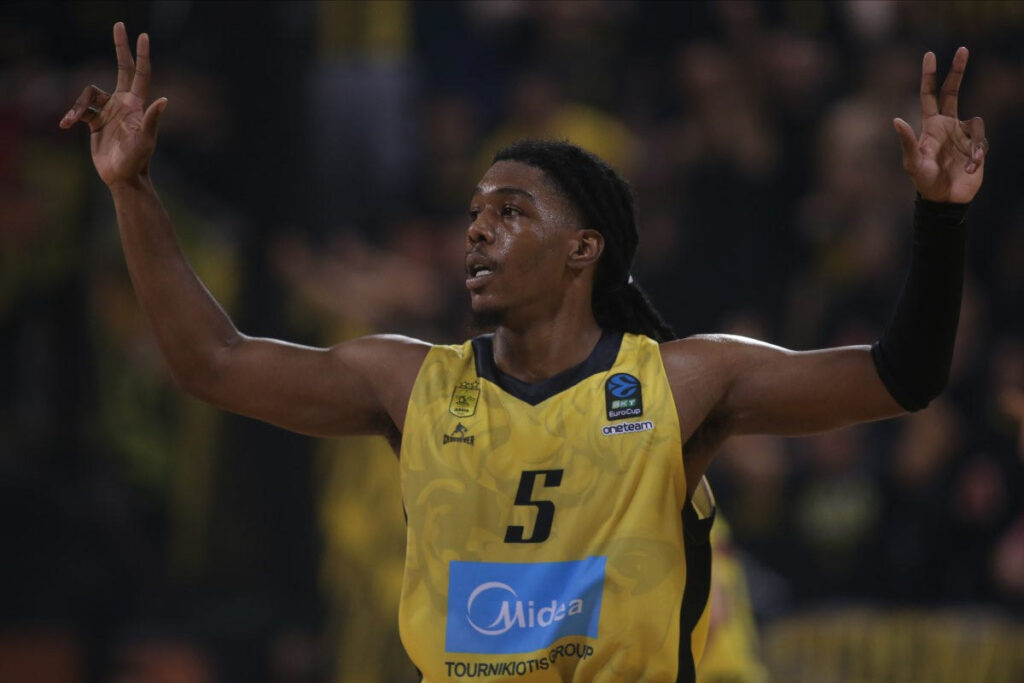
Israel and Canada before another opportunity in Europe
Carr immediately continued his career with Bnei Herzliya, moving into an environment that included several experienced players and carried different expectations from those he had faced during his first European experience. His offensive production increased before he returned briefly to Canada and subsequently moved back to the Israeli league with Hapoel Galil Elion.
His progress became considerably clearer during the 2024-25 season, when Carr averaged 15.7 points, four rebounds and 5.1 assists across 27 games while taking on a much larger share of his team’s scoring and playmaking responsibilities. The increase in assists was particularly relevant considering his difficulties at Aris, as Carr was beginning to operate less as a guard primarily looking for his own offense and more consistently as a player capable of managing possessions and creating opportunities for teammates.
That season did not immediately take him to the EuroLeague, but it allowed him to return to a higher European level with substantially more professional experience than he had possessed when he first arrived in Thessaloniki.
Wurzburg changed the level of his career
The move to Wurzburg for the 2025-26 season proved decisive, as Carr found a role that allowed him to combine his scoring ability with the playmaking responsibilities he had gradually developed during the previous two years.
He averaged 17.3 points and 5.7 assists in the Bundesliga and was even more productive in the Basketball Champions League, where he recorded 17.5 points, 3.2 rebounds and 6.7 assists per game. His three-point percentage also climbed to 39.5%, an important development for a guard who frequently operates out of the pick-and-roll and needs to punish defenders for going underneath screens.
The difference from his Aris spell was not simply a matter of increased statistical production. Carr was reading defenses faster, using the rolling big man more effectively and finding a better balance between looking for his own shot and creating for others, while retaining the ability to generate offense off the dribble.
His season in Germany placed him firmly on the radar of EuroLeague clubs, and Virtus eventually offered him his first opportunity at the highest level of European basketball.
Virtus immediately put the ball in his hands
The role Alex Mumbru gave Carr was notable because Virtus did not bring him in simply as another rotation guard. From the beginning of the season, the Canadian was given substantial responsibility as one of the team’s main creators.
His first two EuroLeague appearances were not especially efficient from a shooting perspective, as Carr scored 12 points on 5/13 shooting against Fenerbahce before producing 10 on 4/12 against Olimpia Milano. Even during the latter game, however, he recorded nine assists, showing that he could continue influencing the offense on a night when his own shots were not falling.
Against Olympiacos, those different parts of his game came together for the first time at EuroLeague level. Carr scored efficiently, consistently created for his teammates and operated as the primary ball-handler for a Virtus team determined to attack before the Olympiacos defense could establish itself. Bologna scored 50 of its 96 points within the opening 10 seconds of its possessions, with Carr repeatedly initiating pick-and-rolls with Aliou Diarra only seconds after Virtus had conceded at the other end.
The Carr-Diarra combination caused significant problems for Olympiacos because the Canadian could either attack the space created by the screen or find the big man rolling toward the basket, while his effectiveness from three made it more difficult for defenders to simply drop underneath the action.
From 1.3 assists to 10
The comparison with the Carr who played for Aris is most relevant because of how his game has changed rather than because one buzzer-beater can somehow erase what happened in Thessaloniki. Carr averaged only 1.3 assists in the 2023-24 EuroCup and finished his stint with more turnovers than assists, whereas against Olympiacos he produced 10 assists in only 24 minutes while controlling a substantial part of Virtus’ offense.
After the game, Mumbru provided a useful description of Carr’s current responsibilities by referring to his point guard as an extension of the coach on the floor and stressing the importance of his ability to make decisions for the team.
Decision-making is precisely the area in which Carr’s progress is most evident. His speed and ability with the ball were already apparent when he joined Aris, but he is now using those qualities without requiring every advantage he creates to finish with his own attempt, while reading defensive help more effectively and involving teammates with considerably greater consistency.
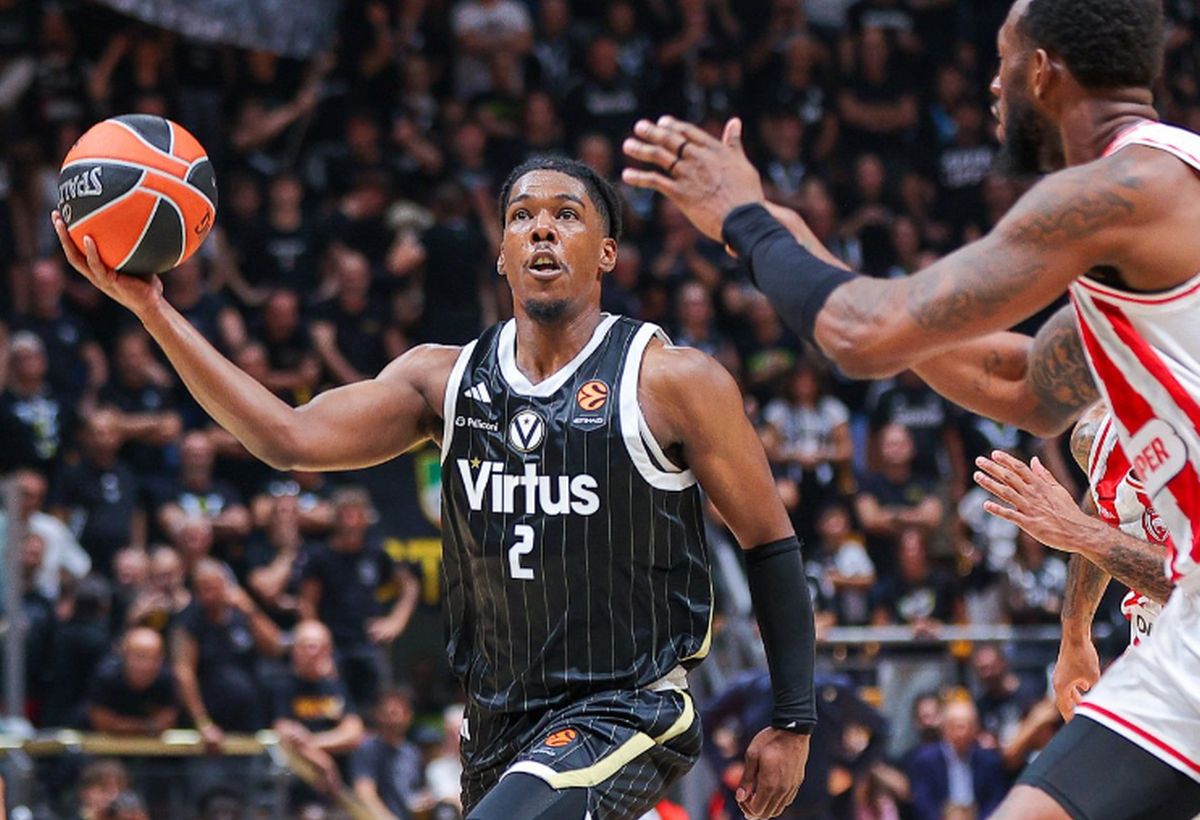
Now he has to prove he belongs at this level
One performance against Olympiacos cannot determine what kind of EuroLeague career Carr will eventually have, particularly only three rounds into the season. The competition presents a significantly greater challenge than the Bundesliga or Basketball Champions League, and opposing defenses will inevitably make adjustments as they accumulate more information about his tendencies.
His current profile, however, is substantially different from the one he displayed during his first European season. Carr remains a ball-dominant guard with speed, the ability to create off the dribble and a preference for operating through the pick-and-roll, but those qualities are now accompanied by more reliable perimeter shooting and significantly improved playmaking.
All of those elements were visible during his 24 minutes against Olympiacos before the final possession transformed an excellent individual performance into one of the early highlights of the EuroLeague season. Carr collected the inbound pass with six seconds remaining, moved toward the corner and converted a difficult off-balance three-pointer to give Virtus its first victory of the campaign.
CARR WINS IT FOR @VirtusBo
AGAINST THE REIGNING CHAMPS! 🤯🤯🤯#MotorolaMagicMoment @Moto I @VirtusBo pic.twitter.com/cgycicn2eP
— EuroLeague (@EuroLeague) October 1, 2026
For those who had watched him during his spell with Aris, however, the most significant part of his performance was not necessarily the final shot but everything that preceded it. The guard who had struggled to consistently organize a EuroCup offense in 2023 had just finished a EuroLeague game against the reigning European champions with 22 points, 10 assists and five three-pointers, while handling the ball on many of his team’s most important possessions.