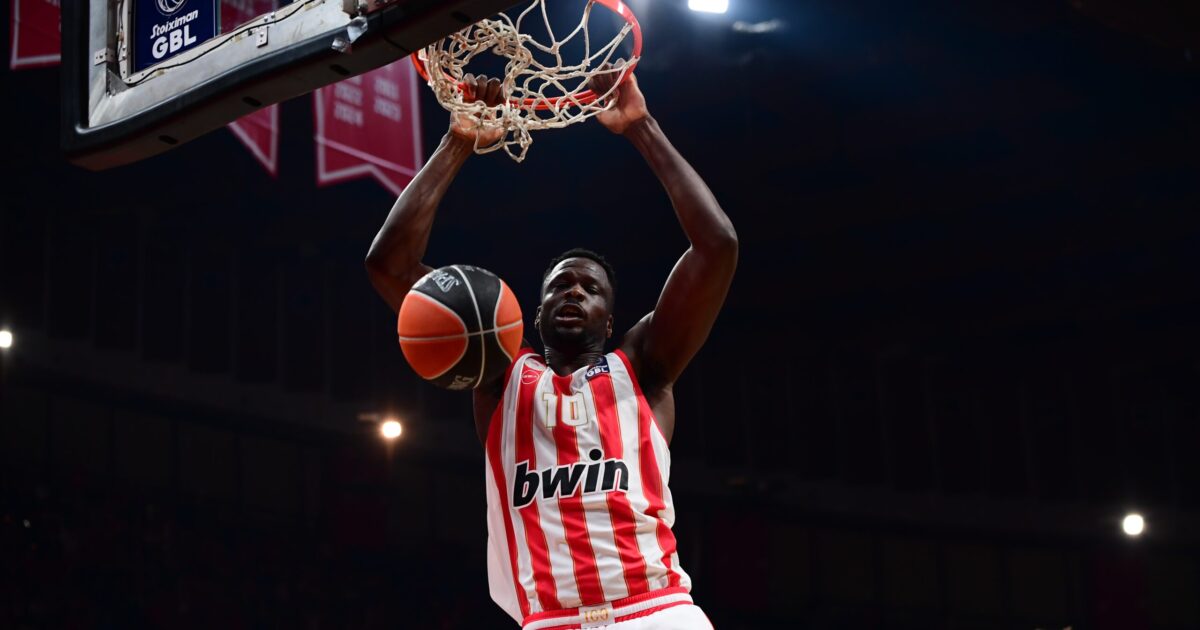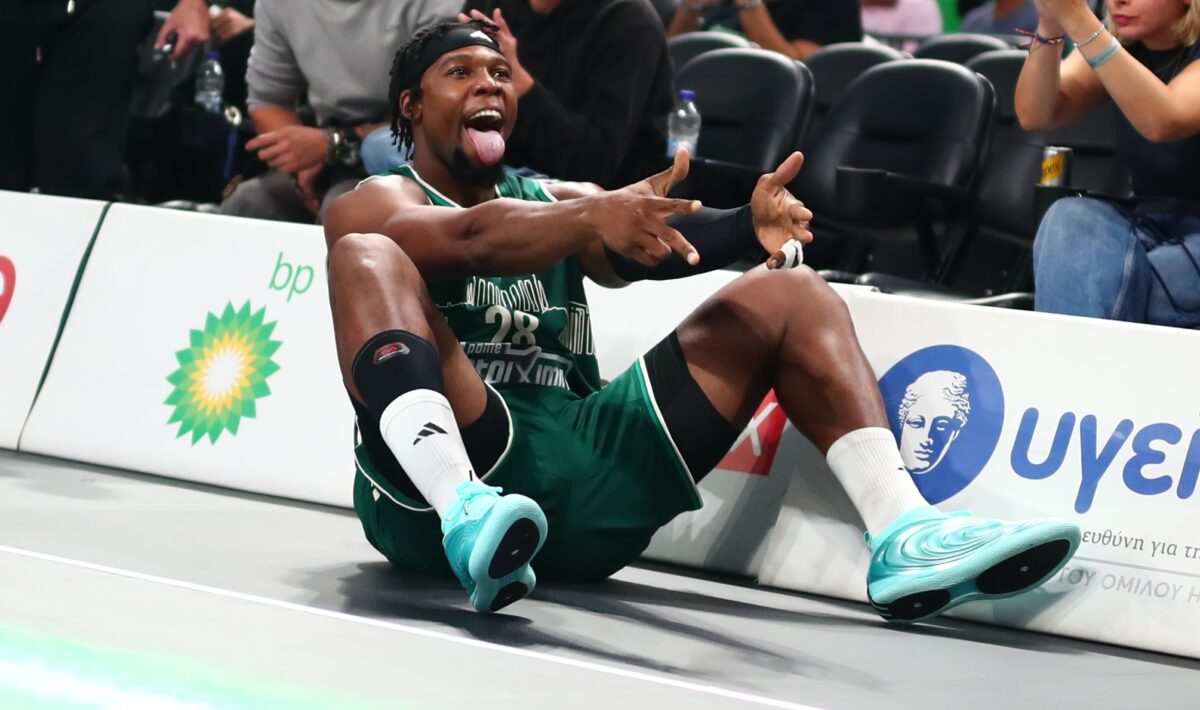



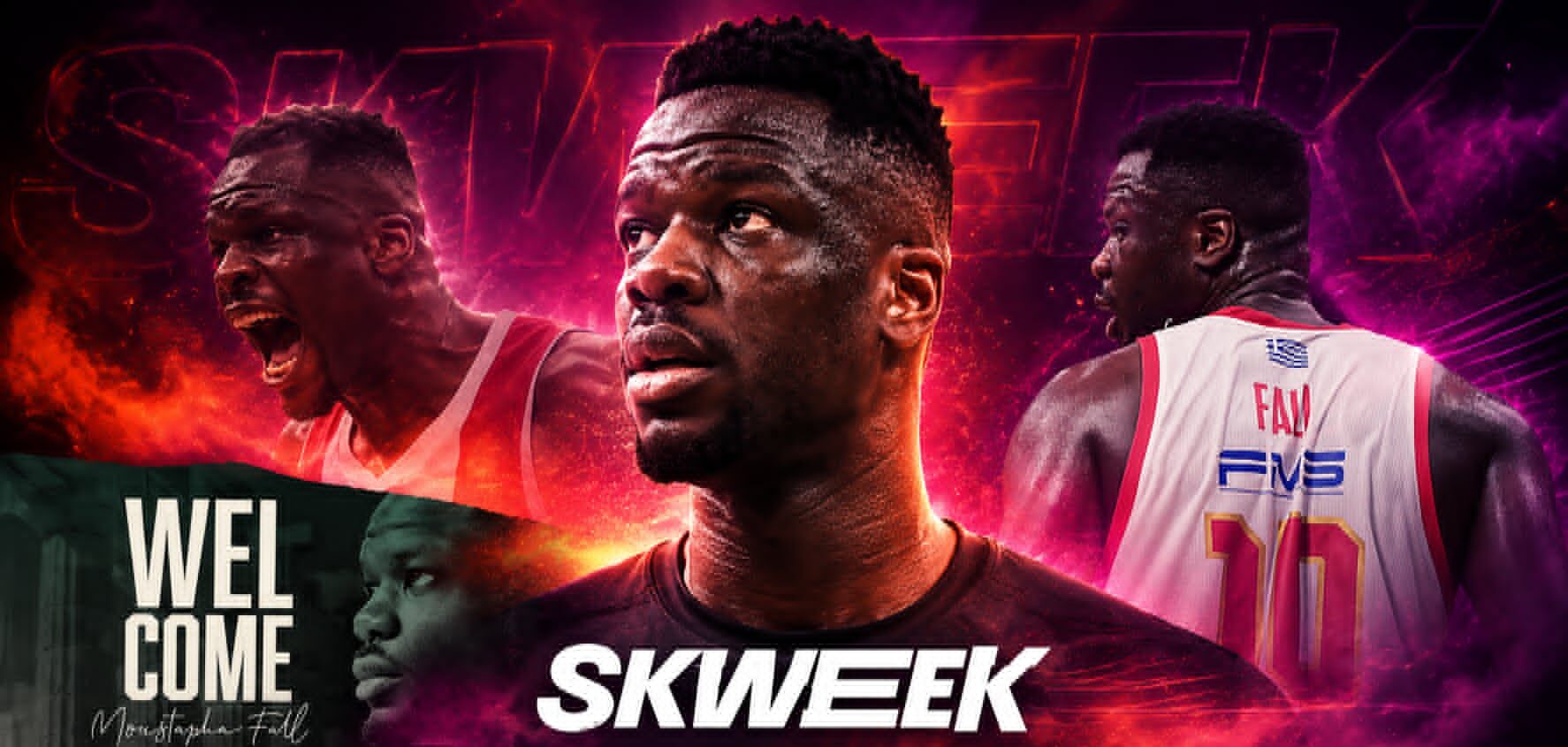

Panathinaikos, following a decision made by Zeljko Obradovic, dressed Moustapha Fall in green, and SKWEEK breaks down how and why the deal came together.


The first move of the club’s second Obradovic era was always going to attract attention. Few, however, expected it to come in the form of Moustapha Fall. On Wednesday night (June 24), Panathinaikos officially announced the signing of the French center on a 2+1-year contract, just days after his departure from Olympiacos, the club where he established himself among Europe’s elite between 2021 and 2026.
Fall’s move to Telekom Center had not surfaced in the rumor mill beforehand, leading to questions from part of the fanbase. In reality, though, the explanation is rather straightforward—especially when the move carries the approval of Obradovic himself.
Before diving into the basketball reasons behind the signing, one thing should be emphasized: Obradovic’s return has created a unique level of trust around every decision made by the organization. When the final call belongs to the most decorated coach in European basketball history, every move carries a different weight.
As for the center position, Panathinaikos entered the summer market looking for a high-level big man capable of sharing responsibilities with Mathias Lessort. The French star, whose career took off under Obradovic’s guidance years ago, remains the primary option at the five. However, the club’s objective was to surround him with another quality center who offers a different skill set and tactical profile.
That is where Fall enters the picture.
At least on paper, the Frenchman arrives as the third center in the rotation before the start of the season. Yet his resume and skill package go far beyond what that label might suggest.
Fall brings elite rim protection, tremendous size and wingspan, the ability to alter countless shots around the basket, defensive versatility in different schemes, strong rebounding and the experience of 181 EuroLeague appearances. On top of that, he remains one of the most unique playmaking centers in Europe, capable of creating from the high post, operating effectively in hand-off actions, facilitating in pick-and-roll situations and setting powerful screens that consistently generate advantages for teammates.
Does the 34-year-old have weaknesses? Of course.
First and foremost, Fall played only two EuroLeague games during the 2025-26 season after suffering a ruptured patellar tendon in his left knee in June 2025. Despite his size and physical profile, he returned to action sooner than expected, earning praise throughout Olympiacos for his professionalism and dedication. Nevertheless, how his body will respond throughout a demanding 75-plus game campaign remains a legitimate question.
In addition, time is undefeated. Fall no longer possesses the same mobility he once had when defending switches, nor is he the explosive finisher around the rim that he was in his athletic prime.
Even so, the overall package remains extremely appealing: playmaking from the paint, efficient interior defense, size, basketball IQ, positioning, productivity and extensive experience at the highest level, including five consecutive EuroLeague Final Four appearances.
Those qualities naturally caught Obradovic’s attention.
There is, however, another factor that makes the move even more attractive for Panathinaikos.
For quite some time, Fall has been working toward obtaining a Greek passport, which would allow him to be registered as a domestic player in the Greek Basketball League. In many ways, that is the club’s strategic advantage in this deal: acquiring a battle-tested EuroLeague center who could potentially provide valuable minutes not only in Europe but also in domestic competitions without occupying a foreign-player spot.
Across his 181 EuroLeague appearances, Fall has averaged 7.3 points (72.8% on two-pointers, 53.2% from the free-throw line), 4.6 rebounds, 1.9 assists, 1 block and a PIR of 12.2.
When those numbers are combined with his skill set—and with the potential bonus of a Greek passport—the answer to the question “Why did Obradovic want him?” becomes fairly simple.
Or perhaps, inevitable.
In short, his move to Panathinaikos was not the result of a rivalry-fueled battle between the two eternal rivals, nor was it some kind of communication stunt. Obradovic saw potential in a situation where his team could gain a significant advantage. Ultimately, it was the basketball criteria of the greatest coach in European basketball history that brought the French international center to the Greens.
Moustapha Fall is now heading to Panathinaikos, where he is expected to form part of a center rotation featuring Mathias Lessort and another high-profile big man that the seven-time European champions intend to add during the summer transfer window.