











Partizan’s early-season momentum has nearly disappeared in less than a month. After nine rounds, Partizan is 4-5, having come away without a win from road trips to ASVEL and Žalgiris. In Villeurbanne, it squandered an 11-point lead, in Kaunas, it erased almost all of a 16-point deficit but could not complete the comeback. Two different scenarios have raised the same question again: Why has Partizan been so inconsistent, and how much longer can its offense depend on one player’s production?


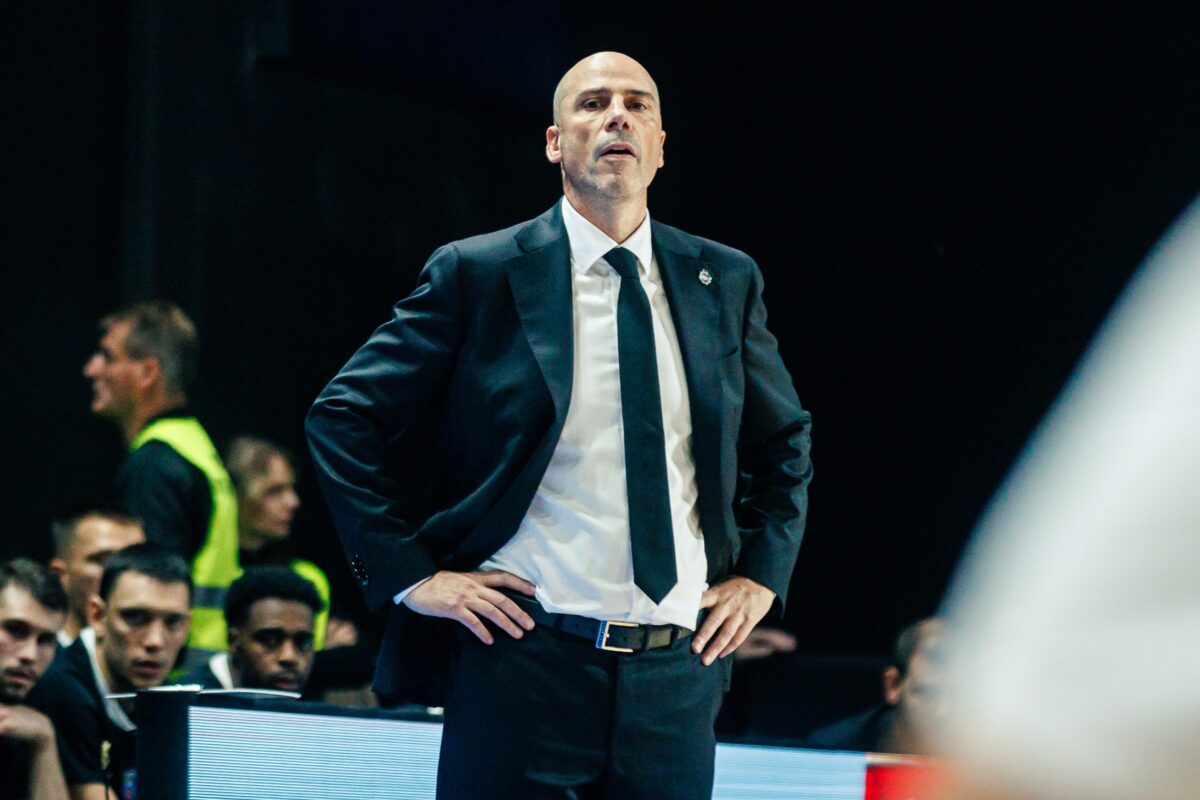
Carlik Jones has shot just 6-for-23 from the field over his last two Euroleague games. Joan Peñarroya urgently needs to find a way to keep the offense functioning when his best playmaker cannot carry the scoring load. Otherwise, the strong start to the season could quickly lose its value.
The loss to ASVEL was particularly painful because of how it unfolded. Partizan led 69-58 in the fourth quarter, only to allow the French team to close the game on a 24-6 run. What had been an excellent opportunity for a road win turned into the kind of defeat that could prove costly at the end of the regular season, particularly in the race for a playoff or play-in spot.


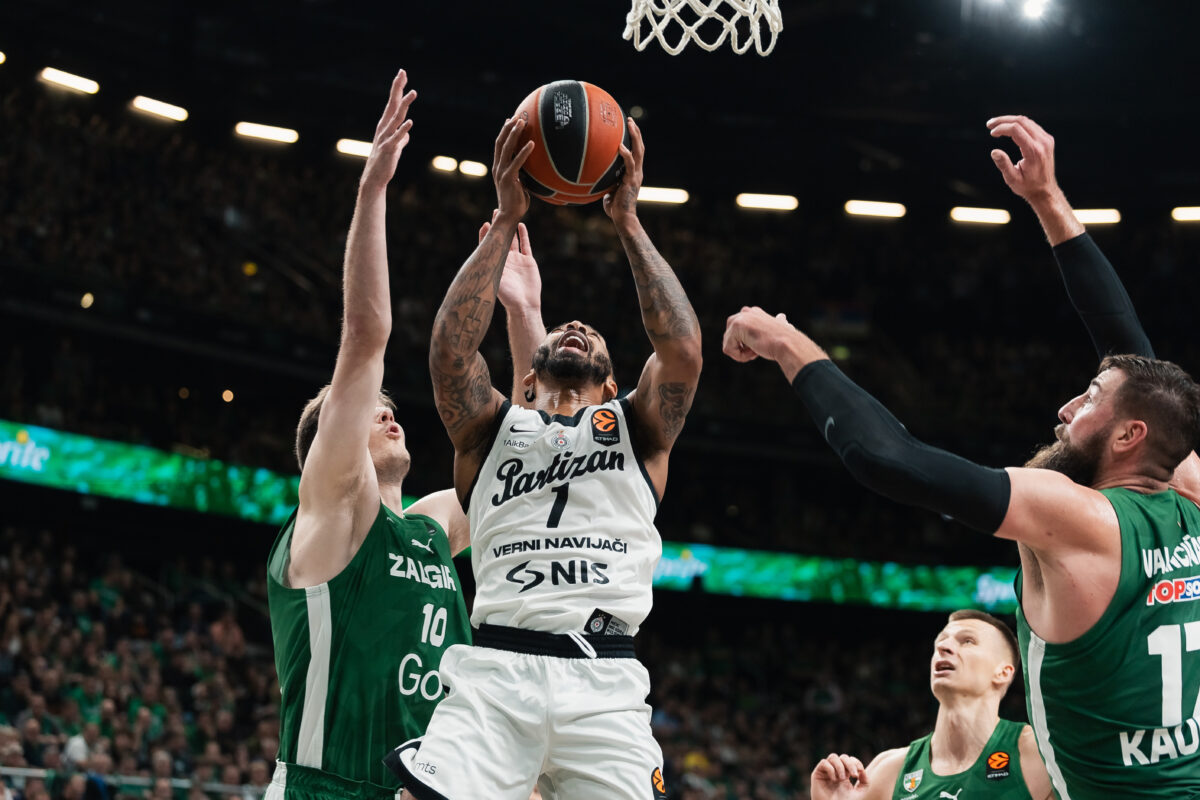
In Kaunas, the trouble started much earlier. Žalgiris led 16-6 by the fifth minute, but Partizan fought back and tied the game at 34-34 midway through the second quarter. It entered halftime down four, only to allow the home team to pull away again early in the second half. A 9-3 run over a little more than two minutes gave Žalgiris a 53-43 lead, which eventually grew to a game-high 75-59 early in the fourth quarter.
Only then did Partizan play with the aggression it had needed from the start. A 14-2 run cut the deficit to 77-73, and Partizan had two possessions to get even closer. Ethan Thompson missed an open three-pointer, however, and Jones then missed a midrange jumper. Žalgiris went nearly eight minutes without a field goal but managed to protect its lead at the free-throw line, eventually winning 87-80.
Partizan’s inability to protect a lead against ASVEL and its slow start against Žalgiris exposed the same problem: a lack of stability when the opponent began taking control.
When Carlik’s Shot Isn’t Falling, Who Steps Up?
Against ASVEL, Jones scored seven points on 3-of-9 shooting. He added four rebounds and five assists but committed four turnovers, finishing with a performance index rating (PIR) of five. Partizan was outscored by 15 points while he was on the floor.
In Kaunas, he again finished with seven points, this time on 3-of-14 shooting. He missed all three of his attempts from beyond the arc and ended the game with five rebounds, seven assists and a PIR of seven. In just over 55 minutes across the two games, Jones also went 0-for-4 from three, although his 12 assists showed that he was still creating opportunities for his teammates.
Arnas Butkevičius did much of the work defending Jones, using physical pressure to make his drives and getting to his preferred spots more difficult. Jonas Valančiūnas also stepped higher in certain pick-and-roll coverages to challenge him. After the game, Žalgiris coach Tomas Masiulis specifically praised Butkevičius’ defense and its importance to the victory.
Against Žalgiris, other players had opportunities to take on a greater share of the offensive responsibility. Luka Vildoza scored 14 points, including 11 in the first half, while Thompson finished with 15 points, six rebounds and four assists. Nikola Tanasković delivered one of his best performances for Partizan, scoring 19 points and grabbing four offensive rebounds. Kevarrius Hayes added eight points in just over 16 minutes, missing only one shot from the field. Partizan recorded 20 assists and just eight turnovers. Those are encouraging indicators of offensive organization, particularly given Jones’ shooting struggles. Partizan also attempted 14 more field goals than Žalgiris but made only five of its 23 three-point attempts.
Peñarroya Needs to Find a More Consistent Lineup
Partizan’s most effective five-man unit against Žalgiris was also its most frequently used: Tanasković, Vildoza, Hayes, Jones and Thompson. That lineup was plus-five in seven minutes and 13 seconds. The Tanasković-Hayes pairing performed even better, posting a plus-seven in 10 minutes and 20 seconds. The worst figure belonged to Joffrey Lauvergne and Jones, who were minus-16 in just under 11 minutes together on the floor. The sample is small, and plus-minus numbers cannot provide a definitive assessment of any lineup.
Peñarroya started Lauvergne to protect Hayes from early foul trouble against Valančiūnas. The plan did not work. Lauvergne struggled defensively, and Hayes still picked up two quick fouls before finishing the game with four. Using Tanasković and Hayes together gave Partizan more mobility in the frontcourt. At the same time, Vildoza and Thompson could take on some of the playmaking responsibilities, reducing the burden on Jones.
Vildoza and Thompson have the ability to initiate offense more frequently, while Jones could spend certain stretches playing off the ball. That would give Partizan more ways to attack when its primary point guard struggles to create an advantage. Fouls were another problem. Žalgiris attempted 30 free throws, while Partizan committed 26 fouls. That was particularly important in the fourth quarter, when the home team went a long stretch without a field goal but continued scoring from the line, preventing Partizan from seriously threatening its lead.
Two Home Games Partizan Must Make Count
After opening the Euroleague season with three consecutive wins, Partizan lost five of its next six games. Its only victory during that stretch came against Crvena zvezda, and even then it surrendered a 15-point advantage and allowed its rival back into the game late. A 4-5 record is not yet a major problem. Still, a loss like the one to ASVEL could carry considerable weight when postseason places are decided. Partizan held an 11-point lead in the fourth quarter and had a game it could have closed out. Against Žalgiris, despite its poor stretches, it also had an opportunity to put pressure on the home team in the closing minutes.
Partizan now faces two home games in Belgrade, against Maccabi on November 6 and Baskonia five days later. These are opponents Partizan has good reason to believe it can beat, especially on its home floor, although neither game should be treated as a guaranteed victory.
Two wins would restore a winning record at 6-5. But, two losses would further complicate its position after such a promising start to the season. Peñarroya needs to address Partizan’s recurring problems with opponents’ scoring runs and the large deficits his team has been forced to overcome. Jones remains Partizan’s most important offensive organizer, but the team needs an offense that works when his shot is not falling. That will be particularly important against Maccabi and Baskonia. After the missed opportunities in Villeurbanne and Kaunas, Partizan can hardly afford to waste two more chances at home.