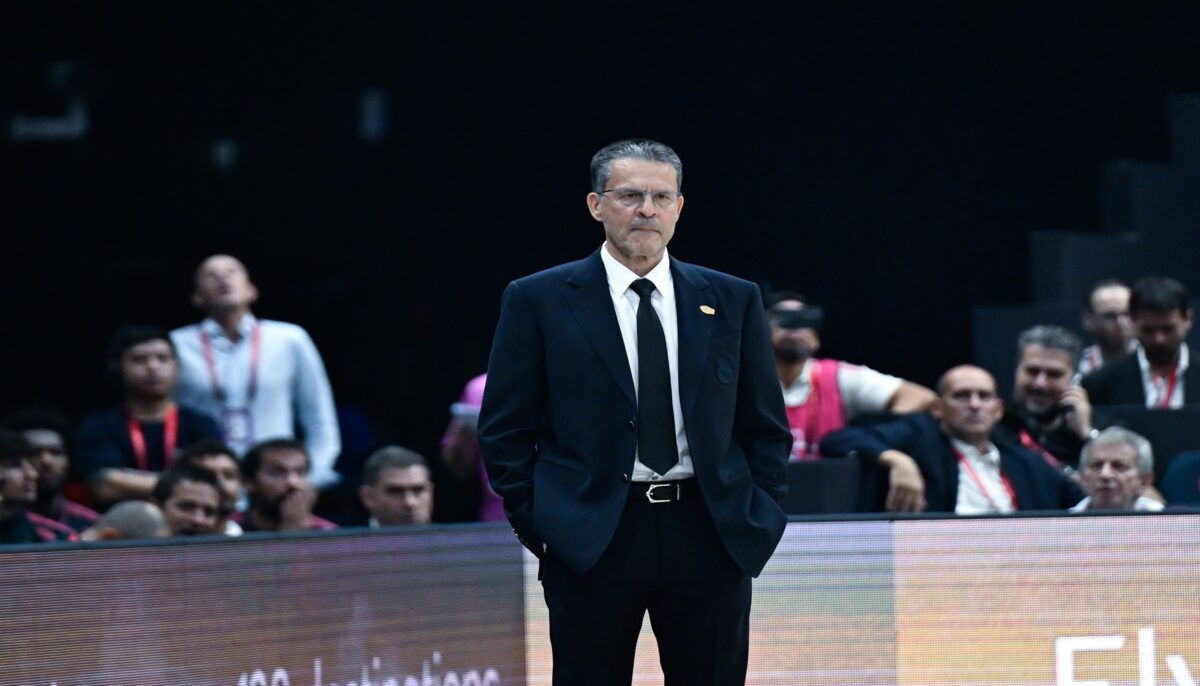

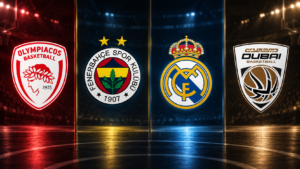


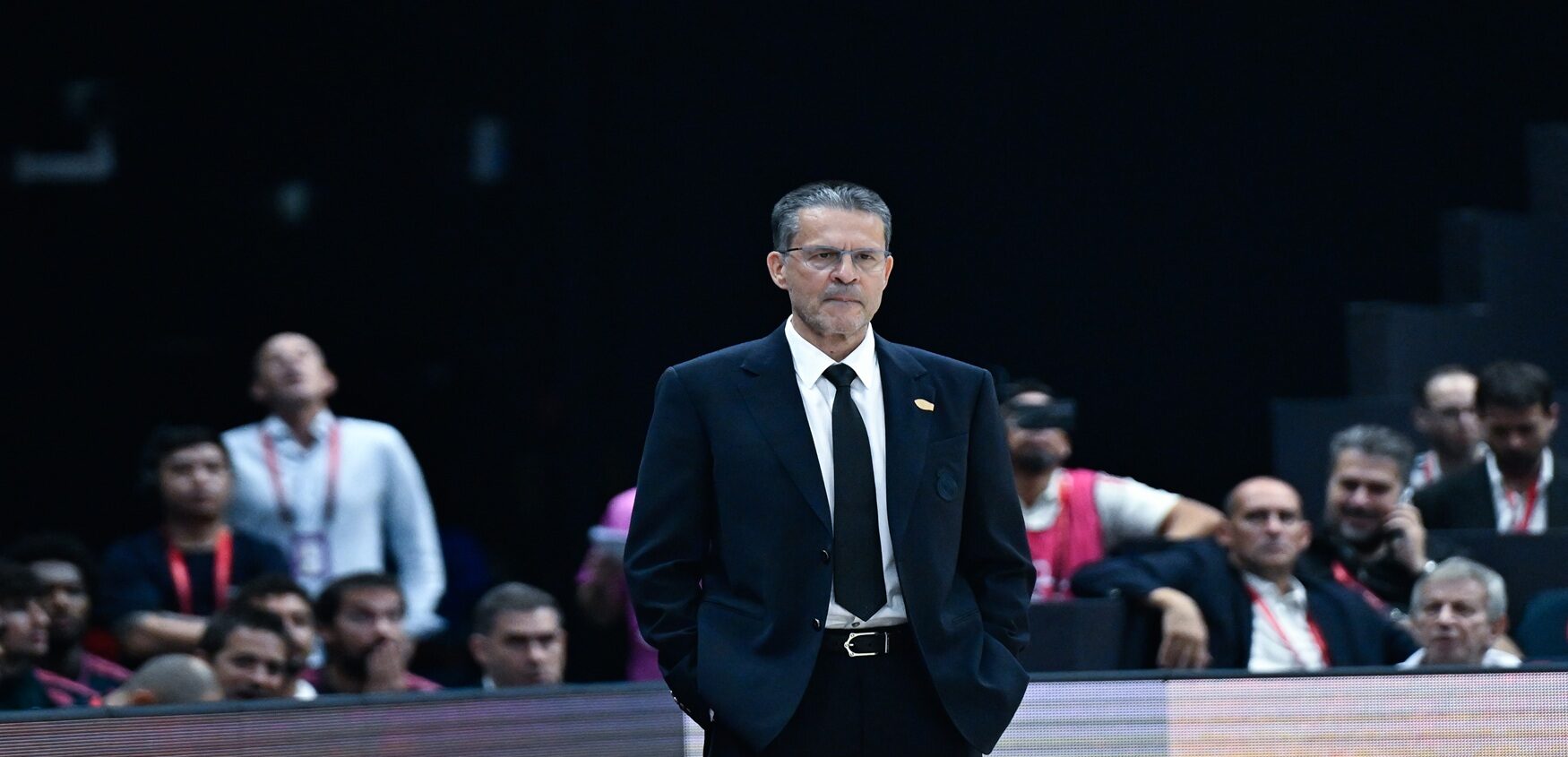

One of the main attractions of the inaugural EuroLeague Super Cup was the opportunity to assess the impact of Pedro Martínez’s arrival as Real Madrid head coach. The 65-year-old veteran, a highly respected figure in Spanish basketball but now coaching one of the country’s two traditional powerhouses for the first time, has spent recent years —particularly during his latest spells with Manresa and Valencia— instilling an extremely fast-paced style of play in which early-clock offense and a high volume of three-point attempts have been two of the main pillars of his teams’ offensive approach.


That made it particularly interesting, despite the season still being in its very early stages, to examine the adjustments the Catalan coach has made during his first month in charge of Los Blancos. Martínez arrived to replace Sergio Scariolo following the upheaval caused by Real Madrid’s first trophyless season in 15 years.
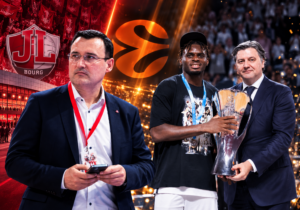
Perhaps that explains why, despite this being a new tournament that is still likely to be viewed by many as part of the preseason, the faces of Real Madrid’s coaching staff and players after being crowned Europe’s first Super Cup champions were those of people who had just had a weight lifted from their shoulders. For the coaching staff, it was about making a strong start at a club where expectations are sky-high from day one. For the players, particularly those who remain from last season, it was about rediscovering the taste of victory after going through the entire previous campaign without a trophy.

The Pedro Martínez era could hardly have got off to a better start in Madrid following such a disappointing season. The first tweaks to the team’s approach were evident almost immediately. In the semifinal against Dubai Basketball, Martínez started Andrés Feliz alongside Facundo Campazzo, a two-point-guard lineup that has been highly unusual for Real Madrid until now, with the Dominican typically coming off the bench. The two floor generals also frequently shared the court with French guard Theo Maledon, who partnered Campazzo in the starting lineup final against Olympiacos.
It remains to be seen how those combinations will work once the team’s latest perimeter signing, American guard Nick Smith —who did not play a minute in the Super Cup— becomes part of the rotation. It was also noteworthy that another player much more accustomed to coming off the bench than starting, Argentine forward Gabriel Deck, was included in the starting five for both games.
Martínez has long been recognized as a coach willing to make difficult decisions. In Spain, he is often described as someone who “doesn’t play favorites” or, more literally, “doesn’t marry anyone.” It was therefore perhaps not entirely surprising to see Sergio Llull left out of the squad against Dubai. It seems likely that the legendary Madrid guard, entering his 21st season with the club, will see his playing time reduced even further and be used in specific stretches of EuroLeague and Liga Endesa games. That would also explain why Martínez opted not to expose him to the physical demands of a back-to-back.
Llull remains a dangerous offensive weapon, but adapting physically to the defensive intensity Martínez typically demands from his teams will not be easy. The new coach’s personality was equally apparent in another decision: Damian Jones was left out against Dubai, while two of the team’s new additions, Ukrainian guard Max Shulga and French center Olivier Sarr, played just four and seven minutes respectively. Twenty-four hours later, against the reigning European champions, Shulga and Sarr made way in the game-day roster for Llull and Jones.
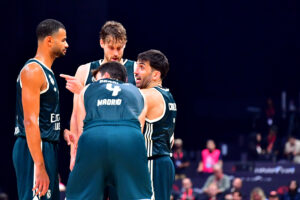
Ultimately, if Real Madrid are to impose the desired up-tempo style over a season in which they could conceivably play more than 90 games, rotation will be essential. Martínez showed that willingness from the outset. Just three minutes into the semifinal, and clearly unhappy with his team’s start, he made three substitutions at once.
At the same time, it would be wrong to overlook the extent to which Martínez continued to rely on two of Madrid’s key players from recent years. Campazzo and Edy Tavares played 33 and 32 minutes respectively against Dubai, although that game went to overtime. The next most-used player was a new arrival, Timothé Luwawu-Cabarrot, with 28 minutes. Campazzo again led the team in minutes in the final, although he played just 25 against Olympiacos. At a club like Real Madrid, the message is clear: rotation is important, but starting the season with a win is even better.
As for the roster structure, the biggest changes over the summer came in the frontcourt. Edy Tavares remains the undisputed focal point in the paint. Against Dubai, Real Madrid only began to recover from their 36-20 deficit once they stopped settling so heavily for threes and started making a genuine effort to feed the Cape Verdean center in the post. Eventually, he was named MVP of the Supercup.

Behind him, the other two centers, Jones and Sarr, still have plenty of work to do, although the American showed more encouraging flashes in the final than the Frenchman had in the semifinal. At the four, meanwhile, the impact of two other newcomers, Jaime Pradilla and Mikael Jantunen, was significant —particularly Pradilla on offense and Jantunen on defense—.
Indeed, Tavares’ foul trouble in the final —he picked up three fouls before halftime and his fourth with eight minutes remaining— prompted Martínez to deploy Pradilla and Jantunen together in the frontcourt, effectively going small. At times, the experiment worked well.
It would be a stretch to say that Real Madrid produced their best basketball. Forty-five turnovers across two games —22 against Dubai and 23 against Olympiacos— is simply too many, even allowing for the fact that the high-tempo style Martínez wants to implement will naturally carry some risk and can lead to more turnovers. There was one number, however, that Martínez will have been particularly pleased with: the assist total. Real Madrid recorded 31 assists against Olympiacos, following 24 in the game against Dubai.
First group to ever lift the Euroleague Basketball SuperCup! 🏆🤩
Congratulations @RMBaloncesto! 👏 pic.twitter.com/2p8cEx9YLy
— EuroLeague (@EuroLeague) September 19, 2026
For all those reasons, and even though this Real Madrid team is still in the process of building itself into a side capable of competing among Europe’s elite once again, its first appearance under Martínez could hardly have gone better.
A new project is taking shape, with a coach who will change plenty of things on the court. And Real Madrid are now, forever, the first-ever EuroLeague Super Cup champions.