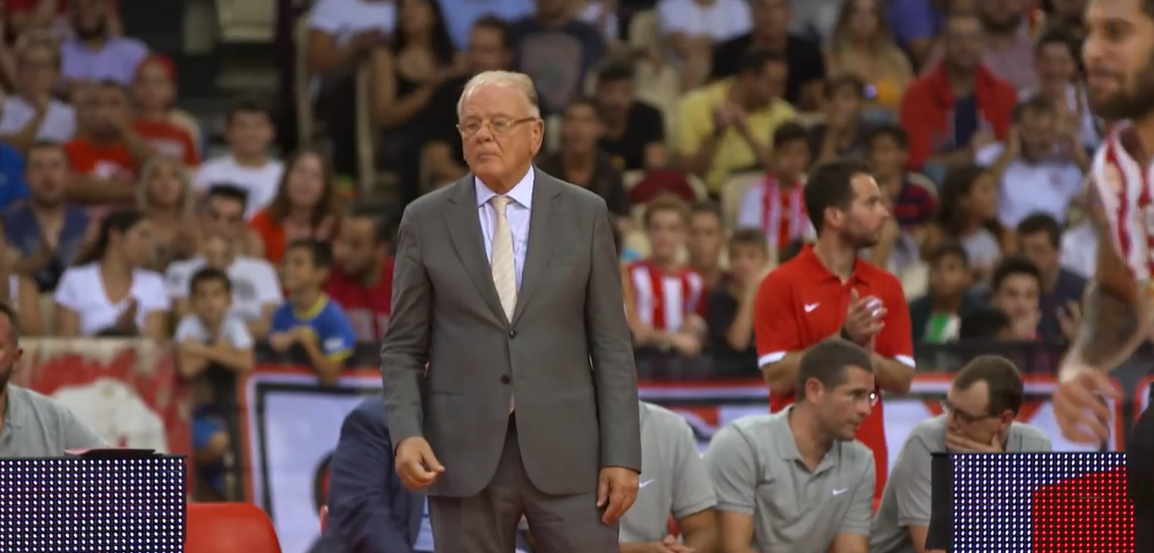


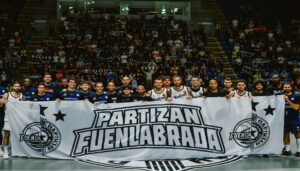


Five years have passed since the death of Dušan “Duda” Ivković, one of the greatest coaches European basketball has ever produced.


Strict but fair, Ivković was a mentor to generations of coaches. Some of the biggest names in the game – Gregg Popovich among them – openly spoke about how much they had learned from him.
“He was a master of basketball, with extraordinary knowledge of the game. My time with Duda – whether in Europe or the United States – was filled with wonder and learning because his presence was unique,” Popovich wrote.
Ivković came from the old school, from an era when the coach’s word was final. But like all truly great coaches, he knew how to evolve with the game and with new generations of players – just enough to preserve his authority without ever compromising his coaching identity.
“Ivković commanded enormous respect. With him, you simply knew what was expected: order, hard work and discipline, with no exceptions. He treated the stars and the best players exactly the same way as everyone else. Discipline was non-negotiable, as was the hierarchy that had to be respected,” Dino Rađa once said.
But Ivković wasn’t merely an authority figure.
He was a builder – and a winner.
The Walk Before Olympiacos Made History
His first trophy came with Partizan in 1979. His last came with Efes in 2015.
For 36 years, the man kept winning.
He delivered Olympiacos their first European title in 1997. Fifteen years later, he did it again.
One story from the day of that first final has become part of European basketball folklore.
“I believe that when you’ve done a good job tactically and prepared your team the way you want – both in terms of being ready to play and psychologically – sometimes there’s no need to keep repeating the same things over and over again. So we went down to the sea and skipped stones across the water. It seems it paid off,” Ivković recalled with a laugh.
His fingerprints were all over Greek basketball. Beyond Olympiacos, he coached Aris, AEK and Panionios, leaving a lasting mark wherever he went.
Building the Modern CSKA
Then came CSKA Moscow.
Ivković helped lay the foundations for the modern CSKA, a club that would become a perennial powerhouse at the top of European basketball.
“Before Mr. Ivković arrived, Russian basketball was in a rut. After he came, we started climbing to the top,” CSKA president Andrey Vatutin said.
“On my first day, I went to the offices and they were small. Everyone would go outside to smoke. There was one employee assigned to me. Little by little, I started building the team together with Sergey Kushchenko. A practice facility, the court, the locker room – like the ones in the NBA,” Ivković explained.
Handing the Keys to Teodosić
His impact on the national-team game was just as profound.
With Yugoslavia, Ivković won three European titles and a World Championship. Years later, with Serbian basketball struggling and six years having passed without a major medal, he came back and led a young Serbia team to silver at EuroBasket 2009.
Once again, Duda was building something.
And this time, he handed the keys to a 22-year-old Miloš Teodosić.
“I’ll be grateful to him forever. I don’t have the words to describe it. He gave me complete freedom at the age of 22 to be the starting point guard of the national team. From that moment on, my career took off.
“There isn’t a single time when our group gets together – Marković, Tepić, Krstić… – without Duda’s name coming up, without someone telling an anecdote and imitating the way he used to talk. He didn’t just coach us, he raised us. He wasn’t just a coach.
“He cared about every single person, about what was happening with us both on the national team and at our clubs. I didn’t even know this at the time, but he called the Olympiacos owner because of me. He did things like that for other players as well.
“Duda commanded such enormous respect that even today, when I talk about him, I stand at attention and speak about him with tremendous respect,” Teodosić said.
Crveni Krst Was Always Home
For all the countries, clubs and locker rooms his career took him to, Ivković remained fiercely attached to where he came from.
Crveni Krst, his Belgrade neighborhood, remained home. So did Radnički, the club that was always close to his heart.
And then there were the pigeons – his lifelong passion away from the court.
But nothing ever came close to basketball.
In 2017, Dušan Ivković was inducted into the FIBA Hall of Fame.