








There is something special about the FIBA Qualifiers that cannot be captured by the standings or the qualification tables for the FIBA Basketball World Cup. It is the chance to see some of Europe’s biggest stars back on the continent, after spending most of the year thousands of miles away, starring in the NBA.


The fourth round of the European FIBA Qualifiers for the 2027 FIBA Basketball World Cup is a perfect example. Nikola Jokic is with Serbia, Victor Wembanyama with France, Jusuf Nurkic and Luka Garza with Bosnia and Herzegovina, Ivica Zubac with Croatia, Lauri Markkanen with Finland, Rudy Gobert with France and Dennis Schroder with Germany.
And those are just some of the biggest NBA names expected to battle with their national teams. This is what makes the FIBA Qualifiers special: they bring some of Europe’s biggest stars back home, giving them the chance to fight for their countries and for a place at the next major international tournament — in this case, the 2027 World Cup.
From Giannis and Jokic to Jokic and Wembanyama
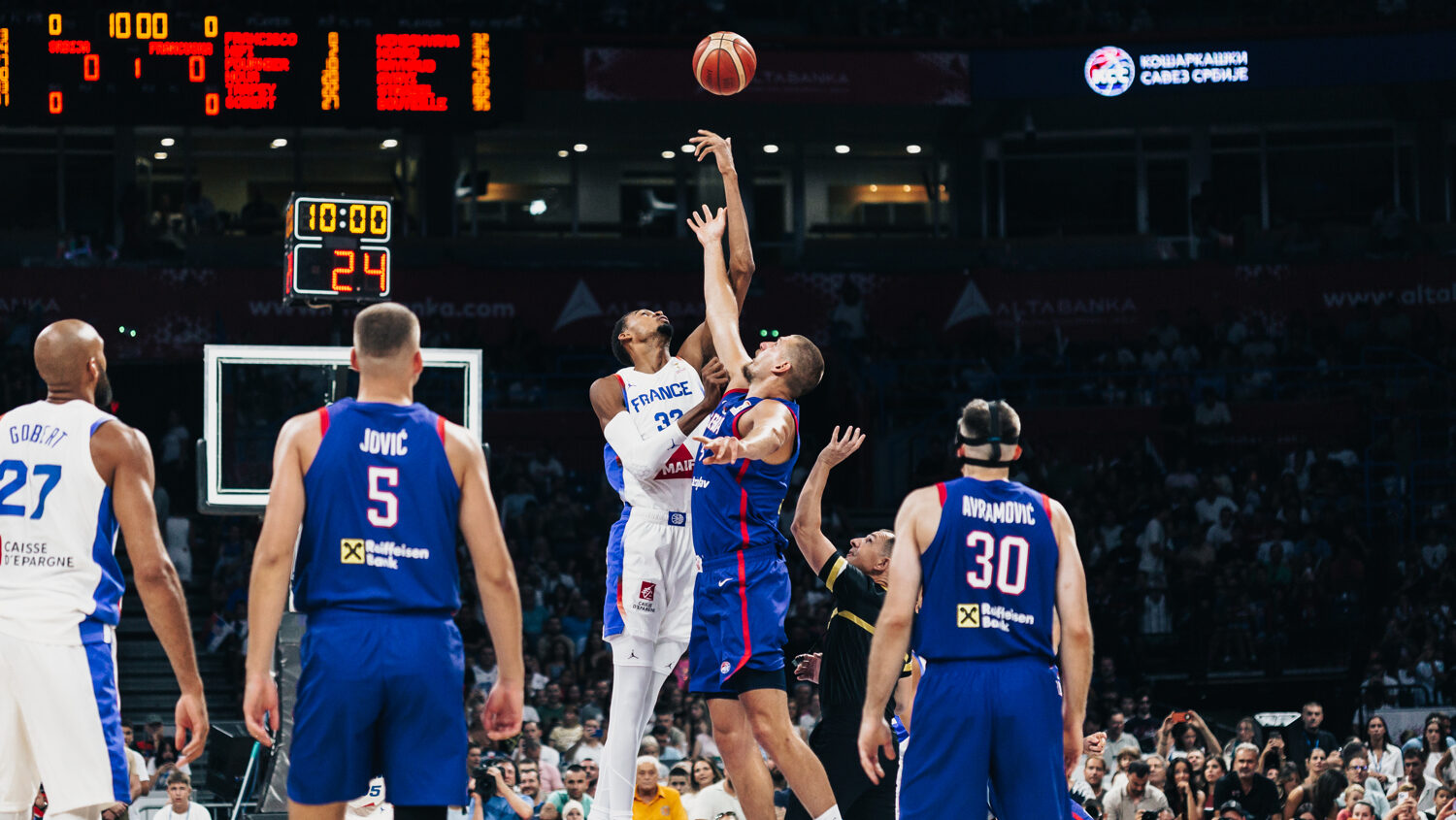
Serbia and France met in Belgrade, with the friendly producing one of those images that would have been difficult to imagine before the introduction of the FIBA Qualifiers. Jokic facing Wembanyama — a three-time NBA MVP going up against a player widely regarded as the next global superstar — in front of more than 17,000 fans. And they will meet again just a few days later, with France and Serbia set to face each other once more in Orleans on Sunday (August 23).
Jokic finished with 20 points, nine rebounds and eight assists to lead Serbia to a 90-87 victory, while Wembanyama returned to the French national team after the Paris Olympics and wore the captain’s armband for the first time. But this was not the first time the FIBA Qualifiers had provided a stage for an NBA-caliber showdown on European soil.
Back in August 2022, during the qualifiers for the 2023 FIBA Basketball World Cup, Greece faced Serbia in one of the most highly anticipated games of the entire qualification process. On the same court stood Giannis Antetokounmpo and Nikola Jokic, two players who had already combined for three NBA MVP awards at that point.
Giannis scored 40 points, while Jokic finished with 29 points, eight rebounds and six assists as Serbia prevailed 100-94 in overtime. On that same matchday, Luka Doncic was also playing for Slovenia. For one night, three of the biggest European stars in the NBA were back on courts across the continent. That is the real value of the FIBA Qualifiers.
They are about more than qualification
The original idea behind the FIBA Qualifiers was straightforward: national teams would have a bigger and more consistent presence throughout the season, while qualification for major tournaments would no longer depend entirely on a single summer competition.
Over time, however, the Qualifiers have become something much bigger. The games have developed their own identity, national teams return at different points throughout the season, arenas are filled, fans have more opportunities to watch their countries play and, whenever circumstances allow, the biggest stars return to Europe.
And perhaps that is one of the greatest strengths of the FIBA Qualifiers. They are not simply a path to the World Cup. They are also a way of bringing the biggest names in European basketball back home — even if only for a few nights.